Faith-based communities have shaped societies for centuries, leaving lasting marks on education, culture, and governance. Today, over 833 million people globally identify with traditions rooted in individual spiritual connection and scriptural authority. These values emerged during the 16th-century Reformation, sparking changes that still ripple through modern life.
From Scandinavia to North America, regions influenced by these beliefs often prioritize accessible education and civic participation. Historical movements championed literacy, empowering individuals to interpret religious texts independently. This focus on personal agency later intertwined with democratic ideals, shaping political systems worldwide.
Modern communities built on these principles continue to innovate in technology, social reform, and ethical leadership. Their cultural footprints appear in everything from work ethics to philanthropic efforts. Understanding this legacy helps explain how certain nations developed distinct approaches to progress and community-building.
Key Takeaways
- Over 833 million people follow faith traditions emphasizing personal belief and biblical authority
- Reformation-era values continue influencing education and governance systems today
- Literacy initiatives historically empowered individual scriptural interpretation
- Democratic principles often align with these spiritual traditions
- Cultural impacts range from work ethics to social responsibility practices
Introduction to Protestant Nations
The term “Protestant nations” often masks a complex tapestry of beliefs originating from 16th-century religious upheavals. Unlike unified religious systems, these communities share a historical foundation: breaking from centralized authority to prioritize personal faith and scriptural access. Protestantism serves as an umbrella term for diverse denominations like Lutherans, Baptists, and Anglicans—each interpreting Christian doctrine through distinct lenses.
Defining the Term and Scope
At its core, Protestantism represents a religious group born from dissent. Early reformers rejected hierarchical structures, arguing that individuals could connect with divine teachings without intermediaries. This principle sparked innovations in governance and education—many regions influenced by these ideas later championed democratic values and universal literacy.
Overview of Cultural and Societal Traits
Societies shaped by these traditions often share recognizable features. Emphasis on personal responsibility fuels entrepreneurial spirits, while work ethic ties back to theological views on stewardship. Schools and libraries flourished historically, as reading scripture required widespread literacy—a legacy visible in modern education systems.
These cultural fingerprints extend to social norms too. Communities tend to value transparency in leadership and merit-based advancement, reflecting the movement’s early challenges to inherited privilege. From healthcare initiatives to environmental policies, the scope of influence remains surprisingly broad five centuries later.
Historical Roots of the Protestant Movement
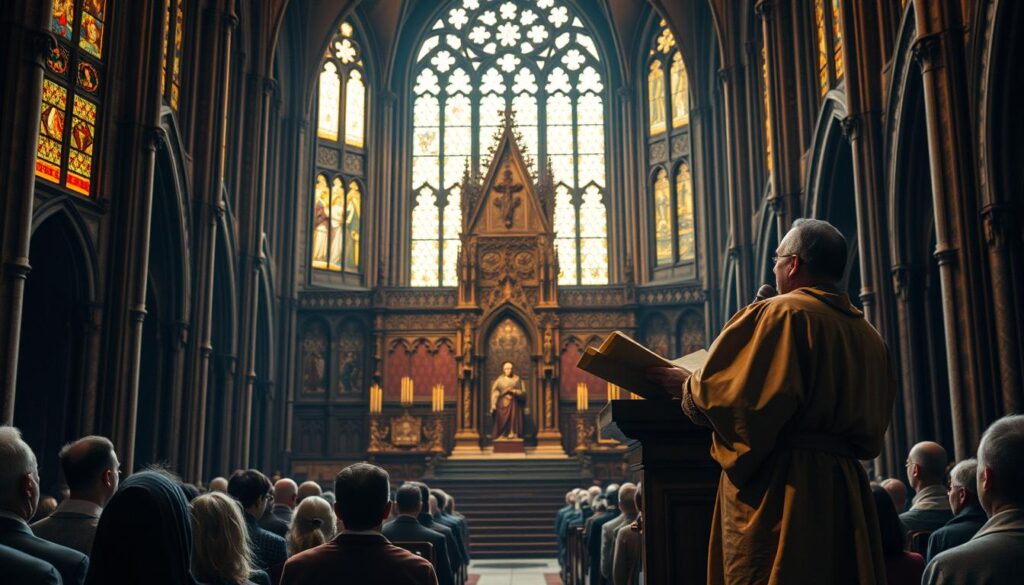
Religious revolutions in 16th-century Europe reshaped spiritual landscapes forever. While Martin Luther’s 1517 protest against indulgences marked a turning point, dissatisfaction with the Catholic Church had simmered for generations. Reformers questioned practices like paid forgiveness of sins and mandatory priest celibacy—issues that struck at the heart of medieval religious power structures.
Breaking From Traditional Authority
Early critics targeted three main areas: financial abuses, clerical privileges, and the Roman Catholic Church’s political influence. Luther’s Ninety-Five Theses argued salvation came through faith alone, not church payments. This idea spread rapidly thanks to new printing technology, undermining centuries of centralized control.
“Why should the pope, whose wealth exceeds all others’, build St. Peter’s with poor believers’ money rather than his own?”
Precursors to Full-Scale Reformation
Long before Luther, figures like Jan Hus challenged church authority. The Bohemian Reformation (1415-1436) introduced:
- Communion for all members, not just clergy
- Scripture translations into local languages
- Resistance to papal decrees
Though suppressed violently, these movements proved reform ideas could survive persecution. Their legacy created fertile ground for 16th-century changes.
| Reform Effort | Time Period | Key Innovation |
|---|---|---|
| Bohemian Reformation | Early 1400s | Layperson access to communion |
| Lutheran Reformation | 1517 onward | Salvation through faith alone |
| Calvinist Movement | 1530s-1560s | Predestination theology |
This gradual evolution shows how religious history often moves through waves of challenge and adaptation. The 16th-century changes didn’t emerge from vacuum—they built on centuries of quiet questioning.
Key Figures in the Protestant Reformation
Two visionary leaders ignited changes that reshaped Christianity’s trajectory across Europe. Their ideas challenged long-standing traditions and created new frameworks for spiritual practice. This section explores how their bold actions during the 16th century continue to influence modern religious thought.
Martin Luther and the Ninety-Five Theses
In 1517, a German monk named Martin Luther nailed his revolutionary document to a church door. His Ninety-Five Theses directly criticized the Catholic Church’s sale of indulgences—payments claimed to reduce punishment for sins. “Why does not the pope empty purgatory for the sake of holy love?” Luther famously questioned in Thesis 82.
This act of defiance sparked widespread debate. Luther argued salvation came through faith alone, not financial transactions. His translation of scripture into German made religious texts accessible to ordinary people, fueling literacy rates across the continent.
John Calvin’s Role in Shaping the Movement
While Luther focused on individual faith, John Calvin developed a structured theological system. His concept of predestination—the idea God chooses who receives salvation—became central to Reformed churches. Calvin transformed Geneva into a model community blending religious discipline with civic responsibility.
His Institutes of the Christian Religion (1536) provided clear guidelines for worship and governance. This work influenced later democratic systems by emphasizing shared leadership over single-authority rule.
| Reformer | Key Contribution | Theological Focus | Lasting Impact |
|---|---|---|---|
| Martin Luther | 95 Theses (1517) | Salvation through faith | Scripture accessibility |
| John Calvin | Geneva reforms (1541) | Predestination | Church-state models |
Both leaders demonstrated how theological ideas could reshape societies. Their 16th-century innovations still guide communities valuing personal interpretation and ethical governance today.
Cultural Influences in Protestant Nations
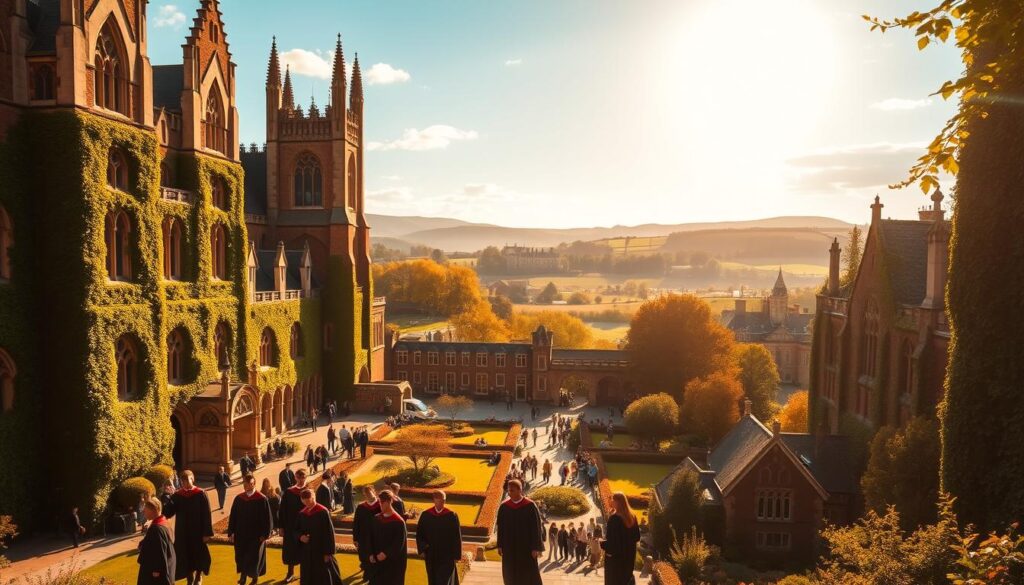
Education became a revolutionary force in communities shaped by Reformation-era ideals. When church authorities couldn’t meet growing social needs, reformers pushed governments to build schools accessible to all. This shift created ripple effects still felt in classrooms worldwide today.
Impact on Education and Social Values
Early doctrinal emphasis on personal Bible study demanded universal literacy. Public schools emerged as tools for empowerment, teaching both reading and critical analysis. By 1600, regions embracing these ideas saw literacy rates double compared to areas clinging to clergy-controlled education.
Three key social values took root:
- Merit over privilege: Success reflected dedication, not birth status
- Civic duty: Citizens engaged in community decision-making
- Ethical work: Labor became a form of spiritual service
These practices transformed economic landscapes. Banking systems in 18th-century London and Amsterdam flourished as people linked financial responsibility with moral living. Even today, regions influenced by these beliefs often prioritize innovation funding and skills training.
| Educational Focus | Pre-Reformation | Post-Reformation |
|---|---|---|
| Access | Clergy & elites | All citizens |
| Content | Latin liturgy | Practical skills + scripture |
| Outcome | Religious obedience | Civic participation |
“A schoolmaster deserves honor above all others, for what are bishops compared to those who teach Christ properly?”
Modern democracies owe much to these cultural shifts. Voting systems and public forums mirror Reformation-era beliefs that ordinary people should shape society’s direction through informed choices.
Demographic Trends and Global Distribution
Global belief systems show fascinating patterns when mapped across continents. Over 833 million people worldwide align with traditions emphasizing personal faith—a number reflecting centuries of cultural exchange and migration. This distribution reveals how historical events and modern movements shape religious geography.
Population Statistics and Country Comparisons
The United States accounts for nearly 20% of this global community, with 160 million adherents. This concentration stems from early commitments to religious diversity and ongoing cultural integration. Other regions tell equally compelling stories:
- Nigeria: 60 million followers, driven by 20th-century missionary efforts
- China: 58 million and growing rapidly—projections suggest it could lead by 2030
- Brazil: 42 million blending local traditions with imported practices
| Country | Population (millions) | Growth Trend |
|---|---|---|
| United States | 160 | Stable |
| Nigeria | 60 | Rapid |
| China | 58 | Accelerating |
These numbers highlight unexpected contrasts. Wealthy European countries like Sweden maintain steady participation rates, while African nations see annual growth exceeding 3%. Asia’s surge—particularly in South Korea and Indonesia—adds new chapters to this evolving story.
Demographic shifts mirror broader social changes. Urbanization and digital connectivity allow ideas to spread faster than ever, creating hybrid practices that blend tradition with innovation. As populations redistribute, these communities continue reshaping their cultural landscapes.
Understanding Protestant Nations Today
Global spiritual landscapes are shifting at unprecedented speeds, reshaping how communities practice faith. Traditional structures now share space with dynamic new approaches that prioritize personal connection over rigid doctrines. This evolution reflects our interconnected world’s demands for adaptable belief systems.
Analysis of Current Trends and Future Projections
Three key developments define this era:
- Borderless worship: Nondenominational groups now account for 25% of global adherents
- Cultural hybridization: African and Asian churches blend local traditions with Reformation principles
- Digital engagement: Virtual congregations attract millions seeking flexible participation
China’s faith communities exemplify these changes. With 10% annual growth, experts predict it could surpass U.S. membership by 2030. House churches and underground networks thrive despite restrictions, demonstrating resilience through decentralized organization.
Younger generations worldwide drive demand for experiential practices. Charismatic movements emphasizing healing services and contemporary music now outpace traditional denominations in 38 countries. This shift mirrors broader cultural preferences for authenticity over institutional loyalty.
Looking ahead, three projections stand out:
- Core values like scriptural focus will persist despite evolving formats
- Urban centers will birth innovative worship models combining tech and tradition
- South-South partnerships will replace older missionary patterns
These transformations reveal how timeless ideals adapt to new realities. As boundaries blur, the emphasis on personal spiritual journeys remains central to this global movement.
The United States: A Leading Protestant Nation
America’s spiritual landscape reflects a unique blend of historical roots and modern innovation. With 160 million adherents, the country hosts the largest Protestant population globally—a legacy stretching back to its colonial beginnings. Early settlers along the Eastern seaboard planted seeds of faith that grew into defining cultural forces.
Foundations Along the Atlantic Coast
Puritan communities in Massachusetts and Anglican settlements in Virginia shaped America’s religious DNA. These groups prioritized scripture literacy, leading to landmark educational investments. Institutions like Harvard (1636) and Yale (1701) began as training grounds for clergy before evolving into global academic leaders.
Three key factors fueled this growth:
- Diverse European traditions merging into new denominations
- Revival movements emphasizing personal spiritual experiences
- Church-led social reforms addressing industrialization challenges
“We must delight in each other, make others’ conditions our own—rejoice together, mourn together.”
Today, this heritage influences debates from healthcare to foreign policy. Megachurches innovate with digital outreach while maintaining core values like community service. The United States remains a hub for theological scholarship and cross-cultural missionary work, proving ancient ideals can thrive in modern contexts.
Nigeria’s Vibrant Protestant Community
Africa’s most populous country hosts one of the world’s fastest-growing faith communities. With 60 million adherents, Nigeria claims the continent’s largest concentration of believers emphasizing personal scripture study and direct divine connection. This spiritual landscape blends colonial-era foundations with modern African innovations.
Growth Dynamics Influenced by Colonial History
British missionaries in the 19th century planted seeds that took unexpected root. Today’s Christian population of 85 million reflects both imported traditions and local reinterpretations. Churches now operate 40% of Nigeria’s primary schools and 25% of healthcare facilities.
Three factors drive this movement:
- Urbanization creating hubs for mega-churches
- Youth-focused ministries using Afrobeats and social media
- Practical theology addressing poverty and corruption
| Church Type | Membership Growth | Key Features |
|---|---|---|
| Anglican | 2% annually | Historic schools, interfaith dialogue |
| Pentecostal | 8% annually | Healing services, business training |
| Independent | 12% annually | Local language worship, community farms |
“Our churches don’t just save souls—they teach coding and farming techniques.”
While Muslim-Christian tensions persist in northern regions, collaborative projects in education and disaster relief showcase the movement’s evolving role. As African-led denominations reshape global religious trends, Nigeria’s experience offers lessons for other countries seeking faith-based solutions to modern challenges.
China’s Emerging Protestant Presence
Asia’s most populous country is rewriting global religious maps through quiet yet explosive growth. With 58 million adherents, China now hosts the world’s third-largest community emphasizing personal scripture study—a trend reshaping spiritual demographics.
Rapid Growth and Future Demographic Impact
Christianity’s 10% annual expansion here outpaces all other major belief systems. Urban professionals and rural villagers alike embrace these traditions for different reasons:
- City dwellers seek meaning beyond material success
- Farm communities value educational support and healthcare initiatives
| Growth Factor | Urban Areas | Rural Regions |
|---|---|---|
| Primary Appeal | Spiritual fulfillment | Community development |
| Meeting Style | Apartment gatherings | Village house churches |
| Government Status | Registered congregations | Unofficial networks |
Experts predict China could surpass America’s protestant population by 2030. This shift would mark the first time in 400 years that a non-Western country leads this demographic category.
“What we’re seeing isn’t just conversion—it’s cultural adaptation meeting spiritual hunger.”
Despite regulatory challenges, creative solutions keep communities thriving. Digital platforms help spread teachings while avoiding physical restrictions. As this movement grows, its global influence on worship practices and social outreach continues to expand.
Brazil’s Religious Landscape and Protestant Influence
Brazil’s spiritual tapestry weaves ancient traditions with modern movements. With 185 million Christians—nearly 90% of its people—the country hosts South America’s largest Christian population. While Roman Catholic roots run deep, approximately 41 million now follow diverse Protestant paths.
Protestant communities here split into two main streams. Traditional churches brought by European immigrants blend with energetic Pentecostal groups. The latter emphasize healing services and lively worship, attracting urban youth and rural families alike.
These churches reshape society through education programs and disaster relief. One Rio de Janeiro pastor notes: “We feed hungry families before sharing scripture—that’s how trust grows.”
| Church Type | Membership | Cultural Impact |
|---|---|---|
| Lutheran | 1.2 million | German heritage schools |
| Pentecostal | 25 million | Music festivals, job training |
From Amazon river villages to São Paulo skyscrapers, Brazilian Protestantism adapts to local needs. This flexibility makes it a global model for faith communities navigating rapid cultural change.
South Africa: A Mosaic of Christian Traditions
South Africa’s spiritual landscape reflects its complex history—a vibrant blend of European influences and indigenous practices. Over 85% of its 60 million people identify with Christian traditions, creating a unique cultural fusion. Communities here reinterpret global faith through local lenses, merging ancestral customs with modern worship styles.
Interplay Between Beliefs and Cultural Identity
Zulu hymns now accompany traditional drumming in Durban churches, while Cape Town congregations mix Afrikaans prayers with Xhosa blessings. This blending extends beyond rituals. Many faith groups address apartheid’s legacy through education programs and housing projects.
Historical Dutch Reformed teachings once justified racial segregation. Today, reformed churches lead reconciliation efforts. “Our faith compels us to heal divisions,” explains Johannesburg pastor Thandi Nkosi. Her congregation runs job-training centers in townships, embodying this shift.
Youth-driven movements add fresh energy. Digital ministries reach remote villages, while urban artists create faith-inspired music merging gospel with amapiano beats. These innovations show how spiritual traditions evolve while retaining core values of community and justice.
FAQ
What defines a "Protestant nation"?
A “Protestant nation” typically refers to countries where Christian groups rejecting papal authority became dominant. These regions often share cultural traits like emphasis on literacy, individualism, and decentralized religious practices.
How did Martin Luther influence modern Christianity?
Martin Luther’s Ninety-Five Theses in 1517 challenged Catholic doctrines, sparking reforms. His translation of the Bible into vernacular languages made scripture accessible, reshaping worship and education across Europe.
Why did education thrive in historically Protestant areas?
Reformers like John Calvin promoted literacy to enable personal Bible study. This led to widespread school systems, particularly in regions like Scandinavia and parts of Germany, fostering high literacy rates.
Which country has the largest Protestant population today?
The United States remains a leader, with over 160 million adherents. Nigeria follows closely, experiencing rapid growth through evangelical movements since the 20th century.
How is China’s Christian community changing?
Unofficial estimates suggest China could have 100 million believers by 2030. Underground churches and state-approved congregations contribute to this growth, despite government restrictions.
What role did colonialism play in Nigeria’s religious landscape?
British missionaries introduced Anglican traditions in the 19th century. Post-independence, local leaders adapted these teachings, creating vibrant independent churches that blend African cultural practices.
Are Protestant beliefs declining globally?
While secularism rises in Europe, regions like Sub-Saharan Africa and Latin America see growth. Pentecostal and charismatic movements drive this expansion, emphasizing personal spiritual experiences.
How does Brazil’s religious diversity include Protestantism?
Once predominantly Catholic, Brazil now has 30% evangelical Protestants. Megachurches and media ministries attract followers seeking community-focused worship and social services.
What makes South Africa’s Christian identity unique?
Dutch Reformed traditions merged with indigenous beliefs during apartheid. Today, churches address social justice issues, reflecting the nation’s complex history and multicultural identity.