In Ethiopian Christian worship, sacred music serves as a bridge between faith and cultural identity. One tradition stands out for its ability to unite believers across generations: spiritual songs rooted in devotion and community. These melodies, deeply tied to Pentecostal practices, reflect a unique blend of reverence and artistic freedom.
Originally shaped by foreign hymns, this musical form evolved into distinctly Ethiopian expressions of faith. Early innovators adapted lyrics and rhythms to local languages, creating worship experiences that resonated nationwide. Radio broadcasts in the 20th century helped spread these soul-stirring compositions, making them accessible beyond church walls.
What makes this tradition remarkable is its inclusive nature. Unlike some worship styles, it welcomes diverse instruments—from traditional krar harps to modern keyboards. This flexibility allows communities to honor their heritage while embracing contemporary sounds, proving spiritual connection needs no rigid boundaries.
Today, these sacred songs continue thriving through digital platforms and youth-led adaptations. Their enduring appeal lies in balancing authenticity with innovation—a testament to music’s power in preserving spiritual legacies while speaking to new generations.
Key Takeaways
- Sacred Ethiopian music blends cultural identity with Pentecostal worship traditions
- Historical evolution transformed foreign hymns into localized spiritual expressions
- Early radio broadcasts played crucial roles in popularizing these songs
- Flexible instrumentation encourages creative yet reverent worship experiences
- Digital adaptations ensure relevance for modern audiences
- Balances traditional roots with contemporary innovations
- Strengthens community bonds through shared musical heritage
Understanding the Legacy of Protestant Old Mezmur
The 1960s sparked a musical revolution in Ethiopian worship spaces. Congregations began embracing locally crafted spiritual songs instead of imported hymns. This shift created a new chapter in faith expression through music.
Roots of Change
At the heart of this transformation stood the Mulu Wongel Church. Founded primarily by Ethiopian leaders, this community became ground zero for developing Amharic-language worship music. Their efforts birthed a generation of singers who blended scriptural messages with cultural rhythms.
More Than Melodies
This movement did more than change song lyrics—it redefined spiritual identity. Using Amharic allowed worshippers to connect deeply with their heritage. The church’s approach created unity across regions, with shared melodies becoming cultural touchstones.
Traditional instruments found new purpose in sacred spaces during this era. Krar strings and kebero drums blended with biblical teachings, forming a distinct sound. This fusion showed how faith could honor tradition while embracing modern worship needs.
The Roots and Evolution of Amharic Mezmur
When institutions fade, culture often finds new champions. The 1970s brought unexpected growth to Ethiopia’s spiritual music traditions despite political pressures. After authorities closed the Mulu Wongel Church, its legacy didn’t vanish—it multiplied through passionate artists.
Evolution Over Time
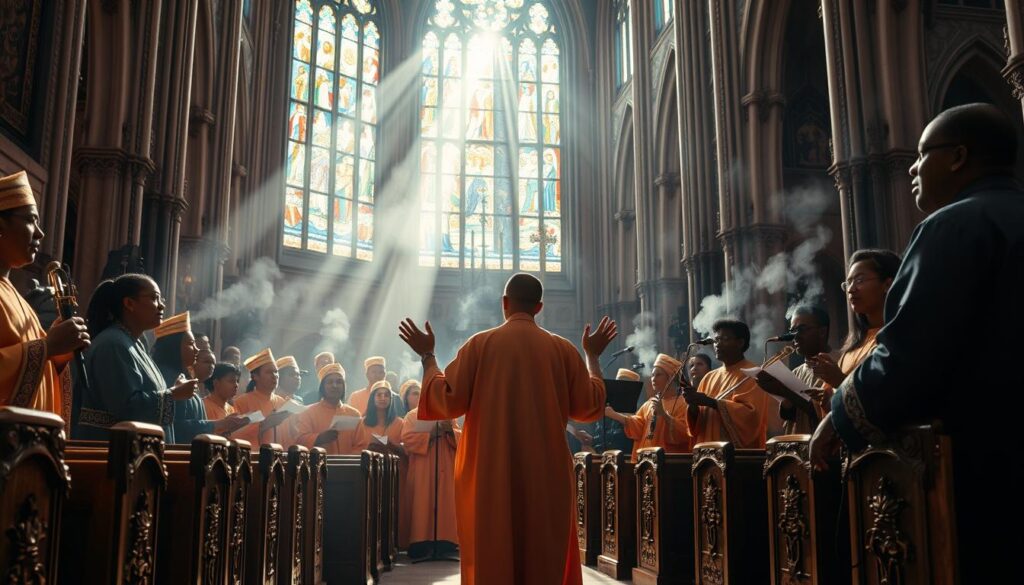
Two choirs became torchbearers during this pivotal era. The Tsion Choir and Mulu Wongel Choir preserved melodies while adding fresh arrangements. Their efforts inspired other groups like the Meserete Kristos and Mekane Yesus Church Choirs to join the movement.
This decentralized approach sparked creative diversity. Each choir developed unique styles—some emphasized call-and-response patterns, while others blended traditional rhythms with modern harmonies. Collaboration without central control became the secret to lasting relevance.
By the 1980s, these groups influenced each other’s work. A Bethel Choir member once noted: “We borrowed rhythms from Mekane Yesus and vocal techniques from Tsion—it felt like sharing family recipes.” This cross-pollination created hybrid compositions that honored roots while welcoming innovation.
- Multiple choirs maintained traditions during political shifts
- Decentralized growth enriched musical diversity
- Shared techniques led to genre-blending innovations
Influential Pioneers in Protestant Old Mezmur
Ethiopia’s sacred music revolution began with bold artists who reshaped worship through cultural fusion. At the forefront stood Addisu Worku, whose radio broadcasts on Misrach Voice brought spiritual songs to living rooms nationwide. His groundbreaking work paved the way for other innovators seeking to blend faith with Ethiopian identity.
Trailblazing Singers
Worku’s contemporaries expanded the genre’s possibilities through diverse approaches. Dr. Atalay Alem combined academic rigor with melodic craftsmanship, while Eyerusalem Teshome’s emotive vocals set new standards. Gizachew Worku and Tesfaye Gabisso experimented with pentatonic scales, creating tunes that felt both ancient and fresh.
Early Influences and Innovations
These artists faced unique challenges—building a musical tradition from scratch without formal templates. Their solutions became lasting trademarks:
| Artist | Innovation | Cultural Impact |
|---|---|---|
| Shewaye Damte | Call-and-response patterns | Enhanced congregational participation |
| Dereje Kebede | Lyrical storytelling | Bridged scripture & daily life |
| Tadesse Eshete | Rhythmic complexity | Connected urban/rural listeners |
| Tamrat Haile | Instrumental fusion | Modernized traditional sounds |
Through radio waves and grassroots sharing, these pioneers created a shared musical language. Their work proved spiritual expression could honor heritage while embracing creative freedom—a legacy that continues shaping worship experiences today.
Transitioning from Old to New Mezmur Styles
Ethiopian sacred music thrives through constant reinvention. Artists now blend time-honored patterns with fresh sounds, creating worship experiences that honor tradition while energizing modern congregations.
Shifting Musical Trends
Today’s performers craft spiritual connections through diverse approaches. Dagmawi Tilahun merges classic vocal techniques with electronic beats at Mulu Wongel Church. Kalkidan Tilahun of Kale Hiwot introduces jazz harmonies into devotional lyrics. These artists prove innovation strengthens rather than weakens sacred traditions.
Instrumental arrangements gain momentum through ministries like Bethel Music. Fikru Aligaz’s piano-driven compositions demonstrate how melodies can convey spiritual messages without words. This “classical” style appeals to younger audiences seeking contemplative worship experiences.
| Artist | Innovation | Genre Influence |
|---|---|---|
| Ahava Gospel Singers | Reggae rhythms | Caribbean fusion |
| Hirut Bekele | Pop vocal styling | Mainstream appeal |
| Muluken | Traditional folk fusion | Cultural preservation |
| Elias Abebe | Multilingual lyrics | Global outreach |
Former secular stars bring professional polish to the genre. Hirut Bekele’s pop-infused hymns and Muluken’s folk adaptations attract listeners beyond church circles. Their conversions show how spiritual music evolves through unexpected pathways.
This creative flexibility ensures sacred songs remain culturally vital. From reggae beats to orchestral arrangements, artists expand worship’s emotional range while keeping faith at the core.
Distinct Characteristics of Traditional Mezmur
Sacred melodies in Ethiopian worship carry a divine purpose that shapes their entire character. Unlike performance-driven music, these compositions exist solely as spiritual offerings. This core principle removes cultural boundaries, creating space for diverse voices to unite in reverence.
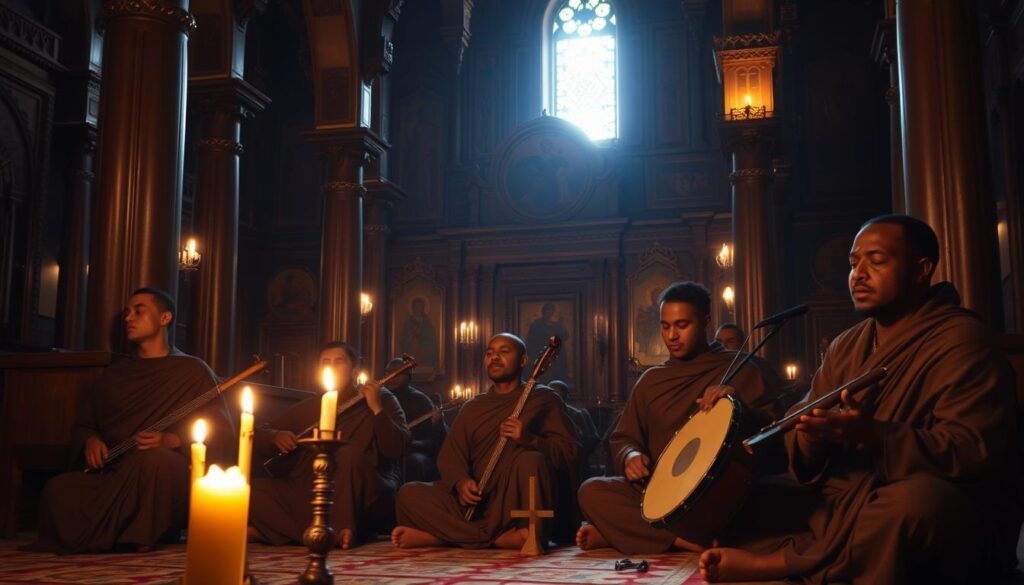
Artists enjoy remarkable freedom in their creative choices. Traditional krar strings might share the stage with synthesizers, while lyrics draw deeply from biblical stories. This flexibility allows each community to worship through sounds that feel authentic to their context.
Call-and-response patterns turn congregations into active participants. A choir leader’s phrase echoes through the crowd, transforming listeners into co-creators. These exchanges build connection while preserving ancient musical structures rooted in Ethiopian heritage.
Vocal delivery prioritizes raw emotion over technical perfection. Singers embrace raspy tones and spontaneous variations, valuing heartfelt expression above polished performances. As one musician noted: “Our cracks and quivers make the praise human.”
Melodic patterns often use pentatonic scales common in Ethiopian folk traditions. This creates a familiar foundation for innovation—like jazz harmonies woven into devotional lyrics. The result feels both timeless and fresh.
These sacred songs prove spiritual music needs no rigid rules to maintain its power. By blending reverence with creativity, they honor tradition while speaking to ever-changing hearts.
Protestant Old Mezmur in Today’s Worship Culture
Ethiopia’s spiritual music landscape now thrives through modern technology. Over 20 specialized studios like Kinnei and Begena provide professional production tools that early artists could only dream of. These hubs help creators preserve cultural roots while reaching global audiences.
Gone are the days of makeshift recordings. Facilities such as Albastor and Exodus Studios offer advanced equipment for crisp audio quality. Worship teams blend ancient vocal styles with modern beats, creating tracks that stream worldwide within hours.
Three key changes define this evolution:
- Social media platforms carry devotional songs to diaspora communities
- High-definition visual projections enhance live worship experiences
- Collaborative apps let musicians across regions co-create hymns
Traditional call-and-response patterns now echo through smartphone speakers. A Bethelihem Studio engineer shared: “We’re not just recording music – we’re archiving spiritual heritage.” This technical support empowers artists to focus on meaningful lyrics rather than logistical hurdles.
Young worshippers particularly appreciate the fusion. Modern arrangements using synthesizers and traditional kebero drums make ancient truths feel freshly relevant. As streaming numbers grow, these sacred sounds continue bridging generations through innovation.
The Enduring Impact of protestant old mezmur on Community Celebrations
Community gatherings in Ethiopia pulse with rhythms that unite generations through shared devotion. These sacred songs form the heartbeat of major life events, blending spiritual meaning with cultural heritage. From joyful weddings to solemn baptisms, each occasion gains depth through time-honored melodies.
Wedding ceremonies transform into vibrant declarations of faith when choirs perform traditional hymns. Lyrics celebrating divine love and marital commitment create sacred spaces within festive atmospheres. Guests often join call-and-response verses, turning spectators into active participants.
Baptismal rites feature songs marking spiritual rebirth. New believers emerge from water to triumphant choruses about redemption, their journey underscored by communal vocals. These moments reinforce belonging through shared musical traditions.
| Celebration | Musical Role | Cultural Significance |
|---|---|---|
| Church Anniversaries | Historical hymns | Honors founding members |
| Easter Services | Resurrection anthems | Blends theology with culture |
| Harvest Festivals | Thanksgiving chants | Connects faith to daily life |
| Youth Gatherings | Modern arrangements | Bridges generation gaps |
Seasonal observances showcase creative adaptations. Christmas performances might pair kebero drums with lyrics about Bethlehem’s star. Such fusions make ancient stories resonate in modern contexts.
Local festivals demonstrate music’s power to build bridges. A community leader notes: “Our songs invite neighbors to experience faith through familiar sounds.” This approach maintains cultural authenticity while fostering wider understanding.
Through these celebrations, sacred melodies become living traditions. Young musicians learn ancestral rhythms while adding contemporary flavors, ensuring spiritual milestones remain relevant across eras.
Incorporating Traditional Instruments and Modern Adaptations
Ethiopian worship music thrives on a dynamic blend of heritage and innovation. This fusion creates soundscapes where centuries-old traditions meet today’s creative expressions, forming a bridge between generations.
Instrumental Diversity
The krar harp’s metallic twang now shares space with synth pads in many congregations. Artists layer the kebero drum’s earthy pulse under electric guitar riffs, proving sacred music evolves without losing its soul.
Young musicians often mix tools in surprising ways. A keyboardist might sample traditional flute melodies, while vocalists harmonize over digital beats. This freedom lets communities honor their roots while crafting fresh worship experiences.
Collaborations between elders and tech-savvy creators yield exciting results. Master krar players teach string techniques to youth groups, who then remix them into electronic tracks. Such partnerships keep cultural heritage alive through reinvention.
Digital workstations help preserve rare instruments. Apps simulate the begena’s deep resonance, making ancient sounds accessible worldwide. These tools ensure timeless melodies remain vibrant in modern worship spaces.
FAQ
How do traditional hymns bridge generational gaps in worship?
These timeless songs create shared spiritual experiences, blending historical teachings with familiar melodies that resonate across age groups. Their lyrical depth often sparks intergenerational dialogue about faith and heritage.
What makes Amharic worship music distinct from other forms?
Amharic spiritual songs uniquely blend Ethiopia’s ancient musical scales with biblical narratives, using poetic Ge’ez influences and call-and-response patterns that reflect communal worship traditions.
Why do some congregations maintain older musical styles?
Many communities preserve these sounds to honor cultural identity and historical continuity. The acoustic instruments and unamplified vocals often create an intimate atmosphere cherished in sacred spaces.
How have contemporary artists reimagined classic spiritual songs?
Modern creators blend traditional lyrics with global rhythms like gospel harmonies or Afrobeat grooves, making ancient messages accessible to younger audiences while maintaining theological foundations.
What role do instruments like the krar play in worship music?
The krar’s resonant tones and masenqo’s bowed strings add earthy textures to sacred gatherings, connecting participants to ancestral worship practices while supporting vocal storytelling.
Can traditional hymns coexist with modern worship trends?
Absolutely. Many churches blend classic melodies with digital arrangements, creating hybrid services that honor heritage while embracing technological advancements in sound design.
How do these songs influence community events beyond church walls?
Their melodies frequently anchor cultural festivals and family milestones, serving as audible threads that weave faith narratives into weddings, harvest celebrations, and memorial ceremonies.