For many, spiritual tools create a bridge between ancient traditions and modern faith. The use of beads in devotional practices stretches back centuries, but one adaptation emerged more recently. In the 1980s, a group of Episcopalians in Texas reimagined traditional methods to craft a new approach for focused meditation.
This innovation resulted in a 33-bead set, each piece symbolizing the years of Christ’s life. Unlike older models, the design emphasizes flexibility, allowing users to personalize their experience. The term “bead” itself traces to the Anglo-Saxon word “bede”, meaning prayer—a fitting origin for objects meant to deepen connection.
Today, these tools are embraced across denominations like Methodist and Anglican communities. They serve as physical anchors during reflection, blending touch with contemplation. Far from rigid rituals, they invite creativity while honoring core beliefs.
Key Takeaways
- Modern bead-based practices originated in 1980s Episcopal communities seeking adaptable spiritual tools
- The 33-bead structure directly references Jesus Christ’s age at crucifixion
- Beads help combine physical engagement with mental focus during devotion
- Multiple Protestant denominations now incorporate these sets into personal worship
- Etymology links “bead” to the Anglo-Saxon term for prayer, reinforcing historical connections
The Historical Roots and Spiritual Significance of Prayer Beads
Physical tools in worship trace back to ancient scriptures, where simple objects became sacred anchors. In Numbers 15, God instructed the Israelites to grasp their garments’ fringes during moments of doubt—a tactile reminder of divine presence. This principle evolved as early believers sought ways to fulfill Paul’s call to “pray continually.”
Biblical Foundations and Early Use in Worship
Ancient communities turned to pebbles, knotted ropes, and later beads to maintain spiritual focus. Desert monks carried stones in pouches, releasing one after each supplication. These methods transformed over centuries into organized strings of beads used across faiths—from Buddhist malas to Islamic tasbihs.
Christian traditions adapted these tools while adding theological meaning. By the Middle Ages, the catholic rosary became a structured meditation aid. Yet Protestant reformers often rejected rigid formulas, preferring direct engagement with scripture.
Transition from Catholic Rosary to Protestant Practice
In the 1980s, Episcopal leaders reimagined prayer tools to blend flexibility with tradition. Their 33-bead set referenced Christ’s lifespan while allowing personalized use. Unlike rosaries requiring specific recitations, this design encouraged free-form reflection on psalms or personal gratitude.
This innovation honored historical roots while respecting Protestant values. It bridged Eastern Orthodox prayer ropes and Catholic practices without doctrinal conflict. Today, these adaptable tools help many faith communities merge physical rhythm with spiritual intention.
Exploring How to Use Protestant Prayer Beads
Personal spiritual practices often thrive when given both structure and freedom. Unlike many traditional methods, modern devotional tools adapt to individual needs while maintaining core symbolism. This balance makes them accessible for diverse worship styles and schedules.
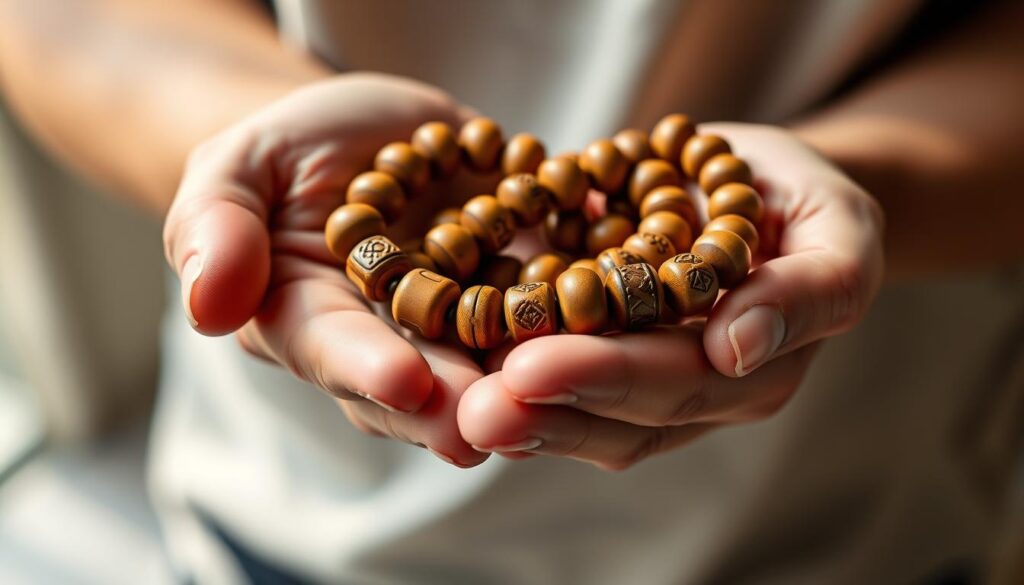
Structural Flexibility in Modern Devotion
While traditional rosaries follow strict patterns, contemporary sets prioritize adaptability. Most feature four groups of seven beads—a design reflecting creation’s completeness rather than lengthy recitations. This streamlined approach helps users avoid feeling overwhelmed during prayer time.
Users craft personal sequences, choosing phrases or scriptures that resonate. One might recite Psalms on certain beads while reserving others for silent reflection. This freedom transforms routine into meaningful spiritual dialogue.
Daily Benefits of Tactile Meditation
Holding physical objects during devotion anchors wandering thoughts. Moving fingers across smooth surfaces creates rhythm, slowing mental chatter. Many find this tactile practice especially helpful when facing stress or decision-making.
Portability allows discreet use anywhere—during commutes or coffee breaks. Regular engagement builds consistent habits, even with limited time. As one worshiper shared: “The beads remind me to pause and listen, not just speak.”
Over weeks, this practice often deepens awareness of sacred moments in ordinary life. It turns distracted minutes into opportunities for connection, blending ancient wisdom with modern needs.
Crafting and Incorporating DIY Prayer Beads in Your Devotion
Creating spiritual tools with your hands adds depth to daily worship. Imagine holding something you shaped, each piece reflecting your unique journey. This process blends creativity with contemplation, turning simple materials into sacred companions.
Creative Steps for Making Your Own Prayer Beads
Start by gathering 33 elements: one special charm, four cruciform beads, and 28 smaller pieces. Choose stones or wood that feel comforting—maybe blue for peace or smooth lava rock for resilience. Many crafters add a cross pendant, but any symbol resonating with your faith works beautifully.
Assemble them in this order:
- Begin with the charm as your anchor
- Add the single invitatory bead
- Place four larger cruciform pieces to form a cross shape
- Separate these with seven smaller beads in four groups
A Step-by-Step Guide to Using Your Prayer Beads
Hold your handmade set and start at the charm. Whisper an opening phrase like “Guide my heart.” Move to the invitatory bead to set your intention—perhaps Psalm 46:10. As you reach each cruciform piece, repeat a simple affirmation about forgiveness or gratitude.
The week beads offer space for specific requests. Try this pattern:
- First seven: Praise for life’s blessings
- Next seven: Requests for loved ones
- Third group: Personal growth hopes
- Final set: Quiet listening time
One user shared: “My homemade set helps me pause when stress hits. The physical rhythm grounds me.” Over weeks, this practice becomes a cherished dialogue, weaving your story into every bead.
Conclusion
The journey of faith grows richer when we engage both hands and heart. Crafted in the 1980s, these spiritual tools blend ancient traditions with modern needs. Their flexible design invites personal themes—gratitude, healing, or quiet listening—without rigid formulas.
Many discover that holding physical objects during meditation brings focus to busy minds. A simple circle of beads becomes a portable anchor, turning commutes or coffee breaks into sacred moments. As more communities embrace this practice, they’re finding it complements existing worship styles rather than replacing them.
What began four decades ago continues gaining momentum. Early adopters paved the way for others seeking tactile practices that deepen connection. Whether using store-bought sets or handmade creations, the rhythm of moving through each piece transforms distracted thoughts into mindful reflection.
This modern adaptation proves ancient wisdom still resonates. It offers a bridge between historical roots and contemporary life, one bead at a time.
FAQ
How do these spiritual tools differ from the Catholic rosary?
While both involve meditative repetition, the structure often includes a cross and four sets of seven beads. Themes like gratitude or scripture replace traditional Marian prayers, reflecting unique faith emphases.
What benefits come from incorporating them into daily routines?
They create rhythm, reduce distractions, and anchor the mind during reflection. Many find they deepen focus on themes like forgiveness or grace, fostering calm and intentionality.
Can I personalize my own set?
Absolutely! Crafting allows creativity—choose colors, materials, or charms that hold personal meaning. Some add a cross or symbolic bead to mark the start of their meditation.
Are there guidelines for beginners?
Start simple. Hold the first bead, breathe deeply, and recite a short phrase or verse. Move through each section at your pace, letting the rhythm guide your heart.
How long should a session last?
Even 5–10 minutes can nurture mindfulness. It’s less about duration and more about consistency—regular use builds a habit of centered reflection.
Do I need formal training to begin?
No prior experience is required. Many resources, like step-by-step guides or community groups, offer support. The practice adapts to your spiritual journey.