Welcome to a journey through centuries of spiritual wisdom that shaped how millions connect with their beliefs. This exploration begins with the 16th-century Reformation, a movement that redefined Christianity by emphasizing faith, Scripture, and God’s grace. At its heart lies a simple yet profound idea: true connection with the divine comes through trust, not rituals.
You’ll find that churches across traditions share core principles while celebrating unique perspectives. Whether through Luther’s bold reforms or Wesley’s focus on personal holiness, these teachings all center on the transformative power of the Gospel. They answer timeless questions about human purpose, forgiveness, and living with meaning.
This guide unpacks how these ideas influence daily life—from understanding salvation to practicing compassion. You’ll see how doctrines about grace and community shape modern believers, bridging historical roots with today’s challenges. Let’s discover together how these enduring truths continue to inspire hope and action worldwide.
Key Takeaways
- Rooted in the 16th-century Reformation, these teachings prioritize faith and Scripture over tradition
- Core beliefs include salvation through grace and the authority of the Bible
- Denominations vary in practices but share foundational Christian principles
- Addresses practical questions about purpose, morality, and community
- Historical figures like Luther and Wesley shaped distinct theological paths
- Remains relevant through its focus on personal spiritual growth and service
Understanding Protestant Theology
At the heart of Christianity’s rich traditions lies a movement that reshaped spiritual life through radical simplicity. This approach centers on direct relationships with God, guided by Scripture rather than human authority. It offers a path where grace outweighs rituals, and personal conviction fuels daily practice.
What Defines This Faith Tradition?
Central to this belief system is the idea that salvation comes through trust in Christ’s sacrifice, not earthly achievements. The Holy Spirit empowers believers to understand biblical truths and live with purpose. Churches across denominations agree on essentials like the Trinity and Jesus’ resurrection while differing on practices like baptism styles.
Essential Teachings at a Glance
Four key principles form the foundation:
| Doctrine | Description | Key Verse |
|---|---|---|
| Justification by Faith | God declares believers righteous through Christ’s merit | Romans 3:28 |
| Scripture Authority | Bible as ultimate truth source | 2 Timothy 3:16 |
| Priesthood of Believers | Direct access to God without mediators | 1 Peter 2:9 |
This framework encourages personal Bible study and prayer. It removes barriers between people and divine grace, fostering communities where compassionate service naturally follows genuine faith. Modern expressions continue adapting these timeless truths to new cultural contexts.
Historical Roots and Proto-Protestant Movements
Centuries before the Reformation, courageous voices challenged religious norms. These reformers laid foundations for changes that would reshape Christianity. Their stories reveal how faith often thrives where authority is questioned.

Origins and Early Movements
In 15th-century Bohemia, Jan Hus led the Hussites toward radical ideas. They demanded communion for all believers and sermons in local languages. Church leaders saw this as rebellion, but Hus insisted: “Seek truth, hear truth, learn truth!
The Waldensians faced similar struggles. For 300 years before Luther, they lived by the New Testament, rejecting wealth and hierarchy. Their portable Bibles became symbols of spiritual independence.
| Movement | Time Period | Key Beliefs | Legacy |
|---|---|---|---|
| Hussites | 1400s | Communion equality, vernacular worship | Inspired Lutheran reforms |
| Waldensians | 1100s-1500s | Scripture over tradition, poverty vows | Model for Bible-centered churches |
| Lollards | 1300s | Critiqued indulgences, promoted lay preaching | Precursor to English Reformation |
These groups shared a focus on Christ’s grace rather than rituals. The Augsburg Confession later stated:
“Our churches teach nothing contrary to Scripture or the universal Christian church.”
Though they broke away from Roman Catholic practices, their goal was renewal—not rebellion. Today, their courage reminds us that spiritual growth often begins with asking hard questions.
The Protestant Reformation and Its Lasting Impact
The 16th century ignited a spiritual revolution that still shapes how millions experience their beliefs today. At its core stood two visionaries who redefined Christianity’s relationship with divine grace and human responsibility.
Martin Luther’s Transformative Influence
When Martin Luther nailed his Ninety-Five Theses to a church door, he unleashed ideas that shattered medieval religious norms. His discovery—that salvation comes through faith alone—freed believers from anxiety about earning God’s favor. “When God declares forgiveness,” Luther taught, “He doesn’t suggest it—He makes it real.”
This sacramental view of Scripture gave ordinary people confidence in their spiritual standing. No longer dependent on rituals or institutions, they embraced a direct path to peace with God through Christ’s sacrifice.
John Calvin and The Reformation
Building on Luther’s foundation, John Calvin crafted a detailed framework for Christian living. His teachings on predestination emphasized God’s sovereign power while offering assurance through the Holy Spirit’s inner witness. Calvin argued:
“True faith perseveres because it rests not in human effort, but in divine promise.”
This perspective shaped churches worldwide, blending intellectual rigor with heartfelt devotion. Together, these reformers established principles that continue guiding believers:
- Scripture as ultimate authority over tradition
- Salvation received through trust, not earned by works
- Every believer’s right to approach God directly
Their legacy lives in modern communities where personal conviction fuels compassionate action. From Sunday sermons to social justice initiatives, the Reformation’s sparks still light the way for spiritual seekers.
Denominational Perspectives and Diversity in Faith
Imagine walking into ten different churches on Sunday morning—you’d hear varied prayers, see unique rituals, yet find common hope. This vibrant diversity shows how communities interpret sacred texts while sharing core truths about grace and purpose.
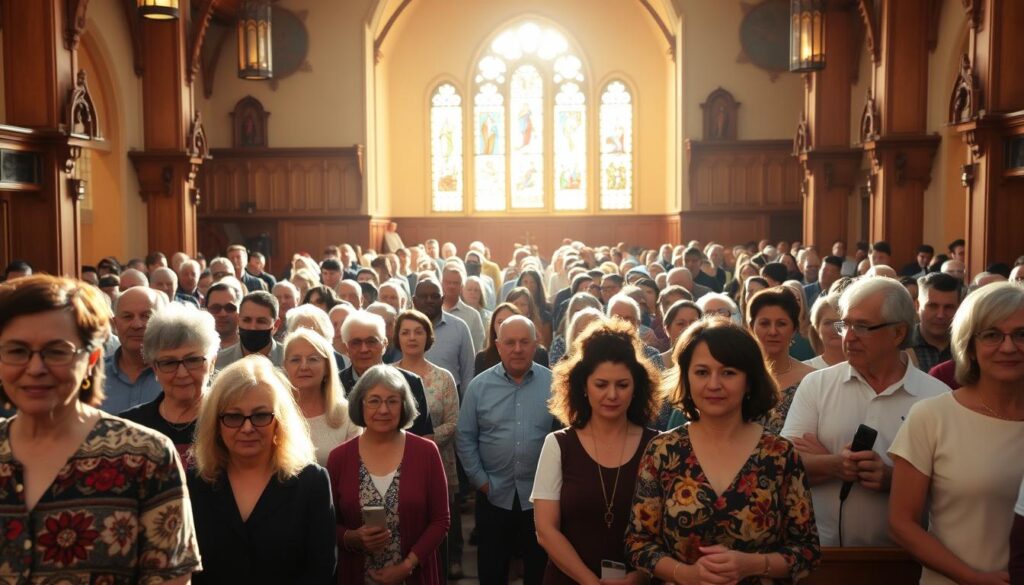
Diverse Denominational Approaches
From energetic Baptist revivals to quiet Quaker meetings, each tradition brings fresh insights to living out faith. These differences often stem from how groups balance divine action with human response in daily experience.
| Tradition | Focus | Worship Style |
|---|---|---|
| Wesleyan-Arminian | Human cooperation with grace | Expressive, music-driven |
| Reformed | God’s sovereignty | Scripture-centered preaching |
| Baptist | Believer’s baptism | Congregational participation |
| Lutheran | Sacramental faith | Liturgical with hymns |
Wesleyan churches teach that faith requires ongoing commitment. They emphasize personal holiness through acts of service. This contrasts with Reformed views where divine choice anchors spiritual security.
Baptist congregations prioritize local church autonomy. Members vote on decisions, reflecting their belief in the Holy Spirit’s guidance through every believer. Their baptism practices symbolize conscious faith choices.
Lutherans blend ancient rituals with Reformation ideas. Communion becomes a tangible encounter with the good news, not just a symbol. This bridges historical continuity with fresh understandings of mercy.
Despite differences, all share a mission to spread hope found in the New Testament. Whether through lively camp meetings or structured liturgies, each path invites people into deeper connection with sacred truths.
Lutheran Theology: Foundations and Practice
At the core of Lutheran belief lies a radical reimagining of divine mercy. This tradition reshapes how people experience grace, blending ancient rituals with revolutionary ideas about God’s love. Through sacraments and Scripture, it offers concrete ways to grasp spiritual truths that once seemed distant.
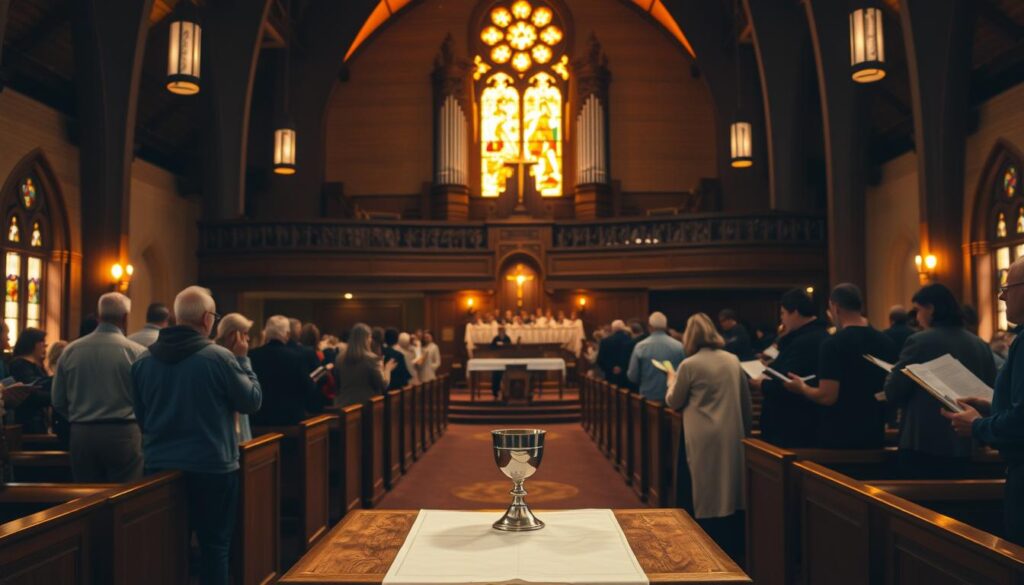
Justification by Faith Alone
Martin Luther’s breakthrough changed everything: “When God declares you forgiven, it’s done.” This doctrine teaches that salvation comes entirely through Christ’s sacrifice, not human effort. Believers find peace knowing their standing with God rests on divine promise, not personal perfection.
The good news becomes personal through baptism. Lutherans view this sacrament as God’s initiative—a powerful act where faith is born and sins washed away. It’s not just symbolism but spiritual rebirth rooted in the New Testament.
Sacramental Practices in Lutheran Worship
Sunday services pulse with ancient rhythms made fresh. Communion tables become places of mystery, where bread and wine carry Christ’s real presence. As one pastor explains:
“We don’t explain the miracle—we receive it.”
Three key practices shape Lutheran spirituality:
- Baptism: Initiates believers into God’s family
- Eucharist: Nourishes through Christ’s body and blood
- Confession: Offers audible assurance of pardon
These sacred acts anchor faith in tangible experiences. Worship blends hymns older than America with sermons making ancient texts speak to modern hearts. Through it all, the church celebrates how God comes near in ordinary things—water, words, wheat.
Reformed Theology: Predestination and Gospel
In the tapestry of Christian thought, Reformed teachings weave a narrative of divine sovereignty and human response. This tradition emphasizes God’s purposeful design in salvation, where grace transforms lives rather than merely influencing them.
Living the Gospel’s Radical Promise
Central to this perspective is the good news that Christ’s sacrifice fully addresses humanity’s brokenness. The Heidelberg Catechism—a cornerstone text—guides believers to see moral law not as burdensome rules, but as joyful response to divine grace.
Reformed churches teach that communion brings spiritual nourishment through Christ’s real presence. Unlike symbolic interpretations, this view sees sacraments as power-filled encounters with the living God. As one pastor notes:
“We taste mercy at the table, not just remember it.”
Three key ideas shape this approach:
- God initiates faith through the Holy Spirit’s work
- Good works flow from gratitude, not obligation
- Scripture remains the final authority for doctrine and life
This framework creates churches where awe fuels action. Members serve neighbors not to earn favor, but because they’ve already received unshakable love. Through sermons and soup kitchens alike, Reformed communities embody the New Testament vision of hope made tangible.
FAQ
How does Protestant theology differ from Roman Catholic teachings on salvation?
Protestant theology emphasizes justification by faith alone, meaning salvation comes through trust in Christ rather than human effort. This contrasts with Catholic teachings that blend faith with sacraments and good works as part of salvation.
Why is the Bible central to Protestant beliefs?
The Bible is viewed as the ultimate authority (sola Scriptura), guiding beliefs and practices. This focus began during the Reformation, rejecting extra-biblical traditions in favor of Scripture’s direct teachings.
What role did Martin Luther play in shaping Protestant thought?
Luther’s 95 Theses challenged corrupt practices like indulgences, sparking the Reformation. He stressed grace, faith, and Scripture, laying groundwork for doctrines like priesthood of all believers.
How does Reformed Theology approach predestination?
Reformed teachings, influenced by John Calvin, highlight God’s sovereignty in salvation. Predestination reflects His choice to save some, emphasizing divine grace over human merit.
Do all Protestant denominations agree on sacraments like baptism?
Views vary. Lutherans see baptism as a means of grace, while some Reformed groups view it as a symbolic covenant. Baptists often emphasize believer’s baptism by immersion.
What’s the Lutheran view of "faith and works"?
Lutherans teach that good works flow naturally from genuine faith but don’t earn salvation. Faith in Christ’s sacrifice is the sole basis for forgiveness and righteousness.
How did John Calvin influence modern Protestant churches?
Calvin’s teachings on God’s sovereignty, predestination, and structured worship shaped Reformed, Presbyterian, and other traditions. His Institutes of the Christian Religion remains a key theological work.