Christianity’s two largest branches share a common foundation but diverge in meaningful ways. For over 500 years, theological debates about spiritual authority and how people connect with God have shaped these traditions. While both value Scripture, their approaches to interpreting it reveal deep contrasts.
The Reformation sparked lasting changes in how communities practice faith. Today, the catholic church maintains structured rituals and sacraments as central to worship. Other Christian groups prioritize personal faith experiences and direct engagement with biblical teachings.
Modern believers often wonder why these differences still matter. The answer lies in how each tradition answers life’s biggest questions: What defines salvation? Who guides spiritual truth? These ideas influence everything from daily prayers to major holidays.
Relationships between catholics protestants have warmed in recent decades. Yet core distinctions in beliefs about grace, leadership, and tradition remain vital. Understanding these nuances fosters respect and clarifies why diverse practices coexist within Christianity.
Key Takeaways
- Spiritual authority differs significantly, with one group emphasizing church hierarchy and the other prioritizing individual interpretation
- Views on salvation range from faith-based acceptance to a blend of faith and sacramental practices
- Seven sacraments shape Catholic worship, while other traditions focus on two primary ordinances
- Modern interactions show increased cooperation despite unresolved theological debates
- Scripture and tradition hold varying levels of importance in shaping doctrines
Historical Roots and the Reformation Impact
A monk’s bold challenge in 1517 ignited a transformation across Europe’s spiritual landscape. Martin Luther’s 95 Theses questioned church practices like selling forgiveness for sins through indulgences. “Why does the pope’s wealth grow while faithful believers struggle?” he famously asked. This moment exposed deep tensions between spiritual ideals and institutional power.
Origins of the Protestant Movement
Luther initially sought to reform the Roman Catholic Church, not create new churches. His teachings emphasized grace through faith alone, clashing with traditions like paid indulgences funding St. Peter’s Basilica. Other reformers like Calvin expanded these ideas, creating distinct approaches to theology and worship.
Political leaders saw opportunities in challenging Rome’s authority. By 1529, protesting princes gave the movement its name – though divisions grew as fast as unity. The church faced its greatest crisis since the East-West Schism.
Evolution of Catholic Traditions
The Council of Trent (1545-63) launched the Counter-Reformation, reaffirming sacraments and apostolic tradition. Clergy training improved, and mystical experiences gained new emphasis. This period birthed enduring institutions like the Jesuit order.
Both traditions deepened their teaching on salvation during this era. While Protestants and Catholics shared Scripture, their interpretations of grace and authority kept them apart. Centuries later, dialogue continues – but core differences remain.
Scripture and Authority: Contrasting Perspectives
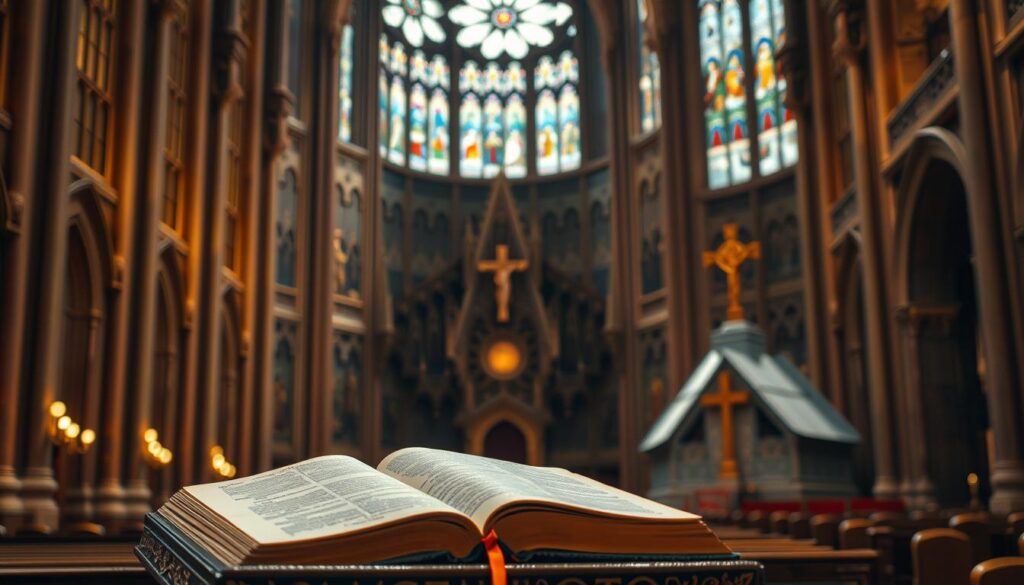
Christian communities worldwide have wrestled with a crucial question: where does ultimate spiritual truth reside? This debate shapes how believers approach sacred texts and community guidance.
Interpretation of the Bible
Many Christian groups champion personal Bible study. They argue Scripture alone (sola scriptura) provides all needed for salvation. As one reformer stated, “God’s word stands above human institutions.” This view empowers individuals but risks fragmented understandings.
The Roman Catholic approach differs. Their Catechism teaches: “Sacred Tradition and Scripture make up a single sacred deposit.” Church leaders preserve this through official teaching, believing the Holy Spirit guides their interpretations.
| Aspect | Protestant View | Catholic View |
|---|---|---|
| Ultimate Authority | Bible alone | Bible + Tradition |
| Interpretation | Individual + Community | Magisterium (Pope/Bishops) |
| Role of Church | Guides understanding | Defines doctrine |
| Source of Doctrine | Scripture first | Equal partnership |
Role of Tradition in Doctrinal Development
Catholics believe traditions dating to the apostles carry equal weight with biblical texts. Practices like Lent or Marian devotion grew from this perspective. The church maintains these help apply eternal truths to changing times.
Other Christian traditions honor history but prioritize Scripture. They might sing ancient hymns while rejecting later teachings not explicitly biblical. This tension impacts debates about justification and sacraments.
Both Scripture and Tradition must be accepted with equal devotion.”
These differences affect how communities handle modern issues. While disagreements persist, many find value in understanding both approaches to divine authority.
Sacramental Life and Worship Practices
Sacred rituals form the heartbeat of Christian worship. These practices shape how communities experience faith and connect with the divine. While shared roots exist, approaches to sacraments reveal profound differences in theology and daily spiritual life.
Comparing the Eucharist and Lord’s Supper
Catholics view the Eucharist as Christ’s real presence. The bread and wine transform into his body and blood through transubstantiation. This belief makes every Mass a participation in Jesus’ sacrifice. As the Roman Catholic Church teaches, “The Eucharist is the source and summit of Christian life.”
Other Christian groups see communion differently. The Lord’s Supper often serves as a symbolic remembrance. Elements remain bread and wine, pointing to Christ’s past work and future return. Open tables frequently welcome all baptized believers, contrasting with Catholic restrictions.
Variations in Sacraments and Rituals
Seven sacraments guide Catholic spiritual growth from birth to death. Baptism, confirmation, and marriage mark life’s milestones. Each ritual channels grace through physical signs like water or oil.
Most Protestant churches recognize two ordinances. Baptism and communion focus on personal faith rather than sacramental power. These elements become acts of obedience, not mystical transformations.
| Practice | Catholic Approach | Protestant Approach |
|---|---|---|
| Sacraments | 7 life-cycle rituals | 2 symbolic acts |
| Communion | Transubstantiation | Memorial view |
| Participation | Restricted to members | Open to all believers |
Importance of Holy Orders and Clerical Roles
Holy orders create a distinct priestly class in Catholicism. Ordained clergy alone can perform sacraments like the Eucharist. This teaching maintains unbroken succession from the apostles.
Many Christian groups see leadership differently. Pastors serve functional roles rather than holding sacramental power. This reflects the “priesthood of all believers” concept, emphasizing equal access to God.
Exploring Protestant Catholicism: Core Beliefs and Doctrines
At the heart of Christian theology lie fundamental questions about divine connection. How do people find forgiveness? What role do human actions play in spiritual growth? These inquiries shape distinct approaches to living out faith.
Understanding Justification and Grace
The Roman Catholic Church teaches that grace flows through sacraments and good works. Catholics believe ongoing transformation helps believers grow in holiness. This contrasts with faith alone views, where trust in Christ’s sacrifice brings instant justification.
Many Christian groups emphasize God’s unearned favor. They see grace as a free gift rather than something maintained through rituals. Both traditions agree on Christ’s centrality but differ in how salvation becomes personal.
Authority, Penance, and Spiritual Renewal
Confession practices highlight another contrast. The sacraments of reconciliation involve priestly mediation for addressing sins. Other traditions encourage direct repentance through prayer, reflecting different views on spiritual authority.
These approaches shape daily spiritual life. Whether through structured practices or personal reflection, both paths aim to heal broken relationships with the divine. Modern dialogues continue exploring these rich theological landscapes.
FAQ
How do views on salvation differ between these faith traditions?
Roman Catholics emphasize faith and works as part of salvation, guided by sacraments like penance. Many Protestant groups teach justification by faith alone, viewing grace as God’s unearned gift through Christ’s sacrifice.
Why is the Bible interpreted differently across these traditions?
The Roman Catholic Church teaches that Scripture must be understood through sacred tradition and the Magisterium’s authority. Protestants typically prioritize sola Scriptura (“Scripture alone”), encouraging personal interpretation within communities.
What distinguishes the Eucharist from the Lord’s Supper?
Catholics believe in transubstantiation—the bread and wine become Christ’s actual body and blood. Most Protestants view communion as symbolic or spiritual, commemorating Jesus’ sacrifice without literal transformation.
How do clerical roles vary between these groups?
The Roman Catholic Church reserves sacramental duties like confession and Eucharist to ordained priests. Protestant clergy often focus on preaching and pastoral care, with many denominations allowing marriage and broader lay participation.
Why do sacramental practices differ in number and meaning?
Catholics recognize seven sacraments, including confirmation and holy orders, as channels of grace. Protestants generally observe two (baptism and communion), viewing them as acts of obedience rather than means of salvation.
What role does Mary play in these traditions?
Catholics honor Mary as the “Mother of God” and seek her intercession, while Protestants typically avoid veneration, focusing solely on Christ’s role in redemption.
How did the Reformation reshape views on authority?
Reformers rejected papal supremacy, arguing that final authority rests in Scripture. The Council of Trent later reaffirmed Catholic teachings on tradition and the Pope’s role as Christ’s earthly representative.
Are confession practices the same in both traditions?
Catholics confess sins to a priest during penance, believing it reconciles them with God. Protestants usually confess directly to God, though some groups practice communal or pastoral confession for accountability.