Welcome to an exploration of spiritual traditions that have shaped communities for over 500 years. At its heart, this practice centers on a direct relationship with the divine—a revolutionary idea when it emerged during the Reformation era. Believers emphasize personal connection over rituals, guided by scripture as their ultimate authority.
These traditions grew from a desire to simplify spiritual life and return to biblical teachings. Core principles like grace through faith and the value of every believer’s role created a foundation still relevant today. Over 800 million individuals worldwide now identify with these practices, adapting them across cultures while preserving core truths.
What makes this approach unique? It prioritizes accessibility. Services often focus on teaching, prayer, and communal singing rather than formal ceremonies. This flexibility allows local congregations to shape experiences that resonate with their members’ needs and cultural contexts.
Key Takeaways
- Rooted in 16th-century reforms emphasizing biblical authority
- Focuses on personal spiritual connection over intermediaries
- Celebrates the active role of all members in religious life
- Combines traditional values with modern cultural adaptations
- Engages over 800 million followers globally
Introduction to Protestant Worship
At the core of Christian practices lies a revolutionary idea: every person can approach the divine without intermediaries. This belief reshaped spiritual life during the Reformation, creating a direct relationship between individuals and their faith. Unlike older traditions that relied on institutional structures, this approach values personal conviction and scriptural guidance above formal ceremonies.
Central to this tradition is the principle of sola fide—faith alone as the path to grace. It rejects the notion that social status or religious titles determine one’s spiritual worth. A farmer and a scholar hold equal standing in prayer, reflecting the belief that divine connection belongs to all.
Gatherings in this tradition often blend simplicity with purpose. Services prioritize teaching, group singing, and shared reflection rather than elaborate rituals. Members actively contribute through readings, music, or leadership roles—a stark contrast to observer-focused ceremonies in other Christian branches.
While practices vary across denominations, common threads bind them. Biblical authority remains unchallenged, and communal activities strengthen both individual faith and collective bonds. From quiet prayer circles to vibrant hymn sessions, these expressions adapt to local cultures while preserving their theological roots.
Historical Origins of Protestant Worship
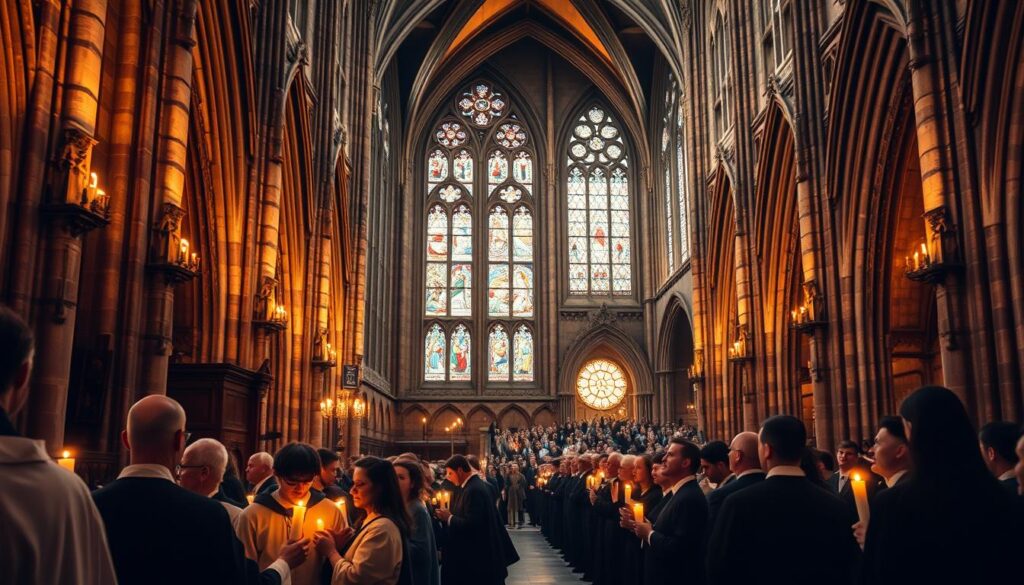
The roots of modern Christian practices stretch back to bold reformers who reshaped spiritual life. Long before the 16th century, groups like the Hussites in Bohemia and Waldensians in France questioned rigid church structures. They championed scripture in everyday language—a radical idea at the time.
Proto-Protestant Movements
These early reformers laid groundwork by challenging papal authority. The Hussites, inspired by Jan Hus, demanded communion for all members—not just clergy. Similarly, Waldensians emphasized personal Bible study over institutional rituals. Their efforts kept reform ideas alive for generations.
The Reformation and Its Impact
Everything changed in 1517 when Martin Luther nailed his critiques to a church door in Wittenberg. His protest against indulgences ignited a continent-wide movement. By 1530, new denominations emerged from Sweden to Switzerland.
England’s break with Rome under Henry VIII added Anglicanism to this growing family of churches. Each branch developed unique traditions while sharing core Reformation principles. This diversity became a hallmark of Protestantism’s global spread.
Today, these historical shifts still shape how millions connect with faith. From Luther’s bold stand to grassroots Bible studies, the Reformation reshaped spiritual landscapes forever.
Key Figures Shaping Protestant Worship
Two revolutionary thinkers transformed spiritual practices through bold ideas that still echo today. Their work created distinct paths within the broader Christian movement, blending theological depth with practical reforms.
Martin Luther’s Legacy and the Ninety-Five Theses
Martin Luther, a fiery German monk, sparked change in 1517 by challenging church practices. He preferred “evangelical” over “Lutheran,” tying his work to the Greek euangelion (“good news”). His German Bible translation let ordinary people engage with scripture—a radical shift in religious access.
Luther’s focus on faith alone reshaped spiritual life. “Salvation comes through trust in God’s grace,” he argued, “not rituals or titles.” This idea turned worship into a personal journey rather than a transactional system.
“The true treasure of the church is the gospel of the glory and grace of God.”
John Calvin and Reformed Traditions
John Calvin built systematic frameworks that spread across Europe. His Reformed churches emphasized God’s sovereignty and simple worship styles. Followers in Scotland, Hungary, and beyond adapted his teachings to local cultures while keeping core principles intact.
| Reformer | Key Contribution | Regions Influenced |
|---|---|---|
| Martin Luther | Vernacular Bible translation | Germany, Scandinavia |
| John Calvin | Systematic theology | Switzerland, Netherlands, Scotland |
Calvin’s colleagues like Huldrych Zwingli added new dimensions. Their collective work created a tradition of adaptable yet rooted practices. Today, over 80 million belong to churches shaped by these reformers’ visions.
Understanding Protestant Traditions and Beliefs
Five Latin phrases from the 1500s still shape millions of spiritual lives today. These core principles, called the Five Solas, form the backbone of Reformation theology. They answer fundamental questions about spiritual authority and divine connection in simple yet profound ways.
The Five Solas Explained
Sola Scriptura (“Scripture Alone”) places the Bible above human-made traditions. It means every teaching and practice must align with biblical truth. This principle empowered ordinary people to engage directly with sacred texts.
Sola Fide (“Faith Alone”) revolutionized ideas about salvation. It teaches that trust in Christ—not rituals or good deeds—grants eternal life. As one reformer wrote: We are saved by faith, not because of faith.
Three other solas complete the framework. Solus Christus declares Jesus as humanity’s only mediator. Sola Gratia emphasizes grace as God’s free gift, while Soli Deo Gloria redirects all honor to Him alone.
Together, these ideas create a cohesive system. They simplify spiritual life by focusing on divine gifts rather than human effort. From Sunday sermons to personal prayers, the Solas guide how believers live out their faith daily.
The Role of the Bible in Shaping Worship
A leather-bound book became the heartbeat of spiritual renewal during the Reformation. Martin Luther’s German Bible translation shattered barriers, letting farmers and scholars alike engage with God’s word. This shift turned churches into classrooms where scripture—not tradition—guided every decision.
Early reformers encouraged believers to question texts while honoring their divine origin. “The Bible is alive,” Luther declared, “it speaks to me every morning.” Congregations began examining passages together, sparking discussions that shaped both personal faith and community practices.
John Calvin’s 1536 arrival in Geneva brought radical changes. Stained-glass saints gave way to painted Bible verses on whitewashed walls. This visual revolution made scripture the focal point—a practice still seen in many churches today. Sermons became deep dives into biblical context rather than ceremonial recitations.
Modern services reflect this legacy. Over 75% of hymns in mainline churches draw lyrics directly from scripture. Pastors often build sermon series around single books like Psalms or Romans. As one worship leader notes: We don’t follow rituals—we follow the text.
From Sunday school curricula to baptismal vows, the Bible remains the blueprint. Its authority shapes everything from seating arrangements (facing pulpits) to service lengths (prioritizing teaching). This 500-year-old tradition proves truth can outlive trends when rooted in timeless words.
Defining “Protestant Worship” Practices
Across diverse Christian traditions, certain practices unite believers in shared devotion. These spiritual expressions focus on two central acts: baptism and communion. Many groups call them ordinances—symbolic actions rooted in Jesus’ teachings rather than mystical rituals.
Some denominations view these as sacraments, while others stress their role as obedient responses to scripture. A Lutheran pastor might sprinkle water during infant baptism, while a Baptist church immerses adults. Both follow biblical principles but interpret them differently.
Unlike traditions that tie rituals to salvation, these practices celebrate existing faith. As reformers argued: We are saved by faith, not because of faith.
This distinction shapes how congregations approach spiritual disciplines—as joyful declarations, not requirements.
Three characteristics define these traditions:
- Adaptability: African drumming or Appalachian hymns both honor scripture
- Participation: Everyone joins prayers, songs, or readings
- Cultural resonance: Services reflect local values without compromising doctrine
From Pentecostal gatherings to quiet Quaker meetings, the core remains unchanged. Whether sharing grape juice or wine, reciting creeds or spontaneous prayers, these practices keep ancient truths alive in modern hearts.
Liturgical Versus Non-Liturgical Worship Styles
Sunday mornings reveal a fascinating spectrum of spiritual expressions among Christian communities. Some congregations follow centuries-old patterns, while others embrace spontaneous forms of devotion. This difference often comes down to liturgical (high church) or non-liturgical (low church) approaches.
High Church Traditions
Liturgical churches value structured ceremonies rooted in history. Anglican, Episcopal, and Lutheran churches typically use ordained clergy robes, recite set prayers, and follow annual liturgical calendars. These denominations treat communion as a sacred ritual, often accompanied by symbolic elements like incense or processional crosses.
Low Church Approaches
Baptist and Pentecostal groups exemplify low church simplicity. Services might feature contemporary music, spontaneous prayers, and flexible sermon topics. One pastor notes: Our focus is heart preparation, not program perfection.
Communion here often feels more like a memorial meal than a formal sacrament.
| Feature | High Church | Low Church |
|---|---|---|
| Structure | Fixed liturgy | Flexible format |
| Clergy Attire | Robes/stoles | Casual dress |
| Sacraments | Formal ceremonies | Simple observance |
| Calendar | Advent/Lent cycles | Topical series |
Both styles help believers connect with divine truth. Whether through ancient rituals or modern spontaneity, these churches show how varied paths can lead to shared spiritual goals.
Rituals of Baptism, Communion, and Dedication
Water and bread connect believers across centuries of tradition. Baptism practices vary among Protestant denominations, using immersion, pouring, or sprinkling. Groups like Lutherans practice infant baptism, viewing it as a covenant with God. Others, like Baptists, wait until individuals can profess faith personally.
The Lord’s Supper, also known as communion, unites congregations through shared remembrance. This sacred meal, also known as the Eucharist in many traditions, involves bread and wine symbolizing Christ’s body and blood. It serves as both a memorial and a celebration of unity.
These rituals adapt to cultural contexts while keeping biblical roots. Whether through infant dedication or believer’s baptism, each practice invites active participation. They remind communities of their shared journey and personal commitments to faith.
FAQ
How did the Reformation change Christian practices?
The Reformation shifted focus to Scripture as the ultimate authority, simplified rituals, and emphasized personal faith. Leaders like Martin Luther and John Calvin promoted congregational singing and preaching in local languages.
What are the core beliefs behind the Five Solas?
The Five Solas—sola scriptura (Scripture alone), sola fide (faith alone), sola gratia (grace alone), solus Christus (Christ alone), and soli Deo gloria (glory to God alone)—highlight reliance on God’s grace through Christ, not human effort.
Why is baptism significant in these traditions?
Baptism symbolizes spiritual rebirth and entry into the church community. While some groups practice infant baptism, others reserve it for believers old enough to profess faith personally.
How do high church and low church styles differ?
High church services, like Lutheran or Anglican, follow structured liturgies with sacraments. Low church gatherings, common in Baptist or Pentecostal circles, prioritize informal preaching, spontaneous prayer, and congregational participation.
What role does communion play in worship?
Communion, or the Lord’s Supper, commemorates Jesus’ sacrifice. Some view it as symbolic, while others believe in Christ’s spiritual presence. It unites believers in remembrance of His grace.
How does Scripture shape weekly services?
Sermons often explain biblical passages, guiding daily life. Readings from Old and New Testaments, hymns based on Psalms, and communal prayers root practices in God’s Word.
Are infant dedications common in all denominations?
Churches that reject infant baptism, like many evangelical groups, may hold dedication ceremonies. Parents commit to raising children in faith, asking the congregation for support.