Christianity’s landscape holds a vibrant tapestry of beliefs, and nowhere is this more visible than in its Protestant traditions. Born from the 16th-century Reformation, these faith groups share core principles like scripture-based teaching—yet their interpretations vary widely. This freedom to explore biblical meaning independently has fueled centuries of spiritual innovation.
Unlike traditions with centralized leadership, many Protestant churches let individuals and communities shape their practices. This approach created hundreds of denominations, from Lutherans to Baptists, each with unique customs. Despite differences, most agree on belonging to a universal spiritual family—the “Invisible Church“—unseen by humans but known to God.
Today’s religious scene also features rising numbers of non-denominational churches. These groups often blend modern worship styles with classic Reformation values, appealing to believers seeking simplicity. Their growth reflects how Protestantism continues adapting to new cultures and generations.
Key Takeaways
- Protestant Christianity includes hundreds of groups with distinct beliefs, all tracing back to the Reformation
- Personal scripture interpretation fuels ongoing diversity in teachings and practices
- Most denominations view themselves as part of a universal spiritual community beyond earthly labels
- Non-denominational churches are growing rapidly, often focusing on core principles over traditional structures
- Cultural influences and historical events continue shaping these faith traditions worldwide
Overview of Protestantism: A Historical Perspective
The 16th century sparked a religious revolution that reshaped Europe’s spiritual history. At its heart stood figures like Martin Luther, a monk who questioned the Roman Catholic Church’s teachings on forgiveness and leadership. His bold questions lit a fuse that would forever change how people practiced faith.
Roots of the Reformation
When Martin Luther nailed his 95 Theses to a church door in 1517, he didn’t plan to start a new movement. He simply wanted honest talks about practices like selling forgiveness certificates. But the newly invented printing press spread his ideas faster than anyone expected.
This technology let ordinary people read the Bible in their own languages for the first time. No longer dependent on priests for interpretation, many began embracing the Five Solas—core beliefs like “Scripture Alone” as God’s true authority. These ideas directly challenged the Roman Catholic doctrine of the time.
Emergence of Diverse Denominations
As reformers like John Calvin and Ulrich Zwingli joined the conversation, regional differences emerged. German states adopted Lutheran teachings, while Switzerland favored Reformed ideas. England’s break from papal rule created yet another path—the Anglican tradition.
Local rulers often supported these changes for both spiritual and political reasons. By rejecting Rome’s control, they gained power over religious and civic life. This mix of faith and governance helped new Christian communities take root across the continent.
Defining Protestantism Branches
At the heart of Christian diversity lies a network of faith communities shaped by shared convictions and individual exploration. Nine major traditions—from Anabaptists to Reformed groups—each maintain distinct doctrinal frameworks while upholding Reformation essentials like scripture’s supreme authority.
Core Doctrinal Beliefs
All these traditions agree salvation comes through faith in Christ alone, not human effort. “By grace you’ve been saved,” wrote Paul—a verse that anchors their theology. Yet interpretations vary widely:
- Lutherans emphasize God’s unmerited favor
- Methodists focus on personal holiness
- Baptists prioritize believer’s baptism
Questions about communion’s meaning or church leadership models further distinguish denominations. These differences show how one belief system can nurture multiple expressions.
Private Interpretation and Faith
The Reformation’s “priesthood of all believers” concept empowers individuals to study scripture independently. This freedom lets local congregations adapt teachings to their context without hierarchical approval. A Quaker meeting might emphasize silent reflection, while Pentecostals celebrate spirited worship.
Despite variations, all groups unite around scripture’s sufficiency and Christ-centered salvation. As Martin Luther declared: “The Bible is the cradle wherein Christ lies.” This shared foundation keeps diverse communities connected across centuries and continents.
Anglican Communion: Tradition and Transformation
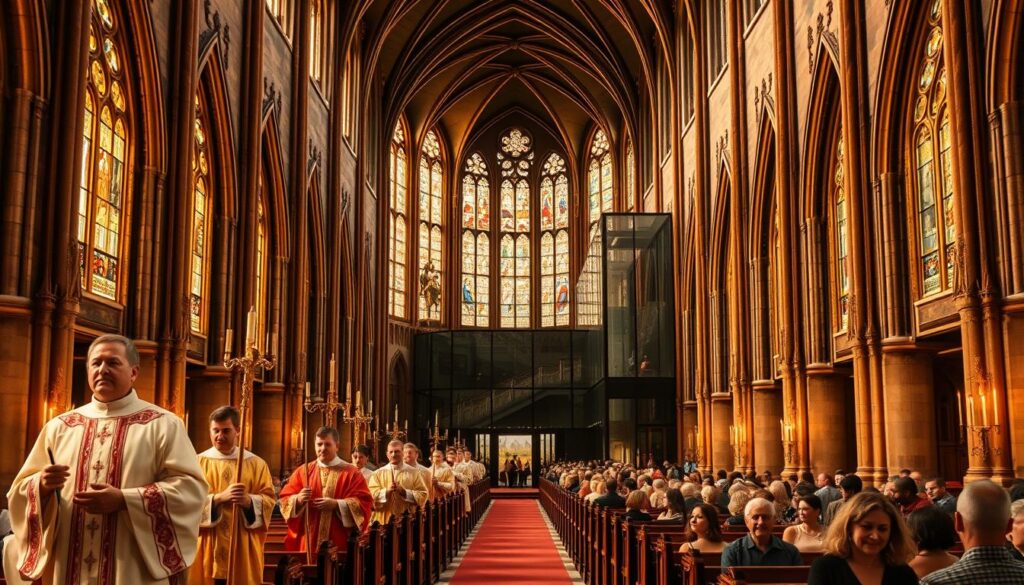
Imagine a spiritual bridge connecting centuries-old rituals with modern cultural shifts. This balance defines the Anglican Communion, a global family of churches rooted in the Church of England’s legacy. With 70 million members worldwide, it blends ancient traditions with local adaptations—a living example of faith evolving across borders.
Historical Formation and the Church of England
King Henry VIII’s 1534 split from Rome wasn’t about theology—it was personal. When Pope Clement VII refused his divorce, Henry declared himself head of England’s church. This political move birthed the Church of England, retaining Catholic-style bishops while embracing Protestant ideas like scripture’s supreme authority.
Archbishop Thomas Cranmer shaped Anglican identity through the Book of Common Prayer. His elegant services created a “middle way”—respecting tradition yet prioritizing accessible worship. Today, this approach still guides Anglican practices from Nairobi to New York.
The Role of the Episcopal Churches
In America, Anglicans became Episcopalians after independence. They kept core elements like bishops overseeing dioceses but adapted governance to democratic values. Similar adaptations occurred globally—African churches often emphasize biblical literalism, while European provinces lean into social justice.
The Archbishop of Canterbury remains a unifying figure, though his role is symbolic. “We walk together even when we disagree,” explains Justin Welby, current holder of the title. This flexibility helps the Anglican Communion navigate modern debates on gender roles and ethics while maintaining shared heritage.
Lutheran Churches: Faith Through the Lens of Martin Luther
When a German monk challenged religious norms in 1517, he ignited a movement that still shapes millions of lives today. Lutheran churches carry forward Martin Luther’s revolutionary ideas about faith and scripture, creating one of Christianity’s most enduring traditions.
The Augsburg Confession and Key Doctrines
In 1530, Lutheran leaders presented their defining document to the Holy Roman Emperor. The Augsburg Confession declared: “Our churches teach that people cannot be justified before God by their own strength.” This bold statement cemented God’s grace as Christianity’s cornerstone for 80 million Lutherans worldwide.
Three pillars support Lutheran theology:
- Scripture alone as ultimate authority
- Salvation through faith, not deeds
- Christ’s real presence in communion
The Book of Concord collects these teachings, guiding congregations from Minnesota to Madagascar. American Lutherans show particular diversity:
| Denomination | Members | Key Position |
|---|---|---|
| Evangelical Lutheran Church in America | 3.3 million | Ordains women & LGBTQ+ clergy |
| Lutheran Church-Missouri Synod | 1.8 million | Traditional biblical interpretation |
| Wisconsin Evangelical Lutheran Synod | 350,000 | Strict communion practices |
While governance styles vary, all Lutheran churches agree on Luther’s core insight: “The heart of Christianity is Christ’s promise of forgiveness.” This shared conviction unites them across cultures and centuries.
Baptist Churches: Believer’s Baptism and Independent Congregations
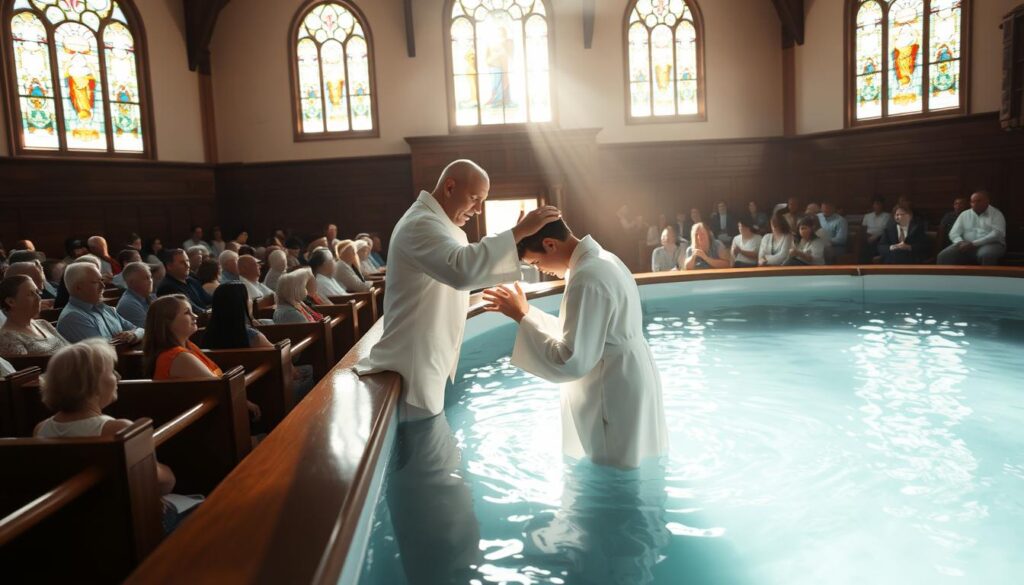
Picture a river where adults step into swirling waters to publicly declare their faith. This vivid ritual lies at the heart of Baptist churches, one of Christianity’s most influential movements. Born in 1609 Amsterdam through English exile John Smyth, these communities transformed baptism from infant sprinkling to conscious adult commitment.
Emphasis on Full Immersion Baptism
Baptists see water immersion as more than tradition—it’s a spiritual rebirth marker. “We bury the old self and rise to new life,” explains Pastor Michael Chen from Texas. Unlike denominations baptizing babies, they wait until individuals can personally affirm belief, usually during teenage years or adulthood.
Variations Within Baptist Traditions
While united on baptism, Baptist congregations display striking diversity. The Southern Baptist Convention, America’s largest network with 14 million members, partners with churches on missions while respecting their independence. Other groups like American Baptists often adopt more progressive stances.
Key differences emerge in theology and practice:
- Some embrace Calvinist predestination; others champion free will
- Urban churches may use contemporary music; rural ones prefer hymns
- A few ordain women pastors; many maintain male-only leadership
Despite variations, all share core commitments: scripture’s authority, local church autonomy, and baptism as a believer’s voluntary act. As Smyth declared: “Faith alone makes the Christian—not rituals or bishops.” This principle continues shaping 40 million Baptists worldwide.
Methodist Movements: From John Wesley to Modern Practices
Picture Oxford University in the 1720s, where two brothers met with friends to study scripture and serve the poor. John and Charles Wesley’s Holy Club became the seedbed for a movement that would reshape spiritual life across continents. Their methodical prayers and community service earned them a nickname that stuck: “Methodists.”
The Origins of the Holy Club
John Wesley’s life changed forever on May 24, 1738. At a London prayer meeting, he described feeling his “heart strangely warmed”—a moment that ignited his passion for personal faith. This experience fueled his teaching that everyone could encounter God directly, not just through church rituals.
The Wesleys organized small groups called “class meetings,” where members shared spiritual struggles. These gatherings became laboratories for their tradition of practical Christianity—combining Bible study with social action.
Evolution of Methodist Connexionalism
Wesley designed a flexible system to manage growing congregations. His connexional polity linked local churches into regional circuits overseen by traveling preachers. Imagine horseback ministers rotating between rural chapels and urban missions!
This structure proved perfect for America’s frontier era. Circuit riders like Francis Asbury spread Methodist theology through camp meetings, often attracting thousands. Today, groups like the United Methodist Church maintain this network while addressing modern issues like racial justice and climate change.
Charles Wesley’s hymns still echo in sanctuaries worldwide, reminding believers of his brother’s vision: “Do all the good you can, by all the means you can.” From Oxford study groups to global humanitarian efforts, this movement keeps evolving while staying rooted in its revolutionary past.
Congregational Churches: Autonomy and Community Worship
What happens when a church lets every member help steer its course? Congregational churches answer this through radical self-governance. These communities make decisions collectively—from hiring pastors to budgeting—without bishops or regional oversight.
Historical Pilgrim Influences
The roots trace back to England’s 16th-century Separatists, who rejected Anglican hierarchy. Fleeing persecution, they sailed on the Mayflower in 1620. Their Plymouth Colony became a laboratory for self-governance, blending town meetings with worship decisions.
Early Congregationalists like Robert Browne argued that “church covenants” between believers mattered more than institutional approval. This ideal flourished in New England’s soil. The 1648 Cambridge Platform formalized their approach: each congregation as autonomous, yet voluntarily connected to others.
Today, this legacy lives in white-steepled meetinghouses where members vote on spiritual matters. “We’re keepers of a 400-year-old experiment,” says Rev. Sarah Ellis from Massachusetts. While styles vary, all honor that original vision—faith shaped by community worship, not distant authorities.
FAQ
What started the Protestant movement?
The movement began in the 16th century when reformers like Martin Luther challenged Roman Catholic teachings. Luther’s 95 Theses in 1517 sparked debates over authority, grace, and scripture, leading to new Christian traditions.
How does the Anglican Church differ from other groups?
The Church of England, part of the Anglican Communion, blends Catholic rituals with Reformed theology. Episcopal churches, like the U.S.-based Episcopal Church, emphasize liturgy while allowing flexibility in doctrine.
Why do Lutheran churches focus on the Augsburg Confession?
Written in 1530, the Augsburg Confession outlines key Lutheran beliefs, such as salvation by faith alone. It remains a unifying document for groups like the Evangelical Lutheran Church in America.
What makes Baptist churches unique?
Baptist traditions, including the Southern Baptist Convention, stress believer’s baptism by full immersion. They also prioritize congregational autonomy, letting individual churches govern themselves.
How did Methodism evolve over time?
John Wesley’s Holy Club laid the groundwork for Methodism, emphasizing personal holiness. Today, groups like the United Methodist Church balance Wesleyan teachings with modern social engagement.
What defines Congregational churches?
Congregationalists, influenced by Pilgrim settlers, emphasize local church independence. The United Church of Christ, for example, allows congregations to adapt worship styles and policies.
Are all Protestant groups similar in structure?
No—polity varies widely. For instance, the Presbyterian Church (USA) uses elder-led governance, while the Anglican Communion relies on bishops. Many Baptist churches reject hierarchical structures entirely.
Do Protestant denominations share core beliefs?
Most affirm salvation through faith, scripture’s authority, and Jesus’ centrality. However, views on sacraments, the Holy Spirit, and church leadership often differ sharply between traditions.