Let’s explore one of Christianity’s most influential branches. Born from the 16th-century Reformation, Protestant faith reshaped religious history by challenging established church practices. At its core, it emphasizes direct connection to scripture and personal faith over traditional hierarchies.
Reformers like Martin Luther sparked this movement by questioning doctrines they saw as disconnected from biblical teachings. Their ideas spread rapidly, creating new ways to practice religion. Today, Protestant churches range from Baptist to Methodist, each with unique traditions united by shared principles.
What makes this faith distinct? Three pillars stand out: belief in salvation through faith alone, the authority of the Bible, and the priesthood of all believers. These ideas continue to shape communities worldwide, influencing culture and personal lives in visible ways.
From small-town congregations to global denominations, Protestant religion adapts while staying rooted in its history. Whether through vibrant worship styles or community outreach, its impact remains fresh and relevant in modern times.
Key Takeaways
- Originated during the 16th-century Reformation as a break from traditional church structures
- Core beliefs include salvation through faith and the Bible as ultimate religious authority
- Encompasses diverse denominations like Lutherans, Baptists, and Pentecostals
- Affects global culture through education, social movements, and community-building
- Modern practices balance historical roots with contemporary approaches to worship
Understanding the Roots of Protestantism
The term “Protestant” itself echoes the defiance that shaped its 16th-century origins. In 1529, German rulers and city leaders took a bold stand against the Diet of Speyer’s attempt to crush Martin Luther’s reforms. Their protest wasn’t just political—it defended people’s right to interpret faith freely.
Historical Emergence and the Reformation
This movement began as a ripple that became a tidal wave. When princes challenged the Roman Catholic Church’s authority, they ignited debates about scripture’s role in daily life. Luther’s famous 95 Theses in 1517 questioned practices like indulgences, arguing salvation came through faith—not payments.
Over years, these ideas spread like wildfire. Printing presses carried Reformation texts across Europe. By the late 1500s, what started as local disputes reshaped entire nations’ religious identities.
Key Figures and Influential Leaders
Martin Luther wasn’t alone in this transformation. Figures like Huldrych Zwingli and John Calvin expanded Reformation ideas, creating new church models. “The true treasure of the church is the gospel,” Luther declared, emphasizing direct access to scripture over traditional rituals.
These leaders faced immense risks. Excommunication, political pressure, and even threats of violence couldn’t stop their mission. Their courage laid groundwork for diverse denominations that still thrive today.
The English and Cultural Context of Protestantism
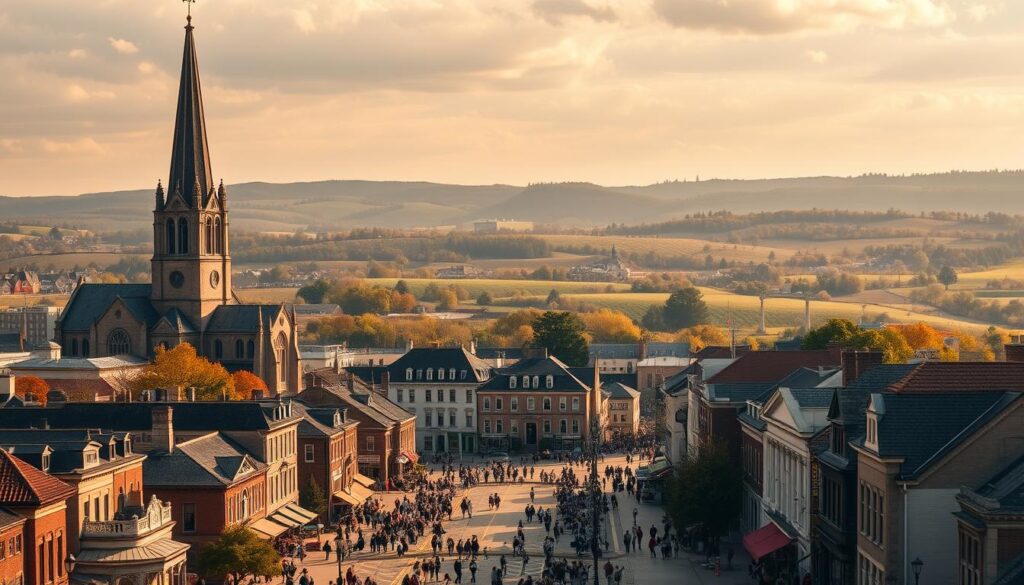
America’s story can’t be told without its religious roots. Since colonial times, churches have shaped community values and civic life. Every U.S. president’s affiliation with Christian traditions highlights this enduring connection between religion and national identity.
Faith’s Living Legacy
Protestant churches built more than Sunday schools – they forged America’s work ethic and volunteer spirit. Early congregations established colleges like Harvard and Yale, blending spiritual growth with education. This practical faith approach still influences how communities tackle social challenges today.
Recent years show surprising shifts. Nearly 30% of U.S. adults now claim no religious affiliation, surpassing Catholic and mainline Protestant groups. Yet spiritual values continue shaping government policies, from historic abolition efforts to modern disaster relief programs.
- Distinct denominational cultures thrive across states – Baptists in Texas, Lutherans in Minnesota
- 17% of Venezuela’s population now identifies with Protestant churches
- Urban ministries adapt traditions to address homelessness and addiction
This evolving landscape proves religious institutions remain vital. They preserve heritage while reimagining outreach for new generations seeking purpose.
Protestantism in a Sentence: Core Explanation
What defines this branch of Christianity at its most basic level? At heart, it’s about direct spiritual access rather than institutional mediation. The movement rejects the Roman Catholic model where church hierarchy controls divine connection.
Three revolutionary ideas form its foundation. First: salvation comes through faith alone, not rituals. Second: every believer can interpret scripture personally. Third: the Bible outweighs tradition in religious authority.
| Aspect | Roman Catholic View | Protestant View |
|---|---|---|
| Ultimate Authority | Church + Scripture | Scripture Alone |
| Salvation Path | Faith + Works | Faith Only |
| Religious Structure | Central Hierarchy | Local Congregations |
This way of thinking sparked global change. From Lutherans to Baptists, denominations share these roots while developing unique practices. They avoid ornate rituals common in Roman Catholic services, focusing instead on scripture study.
Modern examples show this philosophy in action. Many churches let members lead prayers rather than relying solely on clergy. This approach reflects the belief that all believers form part of a collective priesthood.
The Roman Catholic Church and Protestant groups still differ sharply on these points. These distinctions shape worship styles, community roles, and even social policies worldwide.
Key Beliefs and Principles
At the heart of Protestant teachings lie two revolutionary ideas that changed Christianity forever. These concepts answer a simple question: how do people connect with God? The answers sparked a spiritual revolution still shaping worship today.
Justification by Faith Alone
The cornerstone of Protestant religion states salvation comes through trust in Christ, not rituals. This broke from systems requiring payments or specific acts to earn divine favor. As one reformer put it: “Grace isn’t a reward – it’s a gift.”
This belief empowers ordinary church members. They no longer need special permissions to seek forgiveness. Personal prayer and scripture study become direct pathways to spiritual growth.
The Priesthood of All Believers
Every Christian gets equal access to God under this principle. It rejects the idea that priests hold exclusive spiritual authority. Examples abound in modern churches:
| Principle | Meaning | Impact |
|---|---|---|
| Justification by Faith | Salvation through belief | Personal spiritual freedom |
| Priesthood of Believers | Direct divine connection | Democratic church leadership |
This way of thinking transformed worship practices. Services shifted from Latin to local languages. Congregations began choosing their leaders. Even children could read scripture in their own words.
Modern churches keep these ideas alive through Bible study groups and volunteer-led ministries. Whether in storefront chapels or megachurches, the Reformation’s core message remains: faith belongs to everyone.
Differences Between Protestant and Catholic Churches
Two Christian traditions have shaped global faith practices through their distinct approaches. Their differences extend beyond theology to how communities worship and organize. Let’s examine where these paths diverge most significantly.
Roman Catholic Church vs. Protestant Churches
The Roman Catholic Church and Protestant churches operate like different branches of the same tree. One key distinction? Who holds ultimate authority. Catholics follow the Pope’s guidance, while Protestants view scripture as their final rulebook.
| Area | Roman Catholic | Protestant |
|---|---|---|
| Leadership | Pope-centered hierarchy | Local or denominational governance |
| Clergy Rules | Celibate priests | Married ministers common |
| Salvation Path | Faith + sacraments | Faith alone |
| Worship Style | Liturgical rituals | Varied, often informal |
Authority and Doctrinal Contrasts
These groups read the same Bible but draw different conclusions. Roman Catholic teachings emphasize church tradition alongside scripture. Protestant groups prioritize personal Bible interpretation. This affects everything from holiday celebrations to daily spiritual practices.
Historical opposition sometimes turned violent. The Thirty Years’ War (1618-1648) devastated Europe over these disagreements. Modern tensions still surface in regions like Northern Ireland, though interfaith dialogue grows more common.
Sacraments show another divide. Catholics recognize seven holy rituals, while many Protestant churches observe only baptism and communion. These practices reflect deeper beliefs about how grace flows to believers.
Major Denominations and Movements
America’s religious landscape thrives on diversity, with Protestant groups offering distinct approaches to worship and community. From historic congregations to modern megachurches, these movements adapt timeless principles to contemporary needs.
Southern Baptists and Evangelical Trends
The Southern Baptist Convention stands as the country’s largest Protestant denomination, with over 13 million members. Their influence stretches from Sunday pulpits to disaster relief efforts, maintaining Baptist traditions while addressing modern social issues.
Evangelical churches drive much of Protestantism’s growth today. A 2014 Pew Research study found 25% of U.S. adults identify as evangelical Protestants. These groups prioritize personal faith experiences and active outreach, creating highly engaged members who often participate in missionary work.
| Denomination | Key Focus | Membership Trend |
|---|---|---|
| Southern Baptist | Biblical literalism | 13.2 million (2023) |
| United Methodist | Social justice | 5.4 million |
| Pentecostal | Spiritual gifts | Fast-growing |
Modern challenges have sparked innovation. Many churches successfully transitioned worship services online during recent global shifts. This adaptability helps maintain connections with younger members who value digital access.
From Lutheran liturgical services to Pentecostal praise gatherings, denominational diversity lets people find communities matching their spiritual style. What unites them? Shared commitments to scripture’s authority and Christ-centered teachings.
Influential Protestant Figures and Leaders
Protestant leaders have always worn multiple hats – spiritual guides, community architects, and social reformers. Their influence stretches far beyond church walls into education systems, political movements, and neighborhood initiatives.
Trailblazers Who Changed History
Martin Luther’s translation of the Bible into German made scripture accessible to ordinary people. John Calvin’s Geneva became a laboratory for democratic church governance. These pioneers proved faith could reshape societies through:
- Public education systems rooted in biblical literacy
- Social welfare programs addressing poverty
- Ethical frameworks for emerging democracies
Today’s Hands-On Ministry
Modern Protestant clergy maintain this practical tradition. During recent conflicts, over 3,000 ministers served as military chaplains. Their work extends to food pantries, addiction recovery programs, and disaster response teams.
Rev. Amanda Tyler, a Baptist minister in Houston, explains: “Our churches become community hubs – places where people find both spiritual hope and practical help.” This dual focus keeps congregations engaged with real-world needs.
| Historical Impact | Modern Equivalent |
|---|---|
| Luther’s Bible translation | Multilingual worship materials |
| Wesley’s open-air preaching | Podcast sermons and online services |
| Calvin’s community rules | Neighborhood safety initiatives |
From colonial times to today, Protestant churches have produced leaders who transform challenges into opportunities for service. Their legacy proves faith thrives when it rolls up its sleeves and gets to work.
Timeline of Protestant History
Religious transformation often unfolds through pivotal moments. The Protestant story spans five centuries of courage, conflict, and cultural change. Let’s walk through key dates that built this enduring legacy.
Foundations to Global Reach
1517 started the chain reaction when Martin Luther nailed his 95 Theses. Twelve years later, German princes made history at the 1529 Diet of Speyer – their protest coined the movement’s name by 1539. Through the 16th century, reformed ideas leaped borders, creating national churches from Edinburgh to Geneva.
The Thirty Years’ War (1618-1648) reshaped Europe’s religious map. By the end of this brutal conflict, Protestant traditions rooted deeply in many regions. Centuries later, immigrants carried these beliefs across oceans, planting new congregations in America’s soil.
Today’s diverse denominations trace their timelines back to these events. From colonial meeting houses to modern megachurches, this living history continues adapting while honoring its revolutionary roots.
FAQ
What sparked the Protestant Reformation?
The Reformation began in the 16th century when leaders like Martin Luther challenged Roman Catholic Church practices, emphasizing Scripture over tradition. This movement reshaped European religion and politics.
How do Protestant beliefs differ from Catholicism?
Protestants prioritize faith alone for salvation and reject papal authority. Unlike the Roman Catholic Church, they emphasize individual Bible interpretation and reject doctrines like purgatory.
Who were key figures in early Protestant history?
Martin Luther, John Calvin, and Huldrych Zwingli spearheaded the Reformation. Their writings and teachings laid the groundwork for denominations like Lutheranism and Calvinism.
What role does Protestantism play in American culture?
Groups like Southern Baptists and Evangelical Protestants have influenced education, social values, and politics. Their focus on personal faith shapes debates on topics like religious freedom.
What defines Evangelical Protestantism today?
Modern Evangelical movements stress Bible-based teachings, missionary work, and personal conversion. Leaders like Billy Graham expanded their influence through media and global outreach.
How did Protestantism spread globally?
A> Colonization, missionary efforts, and translations of the Bible into local languages helped Protestant churches grow. Today, Africa and Asia have some of the fastest-growing congregations.
Why do Protestant denominations vary so widely?
Differences in interpreting Scripture, worship styles, and governance led to splits. For example, Anglicans and Baptists disagree on baptism practices, while Methodists focus on social justice.
What’s the “priesthood of all believers”?
This principle asserts that every Christian can connect directly with God without needing clergy as intermediaries. It empowers laypeople to lead and interpret faith personally.