Latin America’s spiritual map is redrawing itself at an astonishing pace. While Catholicism long dominated the region, recent decades show a striking shift: nearly 1 in 5 people now identify with evangelical movements. This transformation reaches from bustling cities to rural villages, reshaping traditions that lasted centuries.
New data reveals how deep this change runs. In 2014, 69% of people identified as Catholic – a number that dropped to 54% by 2024. Meanwhile, Protestant communities grew rapidly, particularly Pentecostal groups offering vibrant worship styles. Countries like Brazil and Guatemala now have evangelical populations exceeding 22% and 40% respectively.
What fuels this spiritual revolution? Many find answers in economic instability and social challenges. Modern Protestant churches often provide practical support alongside spiritual guidance, addressing issues like poverty and community safety. Their flexible structures also adapt faster to cultural shifts than traditional institutions.
Key Takeaways
- Catholic identification dropped 15% in a decade across the region
- Pentecostal movements drive most recent religious growth
- Economic factors and social needs influence conversion patterns
- Central America shows highest evangelical adoption rates
- New churches often blend spiritual messages with community aid
Historical Shifts in Latin American Religious Identity
When Spanish ships first reached American shores, they carried more than explorers. Missionaries arrived determined to replace native beliefs with European Christianity. This collision of worlds created a spiritual foundation that would evolve dramatically over five centuries.
From Catholic Hegemony to Emerging Movements
The Catholic Church dominated spiritual life for generations after colonization. Early friars used contrasting methods:
| Aspect | Franciscans | Dominicans |
|---|---|---|
| Conversion Goal | Mass baptisms | Doctrinal understanding |
| Methods | Rapid outreach | Education & catechism |
| Legacy | Widespread practice | Theological depth |
These approaches shaped a unique religious culture blending European traditions with indigenous rituals. By the 1900s, 90% of people identified as Catholic – but change brewed beneath the surface.
Cultural Crossroads and New Beliefs
Cold War-era conflicts shook trust in established institutions. Urbanization left many feeling disconnected from traditional parishes. As one scholar notes: “People sought faith that addressed daily struggles, not just Sunday rituals.”
Newer religious groups offered two things missing for many: personal connection and practical support. Women found leadership roles rarely available elsewhere. While liberation theology focused on societal change, these communities provided immediate hope during uncertain years.
Current Trends in Faith Communities Across the Region
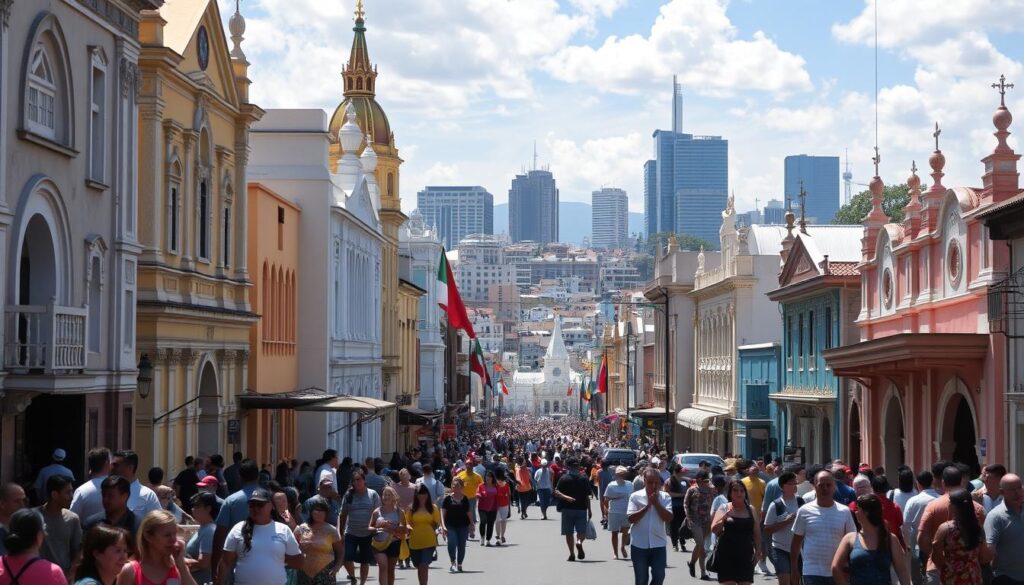
Spiritual preferences are shifting gears at unprecedented speeds. Recent surveys reveal fascinating patterns reshaping worship practices from Rio de Janeiro to rural Guatemala. Let’s explore what the numbers tell us about this transformation.
Statistical Insights and Data Trends
The 2024 Latinobarómetro study paints a vivid picture. Over 40% of Hondurans now identify with evangelical groups, while Guatemala follows closely at 40%. Contrast this with Mexico’s 5% evangelical population – a 10:1 ratio between neighboring nations.
Brazil’s sheer size makes its 28% Protestant identification significant. This translates to over 60 million people embracing new faith communities. Pew Research Center notes that 55% of these believers converted within their lifetime, not through family tradition.
Regional Variations and Demographic Shifts
Urban centers show particularly strong growth. Younger crowds and working-class families often find these congregations more relatable than traditional institutions. As one community leader observed: “Our food banks and job programs speak louder than sermons for many newcomers.”
| Country | Protestant % | Key Demographic |
|---|---|---|
| Honduras | 43% | Urban youth |
| Guatemala | 40% | Indigenous communities |
| Brazil | 28% | Metropolitan areas |
| Mexico | 5% | Rural populations |
Middle-class professionals increasingly join these movements too. Churches now offer networking events and parenting workshops alongside worship services. This strategic adaptation helps explain why growth rates continue climbing across diverse social groups.
The Role of Religious Media in Shaping Beliefs
Screens and airwaves have become modern pulpits across the region. While traditional churches still hold sway, religious broadcasters now compete with mainstream networks for prime-time attention. Their secret? Mimicking popular formats while weaving spiritual messages into everyday entertainment.
Media Strategies and Mainstream Aesthetics
Today’s faith-based programmers master the art of engagement. Take Enlace TV’s Christian telenovelas – these dramas tackle real-life struggles like family conflicts or addiction while promoting moral values. One producer explains: “We’re not just making shows – we’re starting conversations that continue after the credits roll.”
Brazil’s Record TV network demonstrates this entertainment-driven approach. By blending news coverage with subtle spiritual themes, it captures 14% of national audiences. This business-savvy model proves faith content can thrive commercially while advancing religious goals.
Digital Platforms versus Traditional Broadcasting
Younger crowds flock to TikTok sermons and Instagram devotionals. These digital spaces let churches bypass traditional gatekeepers, delivering content directly to smartphones. Yet AM radio still rules in rural areas – stations like Guatemala’s TGN Cultural now rank second nationally by offering practical advice alongside worship music.
The battle for hearts plays out across multiple fronts. While streaming services attract tech-savvy believers, older generations tune into familiar radio frequencies. This dual strategy ensures messages reach diverse audiences – from city apartments to mountain villages.
Political and Social Implications of the Rise
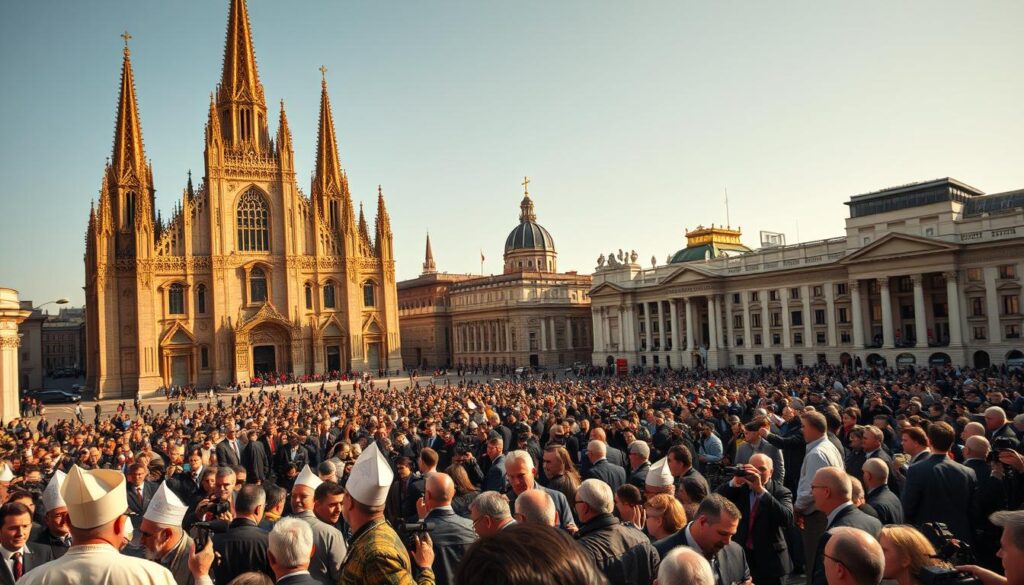
The intersection of faith and governance is reshaping nations across the region. Religious groups now influence elections and policy debates while strengthening social bonds. This dual impact creates both opportunities and challenges for developing democracies.
Religious Influence on Political Dynamics
Recent elections reveal striking patterns. In Brazil’s 2022 presidential race, areas with high evangelical populations voted 68% for Bolsonaro. Religious media played a decisive role, with Record TV airing over 200 hours of pro-government content during the campaign.
Guatemala shows similar trends. When President Jimmy Morales faced corruption charges, evangelical networks rallied behind him. One broadcaster claimed: “True believers stand with godly leaders.” This backing helped Morales finish his term despite widespread protests.
| Country | Political Event | Religious Support Impact |
|---|---|---|
| Brazil | 2022 Election | +22% voter turnout in evangelical strongholds |
| Guatemala | 2016-2020 Presidency | 83% approval among church members during scandals |
| Cold War Era | U.S. Anti-Communism | 50+ Guatemalan churches endorsed military regimes |
Community and Social Cohesion
Beyond politics, these groups build tight-knit networks. Many offer free childcare and job training – services governments often fail to provide. In Rio’s favelas, church-led security patrols reduced crime rates by 40% in some areas.
However, this cohesion sometimes comes at a cost. During the 1980s civil war, U.S.-backed evangelical leaders in Guatemala supported policies harming indigenous communities. Today, similar alliances shape policies on education and healthcare across the region.
As one sociologist notes: “These groups don’t just save souls – they organize neighborhoods.” This grassroots power keeps them central to both social life and political strategy.
Case Studies from Brazil, Costa Rica, and Guatemala
Three nations reveal distinct blueprints for spiritual transformation through media innovation. Each country’s approach reflects unique cultural landscapes and strategic thinking.
Brazil: Media Mergers and Spiritual Markets
Edir Macedo’s 1989 acquisition of Record TV changed the game. This church-owned network now captures 14% of Brazil’s TV audience, blending soap operas with subtle faith messages. Nearly a third of his United Church members first connected through religious broadcasts.
“We’re not just selling beliefs – we’re creating lifestyle content,” explains a Record producer. Morning shows feature financial advice alongside prayer sessions, while evening dramas model family values. This fusion keeps viewers engaged across generations.
Central American Airwave Strategies
Costa Rica became a media hub when Enlace TV launched in 1988. Its Spanish-language news program Mundo Cristiano now reaches 21 countries. Guatemala takes a different tack – religious groups control 32% of radio frequencies and 18% of TV channels nationwide.
Children’s programming proves crucial in both nations. Animated Bible stories air during prime cartoon hours, while parents watch talk shows discussing community issues. This dual approach builds family-wide connections to the movement.
| Country | Media Focus | Audience Reach |
|---|---|---|
| Brazil | Mainstream TV integration | 60 million weekly viewers |
| Costa Rica | Regional news hub | 15 million homes |
| Guatemala | Frequency dominance | 83% rural coverage |
Global and Transnational Dimensions
What began as local spiritual renewal now shapes global religious landscapes. Communities once receiving missionaries now send their own abroad, creating a remarkable role reversal in faith networks.
Latin American Missionary Influence Worldwide
In 1974, just 136 workers served overseas – mostly Brazilians. Today, tens of thousands spread across 150+ countries. Brazil alone sends more missionaries than any nation except the U.S., with groups targeting regions from North Africa to Southeast Asia.
Argentinian strategist Luis Bush changed global outreach in 1989. His “10/40 Window” concept focused efforts on areas between 10-40°N latitude. This zone includes many Muslim-majority nations where traditional Western missionaries faced distrust.
Interplay with Global Evangelical Movements
Leaders noticed an unexpected advantage post-9/11. “Our teams don’t carry colonial baggage,” explained one Guatemalan organizer. This cultural neutrality helps workers from the Global South build bridges where others struggled.
Modern missions blend ancient faith with modern logistics. Training centers now teach language skills alongside scripture study. The movement’s growth shows how spiritual revolutions can ripple outward, transforming both senders and receivers.
FAQ
How has religious identity shifted in Latin America over time?
Once dominated by Catholicism, the region has seen a rise in Protestant groups, especially evangelical movements. Pew Research Center data shows nearly 20% of Latin Americans now identify as Protestant, driven by cultural changes and grassroots outreach.
What role does media play in the growth of Protestant groups?
Religious media, from TV networks like Brazil’s RecordTV to social media campaigns, helps spread beliefs. Many churches blend modern aesthetics with traditional messages to attract younger audiences and expand their influence.
How do Protestant communities impact politics in the region?
Evangelical leaders increasingly shape policies on issues like education and family law. In countries like Guatemala and Brazil, their voting blocs sway elections, reflecting a merging of faith and political strategy.
Which countries show the most significant Protestant growth?
Brazil, Costa Rica, and Guatemala are key examples. Brazil’s evangelical population exceeds 30%, while Guatemala’s Protestant community grew rapidly after its civil war, often through local missionary efforts.
Are Latin American Protestant groups influencing global movements?
Yes! Missionaries from the region now work in Africa, Asia, and even the United States. Groups like Argentina’s Red de Mujeres (Women’s Network) also partner with international organizations to address social issues.
How do digital platforms compare to traditional church outreach?
While radio and TV remain strong, platforms like YouTube and WhatsApp let churches engage daily. Live-streamed services and online donations help sustain communities, especially among younger generations.