Mexico’s spiritual identity has shifted dramatically in recent decades. While Roman Catholicism remains dominant, religious diversity now plays a bigger role nationwide. Recent census data shows nearly 10% of the population identifies with Protestant or evangelical traditions, making this faith group the country’s largest religious minority.
This growth spans multiple regions and denominations. Southern states like Chiapas and northern border areas show stronger evangelical presence, contrasting with central zones where Catholic traditions run deeper. From spirited Pentecostal gatherings to quieter Methodist services, Protestant churches offer varied worship styles across the country.
Historical roots trace back to 19th-century missionary work, but expansion accelerated in the late 1900s. Government figures reveal a striking pattern: Protestant affiliation jumped from 2% in 1970 to over 10% by 2020. Today, constitutional protections for religious freedom help sustain this diverse spiritual ecosystem.
Key Takeaways
- Protestant communities now represent about 10% of Mexico’s population
- Growth spans Pentecostal, Baptist, and non-denominational groups
- Regional concentrations vary significantly across states
- Membership has grown sixfold since 1970
- Legal protections support diverse religious practices
Historical Roots of Protestantism in Mexico
The seeds of religious change took root during Mexico’s turbulent 1800s. Foreign missionaries arrived as the nation gained independence, bringing new spiritual ideas to a land steeped in Catholic tradition.
Early Missionary Efforts and 19th Century Beginnings
Scottish preacher Diego Thompson sparked the movement in 1827, distributing Spanish Bibles under the British and Foreign Bible Society. His work paved the way for evangelical protestant groups to establish footholds. By mid-century, figures like Melinda Rankin—a Presbyterian teacher—created schools that doubled as worship spaces.
The Role of Baptists and Missionaries in Shaping the Movement
January 1864 marked a turning point when James Hickey founded Mexico’s first formal protestant church in Monterrey. Local converts like the Uranga brothers helped grow this Baptist community rapidly. Within five years, six new congregations emerged across northern states.
American missionaries accelerated this growth through organized networks. The Northern Presbyterian Church alone established 73 congregations by 1901. These early efforts blended foreign support with homegrown leadership, creating lasting frameworks for Mexican protestants.
Growth and Transformation in Mexican Religious Communities
Rural villages became unexpected hubs for spiritual change during the 1900s. New faith groups offered practical support through schools and clinics while sharing their beliefs. This approach resonated strongly in regions where communities felt underserved by traditional institutions.

Expansion Among Rural and Indigenous Populations
Between 1970 and 1990, affiliation with non-Catholic groups skyrocketed from 2% to 7% nationwide. Indigenous areas saw particularly dramatic changes. In Oaxaca’s Zapotec villages, new religious practices sometimes clashed with ancient “costumbre” traditions.
Denominations gained ground by addressing daily needs:
- Literacy programs in native languages
- Medical outreach in remote regions
- Job training for low-income members
Key Moments of Religious Conflict and Revival
The path to acceptance wasn’t smooth. Historian Hans-Jürgen Prien notes:
“Mexico recorded more persecution cases against non-Catholic believers in the 1800s than any other Latin American nation.”
Local converts faced intense pressure during early expansions. Records show 59 faith-related deaths in the 19th century – only one victim was foreign. Despite these challenges, modern growth continues reshaping spiritual landscapes.
| Region | 1970 Affiliation | 1990 Affiliation | Growth Rate |
|---|---|---|---|
| Oaxaca Indigenous Zones | 1.2% | 8.9% | 642% |
| Northern Border States | 3.1% | 11.4% | 268% |
| Central Urban Areas | 0.8% | 4.3% | 438% |
Exploring protestantism in mexico: Key Denominations and Diversity
Mexico’s religious landscape blooms with a colorful array of Protestant traditions. Over 20 distinct denominations coexist, each shaping spiritual practices in unique ways. This diversity ranges from quiet liturgical services to energetic charismatic gatherings.
Major Denominational Groups and Their Contributions
Established churches like Anglicans and Methodists anchor the faith community. The Anglican communion serves 30,000 members, while Methodist groups count nearly 50,000 followers. These historical denominations preserve traditional hymns and structured theology.
Newer movements bring dynamic energy. Pentecostal and Neo-Pentecostal churches attract over 17 million Mexicans. Their lively services emphasize spiritual gifts and personal transformation. As one worshiper describes:
“Our faith isn’t just Sunday mornings – it’s daily miracles and answered prayers.”
Differences Between Historical and Neo-Pentecostal Movements
Traditional protestant churches focus on scripture study and community outreach. In contrast, charismatic groups prioritize healing services and spontaneous worship. This split reflects broader global trends in Christian practice.
Unique local expressions thrive too. The Guadalajara-based Light of the World church blends indigenous traditions with Christian teachings. Meanwhile, Jehovah’s Witnesses form a significant minority, though scholars debate their classification within Protestant denominations.
Independent congregations now dominate the scene. Nearly 40% of non-Catholic believers attend evangelical church communities without formal denominational ties. This shift toward personalized faith continues reshaping Mexico’s spiritual identity.
Impact on Local Culture and Societal Dynamics
Mexico’s cultural fabric weaves together ancient traditions and modern beliefs, creating a dynamic spiritual mosaic. While most people maintain peaceful coexistence, shifting practices occasionally spark friction in tight-knit communities.
Interactions With Catholic Traditions and Indigenous Customs
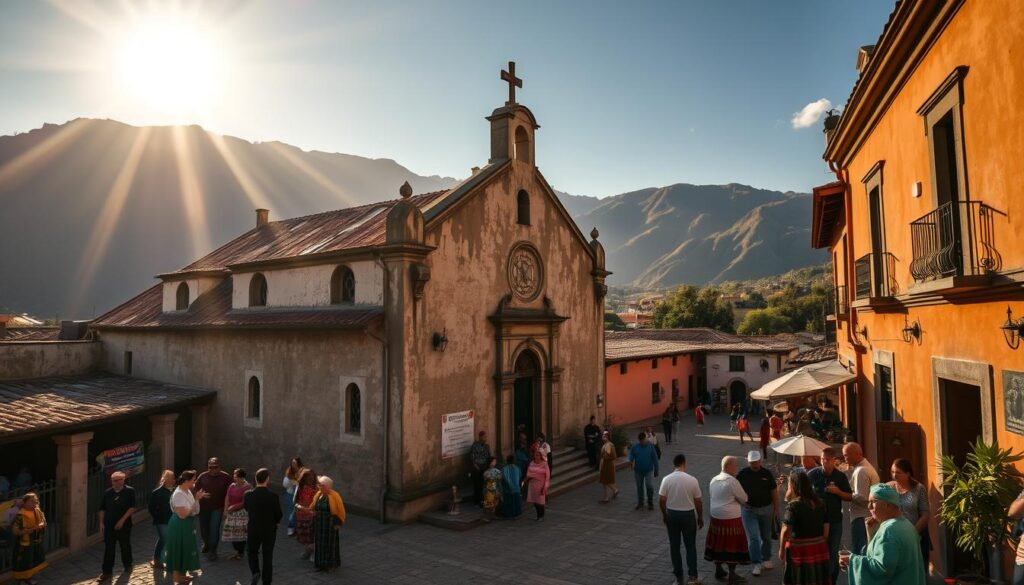
In urban areas, Roman Catholic and Protestant neighbors often share public spaces harmoniously. However, southern regions like Chiapas face unique challenges. Indigenous villages preserving ancestral rituals blended with Catholic church traditions sometimes view evangelical practices as disruptive.
One local leader explains:
“Our ceremonies honor both saints and earth spirits – new beliefs asking us to abandon these feel like losing our roots.”
The Influence on Community Practices and Social Change
Mexico’s secular policies shape religious integration. Unlike other Latin America nations, Protestant groups here rarely operate separate schools or hospitals. This fosters shared community spaces but limits institutional influence.
Three distinct features define evangelical identity:
- Faith as personal choice rather than cultural default
- Active sharing of teachings with Catholic churches members
- Biblical authority over traditional hierarchy
Simplified worship styles – without icons or candles – visually contrast with ornate church Mexico traditions. This reflects theological emphasis on direct connection to Jesus Christ rather than mediated rituals. Such differences spark both spiritual renewal and family tensions across generations.
Contemporary Demographics and Statistical Trends
Recent census data paints a vivid picture of evolving religious makeup. The 2020 government survey shows Catholic affiliation at 78%, down from 83.9% in 2010. Meanwhile, Protestant and evangelical groups now claim 10% of the population, marking a steady climb documented over three decades.
Insights from National Censuses and Population Figures
INEGI figures reveal striking patterns. Evangelical identification jumped from 4.9% to 7.6% between 1990 and 2010. Current estimates suggest 20 million Mexicans align with these traditions, plus 8 million in non-denominational communities.
Regional contrasts remain sharp. Southern states and border areas show stronger evangelical presence, while central regions maintain Catholic majorities. Many now choose independent church communities over traditional structures, reflecting shifting spiritual preferences across generations.
FAQ
When did Protestantism first gain a foothold in Mexico?
Protestant beliefs began spreading in the 19th century through missionaries, especially Baptists, who established early congregations. Foreign evangelists and local converts played key roles in creating a foundation for growth.
How did rural communities influence the growth of Protestant churches?
Rural and Indigenous groups often embraced evangelical teachings as alternatives to Catholic traditions. Missionaries focused on these areas, offering literacy programs and community support, which helped build trust and membership.
What are the largest Protestant denominations in Mexico today?
Major groups include Pentecostals, Seventh-day Adventists, and Jehovah’s Witnesses. Neo-Pentecostal movements have also grown rapidly, emphasizing charismatic worship and personal spiritual experiences.
How has Protestantism impacted Mexican culture?
Some communities blend evangelical practices with local customs, while others challenge traditional Catholic festivals. Churches often promote social initiatives, like sobriety campaigns, influencing daily life and values.
What do recent census figures say about religious shifts?
Government data shows over 10% of Mexicans now identify with Protestant or evangelical groups. Growth is strongest in southern states and urban areas, reflecting changing spiritual preferences.
Are there tensions between Protestant and Catholic communities?
Historical conflicts arose over land, politics, and conversions. Today, most interactions are peaceful, though debates about religious freedom and cultural identity occasionally surface.
Do Protestant groups collaborate with Indigenous traditions?
Some churches incorporate native languages and customs into services, while others reject non-Christian rituals. Approaches vary widely depending on denominational beliefs and local contexts.