Imagine a single document sparking changes that would ripple through nations for 500 years. When Martin Luther nailed his 95 Theses to a church door in 1517, he ignited a revolution that would redefine religion, politics, and daily life across the continent.
Today, nearly one-fifth of Europe’s Christian population identifies with this movement. From Scandinavia’s snowy landscapes to Britain’s bustling cities, its enduring legacy appears in education systems, democratic values, and even work ethics. The Nordic countries still report over 60% affiliation with these beliefs, according to recent surveys.
This transformation wasn’t just about Sunday services. It reshaped how governments operated and how people viewed personal responsibility. The movement’s emphasis on literacy led to Europe’s first mass-education efforts, creating foundations for modern schooling.
Key Takeaways
- Over 833 million people worldwide follow this branch of Christianity
- 9% of EU residents identified with these beliefs in 2019
- Shaped modern concepts like individual rights and accessible education
- Remains dominant in historical strongholds like Sweden and the UK
- Inspired political systems valuing citizen participation
Historical Context and the Emergence of the Reformation
Long before Luther’s hammer struck wood, whispers of change echoed through medieval towns. The 16th-century religious revolution didn’t erupt overnight—it grew from centuries of simmering debates about faith and power.
Proto-Protestantism and Early Reform Movements
Groups like the Waldensians and Hussites lit the fuse of reform 200 years before Luther. These communities rejected lavish church rituals, demanding simpler worship rooted in scripture. By the 15th century, their ideas about personal faith began seeping into mainstream thought.
Political chaos helped alternative beliefs spread. With no central authority controlling all territories, reformers found safe havens in fragmented regions. The printing press then turbocharged this movement, making translated Bibles accessible to shopkeepers and farmers alike.
The Role of Pre-Reformation Ideas
Renaissance scholars’ obsession with ancient texts created unexpected consequences. When researchers studied original Christian writings, they noticed gaps between early practices and 16th-century traditions. This “back to sources” approach made people question centuries of established doctrine.
Economic shifts also mattered. Rising merchant classes wanted faith that matched their practical worldview. As cities grew, so did demands for religious practices fitting urban life rather than rural monasteries.
Key Figures and Landmark Events
October 31, 1517, wasn’t just about Halloween—it marked the start of a religious upheaval. When Martin Luther nailed his critiques to Wittenberg’s church door, he challenged a centuries-old power structure. His 95 Theses questioned whether institutions should mediate between believers and divine grace.
Martin Luther’s 95 Theses and Beyond
Luther’s bold move targeted indulgences—payments claimed to reduce punishment for sins. “Why does the pope’s wealth grow while faithful people starve?” he wrote. This wasn’t just about money. It reshaped how ordinary Christians understood salvation as a gift, not a transaction.
The printing press turned Luther into Europe’s first viral writer. His German Bible translation empowered common people to interpret scripture themselves. By 1525, over 400,000 copies of his works circulated—a medieval bestseller series.
Influential Reformers Like John Calvin and Zwingli
Geneva’s John Calvin took reform further with his predestination teachings. He envisioned cities where church and government collaborated to create moral societies. Meanwhile, Huldrych Zwingli in Zurich argued communion represented Christ’s sacrifice symbolically—not physically.
| Theologian | Core Belief | Lasting Impact |
|---|---|---|
| Martin Luther | Salvation through faith alone | Lutheran churches worldwide |
| John Calvin | Predestination | Presbyterian/Reformed traditions |
| Huldrych Zwingli | Symbolic communion | Anabaptist movements |
These leaders agreed on three radical ideas: scripture over tradition, every believer’s spiritual authority, and faith as the soul’s true currency. Their debates created diverse Christian traditions still shaping worship today.
The Evolution of Protestant Denominations
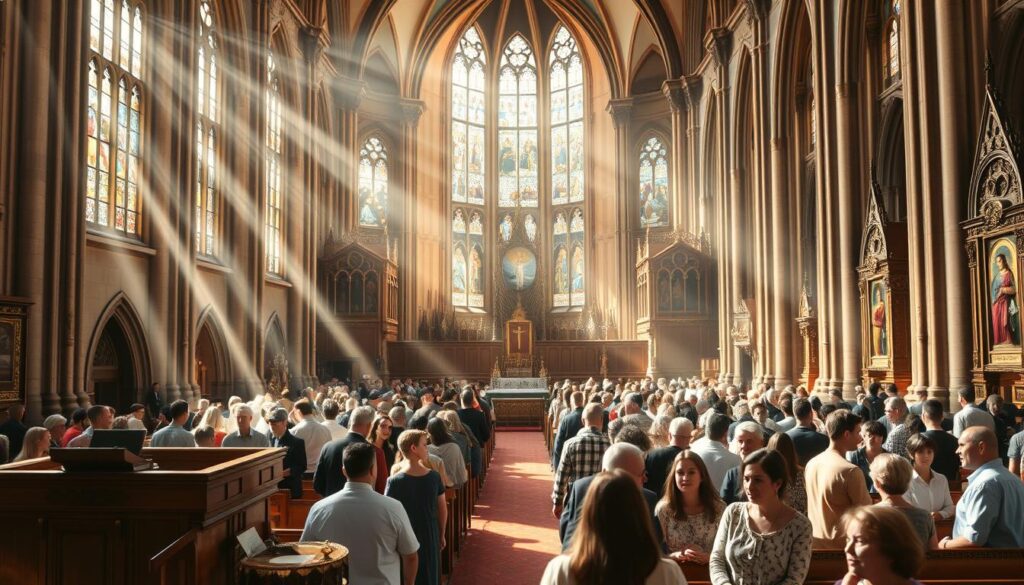
What began as a single reform movement soon blossomed into countless branches. By 2010, over 38% of Protestant groups fell outside major categories—proof that diversity became its defining feature. This growth wasn’t random. Each new church reflected local needs, political realities, and fresh interpretations of scripture.
From Lutheran and Calvinist Traditions
The Lutheran tradition took root fastest. Born from Martin Luther’s sermons, it became the official faith across Scandinavia. “Scripture alone guides us,” declared German pastors, shaping worship styles still heard in Baltic hymns today.
Calvinists added their own twist. John Calvin’s focus on God’s absolute authority birthed Reformed churches in Geneva. Dutch merchants carried these ideas to global ports, while Scottish Presbyterians turned them into national identity markers. Their influence appears in everything from strict work ethics to democratic governance models.
Other forms emerged through cultural blending. Anglican churches mixed Catholic rituals with royal oversight—a compromise solution for England’s turbulent Reformation. Baptists championed adult baptism, appealing to those craving personal spiritual journeys. Methodists later prioritized social reform, proving faith could drive societal change.
Fast-forward to modern times: Pentecostal groups now lead global growth. Their emphasis on spiritual experiences attracts over 10% of Protestant followers worldwide. From storefront chapels to megachurches, this ever-changing landscape shows no signs of slowing down.
Cultural and Socio-Political Transformations
How did a spiritual awakening reshape entire governments? By 1539, rulers from Berlin to Copenhagen wielded religious authority once held by distant popes. Kings now dictated faith practices, merging spiritual leadership with political rule. This shift birthed national churches—like Sweden’s evangelical state declared in 1527—that mirrored each region’s unique identity.
Impact on Governance and Secularization
The “cuius regio, eius religio” principle let monarchs choose their realm’s faith. Citizens either followed their ruler’s beliefs or moved elsewhere. This new system weakened Rome’s grip while strengthening local governments’ role in daily life.
Calvinist teachings sparked unexpected economic changes. Merchants saw hard work as divine approval, fueling early capitalist ideas. “Success isn’t greed—it’s grace made visible,” argued reformers. This mindset transformed markets from Amsterdam to Edinburgh.
Literacy rates soared as Bible translations reached commoners. German farmers read scripture aloud, while Swedish parents taught children using vernacular texts. Public schools emerged, mixing reading skills with moral instruction.
Ironically, pushing for religious unity bred tolerance. When governments stopped enforcing single doctrines, diverse Christian groups flourished. Over time, this practice of coexistence laid groundwork for modern secular states valuing both faith and freedom.
Regional Variations and Demographic Trends
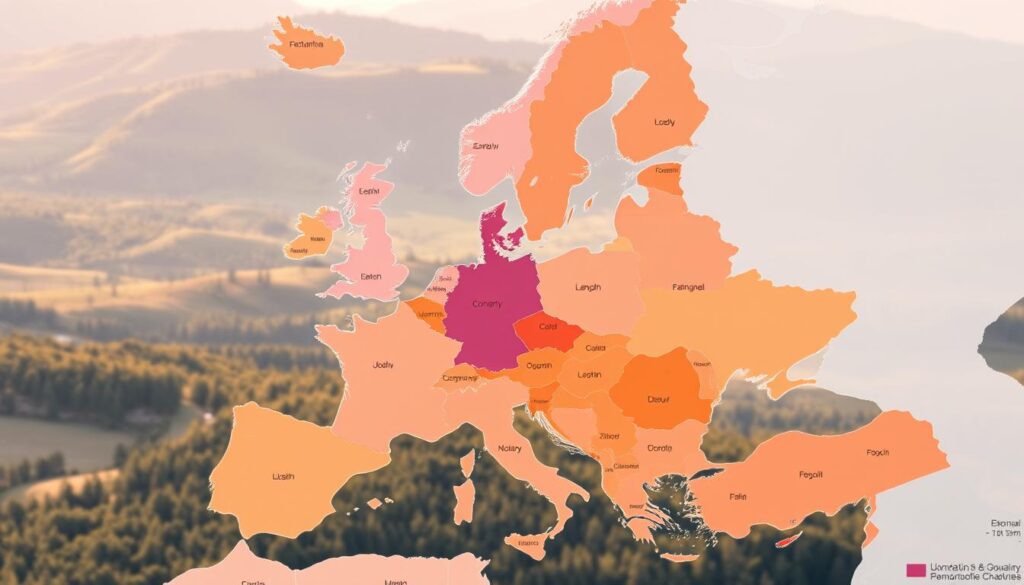
Modern maps of belief reveal surprising patterns rooted in centuries of history. Northern Europe’s Lutheran strongholds contrast sharply with Central Europe’s patchwork of faith communities. These differences show how politics, persecution, and cultural identity shaped religious landscapes.
Northern and Central European Perspectives
Scandinavia remains a bastion of traditional practice. Over 72% of Norway’s population identifies with its state church—a system blending ancient rituals with contemporary social services. Denmark and Iceland show similar patterns, where national identity intertwines with centuries-old Lutheran heritage.
Germany’s religious divide tells another story. The north hosts 18.6 million Protestants (22.6% of the country), while Catholic Bavaria dominates the south. “These borders mirror 16th-century political splits,” notes historian Anna Müller, highlighting how old divisions still influence regional voting trends.
The Netherlands presents a paradox. Though only 11% of the population identifies as Protestant today, Calvinist values fueled its 17th-century trading empire. Amsterdam’s stock exchange and work ethic owe much to this legacy.
Central Europe’s hidden stories emerge in places like Hungary. Despite Catholic majorities, vibrant Protestant minorities thrived here since the Reformation. Meanwhile, the Czech Republic’s low numbers—under 1%—reflect 400 years of Habsburg repression and communist-era restrictions.
Baltic nations add a postwar chapter. Estonia and Latvia preserved Lutheran traditions through Soviet occupation. Today, these practices help define their post-communist identities, proving faith’s resilience against political tides.
protestantism in europe: A Closer Look at Shifting Dynamics
Once dominant groups now navigate unprecedented demographic transformations. From 2009 to 2010 alone, Protestant affiliation dropped from 15% to 12% across the continent. This decline mirrors broader secularization trends, yet unexpected growth pockets challenge assumptions.
Historical Shifts in Adherent Populations
Traditional strongholds like Sweden and Germany saw steady membership losses since the 1970s. “We’re not losing beliefs—we’re losing institutional ties,” observes sociologist Clara Dupont. Younger generations often maintain cultural connections while rejecting formal religious labels.
Immigration reversed declines in surprising ways. African Pentecostal churches thrive in London, while Korean Presbyterians revitalize empty chapels in Berlin. These communities account for 40% of recent growth in some urban areas.
Modern Trends and Future Projections
France and Russia defy continental patterns. Reformed churches gained 18,000 followers in France since 2015, despite strict secular laws. Post-Soviet Russia’s evangelical boom continues, with over 4,000 Protestant congregations active today.
Three key factors shape projections:
- Aging congregants in traditional denominations
- Rising multicultural congregations
- Hybrid online/in-person worship models
By 2050, experts predict Europe will house under 9% of global Protestant followers. This shift hands spiritual leadership to Africa and Asia, reshaping five centuries of religious history.
Interfaith Relations and the Response of the Catholic Church
When theological debates turned into battles, Europe faced its most violent century. The Roman Catholic Church initially met reform movements with force. Inquisitions hunted dissenters, while armies marched to reclaim spiritual control.
From Conflict to Coexistence
Spain’s religious courts targeted reformers as early as 1482. Italy’s 1542 Roman Inquisition jailed thousands. Yet repression bred resistance—Protestant ideas spread faster than authorities could contain them.
The Counter-Reformation changed tactics. New orders like the Jesuits combined education with missionary work. Their schools became tools for rebuilding church influence across divided regions.
Decades of war reshaped boundaries. The Thirty Years’ War alone killed millions before the 1648 Peace of Westphalia. This treaty let rulers choose their realm’s religion, easing tensions through compromise.
Today, former enemies share interfaith dialogues. What began with fear and fire ended with a fragile balance—proof that even bitter divides can yield to understanding.
FAQ
What sparked the Reformation in Europe?
Growing frustration with practices like indulgences and corruption within the Roman Catholic Church fueled reform efforts. Martin Luther’s 95 Theses in 1517 became a catalyst, challenging doctrines and inspiring movements across the continent.
How did early reformers like Jan Hus influence Protestant ideas?
Figures like Jan Hus in Bohemia criticized church authority and promoted vernacular scripture a century before Luther. Their teachings laid groundwork for later movements, emphasizing faith over hierarchy.
What role did John Calvin play in shaping Protestant theology?
Calvin’s teachings on predestination and church governance influenced Reformed traditions. Cities like Geneva became hubs for his ideas, impacting denominations such as Presbyterians and Puritans.
Why did Northern Europe adopt Reformed faiths more widely?
Political alliances, like German princes supporting Lutheranism, and cultural shifts made regions like Scandinavia and England receptive. The Church of England’s break from Rome under Henry VIII also accelerated change.
How did Protestantism affect European governance?
It challenged papal authority, empowering monarchs and local rulers. Concepts like individual interpretation of scripture contributed to secularization, reshaping laws and education systems over time.
What are major denominations stemming from the Reformation?
Lutheran, Anglican, and Reformed branches emerged initially. Over centuries, groups like Methodists, Baptists, and Pentecostals developed, each adapting core ideas to cultural contexts.
How has the Catholic Church responded to Protestant growth?
The Counter-Reformation addressed criticisms through councils like Trent, while missionary work aimed to reclaim followers. Modern ecumenical dialogues now focus on shared values over past conflicts.
Are Protestant populations declining in Europe today?
While historically dominant in regions like Germany, secularism and immigration have shifted demographics. However, evangelical movements and non-traditional churches continue to adapt to contemporary needs.