How does a foreign religious tradition take root in a society with ancient cultural traditions? This question lies at the heart of understanding how churches built on Western teachings became part of China’s modern spiritual landscape. Over decades, these communities have balanced their global roots with local practices, creating a unique blend of belief systems.
Since 1949, religious groups faced new challenges and opportunities under shifting political landscapes. Many adapted their practices to align with cultural expectations while preserving core principles. This delicate dance between tradition and transformation reveals much about how faith evolves in diverse settings.
Today, millions participate in worship services that reflect both historical teachings and contemporary Chinese values. The growth of these communities highlights their ability to thrive despite complex regulations. From humble beginnings to vibrant gatherings, their journey showcases resilience and innovation.
Key Takeaways
- Protestant communities creatively merged global beliefs with Chinese cultural traditions
- Government policies significantly shaped religious practices after 1949
- Local congregations developed unique worship styles over time
- Modern gatherings balance spiritual needs with societal expectations
- Cultural adaptation helped foreign teachings gain lasting relevance
Historical Context: The Legacy of Protestantism in China
The story of faith crossing borders often reveals unexpected twists in its journey. Long before Protestant teachings arrived, other Christian groups tried to establish roots in the region. Nestorian monks from Persia brought their beliefs in the 600s, followed by Catholic Franciscans in the 1200s and Jesuits in the 1500s. Each effort dissolved over time, struggling against political tensions and cultural resistance.
Foreign missionaries faced a recurring challenge: mainland communities viewed outside influences with suspicion. Local traditions and governance systems often clashed with imported religious practices. One scholar noted, “Lasting presence required more than translated scriptures—it demanded cultural fluency.”
This pattern changed when Protestant workers arrived centuries later. Unlike earlier attempts, they focused on training chinese christians to lead communities rather than relying solely on foreign clergy. This shift helped create sustainable networks that survived political upheavals.
The growth of these communities over recent years highlights their adaptive strategies. By learning from past failures, new generations blended spiritual teachings with regional customs. This approach turned historical obstacles into stepping stones for lasting impact.
Early Missionary Work and Cultural Intersection
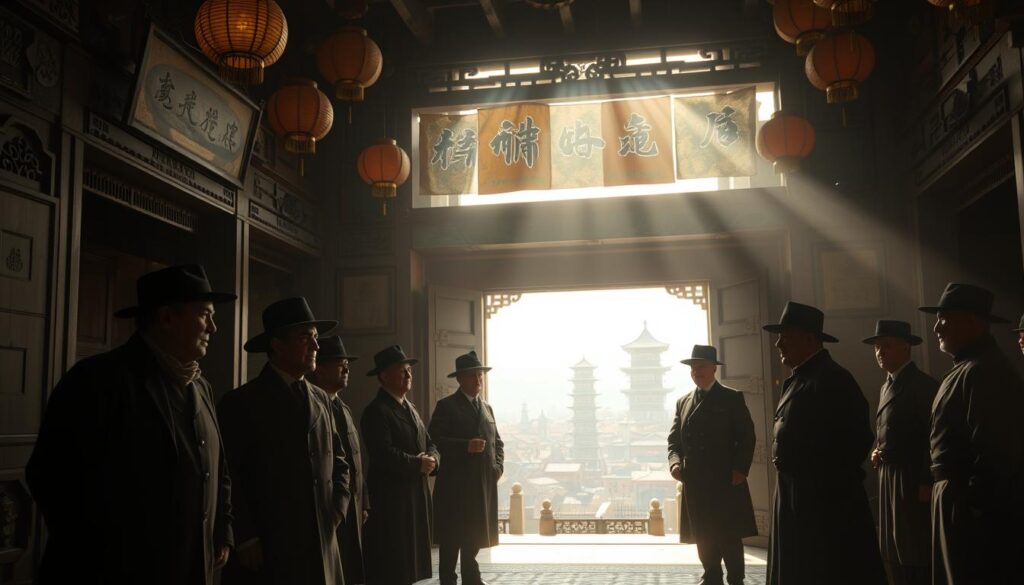
Planting seeds of faith in foreign soil often required more than translated Bibles. Robert Morrison’s 1807 arrival sparked a new chapter, becoming the first Protestant missionary to establish lasting roots. His work unfolded during Europe’s aggressive colonial expansions, creating both opportunities and distrust.
Robert Morrison’s Pioneering Mission
Morrison spent years mastering local dialects while secretly printing religious texts. “A man who dies rich in Mandarin,” he once wrote, “dies poor in soul.” His translation of the Bible laid groundwork for future missionaries, though fewer than 10 converts joined him initially.
Emergence of Indigenous Churches
By 1920, over 500,000 believers attended self-governed congregations. Local leaders blended ancestral customs with Christian rituals—hymns echoed traditional folk melodies, and sermons used regional proverbs. This cultural fusion helped churches thrive without foreign oversight.
The rise of nationalist sentiments accelerated this shift. Communities rejected colonial-era associations, reshaping worship into something distinctly theirs. This groundwork proved vital when political changes later expelled foreign missionaries entirely.
Protestant Growth Before 1950
Unity became the watchword as religious communities built their own institutional frameworks. In 1922, Shanghai hosted a landmark gathering where over 1,000 delegates formed the National Christian Council. This body championed the “Three Self” principles – financial independence, local leadership, and grassroots outreach.
Cheng Jingyi, the council’s first general secretary, declared: “Our faith must grow Chinese roots to bear lasting fruit.” His vision transformed how churches operated, replacing foreign funding with local donations. Rural and urban congregations developed distinct flavors while sharing core beliefs.
City churches often focused on education and social services. Countryside communities blended agricultural rhythms with worship cycles. This flexibility helped religious groups thrive in diverse areas while maintaining unity through the Christian Council structure.
By 1949, over 700,000 believers attended self-supported congregations. Local leaders trained in theology and management replaced foreign missionaries. This strategic shift prepared communities for coming political storms while fueling steady growth across regions.
Communist Takeover and Religious Transformation
When political tides shift, religious communities often face their greatest test of adaptability. The 1949 establishment of the Chinese Communist Party brought sweeping changes to spiritual life. Foreign ties became liabilities overnight as the new government launched campaigns to erase external influences.
Impact on Foreign Missionaries and Institutional Shifts
Within months, 130 missionary schools and hospitals closed. Funds froze like winter rivers. By 1951, every foreign worker had left—ending a 150-year chapter. A local pastor later recalled: “We stood at a crossroads, wondering if our faith would survive the storm.”
The state introduced strict oversight measures. Worship activities required approval, and sermons faced ideological scrutiny. This control aimed to align religious practices with socialist values while maintaining patriotic unity.
| Aspect | Pre-1949 | Post-1949 |
|---|---|---|
| Leadership | Foreign missionaries | Local committees |
| Funding | International sources | Domestic donations |
| Institutions | 130+ organizations | State-regulated groups |
| State Oversight | Limited | Mandatory approvals |
Nearly 700,000 believers navigated this new reality. Some merged worship with community service projects to demonstrate socialist values. Others met quietly in homes, preserving traditions beneath the radar of communist party officials.
This period set patterns for decades. The government‘s approach balanced suppression of foreign links with limited tolerance for local practices. As one scholar noted: “They sought not to eliminate faith, but to redefine its role in society.”
The Three-Self Movement and Patriotic Reforms
Navigating political change requires more than adaptation—it demands reinvention. This truth shaped the 1950s transformation of religious communities into nationally aligned institutions. At the heart of this shift stood the Three-Self Patriotic Movement, a framework blending spiritual independence with socialist ideals.
Formation of the Church of Christ in China (CCC)
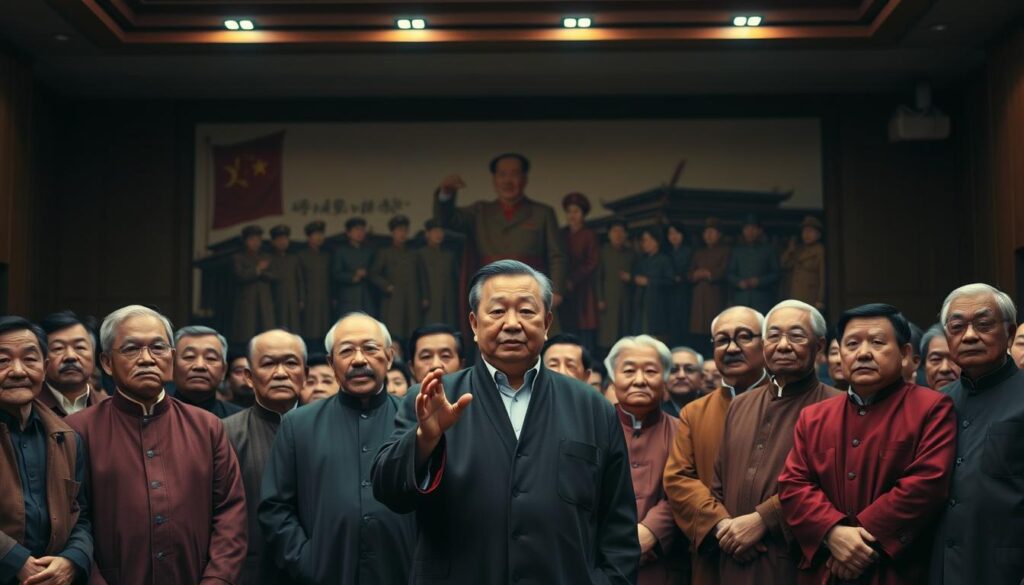
Premier Zhou Enlai’s push for ideological alignment sparked a historic response. In 1950, forty leaders signed “The Christian Manifesto,” declaring: “We must thoroughly recognize imperialist influences within religious affairs and reject them.” The document gained 400,000 signatures within months—a stunning show of unity.
The newly formed Christian Council rebranded their efforts in 1954 as the Three-Self Patriotic Movement (TSPM). Chairman Wu Yaozong emphasized: “Our faith serves both God and the people’s needs.” This pivot distanced communities from Western ties while securing state approval.
The “Three Self” Principles in Action
Self-governance, self-support, and self-propagation became survival tools. Local leaders replaced foreign missionaries, while donations replaced overseas funding. The state administration religious oversight system emerged, creating official channels for worship activities.
Key changes included:
- Mandatory approval for sermons and events
- Integration of socialist values into teachings
- Collaboration with the Christian Council on community projects
This patriotic movement transformed congregations into partners of the state rather than adversaries. By aligning religious affairs with national interests, communities preserved their identity while navigating strict political realities.
Cultural Revolution and Its Impact on Protestant Practices
Dark clouds gathered over spiritual life as political turmoil reshaped society. The decade-long cultural revolution (1966-1976) erased visible signs of organized faith. Public religious activities vanished overnight, with authorities labeling them “poisons of capitalism.”
Every registered church shut its doors. Bibles burned in public squares while red guards ransacked homes. One survivor recalled: “They made us kneel on broken scripture pages—our faith became a crime.” Believers faced beatings, forced labor, and public shaming to “cleanse bourgeois influences.”
Underground networks kept hope alive. Families whispered prayers behind locked doors, sharing handwritten verses. Secret worship gatherings rotated between attics and rural barns. These hidden church meetings preserved traditions when official structures collapsed.
Paradoxically, persecution deepened spiritual bonds. As one elder noted: “The fire that tried to destroy us tempered our resolve.” This resilience laid foundations for future revivals, proving even radical ideology couldn’t extinguish centuries-old beliefs.
Reform Era: Rebirth of Protestant Churches
A new chapter unfolded as economic reforms reshaped spiritual landscapes. Deng Xiaoping’s leadership brought unexpected opportunities for communities of faith. The 1982 Constitution marked a turning point, declaring citizens’ right to religious belief under Article 36.
State Policies and the Revival Process
Officials shifted from viewing churches as threats to potential partners in social stability. One pastor recalled: “We received permits to gather again—like sunlight after decades of winter.” This state-approved revival required careful alignment with national development goals.
Key policies allowed gradual reopening starting in Shanghai. By 1982, over 1,100 worship spaces operated nationwide. Leaders negotiated terms ensuring sermons promoted patriotic values alongside spiritual teachings.
Reopening of Church Buildings and Theological Seminaries
Nanjing Theological Seminary’s 1981 restart became crucial for training clergy. Over 200 students enrolled within three years, learning to balance tradition with modern state expectations. Restored buildings symbolized renewed trust between communities and authorities.
This era proved religious activities could coexist with socialist principles when properly managed. As one official noted: “Well-regulated faith strengthens social harmony.” The careful revival set patterns still shaping church operations today.
Social and Political Harmonization in Religious Affairs
Modern societies often grapple with balancing spiritual values and material progress—a challenge shaping current approaches to religious affairs. The government recognizes faith communities’ potential to strengthen social bonds while supporting national development goals. Recent studies by the Chinese Academy of Social Sciences highlight how blending ethical teachings with traditional values could counterbalance excessive consumerism.
Officials promote frameworks where religious affairs align with public welfare initiatives. One researcher noted: “Shared moral foundations create bridges between belief systems and civic responsibility.” This strategy helps maintain stability as communities navigate rapid economic changes.
The state encourages faith groups to participate in poverty relief and disaster response programs. Such policies foster cooperation while ensuring activities remain within approved boundaries. Local leaders increasingly frame spiritual practices as complementary to—rather than conflicting with—patriotic values.
By integrating time-honored principles with modern governance, authorities aim to cultivate harmony in government-community relations. This delicate equilibrium allows spiritual traditions to contribute meaningfully to society’s broader aspirations under the state‘s guiding framework.
FAQ
How did early missionaries like Robert Morrison shape religious activities in the country?
Robert Morrison, the first Protestant missionary to mainland China, translated the Bible and founded schools. His work laid the groundwork for cultural exchange and inspired later indigenous church movements.
What role did the Three-Self Patriotic Movement play in organizing worship communities?
Established in the 1950s, the movement promoted self-governance, self-support, and self-propagation. It aimed to align faith groups with state policies while reducing foreign influence in religious affairs.
How did the Cultural Revolution affect believers and their practices?
During this period, many churches closed, and public worship was banned. Followers often practiced privately, preserving their faith despite strict government control over religious activities.
What changes occurred after the reform era began in the late 1970s?
Authorities permitted the reopening of theological seminaries and registered churches. Policies shifted to allow limited growth, though unregistered groups still faced scrutiny from the State Administration for Religious Affairs.
How do registered and unregistered congregations differ today?
Registered groups operate under the Chinese Christian Council and state oversight, while unregistered “house churches” function independently. The latter often face challenges balancing growth with compliance.
What strategies do leaders use to harmonize faith with political expectations?
Many emphasize social service, charity, and patriotism. This approach helps align their work with the Chinese Communist Party’s goals while addressing community needs.
Are foreign missionaries still active in the region?
Since the 1950s, foreign missionaries have largely been excluded. Religious affairs are managed domestically, with a focus on maintaining cultural and political alignment.