Welcome to a friendly exploration of one of the world’s most enduring spiritual traditions. With over 1.4 billion followers globally, the Catholic Church stands as Christianity’s largest branch. Its teachings have shaped art, law, and culture for two thousand years, blending ancient wisdom with modern relevance.
This guide unpacks the core principles that unite millions of believers. You’ll discover how traditions passed down from Jesus’ apostles evolved into a global community led by the Pope. We’ll simplify complex ideas like sacraments and social justice, showing how they guide everyday life.
The faith thrives through both scripture and lived experience. From weekly Mass to humanitarian efforts, its practices bridge ancient rituals with contemporary challenges. You’ll see how these elements create a spiritual roadmap for individuals and communities alike.
Key Takeaways
- World’s largest Christian denomination with 1.4+ billion members
- Rooted in teachings dating back to Jesus and the apostles
- Combines scripture with centuries of theological development
- Seven sacraments shape spiritual growth and community life
- Modern efforts focus on social justice and global outreach
Introduction to Roman Catholicism
Explore a religious heritage that unites over a billion people worldwide. At its heart lies a spiritual family stretching back to the first followers of Jesus, committed to serving others while honoring sacred traditions.
Defining the Catholic Faith
The term “Catholic” originates from the Greek word for “universal”, a name first used in the 2nd century. This reflects the church’s mission to embrace diverse cultures as one spiritual community. Members believe their practices and teachings directly continue the work of Jesus’ original disciples, guided by bishops seen as modern successors to the apostles.
The Global and Historical Context
From Rome to rural Kenya, the Catholic Church has grown into the planet’s most widespread Christian group. Over 60% of followers now live in Africa, Asia, and Latin America—a dramatic shift from earlier European dominance. This growth stems from centuries of missionary work, cultural adaptation, and responses to social needs.
Historically, the church preserved ancient knowledge through medieval monasteries and pioneered educational systems. Today, it addresses modern issues like climate change while maintaining rituals like the Mass. Its ability to balance timeless values with evolving societies explains its enduring global influence.
Historical Foundations of the Catholic Church
The story of Christianity’s largest institution begins with humble origins and world-changing events. From dusty roads in ancient Judea to marble halls in Rome, early followers transformed spiritual sparks into lasting traditions.
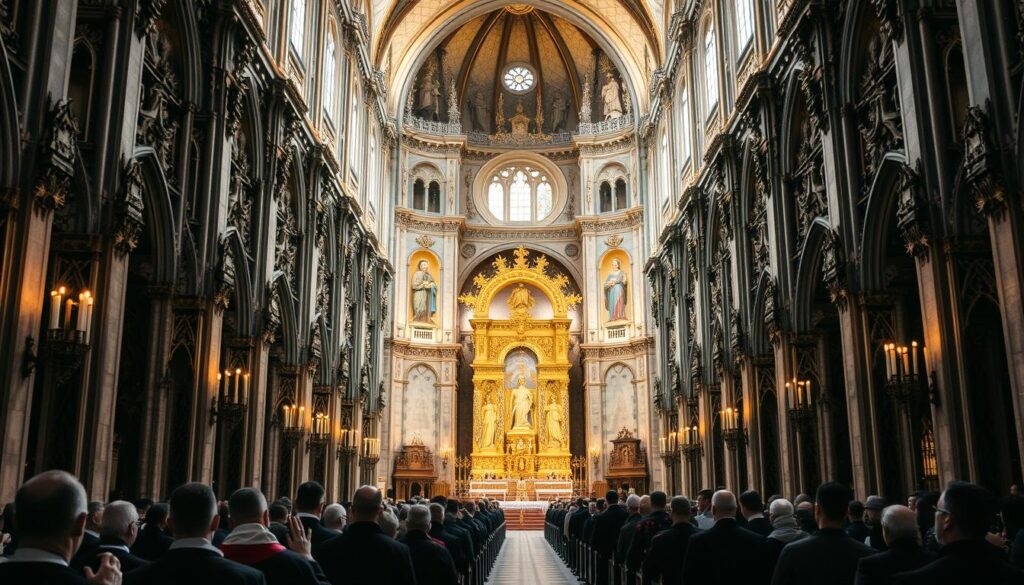
Apostolic Origins and Early Christianity
Twelve ordinary men became extraordinary leaders after Jesus Christ entrusted them with spreading his message. The New Testament shows how these apostles faced persecution while building underground communities. Everything changed at Pentecost—the fiery moment when believers received divine guidance to launch their public mission.
First-century followers met in homes, sharing meals and prayers secretly. By the 4th century, Emperor Constantine’s Edict of Milan gave them legal protection. This shift allowed the church to construct basilicas and expand its influence across continents.
The Evolution Through Empire and Middle Ages
When Christianity became Rome’s official religion in 380 AD, it gained power but faced new challenges. Medieval thinkers like Augustine shaped theology while monks preserved ancient texts. Five key cities—Rome, Constantinople, Alexandria, Antioch, and Jerusalem—became spiritual hubs governing regional practices.
The church thrived by adapting to different eras. It built universities during Europe’s “Dark Ages” and mediated conflicts between kingdoms. Through plagues and wars, its rituals and leadership structures kept communities united across generations.
Sacred Tradition and Scriptural Authority
At the heart of Catholic practice lies a dynamic partnership between ancient wisdom and divine revelation. This relationship forms a spiritual compass guiding millions through life’s complexities.
The Role of Sacred Scripture
The church views the Bible as God’s love letter to humanity—not frozen in time, but alive through ongoing interpretation. As one bishop famously noted, “Scripture breathes when read through the church’s living heart.” This approach prevents isolated readings that might drift from core teachings.
Sacred tradition acts like a family recipe passed through generations. It preserves essential truths while allowing cultural adaptation. Together with Scripture, it creates a complete picture of divine revelation. The Magisterium—the church’s teaching authority—ensures these elements remain harmonized across centuries.
“Both Scripture and Tradition must be accepted and honored with equal devotion and reverence.”
This threefold foundation—Bible, Tradition, and teaching office—provides stability amid changing societies. It allows the global community to address modern ethical questions while staying rooted in apostolic origins. Through this balance, spiritual guidance remains both timeless and timely.
The Seven Sacraments Explained
Life’s most meaningful moments often carry sacred significance. Seven special rituals mark key stages in spiritual growth, connecting believers to divine grace through tangible actions. These practices form a spiritual roadmap from birth to eternal life.
Baptism, Eucharist, and Confirmation
Baptism welcomes newborns and converts with water and prayer. This initiation washes away original sin, echoing Jesus’ immersion in the Jordan River. Many families celebrate with white garments and godparent commitments.
The Eucharist transforms weekly worship. Ordinary bread and wine become sacred nourishment during Mass. Catholics believe this meal sustains souls like food fuels bodies.
Confirmation typically occurs during adolescence. Through oil and laying of hands, participants receive the Holy Spirit’s courage. This rite empowers youth to become active faith ambassadors.
Reconciliation, Matrimony, Anointing, and Holy Orders
Reconciliation offers healing through confession. Believers voice regrets privately to priests, receiving forgiveness and practical guidance. Many describe feeling lighter after this cleansing ritual.
Marriage becomes sacred through mutual vows. Couples promise lifelong support, mirroring Christ’s devotion to humanity. Their union becomes a living symbol of divine love.
Final rites provide comfort during illness through anointing. Holy Orders sets apart clergy through solemn ceremonies. As the Council of Trent affirmed, these acts work through God’s power—not human perfection.
Papal Authority and Leadership
Guiding 1.4 billion people requires a leadership model that spans centuries. The pope stands at the center of this mission, serving as both spiritual shepherd and global diplomat. His role blends ancient traditions with modern responsibilities, creating a unique bridge between past and present.
The Legacy of Saint Peter
Jesus’ words to Peter in Matthew’s Gospel set the stage:
“You are Peter, and on this rock I will build my church.”
Catholics view this moment as the birth ofpapal authority. Each pope inherits Peter’s mantle as the church’s visible foundation stone.
This unbroken chain stretches across 267 successors. From Roman catacombs to Vatican palaces, leaders have adapted Peter’s mission to their eras. Pope Leo XIV continues this legacy today, balancing doctrinal stewardship with urgent global concerns.
Modern Papacy and its Influence
Today’s pope navigates climate crises and refugee emergencies while maintaining ancient rituals. The Vatican’s dual status as religious hub and sovereign state amplifies his voice. World leaders frequently seek his counsel on ethical dilemmas and peace efforts.
Modern papacy uses tools like encyclicals to address pressing issues. These documents shape policies in hospitals, schools, and charities worldwide. Yet the core remains unchanged—a commitment to unity and compassion rooted in two millennia of tradition.
Through social media and international visits, the pope connects with diverse cultures. This approach keeps the Roman Catholic Church relevant while honoring its sacred origins. The office proves that ancient institutions can evolve without losing their soul.
The Impact of the Second Vatican Council
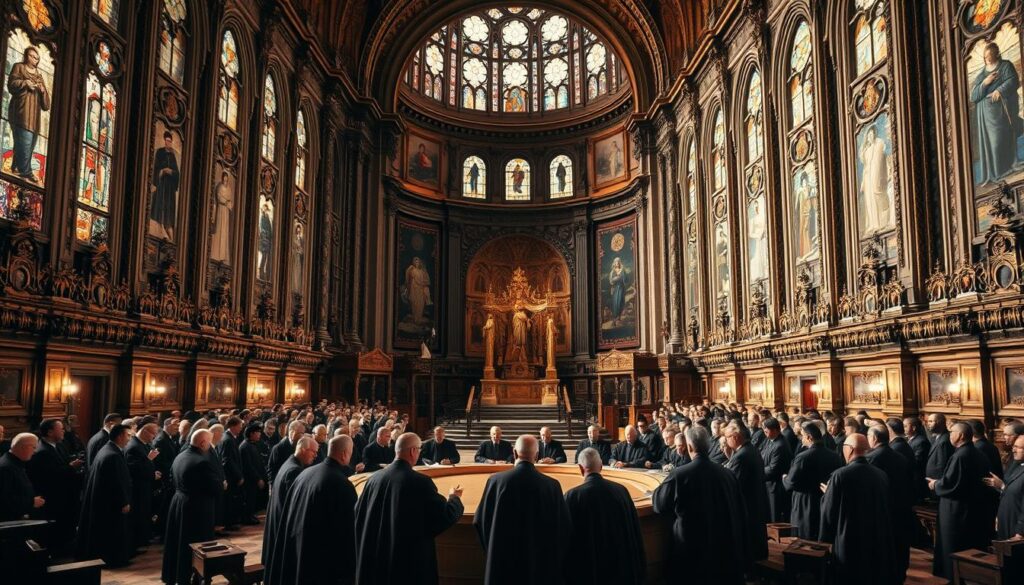
A spiritual earthquake reshaped modern faith communities in the 1960s. The Second Vatican Council (1962-1965) modernized practices while preserving core values. Bishops from 116 countries gathered to help the church speak meaningfully to a changing world.
Worship transformed overnight. Mass shifted from Latin to local languages, letting congregations understand prayers fully. This change turned observers into active participants, deepening personal connections to rituals.
Three key shifts emerged:
- Laypeople gained meaningful roles in ministries and decision-making
- Dialogue with other religions replaced isolationist attitudes
- Social justice became central to spiritual practice
The council’s documents urged compassion over strict rules. As one bishop noted, “Windows were opened to let fresh air into the church.” This approach helped address postwar challenges like nuclear fears and urbanization.
Today, Vatican II’s legacy thrives through interfaith food banks and youth-led prayer groups. Its balance of tradition and adaptation keeps the global community united yet responsive. The council proved ancient institutions could evolve without losing their soul.
Core Roman Catholicism Beliefs
At the heart of Catholic doctrine lies a spiritual compass for daily living. The Nicene Creed beautifully summarizes this roadmap—a 4th-century statement still recited worldwide. It affirms one God in three persons and the church’s role as a unifying force across generations.
Sacred texts form this faith’s foundation. Followers honor the Hebrew Bible’s wisdom while embracing New Testament revelations. Together, they reveal a God deeply invested in human life, from creation to eternal promise.
Seven sacraments make divine grace tangible. Baptism initiates spiritual journeys, while the Eucharist nourishes souls weekly. These rituals aren’t ancient relics—they’re living teachings that shape modern ethical choices and community bonds.
The Catholic Church champions human dignity through action. Its social doctrine inspires hospitals, schools, and climate initiatives. As Pope Francis reminds us, “True worship shows itself in loving service.” This blend of creed and compassion keeps the faith vibrant across 2,000 years.
FAQ
What defines the core teachings of the Catholic Church?
The Church emphasizes Sacred Scripture, Sacred Tradition, and the Magisterium as foundational. Key teachings include the Trinity, salvation through Jesus Christ, and the sacraments as channels of grace.
How does papal authority shape Catholic practices?
The pope, as successor to Saint Peter, holds supreme spiritual authority. He guides doctrine, ensures unity, and interprets faith in modern contexts, influencing global worship and moral teachings.
Why are the sacraments central to Catholic life?
Sacraments like Baptism and Eucharist mark spiritual milestones, offering grace and strengthening faith. They connect believers to Christ and the Church community through visible rituals.
What role did the Second Vatican Council play?
Vatican II (1962–1965) modernized practices, encouraged lay participation, and fostered interfaith dialogue. It updated liturgy, like allowing Mass in local languages, to deepen engagement.
How does Sacred Tradition differ from Scripture?
Sacred Tradition includes teachings passed orally from the apostles, while Scripture is the written Word. Both work together under the Church’s guidance to preserve divine revelation.
What is the significance of apostolic succession?
It ensures bishops’ authority traces back to Jesus’ apostles, maintaining doctrinal continuity. This unbroken lineage validates clergy roles and sacraments’ authenticity.
How does the Church address modern social issues?
It upholds teachings on human dignity, advocating for justice and peace. Topics like marriage, life ethics, and poverty are guided by Scripture and natural law, adapting pastoral approaches.