For over 175 years, a historic landmark in Michigan’s Little Bavaria has united tradition with purpose. What began as a modest log cabin in 1845 now stands as a 38,000-square-foot spiritual hub, blending deep-rooted heritage with modern sustainability. This space isn’t just a place of worship—it’s a living story of resilience and care.
Visitors often marvel at how the building honors its German roots while meeting today’s needs. From handcrafted woodwork to Energy Star certifications, every detail reflects a balance of reverence and responsibility. In 2020, the facility earned an 87 Energy Star score, building on its 2017 achievement of 98—proof that faith communities can lead in environmental stewardship.
But what truly defines this location? It’s the warmth that greets over 3 million guests yearly. Whether attending services or exploring cultural events, people find a blend of authentic hospitality and meaningful connection. The welcoming spirit here extends beyond its walls, supporting local initiatives and fostering fellowship.
Key Takeaways
- Founded in 1845, this historic site has grown from a log cabin to a 38,000-square-foot facility
- Balances German traditions with modern sustainability practices, including Energy Star certifications
- Hosts millions of visitors annually through faith-based programs and cultural experiences
- Actively promotes environmental responsibility while maintaining its architectural heritage
- Serves as both a spiritual anchor and a must-see destination in Frankenmuth
Exploring the Rich History and Architectural Evolution
What began as a 30×30 foot pine shelter in 1845 now stands as a testament to visionary community building. German immigrants constructed their first worship space using local timber, creating what historian Herman F. Zehnder called “a bold declaration of faith on frontier soil” in his book about Frankenmuth’s origins.
From Frontier Outpost to Lasting Legacy
Just 18 months after the log cabin’s completion, a sturdier structure emerged. The Christmas Day 1846 dedication of their combined church-school-parsonage marked Frankenmuth’s first permanent community building. This multi-use space hosted Sunday services, weekday classes, and family gatherings.
| Year | Milestone | Significance |
|---|---|---|
| 1845 | Log cabin completion | First worship space |
| 1846 | Combined facility dedication | Community hub established |
| 1880 | Current building erected | Gothic Revival design |
| 1966 | Modern expansion | Increased capacity |
| Today | Replica structure | Historical education |
Preserving the Past, Inspiring the Future
The carefully reconstructed 1846 building lets visitors step into settlers’ shoes. Its hand-hewn beams and simple furnishings contrast sharply with the 1880 sanctuary’s stained glass and vaulted ceilings. As the posted Frankenmuth CVB notes, this site remains Michigan’s most complete record of German-American religious architecture.
Names tell their own story here. The congregation chose “Lorenz” to honor their Bavarian roots while planting new traditions. Through thoughtful expansions and preservation efforts, they’ve created a living museum of faith and craftsmanship.
st lorenz lutheran church: A Testament to Faith and Community
A journey through time reveals how a small group of settlers built a spiritual cornerstone that thrives today. Their story isn’t just about survival—it’s about creating connections across cultures through shared values.
The Courage and Bravery of Early Settlers
Fifteen families from Bavaria embarked on an extraordinary mission in 1845. Leaving behind everything familiar, they braved ocean crossings and wilderness challenges to establish a Christian community. Their guiding principle, “wie gut und schön es ist bei Jesu sein”, fueled their work with Chippewa neighbors.
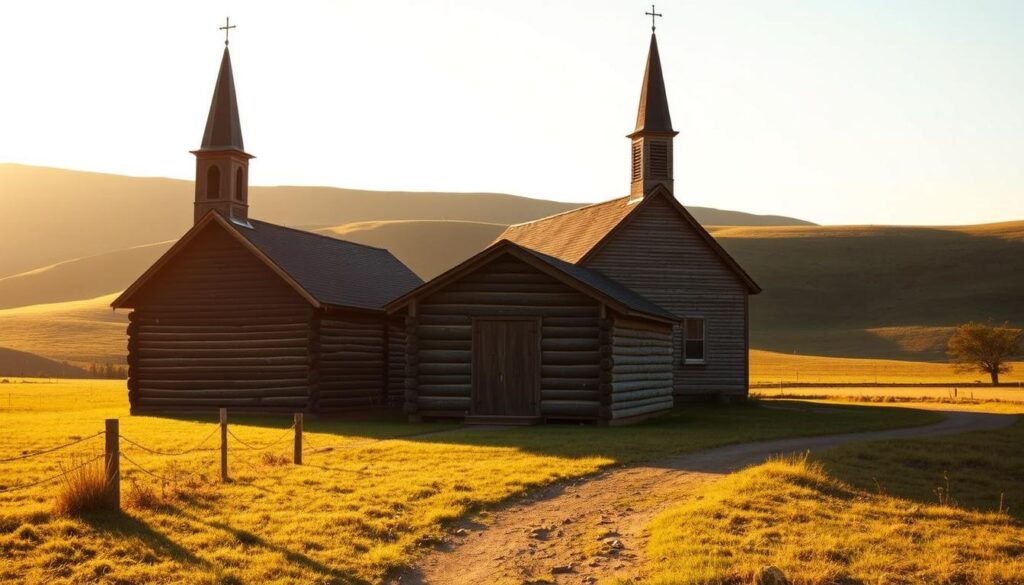
These pioneers turned a simple log structure into a multi-purpose hub. It hosted worship, school lessons, and cultural exchanges. Early records show baptisms of Native American children, marking the start of interfaith collaboration.
Artifacts, Replica Structures, and the Legacy of German Worship
Today, visitors explore tangible links to this past. The museum displays original 1845 record books, while a reconstructed cabin demonstrates frontier living. Two bells brought from Bavaria still ring during monthly German-language services.
The historic cemetery tells silent stories through weathered tombstones inscribed in German. As the posted Frankenmuth CVB notes, these artifacts make history feel alive. Each piece honors the settlers’ vision of unity through faith and education.
The Role of Community in Fostering German Hospitality
German hospitality in Frankenmuth isn’t just a custom—it’s a living tradition shaped by generations. At 1030 West Tuscola Street, the heart of Michigan’s Little Bavaria beats strongest through shared meals, seasonal festivals, and collaborative spirit. Over 3 million annual visitors discover this warmth firsthand, whether attending Sunday services or savoring strudel at community suppers.
Bridging Heritage With Modern Connections
The congregation’s calendar brims with events that honor Bavarian roots while building new relationships. Weekly Kaffeestunden (coffee hours) foster fellowship, while annual heritage workshops teach traditional crafts like woodcarving and pretzel-making. As the Frankenmuth CVB notes, these programs make cultural education feel like family reunions.
| Program | Frequency | Impact |
|---|---|---|
| Choir Performances | Monthly | Preserves German hymns |
| Food Pantry Drives | Quarterly | Supports 500+ families |
| Seasonal Märkte | Biannual | Attracts 15,000 visitors |
Stained glass windows tell silent stories of unity. One panel near the nave shows Pastor Craemer shaking hands with a Chippewa leader—a visual reminder that hospitality transcends cultural boundaries. Visitors often pause here, reflecting on how this ethos still guides outreach efforts today.
To experience this legacy, contact the team at Michigan 48734. Whether joining a quilting circle or touring the apse’s original baptismal font, every interaction embodies the Frankenmuth spirit: “Come as guests, leave as friends.”
Conclusion
In Michigan’s cultural landscape, few places weave heritage and purpose as seamlessly as this historic institution. What began with 15 families now welcomes millions, proving that faith and fellowship can transcend centuries. Visitors discover more than stained glass and hand-carved pews—they find living proof that traditions grow stronger when shared.
The posted Frankenmuth CVB materials highlight its unique role: a spiritual anchor doubling as a cultural time capsule. Monthly German-language worship services connect modern visitors to 1845’s pioneers, while replica structures let hands touch the past. This blend of authenticity and innovation keeps history relevant for new generations.
From community suppers to eco-friendly upgrades, every initiative reflects core values of stewardship and connection. As the Frankenmuth CVB notes, it’s where strangers become friends over strudel and stories. The website offers event details, but true understanding comes through experiencing its welcoming spirit firsthand.
Ultimately, this landmark teaches that lasting legacies aren’t built overnight—they’re nurtured through courage, care, and open doors. Whether drawn by faith or curiosity, all leave inspired by its quiet power to unite across time and tradition.
FAQ
What historical milestones define this congregation’s journey?
Founded in 1845, the congregation began in a humble log cabin before evolving into its current iconic structure. Key moments include surviving early hardships, preserving German worship traditions, and expanding community outreach over 175+ years.
How does the architecture reflect its heritage?
The design blends classic Germanic craftsmanship with modern functionality. Stained glass, hand-carved woodwork, and a replica log cabin highlight the settlers’ dedication to faith and cultural preservation.
What community programs are offered today?
From youth ministries to food drives, the congregation actively supports local needs. Seasonal events, like Christmas markets and heritage festivals, celebrate Frankenmuth’s Bavarian roots while fostering unity.
Are there artifacts or exhibits showcasing its past?
Yes! Visitors can explore historical documents, original hymnals, and a replica of the first log cabin. These displays honor the courage of early settlers and their enduring spiritual legacy.
How does the church embrace German traditions?
Through traditional hymns, seasonal festivals, and partnerships with local businesses, the congregation keeps Bavarian customs alive. This cultural pride strengthens Frankenmuth’s identity as “Michigan’s Little Bavaria.”
Can visitors attend services or tours?
Absolutely. Worship services welcome all, and guided tours of the sanctuary and historical exhibits are available. Check the website for schedules or special event details.