Set in lively District 3 near District 1, this flamboyant pink landmark stops passersby with its salmon-pink facade, soaring octagonal tower, and European-inspired details.
The building dates to the 1870s and saw major updates in the late 19th and early 20th centuries. Its iconic color comes from a 1957 repaint, and the site remains a working parish with posted opening hours.
This short guide covers practical visiting tips, Mass times, the best photo angles, and how to pair a quick stop with nearby attractions like Independence Palace and Notre Dame in chi minh city.
Entrance is free, but crowds vary with tour buses and social media photographers. Plan around services, dress respectfully, and expect helpful transport options from grab or a pleasant 20–30 minute walk from District 1.
Key Takeaways
- Iconic pink exterior and octagonal bell tower make it one of the best things to see in chi minh city.
- Built 1870–1876 with major reconstructions in 1896–1898 and 1928–1929.
- Entrance is free; visit outside Mass and during posted opening windows.
- Top photo spots: Cong Caphe’s bougainvillea balcony and Đinh Công Tráng street angles.
- Pair with nearby attractions and use Grab or a 20–30 minute walk from District 1.
Why Tân Định is Saigon’s “Pink Church” Icon
A bold repaint in 1957 turned this historic landmark into Saigon’s most photographed pink church. That salmon-pink coat set it apart from other religious sites across chi minh city and made the facade instantly recognizable.
The playful color and ornate Neo‑Romanesque/Gothic details now draw photographers and short-form video creators today. Visitors line the sidewalk to frame the octagonal tower and decorative arches.
Behind the viral exterior, tan dinh church remains an active parish. A local community shapes daily life with services, events, and quiet moments of devotion.
- Visual magnet: vivid palette + architecture = must-see things in the city.
- Living place of worship: elegant design meets solemn ritual.
- Practical note: light and weather change how saturated the hue appears; crowds vary.
Mindful photography matters—respect worshippers and parish events while you capture the dinh church’s charm.
tân định catholic church: History and Legacy
What began as a small mission in the 1870s grew into an institution that served worship, education, and printing needs for generations.
From 1870–1876 foundations to a Saigon landmark
The mission was formalized in 1874 and the first building opened in December 1876 at a cost of 15,000 piastres. Early years saw rapid expansion: an orphanage and boarding school opened in 1877 and served about 300 children by the early 1880s.
Key figures who shaped the parish
Father Donatien Éveillard launched the mission, invited the Sisters of Saint‑Paul de Chartres, and started the Imprimerie de la Mission to train disadvantaged youth. He died in 1883 and is buried beneath the nave.
Rebuilds, art, and the mission press
Major rebuilds in 1896–1898 (Father Louvet) and 1928–1929 (Father Jean‑Baptiste Nguyễn Bá Tòng) added the front tower, vestibule, and false ceiling. Italian marble altars were installed in 1929, creating some of Saigon’s most elaborate church interiors.
The presses ran until 1951; selected artifacts are viewable by request at St. Joseph’s Seminary museum. Today the site remains a living parish and local community anchor in chi minh city, notable for its nave, triforium, side aisles and graceful arches.
How to Visit Tan Dinh Church in Ho Chi Minh City
Finding the landmark is straightforward when you use the street address and a rideshare app. The exact spot is 289 Hai Bà Trưng Street, District 3, just a short ride from District 1 and close to local markets and cafes.
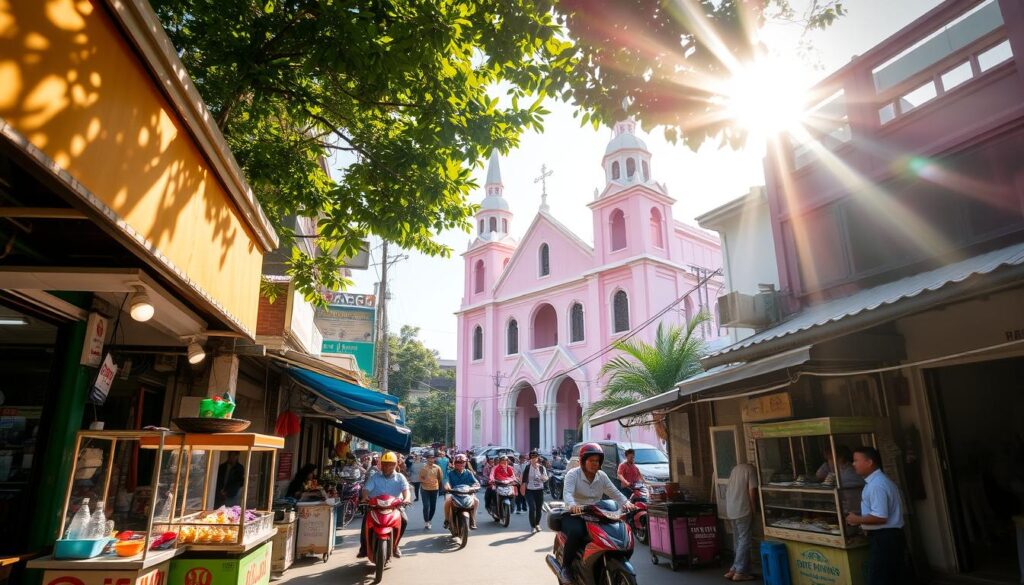
Best ways to get there: order a Grab or taxi in chi minh city to arrive at the gate with minimal fuss. Walking from central District 1 takes about 20–30 minutes if you enjoy a shaded stroll along trung street corridors.
Public transit and budget options
For budget travel, catch buses 31 or 36, which stop nearby on hai trung street. Other routes such as 03, 30, and 150 serve nearby corridors and stops by local schools and parks.
On-the-day logistics
Driving? Use Lê Văn Tám Park parking lots (Hai Bà Trưng, Điện Biên Phủ, Võ Thị Sáu) and walk a few blocks to the site. Cross the busy street carefully, keep belongings secure, and check posted hours before you plan photos.
- Pin the location in your travel app to streamline how to get tan dinh.
- Combine stops—pair a morning visit with coffee and a loop to Independence Palace and the Central Post Office in chi minh.
- Timing tip: sidewalks get crowded mid-morning; arriving earlier is the better way to enjoy calm.
Opening Hours, Mass Times, and Visitors Allowed Inside
On most days there are morning and afternoon visiting periods, separated by a mid‑day closure for parish activities. Posted times vary by source, so expect slight differences between guides and the gate notice.
Current visiting windows (subject to change)
Common patterns: many sources list windows like 8:00–11:00 and 14:00–16:30 or 8:00–12:00 and 14:00–17:00. Some notices show Tuesday–Saturday blocks and reduced access on Sundays. Check the bulletin board at the gate when you arrive.
Mass schedule: times to avoid for sightseeing
Masses are held early and in the evening. Typical weekday services start as early as 5:00 am, with other times around 6:15 am, 17:30, and 19:00. Sundays have multiple masses from dawn through evening. Visitors allowed inside are generally asked to wait outside during active liturgy.
Respectful visiting and interior access today
Entrance is free, but do not block pathways or taped areas. Wear modest clothing—covered shoulders and knees—and keep voices low in the nave. Early morning brings fewer crowds and cooler air; mid‑afternoon light gives the best facade color for photos.
- Tip: arrive outside mass times to maximize access.
- Note: some sources report limited interior visits on Sundays; follow onsite staff guidance in chi minh.
- Quick guide: if doors are closed, the exterior angles still offer great views today.
Architecture Highlights: Color, Arches, and the 52.62-meter Tower
A bold 1957 repaint gave the façade its iconic salmon tone that now defines the landmark across the neighborhood. That change turned the building into one of the most photographed sites in chi minh city and changed how people frame the view from nearby streets.
Romanesque form meets Gothic flourish: the structure rests on a solid Romanesque core while pointed arches, ribbed vaults and flying buttresses lend vertical drama. A false ceiling conceals the original barrel vault, but the nave still reads grand thanks to generous proportions and light.
The octagonal tower and its details
The 52.62-meter octagonal tower was added during the 1928–1929 works. It houses six bells, a clock with a pink surround and golden numerals, and is crowned by a 3‑meter copper cross. From blocks away the tower acts as a clear focal point in the city skyline.
Interior finishes and chapels
Inside, richly carved Italian marble altars (installed in 1929) anchor the high altar and side chapels. Two apsidal chapels near the entrance honor Mary & Joseph and St. Theresa and often hold devotional candles.
“The interplay of color and shadow around the arches is what makes a classic composition.”
| Feature | Notable Detail | Years |
|---|---|---|
| Façade color | Salmon-pink repaint | 1957 |
| Tower | Octagonal, clock, six bells, copper cross | 1928–1929 (added) |
| Altars | Italian marble high & side altars | Installed 1929 |
| Structure | Romanesque base with Gothic ribs and flying buttresses | Late 19th–early 20th centuries |
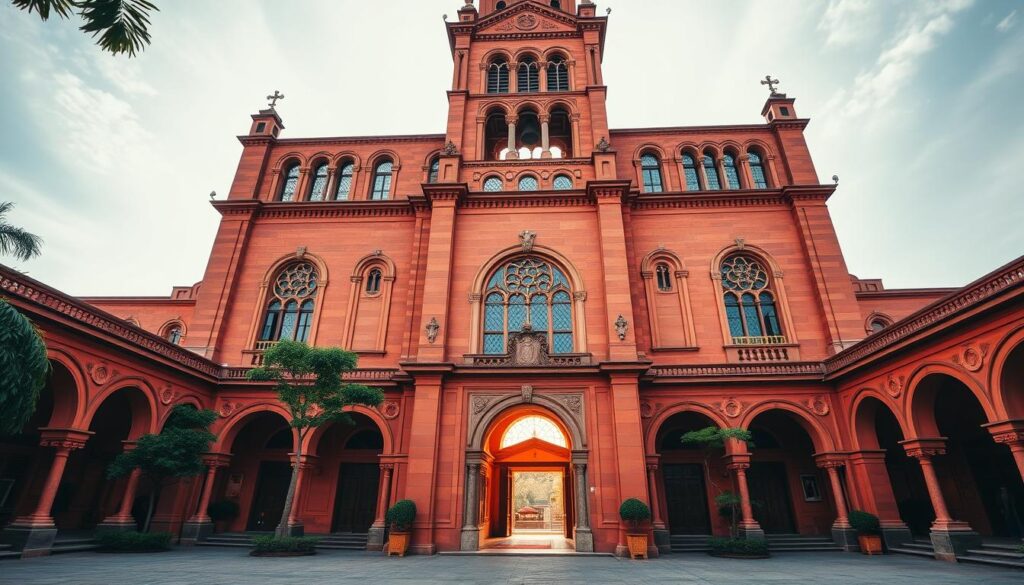
- Photo tip: shoot at low angle to include tower and arches together.
- Detail note: inspect the sculpted marble and clock surround up close before stepping back for a wider shot of the dinh church.
Best Time to Visit and Where to Get the Perfect View
Timing makes all the difference when you want vivid color and fewer people in your frame.
Light matters: arrive early for soft, golden tones and quiet streets. For the most saturated facade, aim for 3:00–4:30 pm. Near sunset the front often falls into shade, so avoid waiting until the last hour.
Top viewpoints
For a framed view, the bougainvillea balcony at Cong Caphe Hai Bà Trưng is iconic (purchase a drink to go upstairs). Ola Hale offers a similar angle with fewer crowds in late afternoon. Street-level shots from Đinh Công Tráng or directly across the road give dynamic compositions with traffic and trees.
Photography tips
- Use a moderate wide-angle lens to capture the tower without distortion.
- Step inside the grounds during open windows for symmetrical, power-line‑free shots.
- Compose tight details (clock face, door arches) if crowds block wide views.
- Wait for the sun to punch the paint; a brief cloud can flatten color.
- Pre-pin locations in your map app to get tan dinh views quickly when time is tight in chi minh city.
| Best Time | What to Expect | Recommended Spot |
|---|---|---|
| Early morning | Soft light, fewer people | Street-level on Đinh Công Tráng |
| 3:00–4:30 pm | Most saturated color | Cong Caphe bougainvillea balcony / Ola Hale |
| Near sunset | Facade may fall in shade | Step inside grounds or focus on details |
Nearby Attractions and Where to Eat & Drink
Plan a full day around the pink landmark and nearby highlights for a compact, walkable Saigon loop. This area packs major attractions, lively markets, and plenty of places to eat drink between stops.
Make a day of it: Independence Palace, Notre Dame, Ben Thanh, Nguyen Hue
Start at tan dinh church then swing by Independence Palace, Notre Dame Cathedral, and the Saigon Central Post Office. Walk or take short Grab hops to save time.
Finish the day on Nguyen Hue Walking Street before sunset for people-watching and lights. Add Ben Thanh Market for market vibes, snacks, and souvenirs.
Eat and drink near Tan Dinh: Coffee with a view and local bites
Take coffee breaks at Cong Caphe Hai Bà Trưng or Ola Hale—both offer views and a shaded place to recharge between photos. Street-food stalls and small eateries on Hai Bà Trưng serve cheap, classic plates for lunch.
- Efficient way: curated walking loop plus occasional Grab rides keeps the day easy.
- Pro tip: leave room for a second pass by the landmark if the morning light was flat.
- Packing: bring water, sunscreen, and a hat—the sidewalks can get hot.
| Stop | Why go | Best time |
|---|---|---|
| Independence Palace | Historic rooms and photo ops | Morning |
| Saigon Notre Dame & Post Office | Classic architecture and maps inside | Midday |
| Ben Thanh Market | Local food, souvenirs, market life | Afternoon |
| Nguyen Hue | Evening stroll and city lights | Sunset / Night |
Why this works: the route fits tight travel plans and shows the best things in chi minh city without long transfers. Enjoy the area, eat drink often, and soak up local life between sights.
Conclusion
This short guide helps you plan a smart visit to tan dinh. Pin 289 Hai Bà Trưng so your driver takes the fastest way and check posted hours before you go.
Make time for an early morning walk for quiet light, or return mid‑afternoon for the richest pink color and best view. Avoid Mass times and ask at the gate if visitors allowed inside are limited.
See the Italian marble altars, the tall tower, and the vivid facade. Treat the site as both a sacred place and a design icon. Pair courtyard time with a coffee on Hai Trung for varied angles and a fuller travel experience.
FAQ
Where is Tan Dinh Church located in Ho Chi Minh City?
The church sits at 289 Hai Bà Trưng Street in District 3, very close to District 1. It’s an easy short ride by Grab or taxi from central landmarks like Ben Thanh Market and Notre Dame Cathedral.
What are the opening hours and mass times for visitors?
Opening hours can change, but the grounds typically open in the morning and remain accessible until late afternoon. Masses run on weekdays and several times on Sunday, so check the parish notice board or local listings before visiting to avoid service times if you’re only sightseeing.
Can visitors go inside and are there any dress code rules?
Yes, visitors are generally allowed inside when no service is in progress. Dress respectfully: shoulders covered and shorts or skirts of a modest length. Keep voices low and follow any guidance from church staff.
Why is it known as the “Pink Church”?
The striking pink exterior and white trim give the building its nickname. The color was applied during restoration work and has become a defining visual identity that attracts photographers and tourists.
What are the best times to photograph the building?
Early morning offers soft light and fewer people, while late afternoon brings warm tones that enhance the pink facade. Weekdays are quieter than weekends for unobstructed shots.
How can I get there using public transit?
Several city buses serve routes near Hai Bà Trưng. Bus lines such as 31 and 36 stop within walking distance; check current route maps and schedules since services can change.
Is there parking nearby if I drive or take a motorbike?
Limited street parking and small lots are available close to the church. Many visitors choose motorbike or rideshare to avoid hunting for parking in the busy district.
What architectural features should I look for during my visit?
Notice the Romanesque and Gothic influences: rounded arches, vaulted interiors, the octagonal bell tower with clock, and Italian marble altars inside. The vivid color and decorative trims are also standout elements.
Are guided tours available or recommended?
Official guided tours are uncommon, but local tour operators sometimes include the site on walking routes through District 3. A self-guided visit works well—bring a guidebook or app for historical context.
What nearby attractions can I add to a half-day itinerary?
Combine a stop at the church with visits to Independence Palace, Saigon Notre-Dame Basilica, Ben Thanh Market, and Nguyen Hue walking street for a full taste of the city’s history and food scene.
Where are good places to eat or get coffee nearby?
Hai Bà Trưng and surrounding streets have many cafés and local eateries. Look for street-side coffee shops, Vietnamese sandwich stalls, and small restaurants serving pho, bánh mì, and regional snacks to enjoy after your visit.
Are there any accessibility considerations for visitors with limited mobility?
Parts of the site have steps and uneven paving. Entrance access may be limited in some areas, so contact the parish ahead of time if you require special assistance or wheelchair access.
Is photography allowed inside and are tripods permitted?
Photography is generally allowed, but be discreet and turn off flash during services. Tripods can disturb other visitors and may be restricted—ask staff before setting one up.
How old is the church and who were key historical figures in its founding?
The building’s foundations date from the 1870s. Important figures in its early history include the French missionary Donatien Éveillard and Bishop Nguyễn Bá Tòng, who helped shape its role in the city’s religious life.