Many people wonder why discussions about the Ten Commandments vary across Christian traditions. The answer lies in how different groups organize these ancient laws. While the Bible doesn’t number them, faith communities have developed distinct systems over centuries.
In the Catholic tradition, the first commandment covers both exclusive worship of God and prohibitions against idolatry. This differs from Protestant interpretations that separate these concepts into two directives. The Church’s approach emphasizes complete devotion to divine authority rather than focusing solely on physical representations.
Historical context helps explain this difference. Early Christian leaders grouped commandments to highlight theological priorities. This structure reinforces that worship belongs solely to God, with imagery serving as tools for devotion rather than objects of worship themselves.
Understanding this distinction clarifies why religious art and statues hold significance in Catholic practice. These elements aren’t worshipped but help focus attention during prayer and reflection. The Church maintains its teachings align fully with biblical principles, despite organizational variations.
Key Takeaways
- Christian traditions number commandments differently due to biblical text organization
- The Catholic Church combines worship directives Protestants separate
- Commandment numbering reflects theological emphasis, not content removal
- Religious imagery serves devotional purposes rather than idolatrous ones
- Historical context shapes how faith groups interpret ancient laws
Biblical Foundations and Historical Context
Ancient texts often reveal deeper meanings when we explore their original settings. The Ten Commandments gain clarity when studied through their cultural and literary background. Let’s examine how these directives developed across centuries of sacred history.
Exodus and Deuteronomy Insights
Exodus 20:4’s famous warning against making “any likeness of what’s in heaven above or the earth beneath” connects directly to verse 3’s command against serving “gods” besides Yahweh. This pairing shows the Old Testament primarily targets idol worship rather than artistic expression.
Deuteronomy’s restatement introduces subtle shifts. Where Exodus groups “house” and “wife” together, Deuteronomy 5:21 separates them. This progression reveals how words evolved to address community needs more precisely over time.
Progressive Revelation in the Old Testament
Scripture unfolded across 1,500 years like a slow sunrise. Early permissions for divorce (Deuteronomy 24:1) later face divine criticism (Malachi 2:16) before Jesus’ final clarification (Matthew 19:8). This pattern applies to understanding images too.
Hebrews 1:1-2 captures this concept perfectly: “God spoke to our fathers in many ways.” Each generation received clearer insights as people grew ready to grasp deeper truths. What began as strict rules against Canaanite idol worship matured into nuanced spiritual principles.
The Role of Images and Idolatry in Scripture
Scripture contains surprising examples where divine instructions require artistic creations. These passages challenge modern assumptions about religious symbols. Let’s explore how sacred texts distinguish between meaningful imagery and forbidden idolatry.
Statues, Cherubim, and Commanded Images
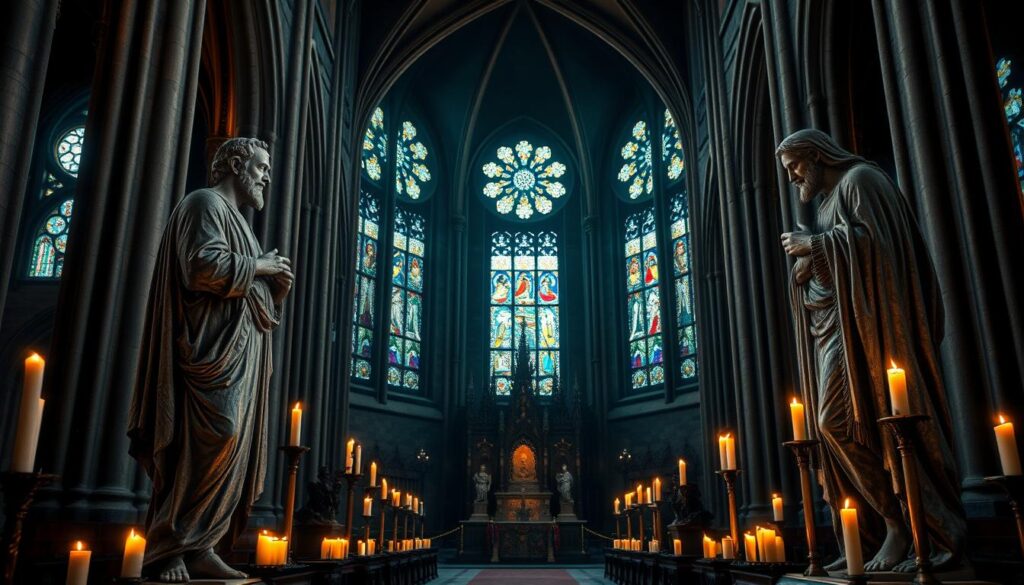
God directly ordered Moses to craft golden cherubim statues for the Ark’s lid (Exodus 25:18-22). These winged figures served as visual reminders of heavenly realities. Centuries later, Solomon’s Temple featured massive angelic statues – 15-foot-tall cherubim with olivewood bodies and gold overlay.
The bronze serpent story reveals another layer. When venomous snakes plagued Israel, God told Moses to “make a snake and put it on a pole” (Numbers 21:8). This healing symbol later became misused, showing how context determines an object’s purpose.
Biblical Examples of Image Worship
Ancient Israel struggled with confusing holy symbols and idols. The golden calf incident (Exodus 32) demonstrates worship gone wrong – people danced around a statue while calling it their deliverer. Contrast this with the Ark’s cherubim, which pointed beyond themselves to God’s presence.
King Hezekiah’s reform makes this distinction clear. He destroyed Moses’ bronze serpent because people burned incense to it (2 Kings 18:4). The object wasn’t evil – its misuse as an idol demanded removal.
| Approved Images | Forbidden Idols | Key Difference |
|---|---|---|
| Ark cherubim | Golden calf | Divine instruction vs human invention |
| Bronze serpent | Nehushtan worship | Healing tool vs worshiped object |
| Temple carvings | Baal statues | Artistic decoration vs deity replacement |
These examples show biblical faith values intent over objects. Sacred art becomes problematic only when people confuse representation with reality. Properly used images direct hearts toward spiritual truths rather than replacing them.
Understanding the Catholic 2nd Commandment: Faith in Tradition
Throughout history, religious practices have sparked intense debates about proper devotion. The Church addressed these discussions head-on during the 16th-century Council of Trent. This pivotal meeting shaped how believers interact with sacred art today.
The Council of Trent’s Clarification
Facing Reformation-era criticisms, Church leaders made bold declarations about religious symbols. Their 1563 decree stated: “Images of Christ, the Virgin, and saints should be kept in churches.” This ruling affirmed visual aids as spiritual tools rather than idols.
The council drew clear lines between veneration and worship. Latria (divine adoration) belongs solely to God. Dulia (honorary respect) applies to holy figures. This distinction prevents confusion between honoring heroes and worshipping deities.
| Approved Practice | Forbidden Action | Key Principle |
|---|---|---|
| Displaying Mary and saints’ images | Bowing to statues as divine | Honor passes to the person, not the object |
| Lighting candles before icons | Asking images for miracles | Art inspires prayer but doesn’t answer it |
| Processions with sacred statues | Believing statues hold power | Focus remains on heavenly realities |
Modern churches follow these guidelines through updated catechism teachings. While statues fill sacred spaces, members aren’t required to use them. The Church emphasizes that plaster and paint hold no magic – they simply point toward higher truths.
This balanced approach maintains tradition while avoiding superstition. As one theologian noted: “We don’t kiss family photos because they’re magical – we kiss them because they remind us of love.” Sacred art works similarly in faith communities.
Contrast in Commandment Numbering and Interpretations
Religious traditions sometimes differ in ways that surprise casual observers. The Ten Commandments present a fascinating case study – identical texts interpreted through distinct organizational lenses. Scripture’s original lack of numbering created space for meaningful variations in understanding divine law.
Historical Divisions of the Commandments
Ancient Hebrew texts contain 13 distinct directives where we now count ten. Faith communities condensed these into memorable groupings. One system combines warnings against false gods and idol-making into a single first commandment, while another treats them separately.
This organizational choice impacts how believers prioritize spiritual dangers. When grouped together, the focus shifts to complete rejection of anything competing with divine authority. Separated commands highlight specific risks like physical idol creation versus misplaced allegiances.
Implications for Worship and Practice
Numbering differences shape devotional approaches. Communities combining the initial directives often emphasize internal motivations over external actions. Those separating them might create specific rules about religious art and symbolic gestures.
The final commandments reveal another contrast. Some traditions distinguish between coveting relationships and possessions, while others treat all desire equally. This affects teachings about marriage, property rights, and personal contentment.
| Catholic System | Protestant System | Practical Impact |
|---|---|---|
| Combined worship commands | Separate deity/image rules | Art usage guidelines differ |
| Split coveting rules | Single coveting command | Marriage vs property ethics |
| Honor parents as #4 | Honor parents as #5 | Family role prioritization |
These variations remind us that love keep commandments matters more than numbering systems. As one scholar noted: “The law’s spirit outlives its organizational structure.” Both approaches aim to guide believers toward righteous living through different pedagogical paths.
Modern Implications and Debates on Idolatry
Modern discussions about religious symbols often spark heated debates. Many misunderstand practices involving sacred art, confusing respectful honor with divine worship. Let’s explore how ancient principles apply to today’s spiritual landscape.
Contemporary Challenges and Misconceptions
Some critics claim churches use statues and images improperly. They point to saints’ depictions or communion rituals as potential idolatry. However, these practices follow specific guidelines established over centuries.
Biblical examples show people showing respect to leaders without worshipping them. The prophet Elijah received deep reverence, just as many honor historical figures today. Sacred art serves similar purposes – reminding believers of virtuous lives rather than replacing divine focus.
Modern confusion often stems from different definitions of honor. While God commands exclusive worship, showing respect to holy people appears throughout Scripture. The key difference lies in intention: Are we glorifying created things or the Creator?
| Common Practice | Misconception | Reality |
|---|---|---|
| Lighting candles before icons | “Worshipping statues” | Honoring the person depicted |
| Praying to saints | “Replacing God” | Seeking heavenly support |
| Eucharistic adoration | “Bread worship” | Celebrating divine presence |
Recent surveys show 62% of Americans misunderstand these distinctions. Clear communication helps bridge gaps between traditions. As one theologian notes: “Symbols speak louder than words – but only when we understand their language.”
Interfaith dialogue benefits from recognizing shared values. Most traditions agree that ultimate reverence belongs to the divine. How communities express this truth simply varies based on cultural and historical contexts.
Conclusion
Understanding sacred texts requires looking beyond surface-level differences. The debate over divine laws centers on how communities organize principles, not their essence. Both major Christian traditions preserve all biblical directives—they simply highlight various aspects of spiritual truth.
Pope Leo XIII’s teachings remind us that “the Old Testament prepares the way for salvation.” This perspective helps explain why some groups merge warnings against idolatry with calls for exclusive devotion. What matters most isn’t numbering, but whether our hearts turn toward heaven.
Scripture’s warning against creating “likenesses of anything in heaven” targets misplaced worship, not artistic expression. Modern believers face similar challenges—distinguishing between tools for connection and objects demanding loyalty.
Ultimately, the commandments guide people toward loving God and neighbor. Whether carved in stone or written on the heart, their power lies in shaping lives that reflect divine goodness on earth.
FAQ
Why do some Christian traditions split the Ten Commandments differently?
The division of the commandments stems from ancient Jewish and Christian interpretations. The Catholic Church follows Augustine’s tradition, combining prohibitions against idolatry into the first commandment and splitting coveting into two. Other traditions, like Lutheranism, follow a different numbering system rooted in earlier Hebrew texts.
How does the Church reconcile statues with Exodus 20’s warning against graven images?
The Catechism distinguishes between idolatrous worship and veneration of sacred art. For example, God commanded Moses to craft cherubim for the Ark (Exodus 25:18–20). Statues of saints or Mary are seen as reminders of faith, not objects of worship, aligning with Pope Leo III’s defense of icons in the 8th century.
Are there biblical examples of images being used positively?
Yes! The bronze serpent (Numbers 21:8–9) and the Ark’s cherubim (Exodus 37:7–9) were God-commanded images. These served as tools for teaching or worship aids, not idols. The key distinction lies in intent—whether the image directs hearts toward God or replaces Him.
How do modern believers avoid idolatry in a materialistic world?
The Catechism teaches that idolatry extends beyond statues to prioritizing wealth, power, or ideologies over God. It’s about the heart’s posture—guarding against letting anything, even good things, overshadow one’s devotion to the Divine.
Why does tradition play a role in interpreting commandments?
The Church views Scripture and Apostolic Tradition as intertwined. Councils like Nicaea II (787 AD) clarified that honoring sacred images isn’t worship but a way to deepen reverence for God’s work through holy figures, ensuring teachings remain consistent across generations.