From towering steeples to intricate stained glass, spiritual spaces often reflect both divine inspiration and human creativity. This guide highlights remarkable worship centers that have shaped religious history across continents. These structures serve as living testaments to the rich diversity of Protestant traditions, blending sacred purpose with cultural identity.
With over 900 million followers worldwide, Protestant Christianity encompasses numerous denominations, each with distinct practices and beliefs. Anglicans, Baptists, and Lutherans represent just a few branches of this vibrant faith tradition. Many of their gathering places tell stories of perseverance, innovation, and community-building that span centuries.
What makes these sacred sites truly special? They’re more than buildings – they’re living centers of faith that continue shaping local cultures. From historic cathedrals that witnessed societal transformations to modern hubs fostering connection, each location offers unique insights into spiritual devotion.
Key Takeaways
- Protestant Christianity includes diverse traditions with global followings
- Historic worship spaces blend architectural beauty with cultural significance
- Modern faith communities maintain centuries-old spiritual legacies
- Sacred buildings often reflect local artistic styles and historical events
- These centers remain vital for community support and spiritual growth
As we journey through these extraordinary locations, you’ll discover how faith communities adapt while preserving core values. Whether through Gothic arches or contemporary designs, each space reveals new dimensions of religious expression in our modern world.
An Overview of Protestant Church History
A spiritual revolution reshaped Europe in the 1500s, challenging centuries-old religious structures. This movement didn’t just alter beliefs – it rewrote how communities connected with faith. At its core lay a simple yet radical idea: direct access to divine truth through scripture.
Origins and Reformation
Martin Luther’s 1517 critique of indulgences ignited what we now call the Reformation. His 95 Theses questioned the Roman Catholic Church’s practices, emphasizing personal faith over institutional tradition. Other thinkers like John Calvin expanded these ideas, creating distinct theological frameworks that still guide various denominations today.
Three revolutionary principles emerged:
- Scripture as ultimate authority (sola scriptura)
- Salvation through faith rather than deeds
- Every believer’s right to interpret biblical texts
Key Historical Milestones
Landmark events cemented these changes across Europe. The Augsburg Confession (1530) formally defined Lutheran beliefs, while England’s 1534 break from Rome created the Anglican church. These developments sparked cultural shifts that extended far beyond religion, influencing education, politics, and social structures.
By the 1600s, Reformed theology had spread through:
- Calvinist movements in Switzerland
- Presbyterian communities in Scotland
- Various nonconformist groups across the continent
This era laid groundwork for today’s diverse spiritual landscape, where personal conviction and community practice coexist in modern worship spaces.
Defining Protestant Denominations and Their Heritage
Imagine a sprawling family tree where each branch represents a unique approach to faith. That’s what you’ll find within Protestantism – nine major denominational families shaped by history, culture, and conviction. While sharing core principles like salvation through grace, each group developed distinct practices that continue evolving today.
Distinctive Beliefs and Doctrines
Anabaptists broke from mainstream reformers in the 1520s, insisting on adult baptism. Their modern descendants like the Amish still prioritize community over individualism. Across the English Channel, Anglican tradition blends Catholic rituals with reformed theology – a middle path reflected in their Book of Common Prayer.
Baptists took congregational autonomy further than most. Their emphasis on personal conversion experiences resonates strongly in America’s Bible Belt. Meanwhile, Lutherans preserved liturgical traditions while championing Martin Luther’s “faith alone” doctrine. You’ll find their ornate altarpieces from Germany to Minnesota.
Cultural and Regional Influences
Geography shapes faith expressions as much as theology. Scottish Presbyterians distilled Calvin’s teachings into democratic church governance. Korean Methodists fused Wesleyan principles with Confucian respect for elders. Even within one denomination, practices vary wildly – compare Dutch Reformed austerity to Ghanaian Pentecostal exuberance.
These adaptations aren’t just historical footnotes. When Swedish Lutherans settled the Midwest, they built steeples resembling Nordic evergreens. Today, Haitian Baptists incorporate drum rhythms into worship. This living heritage proves traditions grow strongest when rooted in local soil.
Exploring 5 Protestant Churches
Across six continents, spiritual gatherings reveal how belief systems adapt to local customs while preserving core values. Our curated selection highlights worship spaces that embody this balance through their history, design, and community roles.

What Makes These Spaces Stand Out?
Each location earned its place through a mix of four key factors:
- Historical footprints: Sites that shaped religious movements
- Cultural blending: Architecture merging local and traditional styles
- Community impact: Centers addressing social needs beyond worship
- Global influence: Institutions guiding international faith practices
Take England’s Anglican mother church, serving 26 million members while preserving medieval traditions. Contrast this with Brazil’s vibrant Pentecostal network, where 22.5 million believers embrace contemporary worship styles. These examples show how shared beliefs manifest differently across cultures.
From Congo’s unified Christian body to Nigeria’s growing Anglican community, each denomination tells a unique story. Ethiopia’s Lutheran-rooted group demonstrates how ancient Christian lands reinterpret Reformation ideals. Together, they form a mosaic of modern spiritual expression.
These institutions aren’t frozen in time – they’re living laboratories where centuries-old doctrines meet 21st-century challenges. Their steeples and sanctuaries continue inspiring both devoted members and curious visitors worldwide.
Architectural Brilliance and Iconic Designs
Sacred spaces speak through their structures, where every arch and aisle carries deeper meaning. Architectural choices in worship buildings often mirror core beliefs, creating physical expressions of faith traditions.
Unique Structural Features
Many historic gathering places showcase clever design solutions. One church in Germany perfected acoustics that carry whispers to back pews, making sermons audible without microphones. Modern adaptations prioritize flexibility – movable chairs replace fixed pews to host community events or youth programs.
Regional influences shine through materials and layouts. Scandinavian designs use light pinewood ceilings to combat dark winters, while African congregations incorporate open-air courtyards for vibrant singing. These choices blend practicality with cultural identity.
Symbolism in Church Architecture
Every element holds intentional meaning. Elevated pulpits emphasize scripture’s importance, while clear glass windows replace ornate saints to highlight nature’s beauty as divine art. Central crosses often stand alone, avoiding distractions from core beliefs.
| Feature | Traditional Style | Modern Approach |
|---|---|---|
| Pulpit Placement | High wooden platform | Circular stage design |
| Light Sources | Stained glass narratives | Skylights & LED panels |
| Community Spaces | Separate fellowship halls | Convertible worship areas |
Today’s designs increasingly favor sustainability. Solar panels on rooftops and rainwater collection systems reflect stewardship values. This evolution shows how timeless principles adapt to contemporary needs while maintaining spiritual focus.
Uncovering the Stories Behind These Churches
Great institutions often begin with visionary individuals who transform faith into action. Let’s explore how specific historical figures shaped spiritual communities that still thrive today.
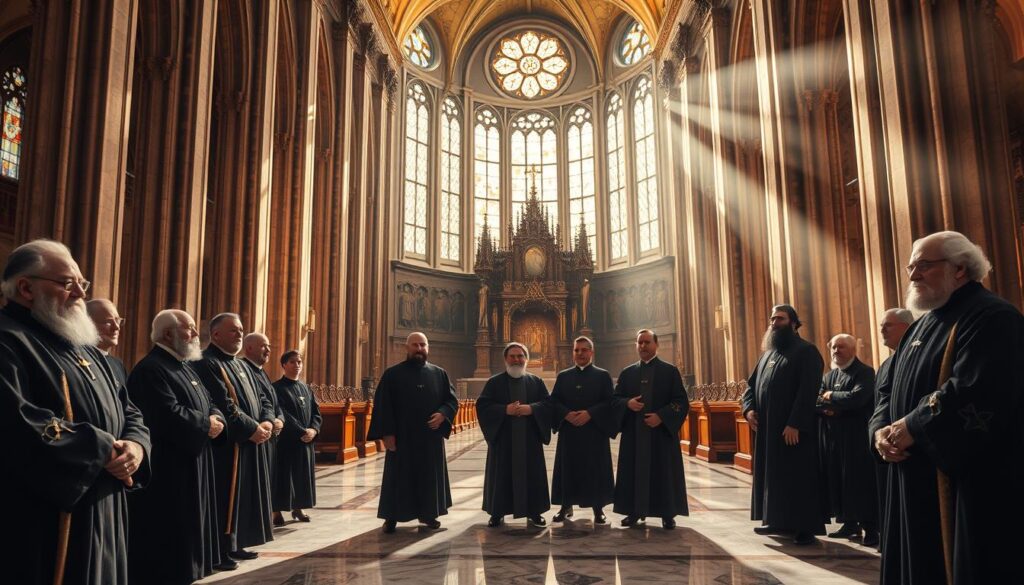
Architects of Faith
John Wesley’s horseback travels across 18th-century Britain birthed a movement. His 40,000 sermons didn’t just spread Methodist ideas – they created small groups that became community anchors. Centuries later, Martin Luther King Jr. used his Baptist pulpit to declare, “Injustice anywhere is a threat to justice everywhere.”
These leaders shared a common thread:
- Grassroots organizing through local churches
- Practical solutions for daily life challenges
- Lasting institutions bearing their founders’ names
Living Legacies in Action
Many congregations started with ordinary people addressing urgent needs. One Midwestern church began as a 1920s soup kitchen during hard times. Today, it runs a tech training center for unemployed veterans.
Modern faith communities continue this tradition through:
- After-school literacy programs
- Free medical clinics
- Disaster relief networks
As you walk through these sacred spaces, remember – every stained glass window and food pantry shelf tells stories of human resilience meeting divine purpose.
Major Protestant Denominations in the United States
America’s religious landscape tells a story of faith adapting to new frontiers. Four key groups have shaped spiritual practices while reflecting the nation’s evolving identity. Their distinct approaches reveal how ancient beliefs thrive in modern society.
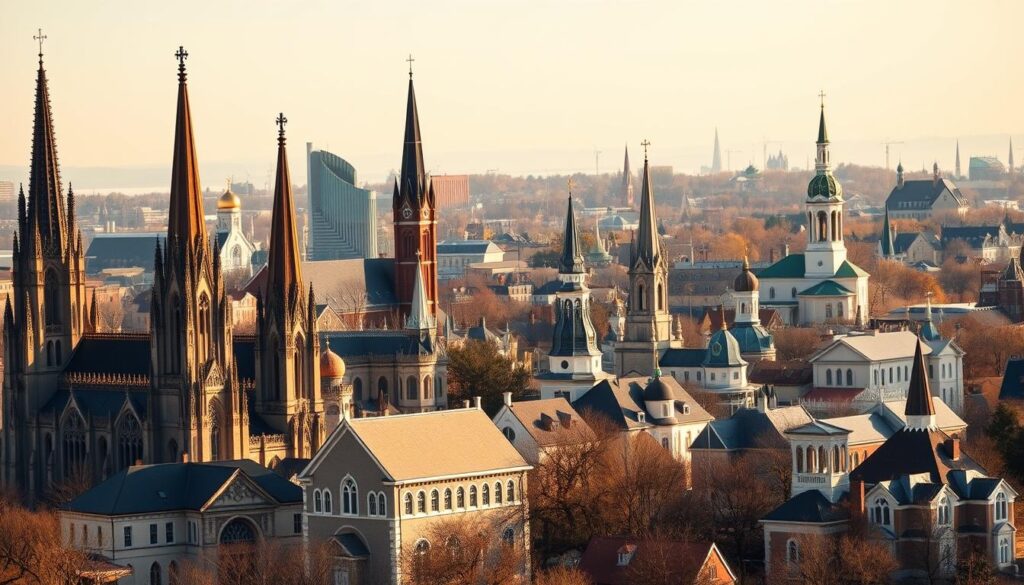
Southern Baptist and Methodist Traditions
The Southern Baptist Convention leads as America’s largest Protestant denomination, with 12.7 million members. Their emphasis on personal conversion and local church autonomy mirrors American ideals of individual liberty. Baptisms by immersion symbolize conscious faith commitments rather than infant rituals.
Methodist growth exploded through 19th-century frontier strategies. Circuit riders on horseback and outdoor revivals built communities where pews preceded town halls. Today’s United Methodist Church maintains this activist spirit through global missions and prison reform advocacy.
Anglican and Lutheran Influences
Colonial-era Anglicans became the Episcopal Church after American independence. They blend ancient liturgy with modern social stances – ordaining women since 1976 and LGBTQ+ clergy since 2015. Their Book of Common Prayer remains a literary treasure.
Lutheran immigrants from Northern Europe planted robust communities. The Evangelical Lutheran Church preserves Reformation theology while hosting Scandinavian heritage festivals. Their colleges like Gettysburg and St. Olaf became educational cornerstones.
| Denomination | Membership | Key Feature | Cultural Impact |
|---|---|---|---|
| Southern Baptist | 12.7 million | Congregational governance | Bible Belt influence |
| United Methodist | 9.9 million | Social justice focus | 50+ US colleges |
| Episcopal | 1.7 million | Liturgical flexibility | Historic campuses |
| Evangelical Lutheran | 3.3 million | Heritage preservation | Immigrant support networks |
These groups prove traditions grow stronger when rooted in local soil. From voter guides to food pantries, they continue shaping communities beyond Sunday services.
Comparing Protestant Movements and Family Trees
Global faith communities thrive through diverse organizational styles. While sharing core Christian beliefs, major groups developed unique structures reflecting their theological priorities. Let’s explore how four influential traditions balance unity with local expression.
Anglican vs. Baptist Approaches
The Anglican church unites 85 million believers under bishops’ guidance. This episcopal system preserves historical continuity through formal leadership roles. In contrast, Baptist churches champion local autonomy – each congregation governs itself without centralized authority.
Anglicans blend ancient rituals with modern flexibility, using prayer books across 165 countries. Baptists prioritize personal faith commitments, often holding believer’s baptism services in rivers or pools. Both models demonstrate how denominations adapt governance to their spiritual visions.
Lutheran and Methodist Developments
Lutheran church traditions emphasize Martin Luther’s teachings through liturgical services. Their 78 million members maintain Reformation-era hymns and sacramental practices. Meanwhile, reformed churches inspired by Calvinist theology focus on community transformation through education and activism.
Methodist groups expanded this social focus, creating networks of schools and hospitals. These developments show how family branches grow distinct while nurturing shared roots. From Africa’s booming congregations to Europe’s historic parishes, each tradition evolves within its cultural context.
This denominational diversity proves faith flourishes through multiple expressions. Whether through structured hierarchies or grassroots communities, these groups continue shaping spiritual landscapes worldwide.
FAQ
What defines a Protestant denomination?
Denominations are groups sharing core beliefs like salvation through faith and Scripture’s authority. Differences arise in practices, governance, or traditions—like the Southern Baptist Convention’s emphasis on local autonomy versus the United Methodist Church’s connectional structure.
How did the Reformation shape Protestant theology?
The 16th-century Reformation, led by figures like Martin Luther, emphasized justification by faith alone and challenged Roman Catholic doctrines. This movement birthed traditions such as Lutheranism and Reformed churches, influencing modern groups like the Anglican Communion.
What makes Methodist traditions distinct?
The United Methodist Church focuses on social holiness and grace through acts of service. Its roots in John Wesley’s teachings stress personal spiritual growth and community outreach, distinguishing it from Baptist traditions that prioritize believer’s baptism and congregational governance.
Why is architecture significant in these churches?
Designs often reflect theological values. For example, Lutheran sanctuaries may highlight sacramental symbolism with altars, while Baptist spaces prioritize pulpit centrality for preaching. Stained glass or minimalist layouts also convey stories or doctrinal focus.
How do Baptist and Anglican practices differ?
Baptists emphasize believer’s baptism by immersion and congregational autonomy. The Anglican Church, rooted in liturgy and episcopal structure, blends Protestant theology with historical Catholic traditions, like the Book of Common Prayer.
What role do these churches play in communities?
Many, like the African Methodist Episcopal Church, have driven social justice movements. Others, such as the Evangelical Lutheran Church in America, run food banks or disaster relief, embedding faith into local support networks.
What criteria highlight must-see churches?
Landmarks are chosen for historical impact, architectural innovation, or cultural influence. For instance, Riverside Church in New York blends Gothic design with interfaith activism, while historic Anglican cathedrals showcase centuries of craftsmanship.
How have regional cultures shaped denominations?
The Southern Baptist Convention grew from antebellum regional splits, while the Lutheran Church–Missouri Synod reflects German immigrant heritage. Regional values often influence stances on issues like worship style or community engagement.