Step into a realm where ancient wisdom meets vibrant storytelling. Across cultures and generations, divine figures in this spiritual tradition have inspired awe through their rich symbolism and universal teachings. Their tales aren’t just myths—they’re mirrors reflecting life’s deepest truths.
At its core, this belief system celebrates unity in diversity. Some followers see a single sacred essence—brahman—flowing through all existence. Others connect with divine forms that embody love, courage, or cosmic balance. The exact count of these figures ranges widely, with symbolic interpretations reaching into the millions.
These sacred stories shape more than rituals. They influence art, festivals, and daily practices worldwide. From temple carvings to modern yoga studios, their presence bridges ancient traditions with contemporary life. Each figure carries unique lessons, whether nurturing compassion or teaching resilience through adversity.
Today, over a billion people find guidance in these timeless narratives. They offer comfort during challenges and inspiration for personal growth. Let’s explore how these enduring symbols continue to shape hearts and minds across our interconnected world.
Key Takeaways
- Represents unity through diverse interpretations of the sacred
- Philosophical views range from one essence to countless divine forms
- Cultural impact spans art, festivals, and daily practices globally
- Symbolic stories address universal human experiences
- Maintains relevance in modern spiritual and cultural contexts
Overview of the Hindu Pantheon
Imagine a spiritual tapestry woven across millennia, where divine expressions adapt to human needs. The Hindu pantheon stands as a living library of sacred stories, evolving alongside civilizations while preserving ancient wisdom.
Origins of Hindu Mythology
Early communities celebrated nature’s forces through fire rituals and poetic hymns. These practices from 1500-500 BCE laid foundations for today’s traditions. Over centuries, elemental spirits transformed into complex personalities—like storm god Indra becoming a cosmic king with family dramas.
The Diversity of Divine Forms
You might encounter eight-armed figures holding symbolic tools or elephant-headed beings embodying wisdom. Regional traditions shape these forms—a village river goddess might later join national temples. This flexibility lets devotees find relatable expressions of the sacred.
Modern worship focuses more on personal deities than ancient Vedic rituals. Yet echoes remain—the fire ceremony (havan) still connects people to early practices. This blend of old and new keeps traditions vibrant across generations.
Understanding hinduism gods and Their Significance
Explore how sacred beings bridge cosmic mysteries and daily human experiences. These divine figures aren’t distant rulers—they’re companions guiding devotees through life’s twists and turns. Their stories reveal universal truths through vivid symbols and relatable emotions.
“As many streams flow into one ocean, all paths lead to the same boundless truth.”
| Deity | Aspect Represented | Symbolic Tool |
|---|---|---|
| Lakshmi | Abundance | Lotus flower |
| Ganesha | Wisdom | Broken tusk |
| Kali | Transformation | Flame |
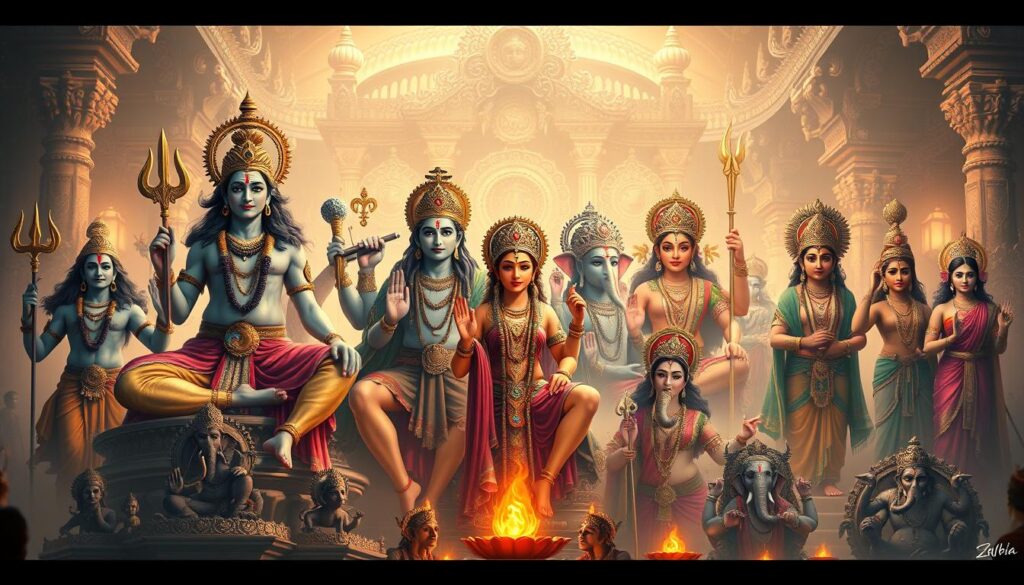
Each divine figure carries 108 names—a sacred number symbolizing cosmic order. These titles highlight different qualities, like protector or source of joy. Parents often choose these names for children, hoping to nurture specific virtues.
Morning rituals to seasonal festivals weave these beings into daily life. A farmer might pray for rain to Indra, while students seek Saraswati’s guidance during exams. Their tales teach resilience, compassion, and finding light in darkness.
Through devotion, practitioners discover practical wisdom. The flame in a temple lamp mirrors inner clarity. A deity’s dance represents life’s constant flow of challenges and blessings. This living tradition remains a compass for millions navigating modern complexities.
The Trimurti: Creator, Preserver, and Destroyer
Picture three cosmic architects shaping existence itself. This divine trio works in harmony, balancing birth, life, and renewal. Their eternal cycle forms the backbone of spiritual philosophy, showing how opposites create equilibrium.
Brahma: The Eternal Creator
With four faces gazing in all directions, Brahma designs reality through sacred thought. Ancient texts describe him emerging from a golden lotus – a symbol of pure potential. Though few temples honor him today, his role as universal architect remains vital.
His four heads represent mastery over space and sacred knowledge. Each face studies a Veda, the foundational scriptures. This imagery reminds us that creation requires awareness of life’s multiple dimensions.
Vishnu and Shiva: Balancing Preservation and Destruction
Vishnu maintains cosmic order through compassionate intervention. Followers cherish his ten earthly appearances, like Rama and Krishna, where he restores justice. Shiva, meanwhile, clears decay to enable rebirth – his dance destroys illusions to reveal truth.
| Divine Role | Symbol | Natural Parallel |
|---|---|---|
| Creator | Lotus | Spring blossoms |
| Preserver | Conch shell | Ocean tides |
| Destroyer | Trident | Forest fires |
“Endings plant seeds for new beginnings.”
This triad teaches that growth requires constant change. Farmers understand this balance – they till old soil for new crops. Modern life echoes this wisdom when we release outdated habits to make space for progress.
Exploring the Avatars of Vishnu
What if your favorite bedtime stories held keys to life’s greatest challenges? Vishnu’s earthly incarnations—called avatars—do exactly that. These divine forms appear during humanity’s darkest hours, restoring balance through courage and compassion.
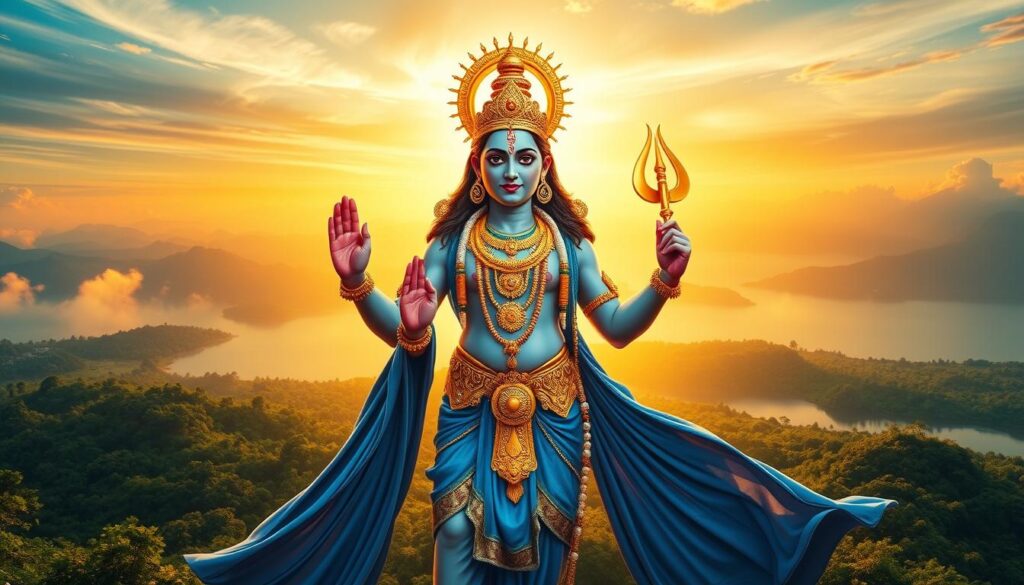
Krishna and Rama: Divine Incarnations
Krishna’s laughter still echoes through villages and cities alike. As the eighth avatar, he blends wisdom with mischief—stealing butter as a child, later guiding warriors with timeless truths. His teachings in the Bhagavad Gita reveal how to act selflessly, even in turmoil.
Rama’s story shines as a beacon of integrity. The seventh incarnation faced exile, betrayal, and epic battles to rescue his wife Sita. His choices model how to uphold duty without losing empathy. Millions recite his tale during Diwali, celebrating light’s victory over darkness.
Together, these incarnations show divinity meeting humanity. They don’t float above life’s messiness—they wade into it. Whether through Krishna’s flute melodies or Rama’s unshakable vows, their lessons feel as relevant today as ever.
The World of Shiva and His Divine Family
High in the Himalayan peaks lies a divine family blending cosmic power with relatable human bonds. Shiva, the meditating ascetic, shows how spiritual depth and family life coexist. His iconic third eye symbolizes wisdom gained through sacrifice—like swallowing poison to save creation.
Parvati, his wife and eternal partner, embodies nurturing strength. As “daughter of the mountain,” she transforms Shiva’s solitary practice into harmonious partnership. Their union teaches that love fuels spiritual growth rather than hindering it.
| Deity | Symbol | Role |
|---|---|---|
| Shiva | Third Eye | Cosmic Consciousness |
| Parvati | Mountain | Nurturing Power |
| Ganesha | Elephant Head | Obstacle Remover |
| Skanda | Spear | Divine Protector |
Their elephant-headed son Ganesha charms devotees worldwide. His broken tusk—sacrificed to write sacred texts—reminds us that imperfections often hide great purpose. Students and entrepreneurs alike seek his blessing before new ventures.
Younger brother Skanda carries a warrior’s spear, showing how spiritual strength protects the vulnerable. Together, this family proves enlightenment thrives in connection. Their timeless stories make cosmic truths feel as warm as a Himalayan hearth fire.
The Divine Feminine: Parvati, Lakshmi, and Their Forms
Beneath the moonlit skies of spiritual traditions, feminine energy radiates as life’s creative force. Followers called Shaktas honor this power through vibrant forms balancing tenderness and might. These sacred figures remind us that true strength flows from compassion as much as courage.
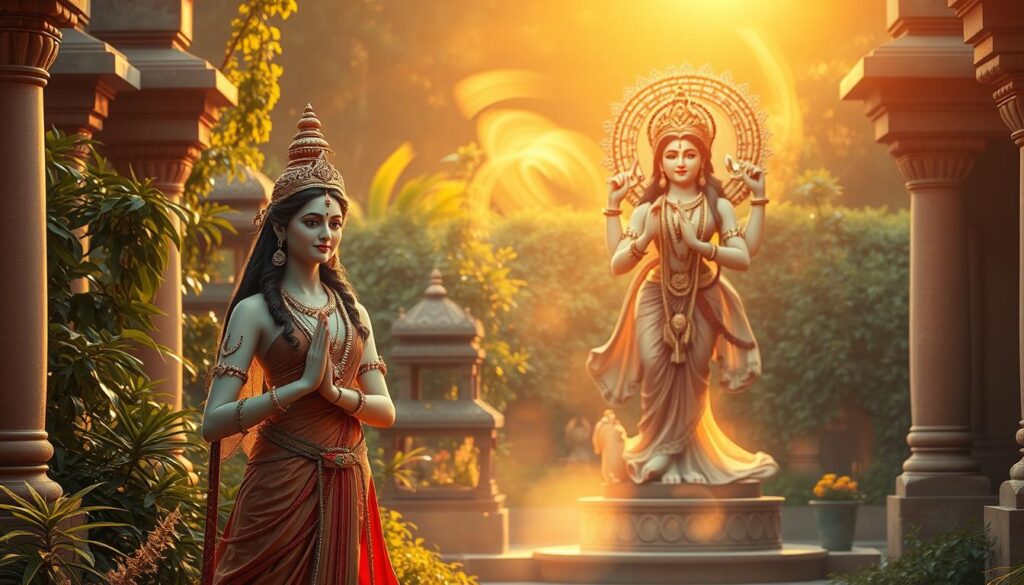
Manifestations of Love and Power
Lakshmi’s golden glow lights the path to holistic abundance. Her four arms hold lotus flowers and coins, symbolizing both material wealth and inner growth. Devotees cherish her not just for riches, but for nurturing relationships and spiritual joy.
Parvati’s transformations reveal nature’s dual rhythms. As gentle Uma, she embodies maternal care. When darkness threatens, she becomes Durga—a warrior riding lions into battle. Her most intense form, Kali, dances on shadows to spark renewal.
| Goddess | Energy | Symbol |
|---|---|---|
| Lakshmi | Prosperity | Golden Lotus |
| Parvati | Harmony | Mountain Peak |
| Durga | Protection | Lion & Sword |
| Kali | Transformation | Flame & Sword |
“The mother of worlds holds both cradle and lightning in her hands.”
These forms teach that power serves life’s sacred cycles. Farmers pray to Lakshmi during harvests, while activists draw courage from Durga’s resolve. Through festivals and home altars, their stories help millions face modern challenges with ancient wisdom.
Whether through a grandmother’s bedtime stories or temple ceremonies, the goddesses remain living guides. They show how love and strength intertwine—like rivers merging into one boundless ocean of meaning.
Insights into Vedic Deities and Their Legacy
Long before skyscrapers touched the clouds, ancient texts sang praises to forces shaping existence. Meet Indra—the thunder-wielding king of deities—who rode Airavata, his seven-trunked elephant companion. His stories in early hymns reveal how early communities understood power and leadership.
Surya, the golden sun god, still greets morning prayers today. His blazing chariot once symbolized time itself, guiding rituals and harvests. Farmers tracked his path long before modern calendars existed.
Feel a breeze? That’s Vayu’s domain—the wind deity whose breath fuels life’s rhythm. Early poets described his movements through rustling leaves and storm clouds. These deities weren’t distant rulers but active partners in daily survival.
Their legacy lives in surprising ways. Modern weather terms like “trade winds” echo Vayu’s influence. Solar energy innovations nod to Surya’s timeless role. Though temple rituals evolved, these king gods remind us how ancient wisdom still illuminates our world.
FAQ
Why is Brahma less worshipped compared to Vishnu and Shiva?
Brahma’s role as creator is seen as complete once the universe forms, shifting focus to Vishnu’s preservation and Shiva’s transformative power. Myths about curses and his connection to rituals also play a role in his diminished worship.
How do Krishna and Rama represent Vishnu’s purpose?
As avatars, Krishna (from the Bhagavad Gita) teaches love and duty, while Rama embodies righteousness. Both restore dharma, showing Vishnu’s commitment to balancing cosmic order.
What makes Shiva’s family central to Hindu stories?
Shiva’s marriage to Parvati symbolizes unity of energy and devotion. Their sons, like Ganesha (ele-headed remover of obstacles), highlight themes of wisdom, success, and familial bonds in myths.
Are goddesses like Lakshmi and Durga worshipped differently?
Yes! Lakshmi represents wealth and prosperity, often linked to Vishnu. Durga, a fierce form of Parvati, embodies protection. Their worship varies based on regional traditions and desired blessings.
Do Vedic deities like Indra still matter today?
While less prominent now, gods like Indra (king of devas) and Agni (fire) shaped early rituals. Their stories remain in texts, influencing festivals and philosophical ideas about nature’s forces.
Why do some deities have multiple arms or animal features?
Symbolism! Multiple arms show divine power to act in many ways. Animal traits, like Ganesha’s elephant head, represent wisdom. These forms make abstract qualities visually relatable.