The Catholic Church is the largest Christian body in the world, with over a billion baptized members. It combines a visible structure of bishops, dioceses, and parishes with a spiritual community united in faith and sacraments.
The community includes the Latin Church and 23 Eastern Catholic Churches, each keeping its own rites while sharing the same head and sacramental life. The pope, bishop of Rome, leads in unity with local bishops, and the Holy See governs through Vatican institutions.
Central to its worship is the Eucharist, celebrated at Mass and held as the Body and Blood of Christ. Beyond worship, this global network runs many schools, hospitals, and social services, shaping civic life in places like the United States and beyond.
Key Takeaways
- More than a billion baptized members form a worldwide communion.
- Includes the Latin Church plus 23 Eastern Catholic Churches and rites.
- The pope serves as head while bishops lead local communities.
- The Eucharist is the central sacrament celebrated at Mass.
- The network operates extensive schools, hospitals, and charities globally.
Definition of Catholic Church
The catholic church is a single, universal communion made up of local particular communities that share one faith, common sacraments, and hierarchical unity under the Bishop of Rome.
This communion is a visible bond. It rests on shared doctrine, sacramental life, and pastoral governance that link members and local dioceses across the earth.
Core glossary entry and concise meaning
Particular churches are dioceses or eparchies gathered around a bishop. When united in faith and sacrament with Rome, each is fully catholic in identity.
Scope and theological senses
- Community of believers: a people formed by baptism and lived faith.
- Kingdom of God: a sign and instrument of God’s reign.
- Mystical Body: a spiritual reality enlivened by grace that embraces the pilgrim on earth, the purified, and the saints in heaven.
Membership begins with baptism and grows through profession of faith and participation in sacramental life. The Bishop of Rome stands as the universal principle of unity while each bishop shepherds his particular local body.
Name, Etymology, and Usage: Catholic, Roman Catholic, and Catholic Church
Across centuries, labels have shifted to reflect theology, language, and politics. Early writers used a Greek word that means “universal.”
Early attestations
Ignatius of Antioch used katholikos in a letter around 110 AD to signal a universal scope. That early use shaped later naming and identity.
Post-Reformation and modern usage
After the Reformation, English speakers began saying Roman Catholic to mark those in union with the Bishop Rome compared to Protestants.
“Major councils and catecheses typically use the preferred title ‘Catholic Church’ to stress unity and universality.”
- Council texts (Trent, Vatican I, Second Vatican Council) keep the formal usage.
- The Holy See often prefers the shorter, inclusive title.
- In practice, Roman Catholic may name the Latin Church; eastern catholic groups are named separately.
| Term | Typical Use | Notes |
|---|---|---|
| Catholic Church | Official documents | Emphasizes universality and union |
| Roman Catholic | Colloquial / Latin Church | Useful but can exclude eastern catholic communities |
| Roman Church | Historic/diocesan | Often meant Diocese Rome, not the whole body |
| Others | Ecumenical contexts | Clarify terms up front to avoid confusion |
For journalists and researchers, pick terms carefully. Specify Latin Church or eastern catholic when clarity helps. Others may use labels differently, so note preferences in parentheses.
Historical Snapshot: From Apostolic Origins to the Present
Pentecost marks the start of the apostles’ public ministry and the apostolic leadership that continues through bishops and the pope as Peter’s successor on earth.
The early community spread across the Roman world, gained legal status with the Edict of Milan (313), and saw Nicene belief rise by 380. Councils shaped doctrine while the Latin Church grew in the West and kept ties to Rome and other great sees.
The East-West Schism (1054) split communion between Rome and Constantinople and altered relations with eastern catholic and Orthodox bodies.
Later, the Reformation prompted the Counter-Reformation and the Council of Trent, which reformed liturgy, discipline, and catechesis for many years.
Today the Holy See coordinates global matters from Vatican City while local communities serve faithful in their own day and culture. Migration and missions have shifted most members to the Global South, and a twentieth-century vatican council renewed mission and pastoral practice around the world.
| Period | Event | Impact |
|---|---|---|
| 1st century | Pentecost and apostolic succession | Established episcopal leadership |
| 313–380 | Edict of Milan; Nicene favor | Legal status and imperial orthodoxy |
| 1054 | East-West Schism | Major split with Eastern churches |
| 16th century | Reformation & Council of Trent | Doctrinal and pastoral reforms |
| 20th century | Vatican council renewal | Modern missionary and pastoral focus |
Four Marks and Ecclesial Self-Understanding
The creed’s four marks frame how members recognize unity, sanctity, universality, and apostolic continuity. These headings guide teaching, worship, and pastoral life across rites and cultures.
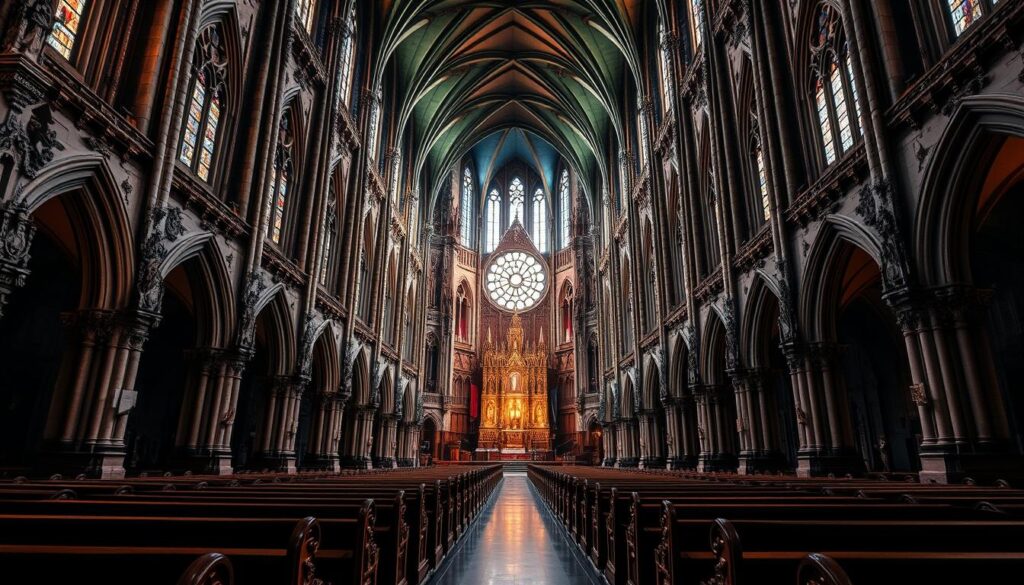
One, Holy, Catholic, and Apostolic
One means visible unity in faith, worship, and governance. That unity is sustained by communion with the bishop rome and the college of bishops.
Holy names Christ’s sanctifying work. Grace flows especially through sacraments to the faithful and shapes daily witness, catechesis, and care for the poor.
Catholic points to universality across space and time, seen in the Latin Church and the eastern catholic churches sharing apostolic faith.
Apostolic affirms continuity with the apostles through succession. Bishops preserve teaching and sacramental life for every local community.
Subsistit in and the Mystical Body
The Second Vatican Council taught that the church of Christ “subsists in” the catholic church, recognizing truth and holiness also found outside visible structures.
The Mystical Body image shows Jesus as head and believers as members. That model encourages communion, ecumenical dialogue, and practical service that make the marks real.
Governance and Polity: Holy See, Papal Primacy, and Episcopal Structure
Leadership blends a central authority with regional bodies to protect teaching and guide pastoral life. This system balances unity with local responsibility across rites and nations.
Holy See and Roman Curia
The Holy See acts as the Diocese of Rome and the central governing authority for the catholic church. The Roman Curia’s dicasteries assist the pope in universal leadership and service.
Pope as Bishop of Rome and Primacy
The pope, as bishop rome, holds primacy and heads the college of bishops. This unique ministry safeguards unity in faith and communion worldwide.
Dioceses, Archdioceses, and Episcopal Conferences
Local life is entrusted to bishops who lead dioceses and archdioceses. Archdioceses often preside over provinces and work with episcopal conferences to address shared needs.
For example, the United States Conference of Catholic Bishops (USCCB) coordinates liturgy, pastoral work, and public policy in the united states.
| Body | Role | Legal Basis |
|---|---|---|
| Holy See | Central authority; diplomacy | Canon law; papal primacy |
| Roman Curia | Dicasteries assist pope | Acts and constitutions |
| Dioceses / Archdioceses | Local governance by bishops | 1983 code canon |
| Episcopal Conferences | National coordination (e.g., USCCB) | Code canon law / norms |
Canon law provides the legal framework for governance and sacraments, with the 1983 Code as the primary reference for the latin church. Eastern catholic churches use parallel codes and synods while remaining in full communion.
Representatives such as nuncios serve as diplomatic and ecclesial links. Accountability tools—tribunals, pastoral and finance councils—help ensure transparency and mission-focused ministry by catholic bishops.
Particular Churches: Latin Church and the Eastern Catholic Churches
Autonomous ritual churches stand side by side, united in faith while keeping distinct worship and governance. The catholic church includes the Latin Church plus twenty-three Eastern Catholic Churches. All are in full communion with the bishop rome, sharing sacraments and doctrine.
Sui iuris structure and diversity
Particular churches mean a local diocese or eparchy. Sui iuris churches are self-governing ritual bodies that keep their own liturgy and law.
- The latin church is the largest particular church, with Western rites and canon law.
- Eastern families include Byzantine, Alexandrian, Antiochene, Armenian, East Syriac, and West Syriac traditions.
- Eastern eparchies and archeparchies serve faithful in the United States and worldwide.
Eastern catholic churches have synods and their own canons, noted in the canons eastern churches and the code canons eastern, while remaining in communion with Rome. Faithful may attend and receive sacraments in any catholic church according to pastoral norms. This liturgical variety enriches the wider communion and offers multiple spiritual paths within one united body.
Liturgy and Sacramental Life
Worship and sacraments give the catholic church its living rhythm. They mark key stages and bring believers into the presence of grace.
The seven sacraments in brief
Seven sacraments are channels Christ instituted for sanctification: Baptism, Confirmation, Eucharist, Penance, Anointing of the Sick, Matrimony, and Holy Orders.
They fall into three groups: initiation (Baptism, Confirmation, Eucharist), healing (Penance, Anointing), and service (Matrimony, Holy Orders). Each serves a specific purpose in a believer’s life.
The Eucharist: becoming the Body and Blood of Christ
The Eucharist is the summit and source of Christian life in the catholic church. At Mass, the consecrated bread and wine truly become the Body and Blood of Christ.
Reverent participation, clear catechesis, and music help the assembly enter that mystery where heaven and earth meet.
Latin and Eastern liturgical expressions
The latin church commonly uses the Roman Rite. Many eastern catholic communities celebrate the Byzantine Divine Liturgy or other venerable rites.
All these liturgical families share the same sacramental faith while showing regional and cultural richness. In the united states, ethnic parishes and eparchies make this diversity visible.
| Category | Examples | Purpose |
|---|---|---|
| Initiation | Baptism, Confirmation, Eucharist | Entry into Christian life and full membership |
| Healing | Penance, Anointing of the Sick | Spiritual and physical restoration through grace |
| Service | Matrimony, Holy Orders | Mission and ministry for the good of the faithful |
| Discipline | 1983 Code (Latin), eastern canonical norms | Regulates sacramental practice and reverence |
Practical note: consult your local parish or eparchy for schedules, preparation, and pastoral guidance on sacraments and holy days of obligation.
Faith, Grace, and Initiation: Creed, Baptism, and Communion
The Nicene Creed gathers core beliefs into a brief profession proclaimed at Mass. It unites the faithful in basic doctrine and guides catechesis and prayer.
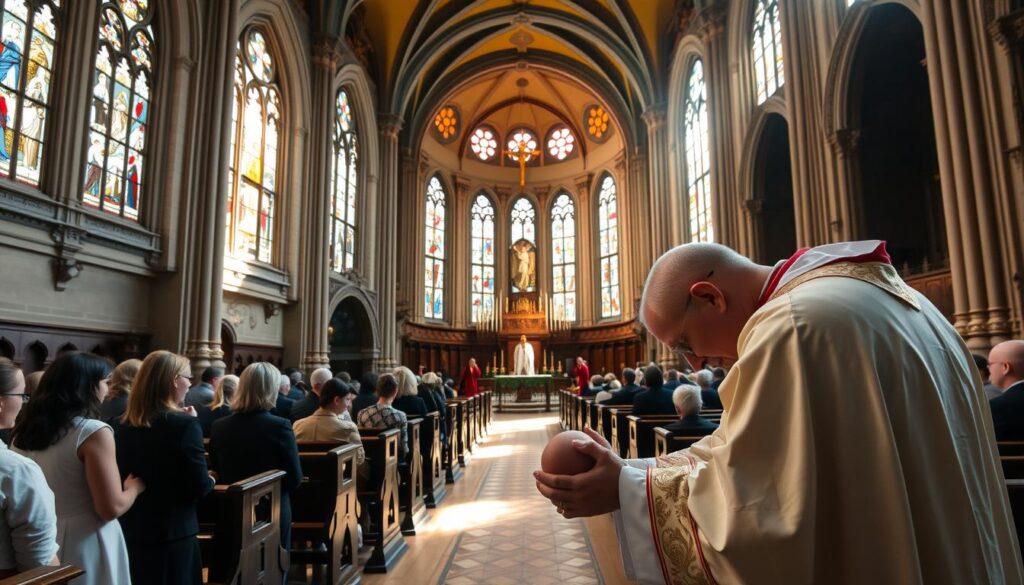
Baptism configures a person to Christ, imparts sanctifying grace, and begins membership in the wider community. It opens access to the sacraments and starts lifelong formation.
Initiation normally continues with Confirmation—the seal of the Spirit—and Eucharist, which brings full participation in communion. Timing can vary by rite and age; pastoral norms respect those traditions.
“The People of God and the universal call to holiness shaped renewed catechesis and active liturgical participation.”
- Faith and grace work together: sacraments communicate graces to help live the creed daily.
- Adults follow a catechumenal process, often culminating at Easter; children usually join through parish preparation.
- Pastoral accommodations honor rite-specific practices, such as infant Confirmation in some eastern rites.
Initiation marks a beginning, not an end. Ongoing catechesis, service, and prayer help new and lifelong members grow in faith and holiness within the catholic church.
Canon Law Framework
Canon law provides the legal framework that keeps pastoral practice and governance in order across rites.
The 1983 code canon governs the Latin Church and updated norms after the Second Vatican council. It structures rights, duties, tribunals, and sacramental discipline for priests and lay faithful.
1983 Code of Canon Law (Latin)
The 1983 code organizes legal norms for governance, marriage procedures, penal cases, and administrative review. It also defines key terms and faculties that bishops grant to clergy.
Code of Canons for Eastern Churches
The code canons eastern (1990) does the same for Eastern communities. It respects synodal customs while keeping shared essentials across the catholic church.
Key terms: canons, delicts, faculties
- Canon: a law that sets obligations and rights.
- Delict: a punishable offense under church law.
- Faculty: an authorization to perform sacramental or ministerial acts.
Canon law serves justice and pastoral care. Journalists and researchers can cite specific canons for accuracy, remembering that the supreme aim remains the salvation of souls.
Membership and Communion: People of God and Terms of Belonging
Membership rests on public profession, sacramental life, and recognized pastoral leadership that bind people into visible communion. Vatican II called this the People of God, stressing dignity and a universal call to holiness.
Visible bonds include profession of faith, reception of sacraments, and unity with lawful pastors in union with the bishop rome. Initiation through baptism opens the door. Growth follows through prayer, catechesis, and the graces given in the sacraments.
Earth, purgatory, and heaven
The catholic church understands membership to include pilgrims on earth, souls being purified, and saints in heaven gathered around Christ the head. Communion therefore has depth and final horizon.
| Element | What it shows | Practical effect |
|---|---|---|
| Profession of faith | Visible assent to creed | Admission to rites and ministry |
| Sacraments | Channels of grace | Ongoing formation and union |
| Lawful pastors | Guardians of unity | Pastoral care and discipline |
| Canon law | Rights and obligations | Accountability; pastoral norms |
Canon law, including the code canon law and references to the 1983 code canon, sets rights and duties for the faithful. In the united states, reception into full communion follows RCIA/OCIA norms and pastoral guidance. Communion can have degrees: some communities share elements of faith and sacraments but lack full union.
Ongoing conversion—service, study, and charity—deepens membership. Bishops and pastors protect unity while the faithful support life and mission, all moving toward heavenly communion with God.
The United States Context
Across the United States, a vast network of dioceses, parishes, schools, and health systems serves millions and shapes civic life. This national footprint includes Latin dioceses and Eastern Catholic eparchies that maintain distinct rites while serving local needs.
The United States Conference of Catholic Bishops (USCCB) coordinates pastoral initiatives, liturgy adaptations, and public policy statements used widely by parishes and schools. States conference catholic bodies also produce regional guidelines and resources.
Each year sacramental reports, school enrollments, and charity statistics offer a snapshot of membership and engagement. Migration and cultural trends shape diocesan responses and parish programs.
- National coordination: USCCB issues liturgical calendars, catechetical materials, and public pronouncements.
- Local diversity: eastern catholic churches and Latin dioceses collaborate on pastoral care.
- Public witness: bishops address religious liberty, family life, immigration, healthcare ethics, and safeguarding minors.
Dioceses also work with civil authorities and interfaith partners on disaster relief, healthcare, and education standards. For official statements and resources, visit USCCB.org for the united states conference materials used across the country.
Second Vatican Council and Contemporary Ecclesiology
Vatican II reframed communal identity by portraying the faithful as a People called to mission, service, and holiness in the modern world. The council promoted a living, pastoral approach that reshaped ministry and lay participation.
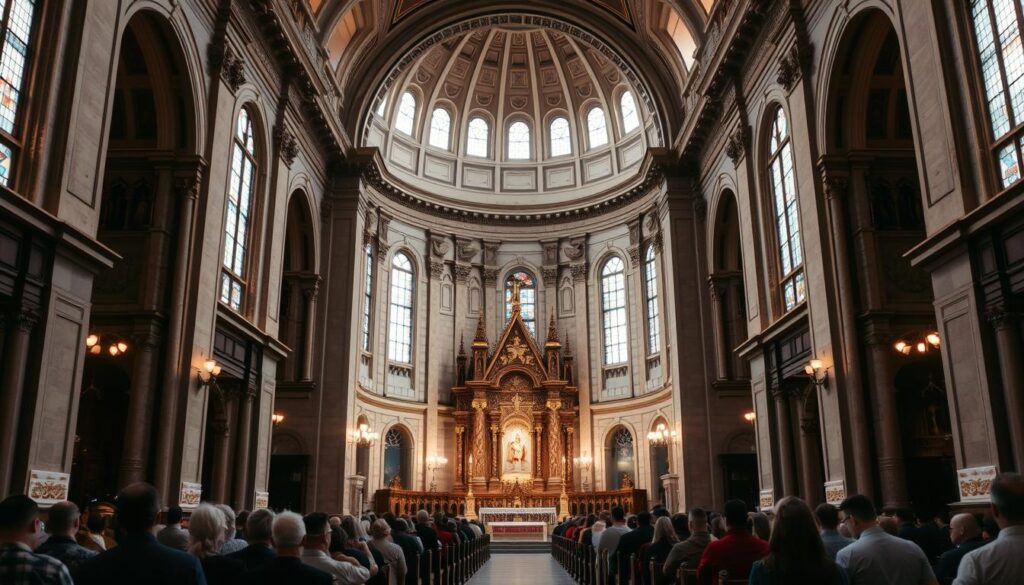
People, Collegiality, and Leadership
People of God names the whole baptized community, highlighting diverse charisms and ministries that work toward conversion and service.
Collegiality describes shared responsibility: catholic bishops act together with and under the bishop rome, balancing local needs and universal unity.
Ecumenism and Terms
The council opened sustained dialogue with other Christians and recognized elements of sanctification and truth outside visible boundaries.
Conciliar texts distinguish between full churches (with apostolic succession and Eucharist) and other ecclesial communities while urging respectful cooperation for unity.
- Liturgical renewal: active participation, clearer Scripture use, and greater vernacular presence while keeping sacramental continuity.
- Reception: ongoing formation, new evangelization, and lay co-responsibility guided local implementation by bishops and synods.
- Eastern voices: eastern catholic traditions contributed insights on synodality, ritual diversity, and living tradition.
Many magisterial texts prefer the title Catholic Church though roman catholic still appears in some contexts. Continued study and formation help clergy, religious, and laity live the council’s reforms fruitfully.
Institutions, Mission, and Global Presence
From parish classrooms to university hospitals, institutional work translates sacramental life into concrete care and learning.
The catholic church runs a vast network worldwide: about 95,200 primary schools, 43,800 secondary schools, 5,500 hospitals, 18,000 clinics, and 16,000 nursing homes. These ministries make it the largest non-governmental provider of education and health care in the world.
These institutions serve people of all backgrounds and express faith through service. Eucharist and Reconciliation inspire works of mercy and ongoing conversion that fuel daily outreach.
How mission works on the ground
- Religious orders, lay movements, and diocesan programs found and sustain schools, hospitals, and social services.
- In the united states, major health systems, universities, and charities link local parishes to national networks.
- Saints and blesseds who pioneered education and care continue to inspire ethical leadership and compassion.
“Service to the poor and care for human dignity remain central to mission and witness.”
| Sector | Global Count | Impact |
|---|---|---|
| Primary schools | 95,200 | Basic education for millions |
| Secondary schools | 43,800 | Workforce formation and civic leadership |
| Hospitals & clinics | 23,500 combined | Primary and specialized healthcare |
| Nursing homes | 16,000 | Long-term care for the elderly |
Commitments include dignity of the person, the common good, and a special care for the poor. Challenges such as funding limits and regulation are met through partnerships, innovation, and civic collaboration.
Connect with your local parish or diocesan office to learn how to serve, donate, or find nearby services run by catholic churches.
Common Related Terms and Offices
Key titles and roles help readers spot who leads, serves, and represents communities at parish, diocesan, and national levels.
USCCB, archdiocese/eparchy, nuncio, cardinal
USCCB is the nationwide body of catholic bishops in the united states that coordinates pastoral priorities, liturgical guidance, and public policy work.
Archdiocese (Latin) and eparchy (Eastern) are principal jurisdictions led by a bishop or archeparch. The apostolic nuncio acts as the Holy See’s diplomatic and ecclesial representative to states and local leaders.
Cardinals are senior clergy who advise the pope and, if under age 80, elect his successor in conclave.
Brother, deacon, laicization, excommunication
A brother is a religious vowed member who is not ordained. A deacon is ordained to service and ministry in liturgy, charity, and pastoral care.
Laicization is the canonical process that releases a cleric to the lay state. Excommunication is a medicinal penalty for grave offenses under canon law.
- Many norms trace to the 1983 code canon and other code canon law texts.
- The second vatican council reshaped ministries and encouraged collaboration with the laity in the roman catholic tradition.
Use precise terms when reporting or studying; diocesan and USCCB resources explain these offices and related sacraments in detail.
See Also and Cross-References
Further reading helps connect governance, worship, and law across catholic churches. Below are curated entries and resources to guide deeper study on key topics and practical norms used in the United States and worldwide.
Core topics to explore
- Second Vatican Council documents — major constitutions and decrees that shaped modern renewal and ecumenical outreach.
- Holy See governance — how dicasteries, nuncios, and the Roman Curia manage universal matters and diplomacy.
- Sacraments — comparative entries showing Latin rites and Eastern catholic practices for initiation, penance, and Eucharist.
- Canon law resources — the 1983 code and the Code of Canons of the Eastern Churches for legal norms, rights, and obligations.
Practical cross-references
Consult entries that explain how the Bishop Rome’s role is treated in theology, liturgy, and law across traditions. For U.S.-specific guidance, the United States Conference of Catholic Bishops (USCCB) and diocesan pages offer pastoral norms, liturgical calendars, and sacramental policy.
| Resource | Focus | Why it matters |
|---|---|---|
| Vatican Council constitutions (e.g., Lumen Gentium) | Ecclesiology and mission | Frames contemporary roles for laity, bishops, and collegiality |
| 1983 Code | Latin church canon law | Primary legal guide for governance, sacraments, and rights |
| Code Canons Eastern | Eastern catholic law | Respects sui iuris traditions while ensuring communion |
| Holy See dicasteries (Doctrine, Divine Worship, Oriental Churches) | Teaching, liturgy, eastern relations | Key offices for researchers and liturgical policy |
See also: short glossaries on key terms and sacramental entries for quick reference. These help journalists, students, and parish leaders compare practice across the Latin Church and eastern catholic churches while keeping canonical accuracy.
Conclusion
The catholic church is a global communion whose life runs from parish pews to Vatican dicasteries, shaped by shared faith and sacramental practice.
Across Latin and eastern catholic rites, members receive sacraments—above all the Eucharist—which sanctify life on earth and point toward heaven.
Canon law and the code canon frame pastoral order while the Holy See supports local dioceses and eparchies in mission and service.
The catholic churches witness in education, health care, and charity across the world, including a strong presence in the united states.
Hold the four marks and the image of the Mystical Body as anchors. Visit a local parish or eparchy to see worship, service, and communion lived in real time.
FAQ
What is the basic meaning of the Roman tradition led by the Bishop of Rome?
It refers to the global communion of particular churches united under the Bishop of Rome, sharing common faith, sacraments, and a hierarchical structure. Members gather around Scripture and tradition, receive the seven sacraments, and live a public profession of faith in parishes, dioceses, and eparchies worldwide.
Where does the term “katholikos” come from and who used it early on?
The adjective comes from Greek sources and appears in early Christian writers such as Ignatius of Antioch. It described the universal scope of the community of believers and later shaped Latin usage for the worldwide communion centered in Rome.
How do “Roman” and other names differ in everyday usage?
“Roman” often points to the Latin liturgical tradition and the episcopal seat in Rome. Other names highlight particular self-understandings or rites, such as the Latin Church and various Eastern churches in full communion. Usage varies by history, local custom, and ecumenical context.
What are the “four marks” that describe the institution’s identity?
The four marks are One, Holy, Catholic, and Apostolic. They express unity in faith and sacraments, sanctifying mission, universality in mission and membership, and continuity with the apostles through apostolic ministry and succession.
What did the Second Vatican Council change about how the community sees itself?
The council emphasized the “People of God,” collegial leadership among bishops, and a stronger ecumenical orientation. Documents highlighted shared baptismal dignity, the laity’s role, and renewed pastoral approaches in the modern world.
How is governance structured at the top levels?
Governance centers on the Holy See, led by the pope, with the Roman Curia assisting in papal ministry. Local governance flows through dioceses and archdioceses under bishops, coordinated in many countries by episcopal conferences such as the United States Conference of Catholic Bishops (USCCB).
What are the particular churches and how do they relate to one another?
Particular churches include the Latin Church and multiple Eastern churches sui iuris. They maintain distinct liturgical rites—Byzantine, Alexandrian, Antiochene, Armenian, and others—while remaining in full communion with the Bishop of Rome and sharing doctrine and sacraments.
What role do sacraments play in communal life?
Sacraments mark initiation, growth, and healing in the spiritual life. Baptism, confirmation, Eucharist, reconciliation, anointing, holy orders, and marriage shape personal faith and bind the community through visible signs of grace.
How is the Eucharist understood in this tradition?
The Eucharist is the sacrament in which bread and wine are believed to become the Body and Blood of Christ, nourishing the faithful and forming the assembly into a single spiritual body grounded in sacramental communion.
What legal codes govern practice and discipline?
The Latin Church follows the 1983 Code of Canon Law. Eastern churches use the Code of Canons of the Eastern Churches. Both codes cover canons, delicts, faculties, and norms for governance, liturgy, and pastoral care.
Who counts as a member and what binds members together?
Membership rests on baptism, profession of faith, and participation in the sacraments under lawful pastoral leadership. Visible bonds include sacramental life, obedience to canonical norms, and communion with bishops in union with the pope.
How is the system expressed in the United States?
In the U.S., dioceses and archdioceses coordinate through the United States Conference of Catholic Bishops. Local pastoral priorities reflect national norms, cultural diversity, and a network of parishes, schools, hospitals, and charitable agencies.
How do Eastern Catholic Churches fit within the global communion?
Eastern Catholic Churches preserve ancient liturgies, disciplines, and spiritualities while remaining in full communion with Rome. They operate as churches sui iuris with their own hierarchies and canonical structures under the broader legal framework.
What common institutions deliver education and social services worldwide?
A broad system of diocesan and religious-run schools, universities, hospitals, and charitable agencies provides global education, health care, and social services, often administered by religious orders, diocesan offices, and charitable networks.
What are some important related offices and terms people should know?
Key offices include the nuncio, cardinal, archbishop or eparch, and bishop. Terms to know include laicization, excommunication, and pastoral faculties. The USCCB represents bishops in the United States on national matters.
How do ecumenical relations and “ecclesial communities” fit into modern teaching?
Contemporary teaching recognizes a distinction between fully institutionalized churches in communion and other Christian communities. Dialogue seeks unity, shared witness, and cooperation while respecting doctrinal differences and sacramental practice.