Welcome to an exploration of the world’s largest Christian denomination, a spiritual institution with over 1.4 billion followers across every continent. This global community blends ancient traditions with modern practices, creating a unique tapestry of faith that has shaped societies for nearly 2,000 years.
From its roots in early Christianity, this organization has grown into a network of 24 self-governing branches. The best-known is the Latin tradition, but 23 Eastern branches preserve equally rich cultural practices. Together, they form a spiritual mosaic united by shared beliefs.
Nearly 3,500 local districts worldwide keep this faith vibrant and accessible. These communities do more than host services—they run schools, hospitals, and charity programs. In fact, this group operates the biggest non-government network of social services on Earth.
Key Takeaways
- Serves 1.4+ billion members globally as Christianity’s largest branch
- Shaped Western culture through art, education, and ethics
- Combines 24 self-governing traditions under one spiritual umbrella
- Maintains 3,500+ local districts for community support
- Leads in global education and healthcare through non-profit work
History and Origins of the Catholic Church
The story begins with a small group of followers who witnessed Jesus Christ’s resurrection. Their mission? To share his message of love and redemption. This movement gained momentum after Pentecost, when believers experienced a spiritual awakening that fueled their evangelical efforts.
Apostolic Foundations and Early Christianity
Saint Peter became central to this growing community. According to tradition, Christ named him the foundation of their spiritual family. His leadership laid the groundwork for a line of successors that continues today.
Early followers faced intense challenges. Roman authorities persecuted those who rejected pagan rituals. Yet these trials strengthened their resolve. Secret gatherings in homes and catacombs kept their faith alive during dangerous times.
Influence of the Roman Empire
Ironically, Rome’s infrastructure helped Christianity thrive. Well-maintained roads let missionaries travel safely. Common languages like Greek and Latin made spreading teachings easier across diverse regions.
Everything changed in 313 AD. Emperor Constantine legalized the faith through the Edict of Milan. By 380 AD, it became Rome’s official religion. This shift transformed a grassroots movement into a powerful cultural force.
Core Beliefs and Teachings
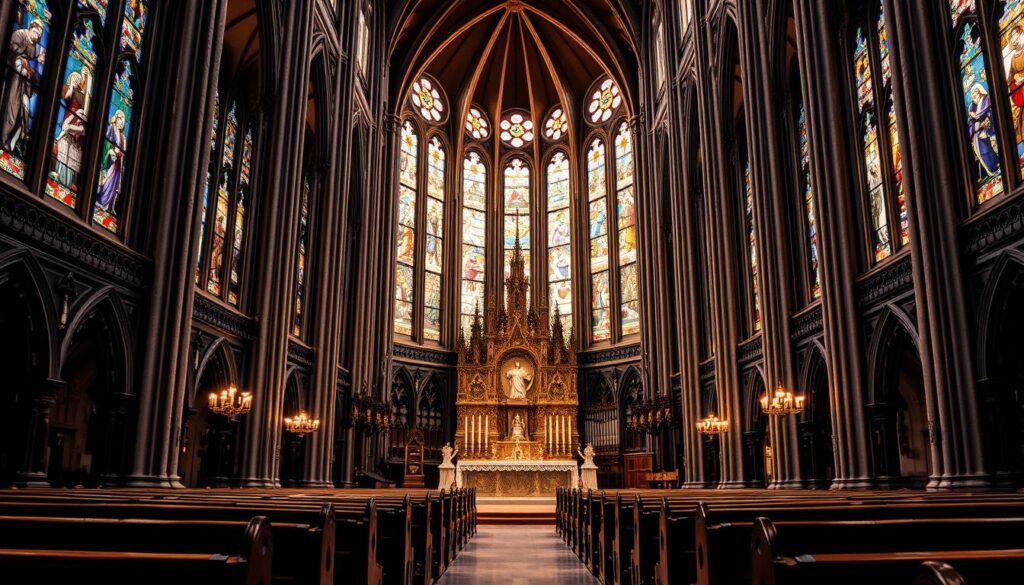
One ancient declaration binds believers across continents in shared conviction. This faith community roots its identity in teachings preserved since the apostles, blending scriptural truth with time-honored practices. At the center stands a fourth-century statement that continues guiding millions today.
The Nicene Creed and Sacred Tradition
The words “We believe in one God” open Christianity’s most universal profession of faith. First formulated in 325 AD, this creed defines essential teachings about Christ’s divinity and humanity. It serves as both a spiritual compass and a unifying force for diverse congregations.
Through apostolic succession, leaders maintain continuity with early Christian witnesses. Bishops trace their authority to the original apostles, while the pope continues Saint Peter’s role as unifying figure. Together with sacred tradition, they safeguard teachings unchanged by cultural shifts.
Sacraments and Liturgical Practices
Seven sacred rituals mark life’s key spiritual milestones. Baptism welcomes new members, while Holy Orders dedicates clergy to service. The Eucharist remains central, celebrated as Christ’s ongoing presence among followers.
Shared rituals create global unity despite local customs. Whether in bustling cities or remote villages, the same prayers and symbolic actions connect worshippers. This consistency reflects a 2,000-year commitment to preserving faith essentials through generations.
The Role of the Catholic Church in Western Civilization
Western civilization’s artistic and intellectual legacy owes much to a global faith community. For centuries, monastic networks safeguarded ancient wisdom while fostering new breakthroughs. This stewardship shaped Europe’s cultural identity during times of upheaval and renewal.
Impact on Art, Culture, and Science
Monastic scriptoriums became lifelines for classical knowledge. Teams of scribes preserved Aristotle’s philosophy and Roman legal texts while Europe rebuilt after the fall of Rome. Benedictine communities developed structured learning systems that evolved into modern universities.
Creative expression flourished under spiritual patronage. Master builders designed soaring cathedrals like Notre-Dame, blending faith with architectural innovation. Renaissance artists like Michelangelo transformed chapels into timeless galleries, merging biblical themes with humanist ideals.
| Field | Contribution | Lasting Influence |
|---|---|---|
| Literature | Dante’s Divine Comedy | Shaped Italian language |
| Music | Gregorian chant notation | Basis for modern sheet music |
| Science | Monastic astronomical studies | Paved way for Galileo’s work |
Educational traditions continue today through thousands of schools worldwide. These institutions blend moral teachings with academic rigor, maintaining a 900-year commitment to holistic learning. From medieval manuscripts to modern labs, this spiritual heritage remains woven into society’s fabric.
Structure and Organization
Like a living network of ancient roots and modern branches, this global faith community thrives through a carefully designed framework. Its structure balances centralized leadership with local flexibility, creating unity across 1.4 billion members.
Papal Leadership and Global Governance
The bishop of Rome serves dual roles as spiritual guide and administrative leader. Leading the world’s largest religious body, he oversees both local parishes and international policies. The Holy See—headquartered in Vatican City—acts as the central hub, coordinating efforts through departments like the Roman Curia.
Regional Coordination and Local Care
Nearly 5,500 bishops manage spiritual needs across defined territories called dioceses. Each oversees priests and deacons who serve neighborhoods through:
- Weekly worship services
- Sacramental preparation programs
- Community outreach initiatives
| Role | Global Count | Primary Responsibility |
|---|---|---|
| Bishops | 5,430 | Diocese leadership |
| Priests | 406,996 | Parish ministry |
| Deacons | 51,433 | Community service |
This system maintains consistent teachings while adapting to local cultures. Bishops collaborate through regional conferences, ensuring decisions reflect both global unity and neighborhood realities. From Rome’s historic halls to village chapels, this structure connects believers through shared purpose.
Global Community and Membership Trends
A rainbow of cultures gathers weekly in over a million worship spaces worldwide. This faith community spans 197 countries, with Sunday services conducted in 3,500 languages. Members from Nairobi to Manila share ancient rituals while embracing local musical traditions and art forms.
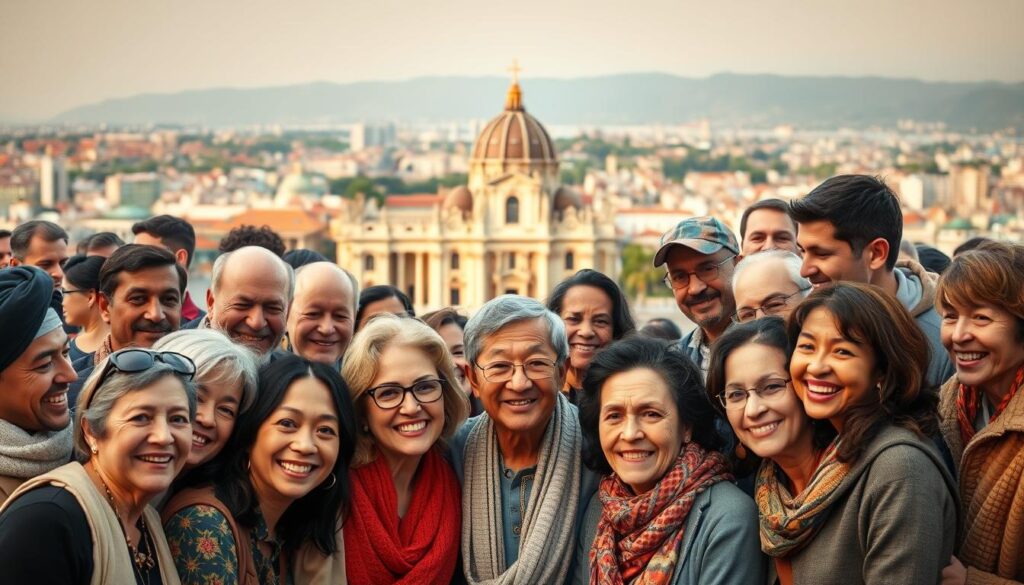
Demographic changes have reshaped membership maps since 1970. Africa’s vibrant congregations now account for 24% of global followers—up from 2% a century ago. Latin America remains home to 40% of members, while European participation continues gradual decline.
Mission initiatives drive growth through practical compassion. Over 300,000 schools and 5,500 hospitals serve communities regardless of religious affiliation. In South Sudan, mobile clinics provide vaccines alongside literacy programs. Philippine typhoon survivors receive food packages and rebuilding assistance.
| Region | Growth Trend | Key Fact |
|---|---|---|
| Africa | +238% since 1980 | 23 million new members since 2010 |
| Asia | +20% last decade | 70% of Filipino population participates |
| Europe | -15% since 2000 | Historic cathedrals now multicultural hubs |
Urban centers like Houston and Sydney showcase evolving membership. Vietnamese Eucharistic festivals color Australian suburbs, while Polish-language masses thrive in Chicago. These blended parishes prove ancient traditions adapt to modern mobility.
As digital tools connect dispersed members, this global network maintains its educational leadership. One in seven U.S. students attends faith-based schools, continuing an 800-year commitment to accessible learning. From Brazilian favelas to Tokyo high-rises, shared values bridge continental divides.
Understanding the Mass and Liturgical Celebrations
The Mass stands as the cornerstone of spiritual life for believers worldwide. This sacred gathering transforms ordinary bread and wine into what followers consider divine nourishment through ancient prayers.
Latin Rite and Eastern Liturgies
Two main traditions shape worship practices. The Roman Rite—used by most communities—features recognizable elements like the Eucharistic Prayer. Eastern traditions maintain older customs, including incense processions and intricate icon displays.
| Tradition | Language | Musical Style | Regions |
|---|---|---|---|
| Roman Rite | Local vernacular | Hymns & organ | Global |
| Byzantine | Greek/Slavonic | Chant harmonies | Eastern Europe |
| Alexandrian | Coptic/Arabic | Drum rhythms | North Africa |
Modern Worship Practices
Recent decades brought fresh approaches to ancient rituals. Many parishes now project song lyrics on screens or host youth-focused services with guitars. These changes aim to make timeless truths relatable in busy urban settings.
Sunday gatherings might feature Spanish-language coros in Texas or Kinyarwanda hymns in Minnesota. Yet all services follow the same four-part structure: gathering, storytelling, meal-sharing, and sending forth. This balance of unity and diversity keeps worship vibrant across generations.
Catholic Church Services and Social Outreach
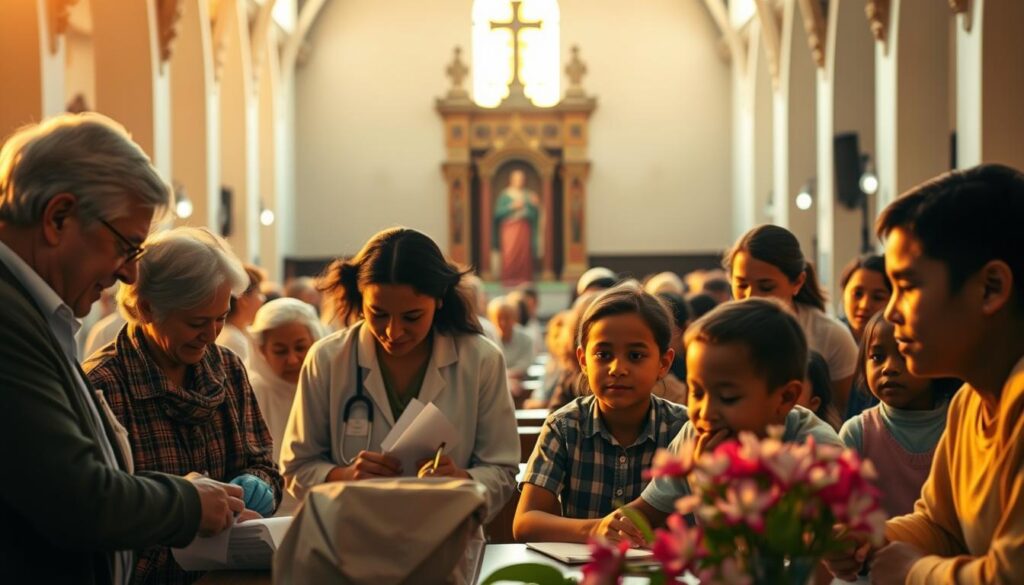
Compassion in action defines one of humanity’s largest networks of care and learning. This faith-based organization runs more health centers than most countries, with 18,000 clinics offering free checkups in remote villages and urban neighborhoods alike. Its 5,500 hospitals handle emergencies from war zones to pandemic hotspots, while 16,000 senior care homes provide dignity in life’s final chapters.
Transforming Lives Through Action
Education forms another pillar of community support. Over 139,000 schools worldwide teach reading and life skills to children in slums and farming towns. These learning centers often become hubs for food programs and job training—proving education opens doors beyond the classroom.
Local volunteers put teachings into practice through food pantries and disaster response teams. Organizations like Caritas Internationalis coordinate global aid, while groups such as St. Vincent de Paul tackle neighborhood poverty. One Texas parish recently distributed 12,000 meals during floods, showing how grassroots efforts create ripples of hope.
This approach blends practical help with spiritual growth. Free medical checkups come with emotional support. School lunches include lessons on shared values. By addressing body and soul together, these programs build stronger communities brick by brick.
The Significance of Sacraments in Daily Life
From birth to final moments, sacraments mark life’s milestones with divine grace. These seven sacred practices anchor believers in their spiritual journey, offering connection through every season. At the heart lies the Eucharist, celebrated as the source and summit of Christian life—a sacred meal uniting communities across generations.
New beginnings start with Baptism, welcoming infants into the faith family. Teens strengthen their commitment through Confirmation, receiving spiritual gifts for adult discipleship. Couples bond eternally in Matrimony, while Holy Orders dedicates leaders to serve the broader community.
The sacrament of Reconciliation renews hearts through forgiveness, creating space for growth. When illness strikes, Anointing brings comfort and healing. Together, these rituals form a spiritual roadmap—visible signs of invisible grace guiding daily choices.
Veneration of Mary as God-bearer complements sacramental life, inspiring believers through her example. From first cries to final breaths, the Catholic Church’s sacramental tradition transforms ordinary moments into encounters with the eternal.
FAQ
What role does apostolic succession play in leadership?
Leaders trace authority back to early followers of Jesus, ensuring continuity with teachings passed down through generations. This unbroken line emphasizes unity and doctrinal consistency.
How do teachings from the Nicene Creed shape daily practices?
The Creed outlines core beliefs like the Trinity and resurrection, guiding prayer, sacraments, and ethical decisions. It serves as a foundation for communal worship and personal faith.
Why are sacraments central to spiritual growth?
Sacraments like baptism and communion mark key moments in a believer’s journey, offering grace and deepening their connection to the community. They blend ritual with personal transformation.
How has the Vatican influenced art and education?
Historic patronage supported Renaissance masters like Michelangelo, while universities such as the Gregorian advanced scholarship. Today, institutions globally promote cultural and intellectual heritage.
What distinguishes Latin Rite from Eastern liturgies?
Latin Rite often uses local languages and modern formats, while Eastern traditions retain ancient chants and rituals. Both emphasize reverence but reflect diverse cultural expressions.
How does outreach address poverty and crises?
Organizations like Caritas provide food, healthcare, and disaster relief worldwide. Partnerships with local groups ensure aid reaches marginalized communities effectively.
Why is the Pope considered a unifying figure?
As the Bishop of Rome, he symbolizes global unity and doctrinal authority. His teachings and visits, like Pope Francis’ environmental advocacy, inspire collective action.
Where is membership growing most rapidly today?
Regions in Africa and Asia report significant growth due to evangelization and cultural engagement. This shift reflects dynamic demographic changes within the global community.