This friendly guide offers a plain-language overview of central teachings and how they shape daily life in parishes and homes across the United States and around the world.
The Nicene Creed summarizes a long message about God, Jesus, and the Holy Spirit. It stands as a touchstone that every christian often recites at Mass.
At its heart is the claim that salvation flows from Jesus’ saving death and resurrection and his promise to remain with the community of believers.
Structure matters: bishops are seen as successors to the apostles and the pope as successor to Saint Peter. The Eucharist remains the principal sacrament celebrated in the Mass.
Today, about 1.27–1.41 billion baptized members belong to the Latin Church and 23 Eastern churches. This fact shows a global presence and long continuity.
Read on to connect belief with practice and to see simple ways that faith becomes a living relationship for each person and family.
Key Takeaways
- The Nicene Creed sums up core message shared in worship.
- Faith centers on Jesus’ death, resurrection, and ongoing presence.
- Structure includes bishops and the pope as apostolic successors.
- The Eucharist is central to worship and daily spiritual life.
- Over a billion baptized members form a global community.
Core Catholic Beliefs at a Glance: God, Jesus Christ, the Holy Spirit, and the Church
At the heart of Catholic teaching sits a concise summary of faith that shapes worship and daily choices. It names God as one and reveals how life, hope, and duty flow from that truth.
One God in Three Persons: Father, Son, and Holy Spirit
Unity and mystery are expressed as three distinct Persons. This confession centers on relationship within God and guides communal prayer.
Jesus Christ: true God and true man, his saving death and resurrection
Jesus Christ is the eternal Son who shared human life, suffered, and rose to bring salvation for men. His passion and rising open a way to renewed life for every believer.
The Holy Spirit and the one, holy, catholic, and apostolic Church
The holy spirit is called “the giver of life,” active in sacraments and teaching. The catholic church stands as a community rooted in apostolic succession and shared practice.
Resurrection, salvation, and the life of the world to come
The creed looks ahead to judgment, resurrection, and heaven. This hope shapes moral choices now and frames a vision for life in the world and beyond.
Scripture and Sacred Tradition: How Catholics Receive and Live the Faith
Two streams—Scripture and living Tradition—meet to preserve and pass on the faith.
The Bible is read as God’s inspired Word, held inside a wider living memory kept by generations of believers. Sacred Tradition carries preaching, prayers, and practices handed down by apostles and bishops.
Magisterium serves as the teaching office that interprets both sources. Its role is to safeguard the deposit of faith so the apostolic message stays clear and whole.
A key fact of history is that early leaders helped define the biblical canon and preserved texts through monasteries and libraries. That careful work kept Scripture safe for later readers.
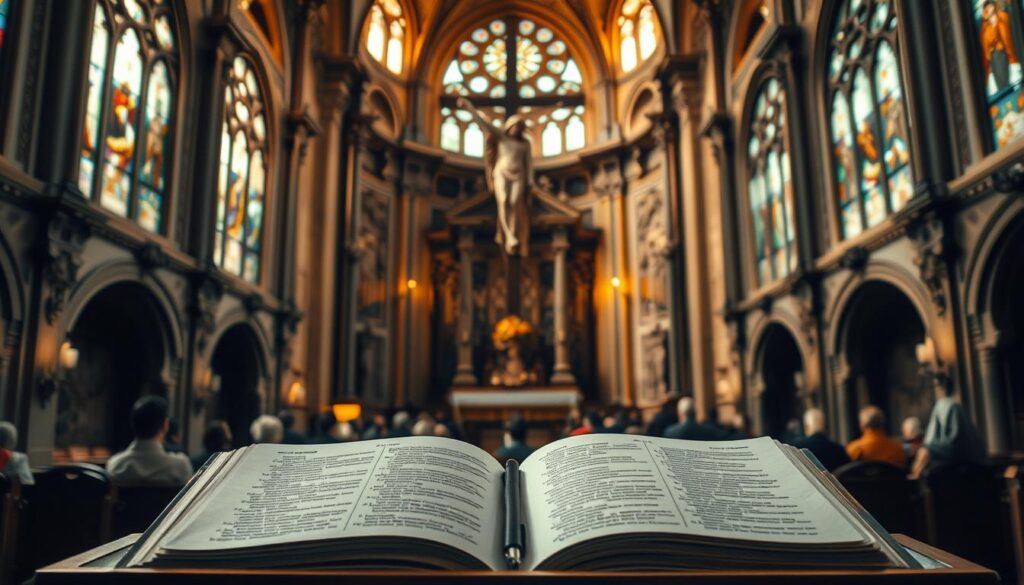
The living link
From the first centuries onward, bishops continued apostolic ministry by handing on teaching and sacraments. In parish life, Mass, sermons, and catechesis form the ordinary place for every christian to hear, learn, and live the Word.
- Scripture and Tradition work together, not in rivalry.
- The Magisterium interprets to guard clarity across cultures.
- That framework keeps faith growing with continuity and care.
Worship and the Sacraments: Meeting Jesus in the Mass and Daily Life
Mass gathers a parish to hear scripture, share thanks, and receive spiritual nourishment.
The Mass is the principal act of worship. Here the community hears God’s Word and offers thanksgiving through the Son in the holy spirit.
The Catholic Mass: hearing the Word and giving thanks in the Eucharist
At consecration, a priest leads the prayer that makes Christ present for all. People listen, sing, and receive spiritual food that shapes daily life.
Real Presence in the Eucharist: bread and wine become the body and blood of Christ
Catholics hold that bread and wine become the body and blood of Christ. This Real Presence nourishes a living bond with Jesus and with one another.
The sacrament of reconciliation: confessing sins and receiving healing
“If you forgive the sins of any, they are forgiven.” — John 20:23
Sacrament reconciliation offers mercy and spiritual repair. Scripture also urges believers to “confess your sins to one another” (James 5:16).
Living the Catholic way: baptism, confirmation, matrimony, holy orders, anointing of the sick
Seven sacraments guide people at every stage: Baptism, Confirmation, Eucharist, Penance, Anointing, Matrimony, and Holy Orders. Each sacrament meets real needs and sends people back into daily work, family, and service.
| Rite | Purpose | Everyday effect |
|---|---|---|
| Baptism | New life in Christ | Community belonging |
| Eucharist | Nourishment by body and blood | Strength for duty and mercy |
| Penance | Forgiveness of sins | Peace and moral repair |
| Anointing | Comfort in illness | Hope and support |
Worship continues beyond Sunday in daily prayer and simple acts of charity. These ways help carry Christ’s presence into every corner of life.
Mary and the Saints: Love, Intercession, and Christian Friendship
Honoring Mary and saints helps ordinary people connect daily life with a wider spiritual family.
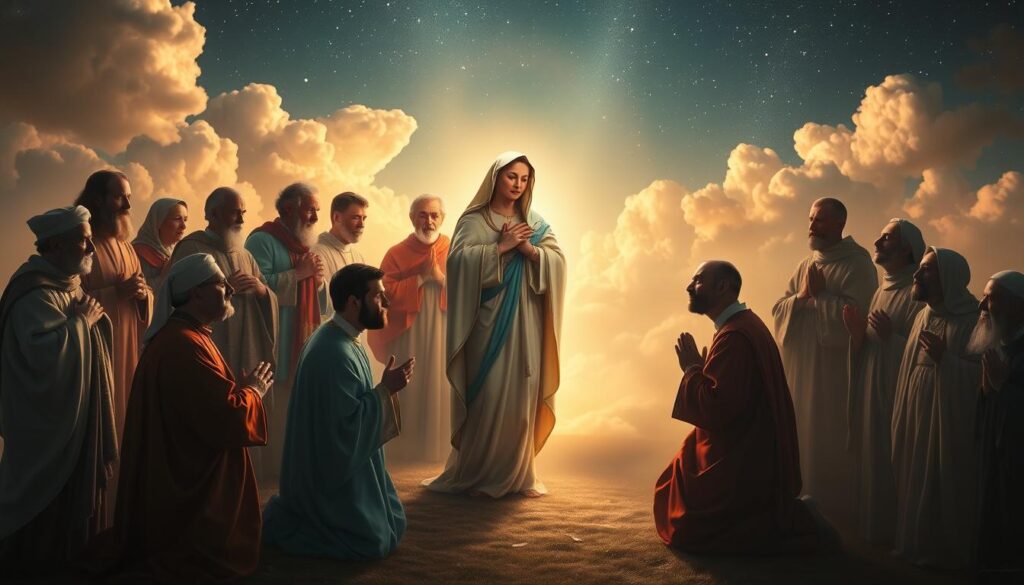
Why Mary is called Mother of God and honored in faith
Mary is honored as mother of Jesus and thus Mother of God. This title shows her special role in salvation history. Teaching names her Immaculate Conception and Assumption as ways God prepared her to receive the Word by the power of the holy spirit.
Praying with saints: asking for intercession, not worship
Believers ask mary pray and ask other saints to bring needs before God, much like asking a friend to pray. This intercession supports daily prayer and strengthens love for God and neighbor.
“When we ask for a saint’s prayers, we join a larger family of faith.”
- Saints are models of holiness and practical discipleship.
- Veneration honors them; worship belongs to God alone.
- Sacred art and images lift minds and inspire prayers.
Conclusion
This guide ends by inviting each person to meet jesus christ anew in prayer, Scripture, and the sacraments. That encounter shapes daily life and builds a lasting relationship with Father, Son, and holy spirit.
The Eucharist is the bread of life: in Mass bread and wine become Christ’s body and blood. That gift feeds mission, heals sins, and points toward salvation and heaven.
Around the earth, saints and Mary, our spiritual Mother, support the journey. Visit a parish, speak with a priest or join a local ministry to reconnect with worship, prayers, and service.
Take a simple step today: find a place nearby, share a welcome, and let sacrament and community renew your faith and life.
FAQ
What are the core teachings in "The Catholic Church’s Core Beliefs Explained"?
This overview presents faith centered on one God in three persons — Father, Son, and Holy Spirit — and highlights Jesus Christ as both fully divine and fully human. It covers his life, saving death, and resurrection, the role of the Spirit, and the Church’s mission to guide believers toward salvation and eternal life.
How can I understand "Core Catholic Beliefs at a Glance: God, Jesus Christ, the Holy Spirit, and the Church"?
This snapshot explains the Trinity, the mystery of Jesus’ person and redemptive work, the Spirit’s presence in believers, and why the Church is called one, holy, catholic, and apostolic. It also outlines hope in the resurrection and the promise of life to come.
What is meant by "One God in Three Persons: Father, Son, and Holy Spirit"?
This doctrine teaches a single divine nature shared by three distinct persons. Each person is fully God, yet there is one divine will and one divine essence. The Trinity shapes prayer, worship, and how people relate to God.
Who is "Jesus Christ: true God and true man," and why does his death matter?
Jesus is understood as both divine and human, sent to restore the broken relationship between God and humanity. His suffering, death, and resurrection redeem people from sin and open the way to new life and union with God.
What role does "The Holy Spirit and the one, holy, catholic, and apostolic Church" play?
The Spirit guides the Church, preserves teaching, and empowers believers for ministry. The four marks — one, holy, catholic, apostolic — describe the Church’s unity, sanctity, universality, and foundation on the apostles’ witness.
What is meant by "Resurrection, salvation, and the life of the world to come"?
Resurrection means new, transformed life after death. Salvation refers to being saved from sin and its effects through grace. Together they point to hope in eternal communion with God beyond earthly life.
How are Scripture and Tradition related in "Scripture and Sacred Tradition: How Catholics Receive and Live the Faith"?
The Bible and sacred Tradition together transmit God’s revelation. The Magisterium — the Church’s teaching authority — preserves and explains that deposit so communities and individuals can live by it faithfully.
What does "The Bible, Sacred Tradition, and the Magisterium safeguarding the deposit of faith" involve?
It involves Scripture as God’s inspired word, Tradition as the living memory of the apostles, and the Magisterium as the interpreter that ensures consistent, authentic teaching across generations.
How is worship shown in "Worship and the Sacraments: Meeting Jesus in the Mass and Daily Life"?
Worship centers on communal liturgy and personal prayer. The sacraments mark key moments of grace, especially the Eucharist, where believers gather to hear God’s word and give thanks for Christ’s presence.
What happens at "The Catholic Mass: hearing the Word and giving thanks in the Eucharist"?
The Mass includes readings from Scripture, a homily, prayers, and the Eucharistic celebration. It is a communal act of thanksgiving that recalls Jesus’ sacrifice and nourishes spiritual life through his real presence.
What is "Real Presence in the Eucharist: bread and wine become the body and blood of Christ"?
This belief holds that, by God’s power, the bread and wine truly become Christ’s body and blood while keeping the appearances of bread and wine. It affirms intimate union with him through reception of the sacrament.
How does "The sacrament of reconciliation: confessing sins and receiving healing" work?
Reconciliation offers a confidential encounter with a priest to name sins, express sorrow, and receive absolution. It restores relationships with God and community through repentance and penance.
What about "Living the Catholic way: baptism, confirmation, matrimony, holy orders, anointing of the sick"?
These sacraments mark stages of life and service. Baptism brings new life, confirmation strengthens, matrimony and holy orders configure people for family and ministry, and anointing offers comfort and healing in illness.
Why do people venerate Mary in "Mary and the Saints: Love, Intercession, and Christian Friendship"?
Mary is honored as Mother of God and model disciple. Veneration recognizes her unique role and asks for her prayers, not worship. She points believers to Christ and to faithful living.
How do Catholics view "Praying with the saints: ask Mary to pray, the intercession of holy men and women (not worship of images)"?
Asking saints to pray is like asking friends to pray for you. It acknowledges that those united with God can intercede. Respect for images or statues serves as reminders of holy lives, not objects of worship.