Christianity’s story is one of unity and diversity. From its earliest days, followers debated how to live out their faith, as seen in Paul’s letters addressing divisions among believers. These conversations shaped the church’s journey through centuries of growth, conflict, and renewal.
Two pivotal moments defined modern Christianity. The 1054 split between Eastern and Western traditions created lasting theological divides. Centuries later, the 1517 Reformation sparked new ways of interpreting scripture and practicing worship. Despite these splits, both branches share roots in early councils like Nicea and Chalcedon.
What makes these traditions unique? It’s not just history—it’s how they answer big questions. Who leads the church? How do sacraments work? What role does tradition play? We’ll explore these differences with care, showing how each tradition helps people connect with God.
Key Takeaways
- Early Christian debates shaped later divisions between major branches
- The Great Schism (1054) and Reformation (1517) defined modern traditions
- Shared foundations include four key ecumenical councils
- Interpretations of leadership and sacraments create distinct practices
- Both traditions aim to deepen spiritual connection through worship
Historical Context and Origins
The roots of Christian traditions stretch back to ancient debates and pivotal decisions. Four councils between the 4th and 5th centuries shaped core beliefs still held today. These meetings—held in cities like Nicea and Chalcedon—clarified teachings about Jesus’ divinity and humanity, creating a shared foundation for future generations.
Early Church Divisions and the Role of the Councils
Disagreements over doctrine often led to splits. The filioque controversy—a dispute about wording in the Nicene Creed—revealed growing tensions between Eastern and Western churches. By 1054, differences in leadership styles and worship practices caused a formal break. This church division, known as the Great Schism, created two distinct branches with separate cultural identities.
The Great Schism, Reformation, and Formation of Distinct Traditions
Centuries later, new questions about authority sparked another transformation. When Martin Luther challenged certain practices in 1517, he ignited a movement emphasizing scripture over tradition. By the late 16th century, theologians like Theodore Beza systematized these ideas, creating doctrinal standards for emerging communities. This era saw Reformed teachings spread through Switzerland, the Netherlands, and eventually to America’s shores.
Each split—whether in 1054 or 1517—reshaped how churches operated. Yet all groups traced their history back to those early councils, proving that even divided branches share deep roots.
Common Ground: Foundational Doctrines and Beliefs
At the heart of Christian teaching lies a core of truths that bridge centuries of theological development. These shared convictions form a spiritual anchor, connecting communities across time and culture.
Shared Tenets: Trinity, Resurrection, and Salvation in Christ
All major branches affirm the Trinity—one God in three persons. This belief, solidified in early councils, underscores Jesus’ dual humanity and divinity. His resurrection remains the linchpin of Christian faith, celebrated as victory over death.
Salvation through Christ’s blood unites these traditions, though interpretations differ. Both groups teach that eternal life comes through His sacrifice. As one early theologian wrote: “In Adam all die, so in Christ all will be made alive.”
Scripture forms another key agreement. While some include additional texts, all would agree on the 66-book foundation listed by Athanasius. This shared biblical bedrock supports dialogue between traditions.
- Virgin birth accepted, with varying views on Mary’s later life
- Four ecumenical councils shape Christological understanding
- Eschatological hope rooted in resurrection promises
These common threads remind us that unity often runs deeper than division. From baptismal waters to communion tables, essential truths continue to shape worship worldwide.
Exploring Protestant Orthodox Perspectives
How communities interpret divine guidance shapes their spiritual identity. At the core of many theological discussions lies a fundamental question: what holds ultimate supreme authority in matters of belief? This debate continues to influence worship practices and doctrinal priorities across Christian traditions.
Scripture Authority vs. Tradition in Faith
Some groups emphasize Sola Scriptura—the belief that sacred texts alone provide divine instruction. While respecting historical teaching, they view scripture as the ultimate standard. A modern shift toward Suprema Scriptura acknowledges other wisdom sources but maintains biblical primacy.
Others see tradition and scripture as inseparable. They argue divine revelation flows through both written texts and lived practices passed down generations. This approach values continuity with early church patterns while adapting to cultural contexts.
Justification by Faith and the Role of Works
The concept of justification by faith alone revolutionized spiritual understanding. One reformer famously stated: “The faith that saves alone is never alone.” This means authentic belief naturally inspires compassionate action—works become evidence, not prerequisites, for salvation.
- Faith initiates spiritual transformation
- Actions demonstrate genuine commitment
- Sacraments serve as grace channels, not merit systems
Contrasting views enrich theological dialogue. Whether through scripture-focused study or tradition-guided practices, both paths aim to deepen faith and foster spiritual growth. These distinct yet interconnected approaches continue shaping how believers experience divine connection today.
Worship and Church Practices
How believers experience God through worship reveals core values shaping spiritual communities. Whether through vibrant sensory engagement or stripped-down simplicity, these practices anchor christian life in shared purpose and personal devotion.
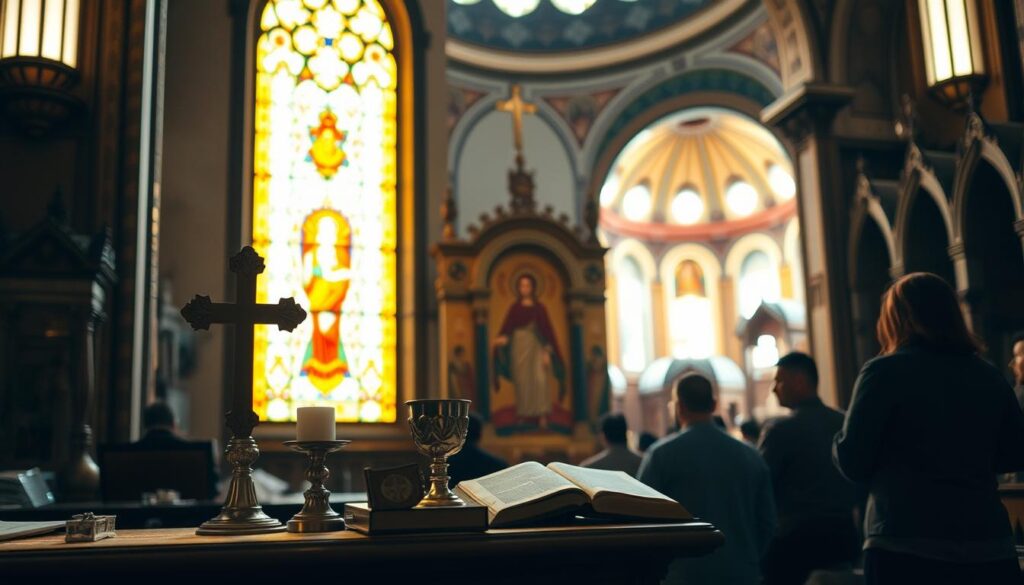
Liturgical Expressions: From Iconography to Simplicity
Walk into a traditional sanctuary, and you’ll find walls covered with icons—sacred images of biblical figures and revered saints. These aren’t just decorations. Many see them as invitations to connect with divine mysteries through sight and touch. Incense swirls as chanted prayers echo ancient rhythms, creating a multisensory worship experience.
Contrast this with spaces favoring unadorned walls and clear sightlines. Here, the focus shifts to communal singing and scripture-centered teaching. As one modern worshiper noted: “Simplicity lets the Word speak without distraction.” Both approaches aim to draw hearts closer to sacred truths.
Baptism, Communion, and Daily Living in Faith
Sacramental practices highlight different ways of understanding grace. Infants might be fully immersed three times in water, symbolizing death and rebirth. Others receive sprinkling as adults after personal faith declarations. Each method reflects deep convictions about baptism’s role in spiritual initiation.
At communion tables, some traditions teach the bread and wine become Christ’s body and blood mystically. Others view them as powerful symbols of remembrance. Beyond rituals, many communities emphasize fasting seasons or prayer routines—practical ways to weave faith into daily living.
These diverse practices remind us that worship isn’t one-size-fits-all. Whether through ancient patterns or modern adaptations, believers find paths to nurture their spiritual journey.
Theological and Cultural Impacts Over Time
The ripple effects of theological ideas often extend far beyond Sunday services. These traditions have shaped how societies think about morality, leadership, and human purpose—leaving fingerprints on everything from art to laws.
Influence on Philosophy, Ethics, and Church Governance
Biblical scholarship flourished through movements valuing personal scripture study. Universities and literacy programs grew from this focus, making ancient texts accessible to everyday people. C.S. Lewis, a beloved figure, showed how faith could engage modern minds—his books bridging divides between believers.
Eastern traditions offer rich insights into spiritual growth. Concepts like theosis teach that humans can reflect divine qualities through daily practice. This wisdom helps many integrate faith into work, relationships, and self-care routines.
Governance models also reflect these roots. Some nations adopted ideas about individual conscience into their legal systems. Others built cultural identities around ancient liturgies and communal rituals. As one historian noted: “Churches don’t just shape souls—they mold societies.”
Today, both traditions address modern ethics differently. While some groups focus on social justice through activism, others emphasize personal transformation. Yet their shared Old Testament roots remind them of common ground in pursuing justice and mercy.
Conclusion
Today’s churches show how unity grows through shared purpose. While differences in worship styles and tradition remain, many now see fellow believers as partners in faith. This shift reflects Christ’s prayer for His body to reflect divine love across cultural lines.
Both traditions offer unique gifts. One group’s teaching on scripture tradition fuels global Bible literacy. Another’s use of icons and ancient prayers connects modern living to early church rhythms. Together, they remind us that salvation through Christ’s blood unites all who seek truth.
The Holy Spirit works through these varied ways of worship. Whether through baptism rituals or communion practices, both groups point to Christ’s resurrection. As conversations deepen in our century, shared roots in early councils become bridges for mutual understanding.
What matters most? Not perfect agreement, but shared devotion to shaping christian life through grace. When churches honor their distinct paths while valuing others’, they reveal faith’s power to transform humanity.
FAQ
How do views on authority differ between these Christian traditions?
One key distinction lies in the source of spiritual authority. Many emphasize Scripture as the supreme guide, while others hold that sacred tradition and church councils equally shape belief. This impacts interpretations of doctrine and practice.
What role do sacraments like baptism play in daily faith practices?
Rituals such as baptism and communion are central to communal worship in liturgical traditions, seen as channels of grace. Other groups focus more on personal faith experiences, though both affirm these acts as expressions of devotion to Christ.
Why is the concept of "justification" interpreted differently?
The belief in salvation through faith alone contrasts with teachings that view grace as transformative, involving cooperation with God. This shapes how individuals understand their journey toward spiritual growth and eternal life.
How does cultural history influence worship styles today?
Centuries of tradition have preserved rich liturgical practices, including iconography and veneration of saints. Simpler forms of worship often reflect a desire to return to early church simplicity, prioritizing preaching and Scripture.
Are there shared beliefs that unite these groups despite differences?
Yes! Core doctrines like the Trinity, Christ’s resurrection, and the need for redemption through His sacrifice are universally affirmed. Both traditions seek to honor God through prayer, service, and living out biblical truths.