What does it mean to live out a faith that bridges tradition and modern life? The Evangelical Lutheran Church in America (ELCA) offers a compelling answer. Rooted in grace and service, this community strives to make “God’s Love Made Real” through action—transforming lives locally and globally.
At its core, the ELCA focuses on creating spaces where everyone belongs. Whether through worship, social justice initiatives, or partnerships worldwide, it emphasizes inclusivity and practical compassion. Recent strategic recommendations highlight how members collaborate to address pressing challenges while nurturing spiritual growth.
This approach isn’t just about beliefs—it’s about tangible impact. From feeding the hungry to advocating for equity, the ELCA empowers individuals to live their values. Its vision of a “world shaped by grace” unites diverse voices, proving that faith thrives when shared openly.
Key Takeaways
- The ELCA prioritizes practical service and social justice as expressions of faith.
- Inclusivity is central, welcoming people from all backgrounds and life experiences.
- Local and global initiatives reflect a commitment to holistic community impact.
- Active participation in worship and service is encouraged for personal and collective growth.
- Resources and support networks help individuals connect meaningfully with the community.
Overview of the Evangelical Lutheran Church
How did a 16th-century movement spark a spiritual legacy still thriving today? The answer lies in Martin Luther’s transformative ideas, which challenged rigid traditions and redefined Christianity’s focus on grace over obligation. This foundation grew into a vibrant tradition emphasizing service and learning.
From Reformation to Modern Community
Three major mergers in 1988 formed what’s now the largest U.S. denomination in this tradition. Early followers built hospitals and schools, proving faith lives through action. Their work established a pattern of blending worship with practical support for neighbors.
| Historical Milestone | Impact | Modern Expression |
|---|---|---|
| 1517 Reformation | Emphasis on scripture | Bible study groups |
| 19th-century Immigration | Expanded U.S. presence | Multicultural congregations |
| 1988 Merger | 3.3 million members | National hunger programs |
Grace as Daily Practice
Central to this tradition is the belief that love comes first—not as a reward, but as a gift. This shapes how members approach relationships and challenges. Quarterly publications like Living Lutheran share stories showing this principle in action, from disaster relief to local food drives.
Resources keep people connected across distances, turning individual faith into shared purpose. Whether through historic creeds or modern ministries, the focus remains clear: making hope tangible.
Core Teachings, Worship, and Community Life
How do communities balance timeless traditions with today’s pressing challenges? For many, the answer lies in rhythms of shared learning, action, and connection. Weekly gatherings blend ancient rituals with fresh perspectives, creating spaces where faith becomes a lived experience.
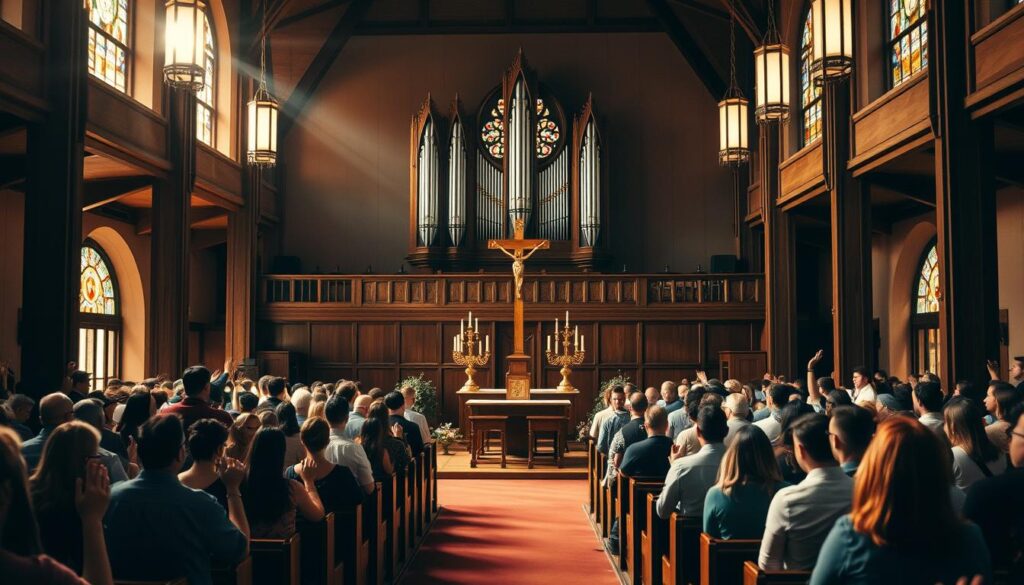
Worship Practices and Bible Studies
Sunday services often start with scripture and song, grounding participants in stories that shape their values. Hymns and communion anchor these moments, while sermons bridge biblical wisdom to modern dilemmas. Midweek online studies dive deeper—like the ELCA’s Wednesday sessions exploring climate justice and reconciliation through a spiritual lens.
Celebrating Faith Through Community Gatherings
Shared meals and seasonal festivals turn strangers into neighbors. At Wicker Park Lutheran, Sunday worship at 10 a.m. flows into coffee hours where laughter mixes with heartfelt conversations. Special events—from holiday markets to volunteer fairs—strengthen bonds while addressing local needs.
Embracing Justice and Daily Ministry
Care extends beyond sanctuary walls. Members use tools like Church Community Builder to organize meal trains for new parents or coordinate disaster relief efforts. “We’re called to show up,” says one volunteer, describing how their group partners with food banks and schools.
This blend of worship, study, and service equips disciples to live intentionally. Whether through quiet acts of kindness or advocacy campaigns, every action reflects a commitment to making hope tangible.
Service and Ministry Opportunities
When storms strike or hunger persists, faith communities roll up their sleeves. Across the country, hands-on ministry meets urgent needs through partnerships and perseverance. From disaster zones to neighborhood food pantries, these efforts show compassion in motion.
Supporting Flood Response and Disaster Recovery
Rising waters leave more than physical damage—they test hope. Teams from Lutheran Disaster Response work with the Southwestern Texas synod to deliver supplies, gut flooded homes, and listen to survivors’ stories. “Recovery takes years, not weeks,” explains a volunteer coordinator. Their approach combines cleanup crews with counselors who help people process trauma while rebuilding.
Volunteer Opportunities and Social Service Roles
Want to pack meals for families or tutor students? Local initiatives offer flexible ways to serve. Self-funded groups like Wicker Park’s ministry channel every dollar directly into feeding programs and housing aid. Tax-deductible gifts fund trauma training for volunteers—proving small actions create big ripples.
Whether wielding a hammer or donating skills remotely, everyone can contribute. As one organizer notes: “This work isn’t about fixing—it’s about walking together.” Seasonal drives and mentorship projects keep compassion active year-round.
Exploring the evangelical lutheran church: Diversity, Discipleship, and Inclusion
What does true unity look like in a world of differences? For many, it starts with creating spaces where every voice matters. This community thrives by celebrating unique stories while building shared purpose.
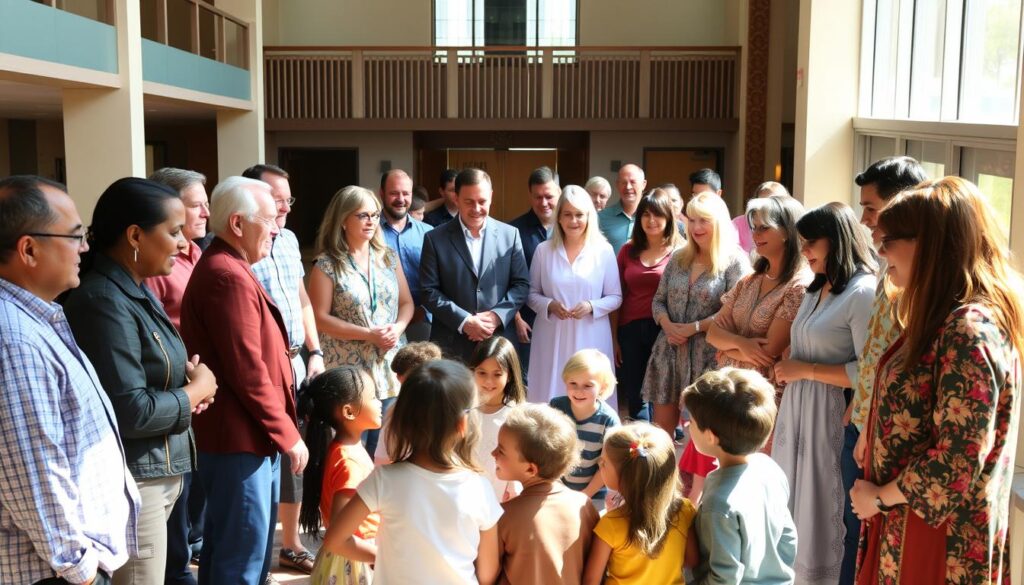
Synod Assemblies and Global Outreach
Annual gatherings bring leaders together to shape collective action. As Bishop Eaton recently stated: “We’ll explore new forms while keeping the gospel alive everywhere—from neighborhood food pantries to international partnerships.” These meetings fuel initiatives like cultural exchange programs and disaster relief networks across 80 countries.
Inclusive Ministries and LGBTQIA+ Leadership
Over 200 congregations proudly display rainbow decals, signaling safe spaces for LGBTQIA+ individuals. Ethnic-specific ministries blend traditions—like Spanish-language services with Scandinavian hymnody—proving diversity strengthens unity. One pastor shares: “Our differences aren’t obstacles—they’re how we reflect God’s creativity.”
Training programs help members address unconscious biases while amplifying marginalized voices. This approach transforms Sunday sermons into Monday actions, whether through pronoun-inclusive materials or accessibility upgrades for worship spaces.
Engaging with Faith and Social Justice Initiatives
Faith becomes transformative when it meets the urgent needs of our time. Leaders like Bishop Yehiel Curry call communities to confront threats against transgender siblings, refugees, and migrants through compassionate action. This work isn’t theoretical—it’s about showing up today where pain and hope collide.
Addressing Current Social Issues with Compassion
Recent responses to discrimination highlight a powerful truth: prayer and policy change go hand in hand. Commemorations like the Emanuel Nine anniversary remind us to confront racism’s roots while planting seeds of reconciliation. By partnering with groups like Lutheran Social Services, individuals turn grief into justice-centered solutions for housing, immigration, and healthcare access.
Connecting Through Local Events and Advocacy
Change grows from neighborhood connections. From town halls to volunteer fairs, events create spaces to learn, listen, and lobby alongside others. The ELCA Advocacy network helps amplify voices through state and national campaigns—proving small actions spark big shifts when communities unite.
FAQ
How did the Lutheran tradition begin?
Rooted in the 16th-century Reformation, the tradition emphasizes grace, faith, and scripture. Leaders like Martin Luther challenged doctrines that strayed from biblical teachings, shaping a focus on accessibility and personal connection to the Gospel.
What teachings guide your community?
Central beliefs include salvation through grace, the authority of Scripture, and serving others. Communities prioritize love, justice, and inclusivity, reflecting Christ’s teachings in modern challenges like poverty and inequality.
What does a typical service look like?
Services blend traditional hymns, prayer, sermons, and sacraments like communion. Many congregations also host contemporary worship, Bible studies, and interactive discussions to deepen spiritual growth.
How can I support disaster recovery efforts?
Volunteer with groups like Lutheran Disaster Response, which aids flood recovery and long-term rebuilding. Donations and hands-on help provide essentials like shelter, food, and emotional care to affected families.
Are LGBTQIA+ individuals welcome in leadership roles?
Yes! Many synods ordain LGBTQIA+ pastors and actively support inclusive ministries. Affirming congregations celebrate diversity, ensuring all voices contribute to worship, decision-making, and community life.
How does the church address current social issues?
Through advocacy, education, and partnerships, members tackle racism, climate change, and immigration reform. Initiatives often align with groups like the ELCA Advocacy Network to drive systemic change.
Can I join events without being a member?
Absolutely! Community meals, workshops, and justice rallies are open to all. These gatherings build bridges, foster dialogue, and invite collaboration across different backgrounds.
Are Bible studies open to newcomers?
Yes—groups welcome curious learners at any stage of their journey. Studies explore Scripture’s relevance today, often linking themes like mercy or forgiveness to daily life and service.
What global ministries are active?
Partnerships in over 60 countries focus on health, education, and sustainable development. Programs like the Malaria Campaign or refugee support reflect a commitment to global neighbor care.
How can faith inspire daily actions?
Members are encouraged to live out their beliefs through kindness, ethical choices, and standing up for justice. Small acts—like volunteering or mentoring—embody the Gospel’s call to love boldly.