Let’s step back in time to explore how a bold movement reshaped spiritual life across Europe and beyond. In the 16th century, a wave of reformers sought to redefine faith practices, sparking changes that would ripple through centuries. Their efforts laid the groundwork for traditions now followed by millions worldwide.
This journey began with courageous voices challenging long-held doctrines. Figures like Martin Luther and John Calvin emphasized direct engagement with scripture, shifting power away from centralized religious institutions. Their ideas spread rapidly, fueled by new technologies like the printing press.
What made these reforms so groundbreaking? They weren’t just about theology—they reshaped politics, education, and culture. Local communities gained autonomy in worship, while debates about faith became more accessible to everyday people. These shifts created diverse branches of belief, each with unique practices.
As we unpack this story, you’ll see how historical conflicts and alliances shaped modern spiritual landscapes. From royal disputes to grassroots movements, every era left its mark on how believers connect with their faith today.
Key Takeaways
- Origins trace back to 16th-century reformers challenging traditional authority
- Core ideas focused on individual interpretation of religious texts
- Political and technological changes accelerated the movement’s growth
- Multiple denominations emerged with distinct practices and beliefs
- Lasting impacts visible in modern worship styles and community structures
Introduction to Protestant Churches
Imagine a spiritual landscape where personal connection with scripture takes center stage. This vision drove reformers to challenge medieval religious structures, creating a new branch of Christianity distinct from Roman Catholic traditions. Their efforts birthed communities valuing individual interpretation and simplified worship practices.
Three revolutionary ideas anchor these groups: salvation through belief rather than deeds, scripture as the ultimate authority, and every believer’s right to approach the divine directly. These principles shattered medieval hierarchies, empowering ordinary people to shape their spiritual journeys.
Opposition arose quickly. The Catholic Counter-Reformation reclaimed ground in regions like Spain through education reforms and artistic campaigns. Yet new waves of thought kept emerging—from Pietism’s heartfelt devotion to Rationalism’s logical inquiry.
Today’s landscape reflects centuries of adaptation. Evangelical groups prioritize scripture-based outreach, while Pentecostals embrace expressive worship styles. Mainline denominations balance tradition with modern social engagement, showing how one movement can nurture countless expressions of belief.
What unites them? A shared commitment to reimagining faith’s role in daily life. From bustling urban congregations to quiet rural gatherings, this legacy continues evolving while honoring its revolutionary roots.
Exploring the Roots of Protestant Thought
The story of reform begins not with a bang, but with courageous whispers in medieval halls. Long before famous reformers made headlines, bold thinkers laid groundwork that would shake spiritual foundations across continents.
Pioneers Before Their Time
Fourteenth-century England buzzed with radical ideas. John Wycliffe, an Oxford scholar, declared scripture should guide faith—not distant leaders. “Truth resides in God’s word, not in human traditions,” he argued, sparking what some called a dangerous movement.
His followers, nicknamed Lollards, faced harsh consequences. Authorities banned English Bible translations, fearing common people might interpret texts independently. Yet handwritten copies kept circulating through secret networks.
“Every Christian has the right to examine Christ’s law for themselves.”
Flames That Lit Fires
Wycliffe’s writings reached Prague, inspiring Jan Hus. The Czech priest condemned corrupt practices, declaring spiritual authority belonged to scripture alone. When church leaders summoned him to a council in 1415, they promised safe passage—then burned him as a heretic.
| Reformer | Focus | Legacy | Opposition |
|---|---|---|---|
| Wycliffe | Scripture accessibility | First full Bible translation | Declared heretic posthumously |
| Hus | Church accountability | Bohemian Reformation | Executed in 1415 |
Hus’s followers dominated Bohemia for decades, proving reform movements could outlive their founders. Their success showed how ideas about personal faith resonated across cultures—even when authority figures tried silencing them.
These early challenges to established power structures created ripples that would later become waves. By prioritizing individual connection with sacred texts, medieval reformers planted seeds for transformations no one could yet imagine.
Early Precursors and Proto-Protestantism
Long before the Reformation’s spark, embers of change glowed in unexpected places. Ninth-century thinkers like Claudius of Turin rejected religious images and papal authority, declaring salvation came through belief alone. His contemporary Gottschalk of Orbais took it further, teaching that divine grace—not human effort—shaped spiritual destiny.
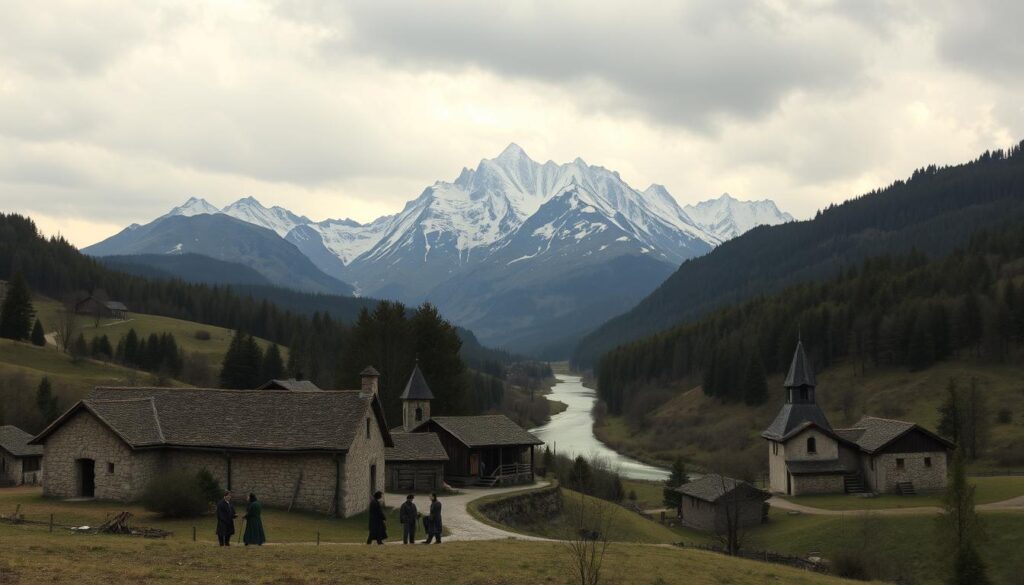
Voices in the Wilderness
Two centuries later, Peter Waldo made waves. This wealthy merchant gave away his fortune, urging communities to live like Christ’s disciples. His followers, called Waldensians, roamed Europe preaching in common languages. They carried handwritten Bibles—a radical act when scripture was locked in Latin.
Authorities saw them as threats. Hunted across France and Italy, these believers retreated to alpine valleys. There, they preserved their faith practices for generations. Their survival proved grassroots movements could outlast persecution.
| Movement | Core Beliefs | Survival Tactics | Legacy |
|---|---|---|---|
| Waldensians | Simple living, vernacular scripture | Mountain hideouts, oral traditions | Inspired later reformers |
| Lollards | Bible accessibility, anti-clericalism | Secret meetings, coded messages | Paved way for English Reformation |
Meanwhile, Wycliffe’s followers stirred trouble in England. Lollards met in homes to study outlawed Bible translations. One member wrote, “Truth needs no sword—it cuts through lies alone.” Their defiance showed how ordinary people could challenge powerful institutions.
These groups shared a bold vision: a christian religion rooted in personal conviction rather than rituals. Though scattered and silenced, their ideas formed a hidden river that would later feed the Reformation’s floodwaters.
The Spark of Reform: Martin Luther and the Ninety-Five Theses
A single document nailed to a door changed the course of spiritual history. In October 1517, Martin Luther pinned his critiques to the Castle Church Wittenberg, unknowingly lighting a fuse that would transform European society. His target? The widespread sale of indulgences – payments claimed to shorten punishment for sins in the afterlife.
When Academic Questions Became Public Outcry
Luther intended his 95 arguments as discussion starters for scholars. Written in Latin, they questioned whether leaders had authority to “sell God’s forgiveness like vegetables at market.” But printers saw gold in his fiery words. Translated into German, copies raced across cities faster than horse riders.
Three factors turbocharged this message:
- Growing frustration with Catholic Church financial practices
- New printing technology spreading ideas at unprecedented speed
- Rulers eager to reduce Rome’s influence in their territories
By 1518, debates about indulgences reached taverns and town squares. Farmers discussed salvation theology while nobles saw chances to seize church lands. The Castle Church Wittenberg door became a symbol of courage – proof that one voice could challenge mighty institutions.
“When coins clink in the collection box, greed and avarice increase.”
Luther’s stand didn’t just criticize payments for pardons. It invited ordinary people to rethink their relationship with spiritual authority – a shift that would birth new forms of community and worship.
The Reformation in Germany
Germany’s spiritual landscape erupted in flames of change during the 1520s. Martin Luther sparked a wildfire when his critiques of religious practices reached hungry minds across the Holy Roman Empire. What began as academic debates soon reshaped kingdoms and villages alike.

Luther initially aimed to fix existing structures, not destroy them. “True faith needs no gilded rituals,” he argued, pushing for simpler worship within the church. But his ideas took unexpected turns as local rulers saw opportunities. Ambitious princes embraced reform to weaken Rome’s grip—and strengthen their own power.
The movement’s rapid spread alarmed authorities. By 1524, peasants in Bavaria and Swabia rebelled, demanding both spiritual and economic freedom. Their uprising revealed how religious reformation intertwined with social justice cries. Though Luther condemned the violence, the genie couldn’t be forced back into the bottle.
Three key developments reshaped Germany:
- Printing presses turned theological debates into public conversations
- Regional princes established state-approved worship styles
- New interpretations of scripture multiplied beyond Luther’s vision
This religious revolution proved ideas could outpace their creators. As pamphlets spread in common languages, ordinary people claimed ownership of their faith—a legacy still shaping spiritual journeys today.
The protestant church history timeline: Milestones and Turning Points
Marking key moments across centuries reveals how spiritual revolutions unfold. While 1517 stands out—the year Martin Luther sparked debates with his Ninety-Five Theses—the roots dig deeper. Groups like the Waldensians and Hussites had already questioned authority for 300 years, planting seeds of change in hidden valleys and university halls.
The first explosive phase (1517-1555) saw ideas spread like wildfire. Reformers like Calvin and Zwingli built theological frameworks while rulers reshaped worship practices. “This wasn’t just about doctrine,” notes historian Eleanor Park, “but about who gets to define sacred truth.”
| Period | Key Events | Impact |
|---|---|---|
| 1517-1555 | Luther’s protests, Augsburg Peace | Legal recognition for new beliefs |
| 1555-1648 | Thirty Years’ War, Westphalia Treaty | Ended Europe’s religious wars |
| 18th-19th C. | Great Awakenings | Revived spirituality in America |
| 20th C. | Pentecostal rise | Global charismatic movements |
By 1648, the Westphalia agreements allowed diverse faiths to coexist—mostly. But the movement kept evolving. Eighteenth-century camp meetings in Kentucky drew thousands seeking emotional connections, while modern megachurches blend ancient teachings with digital outreach.
Each era faced unique challenges. Wars tested tolerance, industrial shifts demanded new community structures, and scientific advances prompted fresh interpretations. Yet through all this, core principles endured: personal faith, scripture’s authority, and the right to question.
Expansion in Switzerland and Continental Europe
While Germany’s reform fires burned bright, another flame ignited in Switzerland’s mountain valleys. By 1519, Huldrych Zwingli began reshaping Zurich’s spiritual life with bold ideas that would ripple across borders. His approach shared Luther’s passion for change but charted its own course.
Zwingli’s Practical Revolution
The Zurich leader targeted visible traditions first. “Why keep art in sacred spaces if it distracts from God’s word?” he argued. Churches became plain rooms for scripture study. Even communion bread lost its ceremonial flair—simple fuel for thoughtful worship.
Calvin’s Lasting Blueprint
John Calvin gave the movement staying power. His Geneva writings became a roadmap for followers from Scotland to Hungary. Unlike Luther’s focus on individual faith, Calvin emphasized God’s grand plan—predestination as comfort, not fear.
Three key elements made Calvin’s system stick:
- Clear church governance structures
- Education programs for laypeople
- Practical guidelines for daily living
John Calvin’s reformation legacy proved adaptable. Dutch merchants and Hungarian nobles alike found his balanced approach useful. Through wars and migrations, these ideas kept communities anchored while letting local cultures shape their practice.
FAQ
What started the Protestant Reformation?
Martin Luther’s 1517 critique of indulgences, posted at Wittenberg’s Castle Church, ignited the movement. His bold stance against certain Catholic practices encouraged others to rethink faith and authority.
How did John Calvin shape Reformed Theology?
Calvin’s writings, like Institutes of the Christian Religion, emphasized God’s sovereignty and predestination. His ideas in Geneva inspired communities worldwide, influencing Presbyterians and Puritans.
Were there reformers before Luther?
Yes! Figures like Jan Hus and John Wycliffe challenged church corruption in the 1300s–1400s. Their calls for Scripture-focused faith laid groundwork for later reforms.
Why did Henry VIII break from Rome?
After the pope denied his marriage annulment, Henry declared himself head of England’s church. This political move reshaped religion and power structures nationally.
What role did the Waldensians play?
This medieval group, rejecting papal authority, prioritized poverty and Bible access. Their resilience inspired later reformers despite facing persecution.
How did the Peace of Augsburg change Europe?
The 1555 agreement let German princes choose Lutheranism or Catholicism for their regions. It eased conflicts but didn’t fully resolve religious tensions.
Why were indulgences controversial?
Sold as “pardons” for sins, many saw them as exploiting believers. Luther argued salvation came through faith, not payments—a core Reformation idea.
What was unique about Zwingli’s reforms?
Huldrych Zwingli in Zurich merged faith with civic life, rejecting rituals like fasting. His debates with Luther over communion shaped Protestant diversity.