For centuries, religious traditions shaped the identity of this European nation. Known historically as “the eldest daughter of the Church,” its spiritual roots date back to the 2nd century. By 1789, nearly all 28 million residents belonged to the same faith, though minority groups faced exclusion from full societal participation.
Modern statistics reveal a striking shift. While cultural connections remain strong, only 15% actively practice today. Weekly services attract just 4.5% of citizens, with daily observance dropping below 2%. These numbers highlight a society balancing secular values with inherited traditions.
The emotional response to events like the Notre-Dame fire shows how deeply symbolic ties endure. Many who no longer attend services still feel connected through art, holidays, and shared history. This cultural membership creates a unique bridge between past and present.
Our exploration will uncover how historical events reshaped public attitudes. From royal alliances to revolutionary reforms, each era left marks on national identity. We’ll also examine why certain traditions persist despite declining participation rates.
Key Takeaways
- Spiritual heritage shaped national identity for over 1,800 years
- 98% affiliation rate in 1789 contrasts sharply with modern statistics
- Cultural connections outlast regular religious practice
- Secular values coexist with historical symbolism
- Recent events reveal enduring emotional ties to tradition
- Membership definitions evolved from mandatory to cultural
Historical Foundations of Catholicism in France
Long before becoming a spiritual stronghold, early believers faced persecution in Gaul’s urban centers. The first documented Christian community emerged in Lyon, where Bishop Pothinus and 47 followers were martyred in 177 AD. Their sacrifice, recorded by Irenaeus, planted seeds for a faith that would later unite kingdoms.
The Gallican Tradition and Early Christian Roots
A pivotal shift occurred in 496 AD when King Clovis I embraced baptism. This conversion from pagan traditions created Europe’s first “Christian kingdom”, blending royal power with religious authority. The Gallican Church developed unique customs allowing local bishops to govern parishes while maintaining loose ties to Rome.
This arrangement gave French monarchs unusual control over church affairs. By the 15th century, the Pragmatic Sanction of Bourges formalized these liberties. Clergy managed local worship practices, yet avoided complete separation from the Roman Catholic Church.
Impact of the French Revolution on the Church
1789 brought seismic changes as revolutionaries targeted religious institutions. “The Church must belong to the nation, not Rome!” became a rallying cry. By 1790, the state had:
- Confiscated 10% of national land from churches
- Forced 34,000 clergy to swear loyalty oaths
- Replaced dioceses with elected parish councils
These reforms divided communities. Many members resisted, viewing the Civil Constitution of the Clergy as heresy. The revolution’s anti-church policies severed centuries-old bonds, yet unintentionally preserved cultural ties through shared history.
The Evolution and Decline of the Church’s Role
The 18th century sparked a firestorm of ideas that would forever change spiritual institutions. Thinkers began questioning why ancient traditions should govern modern life. This shift laid the groundwork for dramatic reforms during the french revolution.
Enlightenment Critiques and Growing Anticlericalism
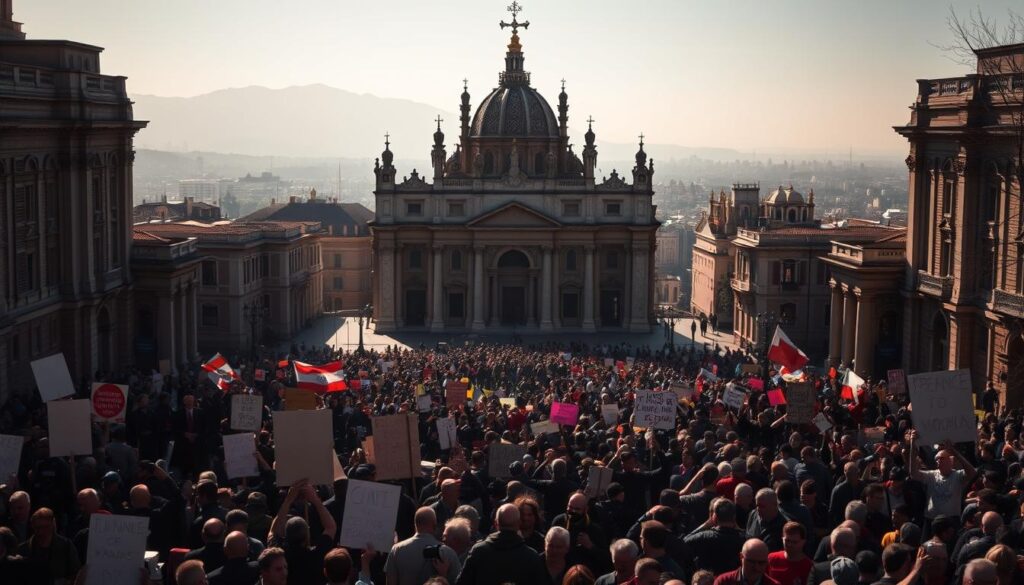
Voltaire famously mocked monastic life, asking: “Does praying feed the hungry or plow fields?” His words echoed through salons where intellectuals debated the roman catholic Church’s role. By 1789, religious orders controlled 150 million livres annually while owning 6% of farmland.
| Church Holdings (1789) | Value | Public Reaction |
|---|---|---|
| Land Ownership | 6% of France | Widespread resentment |
| Annual Revenue | 150M livres | Calls for redistribution |
| Tax Exemptions | Full immunity | Growing anger |
Many saw monasteries as wasteful. Critics argued monks contributed nothing to society while collecting tithes from struggling farmers. This tension fueled demands for change.
The Nationalization of Church Property and Revolutionary Reforms
On November 2, 1789, lawmakers made a bold move. They declared all catholic church lands state property. Over 34,000 clergy faced an impossible choice: swear loyalty to the new constitution or lose their positions.
The oath divided communities. Membership in religious orders plummeted as many refused to comply. This schism turned spiritual leaders into political targets, reshaping worship practices nationwide.
These reforms didn’t just redistribute wealth. They redefined how citizens viewed authority – a legacy that still influences debates about faith and governance today.
Contemporary Trends in catholicism france
Modern spiritual identity in this European nation reveals a striking paradox. While 60% of adults still claim “cultural membership” in surveys, only 15% actively participate in weekly rituals. A priest from Normandy recently observed: “Our churches hold more memories than worshippers these days.”
Modern Revival and Demographic Shifts
The roman catholic church faces a critical challenge: fewer than 90 new priests are ordained yearly to replace 700 retiring clergy. This shortage forces creative solutions:
| Year | Priests Ordained | Retirements |
|---|---|---|
| 2022 | 87 | 721 |
| 2023 | 83 | 698 |
Despite these hurdles, some communities thrive. Traditionalist groups report increased mass attendance among young people, particularly in urban areas. Lay volunteers now lead 40% of services in rural parishes.
Adaptation to Secular Policies and Cultural Identity
Over 45,000 church buildings stand as silent witnesses to changing times. Only 5% host regular practice, yet 78% of citizens oppose converting them into secular spaces. “These structures are our collective memory,” argues a Parisian historian.
The catholic church maintains influence through 8,500 schools educating 2 million students annually. This quiet presence allows french catholic traditions to endure as cultural touchstones rather than mandatory beliefs.
The Intersection of Catholicism and French Society
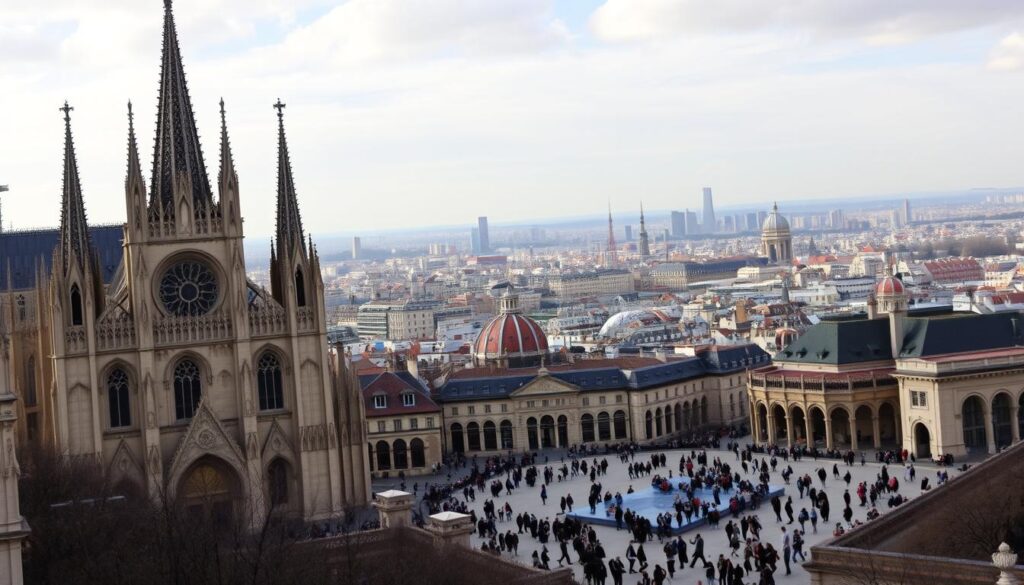
Walk through any French village, and you’ll hear church bells echo across town squares. These sounds aren’t just religious calls – they’re threads in the nation’s cultural fabric. A recent survey found 68% of adults view historic churches as “shared heritage spaces” rather than strictly places of worship.
Cultural Catholicism and Secular Republican Values
Three out of four citizens attend religious ceremonies for life milestones, though only 12% practice weekly. “We’re baptized atheists,” jokes a Parisian architect. This cultural connection explains why 45,000 church buildings remain standing despite declining congregations.
The nation navigates a unique balance: 63% support keeping crosses in public spaces while 58% oppose hijabs in schools. Catholic processions receive municipal funding, yet new mosques face strict zoning laws. These double standards reveal how religion blends with national identity.
Heritage Sites and National Symbolism
Notre-Dame’s 12 million annual visitors outnumber Louvre attendees threefold. After its 2019 fire, donations poured in from atheists and Muslims alike. “It’s our collective memory vault,” remarked a historian during restoration efforts.
This symbolic power extends beyond architecture. Catholic schools educate 20% of students nationwide, including many Muslim families seeking academic rigor. Meanwhile, 78% consider church bells essential to village character – proof that cultural Catholicism thrives where religious practice fades.
Catholicism and Modern French Politics
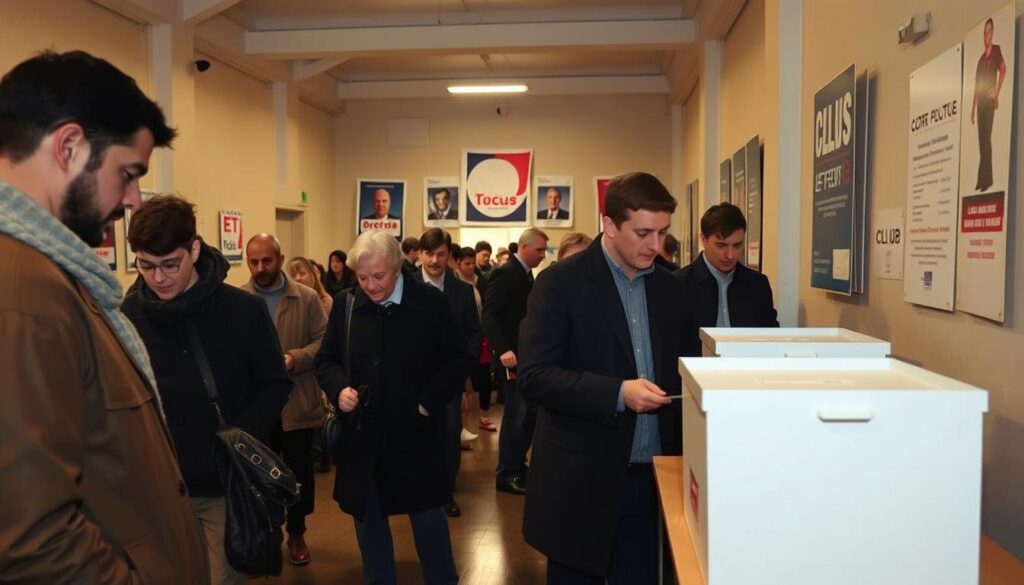
Political landscapes often reveal unexpected alliances. In 2017, a striking pattern emerged when Marine Le Pen’s far-right party secured 38% of votes from self-identified Catholic voters. This marked a historic shift for a political movement that previously struggled to gain religious approval.
The Role of Church Influence in Political Narratives
Surveys show a clear divide: regular worshippers tend toward moderate positions, while “cultural Catholics” lean nationalist. Only 14% of weekly mass attendees supported far-right candidates in recent elections, compared to 30% of non-practicing members. “Faithful practice acts as a social anchor,” notes a Parisian sociologist.
Three key factors shape this dynamic:
- Cultural identity often outweighs religious doctrine in voting booths
- Political campaigns frame church heritage as national identity markers
- Bishops’ official stances frequently clash with parishioners’ political choices
The table below illustrates recent voting patterns:
| Voter Category | Far-Right Support | Centrist Support |
|---|---|---|
| Weekly Worshipers | 14% | 41% |
| Cultural Catholics | 30% | 28% |
This divide reflects broader societal tensions. While some politicians invoke “Christian roots” to oppose immigration reforms, church leaders emphasize social justice programs. The result? A faith community navigating its place in an increasingly secular nation.
Conclusion
Time reveals shifting tides in how communities engage with spiritual legacies. While religious practice declines yearly, cultural connections endure through shared spaces and traditions. Over 60% of adults still mark life milestones in local churches, blending heritage with modern values.
The story of faith here mirrors broader societal changes. A century ago, most people attended weekly mass – today, it’s under 5%. Yet ancient cathedrals draw millions as living museums of art and history. This paradox shows how society redefines spiritual membership across generations.
Recent surveys highlight an unexpected trend: 22% of young adults now view church architecture as vital to national identity. Though atheism grows, 78% oppose repurposing sacred spaces. Like weathered stones in a village church, these traditions remain foundational – even when their original purpose evolves.
As the years pass, the balance between memory and modernity continues shaping this nation‘s unique character. What endures isn’t dogma, but the human need for shared stories etched in time.
FAQ
How did Roman Catholicism become rooted in French society?
The faith’s early roots trace back to the Gallican tradition, blending Roman practices with local customs. Over centuries, it became central to cultural identity, education, and governance, even amid conflicts like the Wars of Religion.
What major event weakened the Church’s power in the late 18th century?
The French Revolution drastically reduced its influence. Revolutionary reforms nationalized property, abolished monastic orders, and promoted secular governance, leading to decades of tension between church and state.
Why do some young adults return to Catholic traditions today?
A minority seek spiritual meaning or cultural connection amid modern secularism. Parishes also adapt through contemporary worship styles and social outreach, attracting new members despite broader societal decline.
How does secularism affect religious practice in the country?
Strict secular policies limit public displays of faith, but many still identify as “cultural Catholics.” Heritage sites like Notre-Dame remain symbols of national pride, blending history with non-religious appreciation.
Are converts changing the demographics of parishes?
While converts (catechumens) are growing slowly, they represent a small fraction. Most members are older, though urban areas report slight increases among younger adults drawn to community-focused ministries.
Does the Church still influence political debates?
Direct influence has waned, but bishops occasionally comment on ethics or social justice. Political figures sometimes reference Catholic values rhetorically, though policies remain largely secular.