For nearly 300 years, a unique tension has shaped conversations about spiritual identity. The Catholic Church maintains clear boundaries regarding organizations it views as conflicting with its core beliefs. One such group continues to spark debate even in modern times.
Many people wonder why a fraternal organization focused on charity and moral growth would create controversy. The answer lies in differing views about truth and spiritual authority. Church leaders emphasize that certain philosophical foundations challenge essential teachings about divine revelation and humanity’s relationship with God.
Recent statements from Vatican officials (November 2023) confirm this stance remains unchanged. This ongoing position affects millions of believers worldwide, particularly in regions where cultural traditions blend with religious practice. Families sometimes face difficult choices when social connections intersect with matters of faith.
Our exploration will unpack three key issues driving this complex relationship. We’ll examine how different approaches to spirituality, community-building, and ritual practices create fundamental disagreements. You’ll also discover why this historical debate remains relevant for modern seekers of truth.
Key Takeaways
- Church teachings maintain specific boundaries regarding organizations with conflicting spiritual views
- Philosophical differences center on concepts of divine truth and religious authority
- Recent Vatican statements reaffirm long-standing positions on this matter
- Social perceptions often differ from official doctrinal perspectives
- Historical context helps explain modern-day tensions and misunderstandings
Exploring catholicism freemasonry: A Historical Perspective
The roots of modern religious boundaries stretch back to 18th-century Europe. As new social organizations emerged, Church leaders grew concerned about their spiritual influence. One group’s secretive nature particularly alarmed authorities.
Foundations of Conflict
In 1738, Pope Clement XII made history with his document In Eminenti. This official prohibition targeted oath-bound groups operating in shadowy lodges. Church teachings argued such secrecy undermined both faith and civil order.
Over 150 years, multiple popes reinforced this position. Leo XIII’s 1884 encyclical called certain philosophies “a war against divine revelation.” His words highlighted core disagreements about humanity’s relationship with higher powers.
Shifting Battlegrounds
Political tensions flared as some governments adopted anti-clerical policies. In 1873, Pius IX described coordinated efforts to limit the Catholic Church‘s role in society. Countries like Mexico saw violent clashes over education and land rights.
These historical examples show why Church leaders maintained strict rules about members joining conflicting organizations. While cultural contexts evolved, the central concern remained: preserving spiritual unity against competing worldviews.
Philosophical and Theological Conflicts
At the heart of modern spiritual debates lies a clash of worldviews. Two distinct approaches to understanding humanity’s purpose and divine connection create friction between longstanding religious teachings and fraternal traditions.
The Role of Naturalism and Indifferentism
Church teaching emphasizes divine revelation as the ultimate source of truth. This directly opposes philosophies elevating human reason as the highest authority. As one pope noted, such views leave “no room for truths beyond human understanding.”
This naturalist approach leads to indifferentism – the idea that all religions hold equal value. For believers, this clashes with the conviction that Jesus Christ offers the only path to salvation. “We don’t correct anyone’s beliefs,” wrote a 19th-century lodge leader, highlighting this inclusive yet conflicting stance.
Secret Rituals and the Concept of the Great Architect
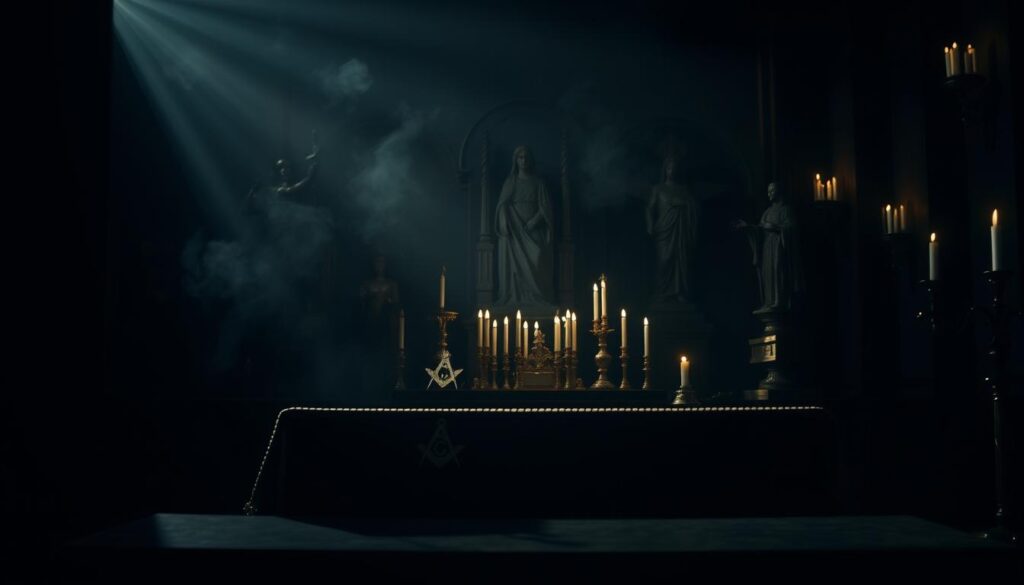
Rituals in private lodges often involve symbolic gestures and prayers to a vague “Great Architect.” While members claim this isn’t a religion, the ceremonies borrow heavily from sacred traditions. Altars and moral lessons create spiritual experiences without specific doctrinal commitments.
This contrasts sharply with structured sacraments and Trinitarian worship. The difference reveals deeper divides about how faith interacts with daily life – whether through personal interpretation or guided principles.
Canon Law, Church Teaching, and Membership Implications
Church rules about organizational ties carry real consequences for believers. Legal codes developed over centuries outline clear boundaries, blending spiritual guidance with practical discipline. Let’s unpack how these guidelines shape decisions about group affiliations.
Automatic Excommunication and Penalties in Canon Law
The 1917 Code of Canon Law left no room for doubt. Canon 2335 declared joining Masonic groups triggered automatic excommunication. This penalty meant immediate separation from sacraments until reconciliation through Vatican channels.
Revised rules in 1983 took a broader approach. Canon 1374 now applies to any association opposing the Church, stating members face “a just penalty.” While not naming specific groups, the Congregation for the Doctrine of the Faith clarified in 1983 that bans on lodge membership remain active. This keeps the door open for addressing new organizations while maintaining core principles.
Modern Interpretations and the Call for Dialogue
Recent updates confirm traditional stances still apply. In 2023, the Dicastery for the Doctrine of the Faith told Filipino bishops: “Active membership constitutes grave sin.” This closed debates about whether modern lodges differ from historical ones.
Some leaders suggest exploring common ground through talks. However, Vatican documents stress doctrinal differences outweigh social benefits. Catholics in lodges must resign and seek confession to restore full communion. As one priest notes: “Charitable works elsewhere don’t require compromising beliefs.”
“The Church’s negative judgment remains unchanged.”
Conclusion
Understanding spiritual boundaries helps clarify why certain affiliations raise concerns. The Catholic Church maintains its stance not from outdated tradition, but to protect foundational truths about divine revelation. Recent guidance confirms membership in conflicting groups still risks sacramental access through excommunication.
For those involved, reconciliation begins with leaving lodges and seeking confession. Organizations like the Knights of Columbus provide community without compromising faith. As one leader notes: “True fellowship thrives when shared principles align with Christ’s teachings.”
While social ties might complicate decisions, the Church emphasizes this position stems from love – guiding members toward deeper unity with Jesus Christ. Pastoral support helps navigate these challenges, honoring both personal connections and spiritual commitments.
Ultimately, these boundaries reflect a timeless mission: preserving the integrity of sacred teachings while inviting all to encounter divine truth. Through prayer and discernment, believers find paths that strengthen both community bonds and religious identity.
FAQ
Why does the Church oppose membership in groups like Freemasonry?
The Church teaches that such groups promote principles conflicting with Catholic doctrine, like naturalism and religious indifferentism. These ideas undermine the necessity of grace and revelation through Jesus Christ.
What penalties did older canon laws impose on Catholics who joined?
The 1917 Code of Canon Law stated automatic excommunication for joining. While the 1983 Code softened the language, the prohibition remains due to incompatible beliefs.
Is the “Great Architect” concept in Freemasonry compatible with Christianity?
The vague, non-denominational view of a “Great Architect” contrasts with the Christian understanding of God as a Trinity. This ambiguity risks reducing faith to a generic spiritual idea.
Can a Catholic attend Masonic events if they don’t participate in rituals?
The Dicastery for the Doctrine of the Faith clarifies that formal involvement, even without rituals, contradicts Church teaching. Social engagement may still create confusion about one’s faith alignment.
Are organizations like the Knights of Columbus considered Masonic?
No. Groups like the Knights of Columbus are fully Catholic, promoting charity and unity under Church guidance. They differ from secretive societies that operate outside ecclesiastical authority.
Does the Church still enforce excommunication for Masonic membership today?
While automatic excommunication was removed in 1983, joining remains forbidden. Local bishops may impose penalties if membership risks undermining faith or Church unity.
How does Freemasonry’s secrecy conflict with Catholic values?
Secret oaths and rituals can create divided loyalties, conflicting with the transparency and communal witness central to Catholic life. It also raises concerns about hidden agendas.