Picture a crowded bar where ordering a drink sparks more than small talk—it reveals family roots and cultural loyalties. This scene captures the enduring legacy of a curious cultural myth that turned two Irish spirits into symbols of identity. Though rooted in fiction, the idea of “Protestant whiskey” versus its counterpart became a powerful social code for generations of Irish-Americans.
The tale begins with geography, not theology. One distillery operated in Northern Ireland, while another hailed from the Republic—a division that accidentally mirrored historical religious lines. But here’s the twist: both brands had leaders from mixed backgrounds. A Scottish Protestant founded what many consider the “Catholic” label, while the “Protestant” distillery employed masters from both faiths.
This myth thrived in American immigrant communities as a way to share heritage. Families passed down drink preferences like heirlooms, using glassware choices to quietly declare their story. Bars became stages where people expressed pride, pain, and belonging through simple orders—proof that cultural identity often lives in unexpected places.
Key Takeaways
- The Protestant whiskey concept emerged from Irish-American immigrant experiences, not actual distillery practices
- Geographic origins of brands fueled misconceptions about religious affiliations
- Family traditions turned drink preferences into generational identity markers
- Bar culture amplified these myths, influencing ordering habits nationwide
- The story reveals how consumer choices can express cultural values
- Historical facts often contradict popular beliefs about the brands’ origins
Historical Origins and Myths
The story of these iconic brands starts not with religion, but with geography and entrepreneurial spirit. What began as local businesses grew into legends through unexpected twists of history. Let’s explore how facts blended with folklore to create enduring narratives.
Early Beginnings and Distillery Legends
John Jameson, a Scottish-born businessman, bought Dublin’s Bow Street distillery in 1780. Though his Presbyterian background might suggest otherwise, this location tied his brand to southern Ireland’s Catholic regions. Meanwhile, Bushmills’ 1608 royal license from King James I became its claim to fame—despite opening its doors 176 years later.
Both operations defied simple categorization. Jameson’s “Catholic” distillery had Protestant leadership, while Bushmills’ Northern Irish company employed mixed-faith teams. Over the years, ownership shifted globally—from French conglomerates to Mexican liquor giants—erasing any original religious ties.
The Roots of Irish Whiskey Narratives
American immigrants reshaped these histories to fit their needs. They overlooked key truths: master distillers from both communities worked at each site. A table reveals the surprising realities behind the myths:
| Aspect | Jameson | Bushmills |
|---|---|---|
| Founder’s Faith | Protestant | N/A (Royal License) |
| First Master Distiller | Catholic | Protestant |
| Current Owner | French Firm | Mexican Company |
| Workforce History | Mixed | Mixed |
This contrast shows how stories outlasted facts. Families passed down simplified versions that felt truer than reality. Today, these distilled legends remain potent symbols in bar culture—proof that heritage often mixes memory with imagination.
protestant whiskey: Debunking Misconceptions and Cultural Myths
Ordering a drink shouldn’t require a history degree, yet America’s bars became battlegrounds for inherited myths. The 1996 Bushmills boycott revealed how deeply these stories stuck. San Francisco’s mayor famously poured bottles down drains, claiming unfair hiring practices – only to learn the distillery never asked about faith.
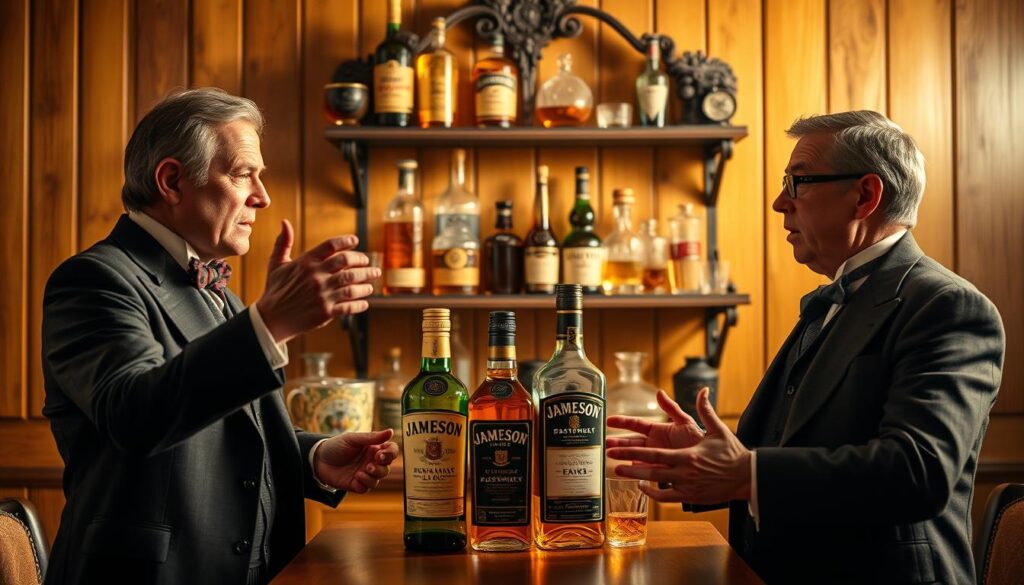
The Jameson and Bushmills Debate Explored
Let’s break down the boycott drama. Protesters argued Bushmills employed few Catholics, but company records showed mixed teams. “We judge people by their skills, not sacraments,” their spokesperson clarified. Sales barely dipped – most drinkers cared more about flavor than folklore.
| Boycott Claim | Reality |
|---|---|
| 10% Catholic workforce | No religious tracking |
| Protestant ownership | Mexican parent company |
| Religious favoritism | Mixed leadership since 1780 |
Religious Identity and Irish-American Traditions
Jack McGarry, a Belfast bartender, laughs at the U.S. obsession. “Back home, we drink both. This ‘us vs them’ idea only exists overseas.” Like corned beef dinners on St. Patrick’s Day, these preferences became American identity markers.
Families passed down ordering habits like secret handshakes. A grandfather’s “bit of Jameson” felt rebellious, while choosing Bushmills whispered northern roots. Though fiction, these rituals helped immigrants feel connected to a homeland many never knew.
Modern Perspectives and Cultural Significance
Today’s drinkers approach Irish spirits with fresh eyes, valuing craftsmanship over century-old rumors. Taste profiles now trump tribal loyalties, as mixologists guide patrons through flavor notes rather than folklore. This shift reflects broader changes in how we celebrate heritage while embracing modern truths.
Contemporary Trends in Whiskey Appreciation
Bars nationwide now host “blind sip tests” that surprise regulars. Many discover they prefer the grain-forward character of northern Ireland spirits, despite family traditions favoring southern styles. A recent comparison shows how preferences have evolved:
| Aspect | Traditional View | Modern Approach |
|---|---|---|
| Selection Criteria | Family allegiance | Barrel aging process |
| Flavor Discussion | Nonexistent | Detailed tasting notes |
| Celebration Link | St. Patrick Day stereotypes | Authentic cultural events |
Educational initiatives make a difference. Jack McGarry’s NYC bar replaces green beer with historical cocktails during March celebrations. “We share Ireland’s real stories through drinks,” he explains.
Heritage, Identity, and the Evolving Narrative
Professor Mary C. Kelly notes that corned beef dinners and brand loyalties served as armor for early immigrants. “These rituals helped marginalized communities feel rooted,” she says. Yet personal histories often contradicted the myths – like families blending multiple faiths while clinging to simplified stories.
Modern distilleries lean into this complexity. Their marketing highlights master blenders rather than maps, and collaborations between north and south brands quietly rewrite old narratives. As one bartender puts it: “The best spirit isn’t from a region – it’s the one that brings people together.”
Conclusion
Every glass poured tells two stories—one of liquid craftsmanship, another of human connection. While myths about Irish spirits once divided people, modern drinkers unite through shared appreciation. Experts agree—both labels deserve a place on any shelf.
This cultural legend reveals how immigrant communities used simple choices to preserve identity. What began as survival tactics became traditions that stood the test of time. Today, we honor that history best by tasting freely.
When selecting drinks, let your palate lead. Explore triple-distilled smoothness or malt-rich complexity. Share discoveries with friends—that’s the true way to celebrate heritage. As bar menus evolve, so does our understanding of what makes spirits meaningful.
Next time you raise a glass, toast the blenders who perfected these pours across centuries. Their skill transcends borders and old debates. After all, good Irish whiskey—like great stories—belongs to everyone.
FAQ
Is Bushmills really a "Protestant" brand?
While some stories claim Bushmills has religious ties, the distillery itself never officially aligned with any faith. These labels often stem from historical regional divides rather than actual company policies. Both its spirits and visitors come from diverse backgrounds today.
Why do people link Jameson to Catholic traditions?
This idea likely grew from Ireland’s complex history. Jameson originated in Dublin, a city with mixed cultural influences. Over time, informal storytelling—not factual records—shaped these perceptions. The brand now celebrates Irish heritage without emphasizing religious divides.
How did St. Patrick’s Day become tied to specific drinks?
Irish-American communities popularized festive traditions like pairing corned beef with certain liquors. Marketing campaigns later amplified these customs, creating a blend of nostalgia and cultural pride that shaped modern celebrations.
Do Northern Irish distilleries focus on different styles?
Regional techniques vary, but preferences aren’t strictly divided. For example, Bushmills uses triple distillation—a method also found in other areas. Modern drinkers prioritize flavor over old stereotypes, enjoying options from all parts of Ireland.
Are there "Catholic" or "Protestant" whiskey glasses?
No—this myth plays into outdated tropes. Glassware choices depend on personal taste or cocktail trends, not identity. Many bars now highlight shared appreciation for craftsmanship, moving beyond past divisions.
Why does corned beef pair with Irish liquors in the U.S.?
Irish immigrants adapted local ingredients, turning corned beef into a holiday staple. Over generations, this meal became a symbol of resilience and community, often enjoyed with spirits that evoked homeland memories.