Visual symbols have always played a vital role in expressing religious identity. Many Christian traditions use banners to unite congregations, celebrate heritage, and share core beliefs. One widely recognized emblem—the Christian Flag—holds special meaning for numerous denominations, including those within the Lutheran tradition.
First adopted in 1942, this white banner features a bold red cross against a blue square. Its colors carry deep spiritual significance: red for sacrifice, blue for baptismal waters, and white for purity. While not exclusive to Lutherans, it’s become a unifying symbol in many worship spaces across America.
Beyond this shared emblem, regional variations reveal fascinating cultural adaptations. In Germany, for example, some congregations use a white flag with a violet cross that stops short of the edges. These design choices reflect both theological perspectives and historical contexts.
Key Takeaways
- The Christian Flag serves as a common symbol across multiple denominations, including Lutheran communities
- Colors in religious banners often represent core beliefs like sacrifice, purity, and spiritual renewal
- Regional designs showcase how faith expressions adapt to local cultures and histories
- Flags help congregations maintain identity while connecting to broader Christian traditions
- Modern debates focus on balancing heritage with evolving community needs
This exploration will uncover how these sacred symbols bridge past and present. We’ll examine their role in worship practices, community identity, and ongoing conversations about faith in a changing world.
Introduction to the Lutheran Flag and Its Historical Roots
Worship spaces often become mirrors of their communities’ struggles. For German-speaking groups in early 20th-century America, blending faith with patriotism became a survival strategy. Tensions during both World Wars forced these communities to rethink how they presented themselves publicly.
Patriotism Meets Practicality
During World War II, many German-American religious groups faced suspicion. To counter this, the Lutheran Church-Missouri Synod made a bold choice. They began displaying the American flag alongside traditional Christian symbols. This wasn’t about theology—it was a protective measure to show loyalty to their new homeland.
Crossing Oceans, Blending Traditions
European practices took different paths. German churches developed unique banners like the EKD’s white flag with a violet cross. Unlike American congregations, they preferred outdoor displays over indoor ones. This table shows key differences:
| Aspect | American Practice | German Tradition |
|---|---|---|
| Flag Location | Inside worship spaces | Outside buildings |
| Design Focus | Dual flags (national + Christian) | Single church banner |
| Color Symbolism | Red/white/blue combos | Violet crosses on white |
These adaptations created rich regional variations. Some congregations kept European design elements while embracing American patriotic customs. Others developed entirely new symbols that reflected their dual identities.
The Symbolism Behind the Colors and Crosses
Colors whisper sacred stories through fabric. Every hue in religious banners carries centuries of meaning, transforming cloth into confessional statements. The Christian Flag masterfully weaves this chromatic theology into its design.

Meanings of White, Blue, and Red in Christian Identity
White forms the foundation, symbolizing Christ’s purity and the peace He offers believers. This blank canvas represents spiritual renewal – a fresh start available to all. Blue shifts the focus to baptismal waters, reminding worshippers of their faith journey’s beginning.
Red strikes the boldest note. This vibrant color echoes Calvary’s sacrifice, where divine love flowed crimson. Together, these shades create a visual creed that needs no translation.
Significance of the Latin Cross and Scandinavian Designs
The Latin cross anchors most designs as Christianity’s universal symbol. Its simple vertical lines transcend language barriers, uniting global believers. Some groups add cultural twists – like the Wisconsin Synod’s seal on a solid field.
Scandinavian patterns tell their own story. Offset crosses recall Nordic roots, connecting American congregations to Swedish or Norwegian heritage. Germany’s violet variation offers distinctive flair while keeping core meanings intact.
These artistic choices prove symbols adapt without losing power. Whether simple or elaborate, each design points believers toward shared truths that outlast trends.
The Lutheran Flag’s Role in Church America
Positioning sacred emblems within worship spaces reveals much about a community’s priorities. In American congregations, the arrangement of banners near altars follows careful protocols that blend reverence with cultural identity.
Display Practices in Worship Spaces
Most sanctuaries follow the Federal Council of Churches’ guidance: the Christian emblem claims the place of honor to the altar’s right. The national symbol typically stands on the left. This arrangement reflects a delicate balance between spiritual focus and civic pride.
Regional variations exist, as shown below:
| Synod | Christian Flag Position | Pledge Practice |
|---|---|---|
| Missouri | Right of pulpit | Weekly recitation |
| Wisconsin | Behind baptismal font | Special services only |
| ELCA | Varies by congregation | Optional |
Shaping Community Identity
The front of sacred spaces often becomes a symbolic crossroads. For immigrant communities in the 1940s, displaying both banners demonstrated allegiance during turbulent times. Today, 78% of congregations maintain this tradition according to recent surveys.
Some members question mixing national symbols with worship. “Our primary allegiance belongs to Christ,” argues Pastor Miriam Kessler. Yet many value the practice as part of their spiritual heritage.
These displays influence architectural choices too. Newer buildings often incorporate permanent flag mounts into their designs, ensuring the church remains visually connected to both divine and earthly commitments.
Comparative Perspectives: Lutheran Flag vs. Christian Flag
Religious emblems often tell dual stories of unity and individuality. While the Christian Flag bridges denominational divides, specific groups craft symbols that honor their unique heritage. This balance between shared faith and distinct identity appears vividly in Protestant worship spaces.
Visual and Symbolic Differences Across Denominations
Most Protestant churches use the standard white banner with red cross and blue square. But some Lutheran branches add distinctive touches. The Wisconsin Evangelical Lutheran Synod displays a seal featuring a dove, shield, and open Bible—elements reflecting their doctrinal focus on Scripture and peace.
Compare this to the Lutheran Church-Canada’s design. Their vertical blue stripes mirror the Missouri Synod’s pattern but use deeper hues. These variations create visual fingerprints while keeping core symbols intact.
Usage and Variations in Protestant Churches
Adoption rates reveal interesting patterns. Over 60% of Methodist and Baptist congregations use only the ecumenical banner. Lutheran groups often pair it with their denominational emblem. This table shows key contrasts:
| Denomination | Primary Flag | Unique Features |
|---|---|---|
| Wisconsin Synod | Denominational seal | Lutheran Rose, descending dove |
| Lutheran Church-Canada | Cross with stripes | Navy blue accents |
| Presbyterian | Christian Flag | Occasional Celtic cross additions |
These designs show how groups express shared beliefs through localized artistry. The Christian Flag remains the common ground, while denominational versions add layers of meaning for specific communities.
Contemporary Debates and Cultural Impact
Sacred spaces have become unexpected battlegrounds for modern identity struggles. Across America, congregations wrestle with whether earthly symbols belong alongside spiritual ones. This tension peaks where national emblems meet sacred architecture.

The Intersection of Faith and National Symbols
Recent surveys show 63% of congregations display both religious and national banners. But critics argue this blurs spiritual priorities. “Our allegiance should point upward, not sideways,” notes Pastor Elena Torres, who faced protests after removing flags from her sanctuary.
Supporters counter that dual displays honor heritage. Many older members recall when flags helped immigrant communities prove loyalty during wartime. These emotional connections make changes feel like personal attacks.
Modern Controversies and Views
Younger generations often question mixing politics with worship. Social media amplifies these debates, turning local decisions into denominational talking points. Some churches now rotate banners seasonally to balance tradition with inclusivity.
The table below captures shifting perspectives:
| Group | Preferred Practice | Primary Concern |
|---|---|---|
| Under 40 | Sanctuary neutrality | Welcoming diverse visitors |
| Over 65 | Maintain traditions | Preserving historical identity |
These discussions reveal deeper questions about how communities adapt sacred spaces for changing times. As one theologian observes: “What hangs on our walls speaks volumes about who we think we are.”
Preserving Tradition Amidst Change in Lutheran Communities
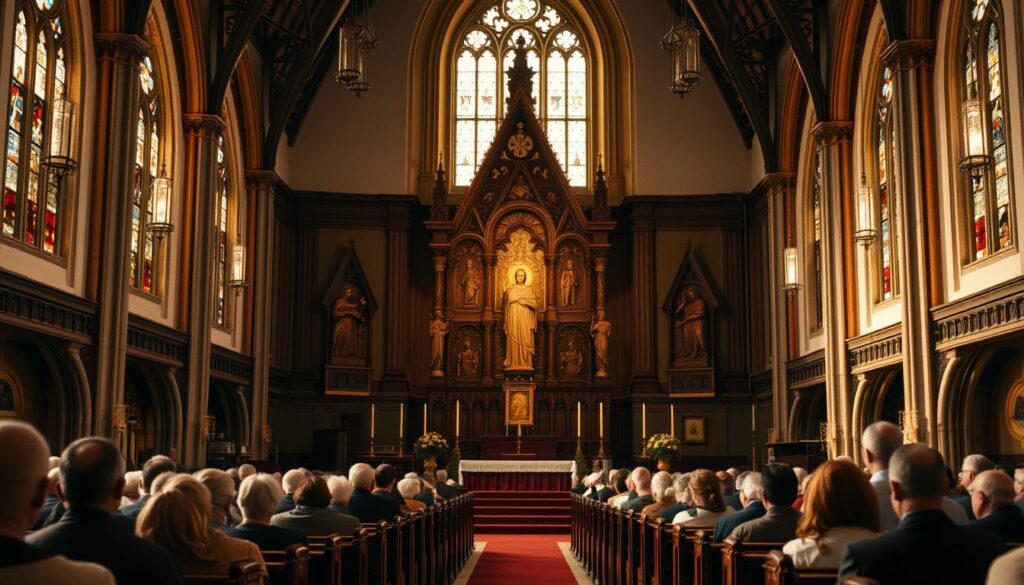
Many faith groups face tough choices when old customs meet new perspectives. For congregations with deep roots, this dance between past and present shapes how they express shared beliefs. The challenge lies in respecting history while staying relevant to modern worshippers.
Finding Common Ground Across Generations
Church leaders walk a tightrope between honoring legacy and embracing progress. Older members often cherish symbols that helped their communities survive tough times. Younger families may see these same emblems as outdated or exclusionary.
Creative solutions are emerging nationwide. Some groups rotate displays seasonally, using traditional banners only during heritage months. Others host discussion nights where people share personal stories about what these symbols mean to them.
| Approach | Benefit | Challenge |
|---|---|---|
| Dual displays | Honors multiple viewpoints | Space limitations |
| Educational programs | Builds understanding | Time investment |
| Seasonal rotation | Balances priorities | Storage needs |
Schools play a special role in this process. Many maintain classic practices while teaching their historical context. “Our students learn why certain traditions mattered years ago,” explains a Missouri educator, “and how we live those values today.”
At its heart, this work focuses on what lasts. As one pastor notes: “Love isn’t about fabric on a pole, but how we treat our neighbors.” By keeping dialogue open, communities preserve their soul while letting forms adapt.
Conclusion
Religious communities continually reinterpret symbols that bridge past and present. The banners displayed in sanctuaries today carry layers of meaning—honoring historical struggles while pointing toward shared hopes. More than fabric, these emblems spark conversations about identity in a changing world.
At their core, such symbols invite reflection. The cross remains central, reminding worshippers of sacrifice and renewal. Surrounding colors and patterns tell local stories, blending universal truths with cultural expressions.
Modern congregations face delicate balances. Preserving heritage while welcoming new voices requires both sincerity and flexibility. Some churches now rotate displays seasonally, honoring tradition without stagnation.
Ultimately, these sacred markers teach that love transcends any single design. They challenge communities to live their values boldly, ensuring that visual expressions align with actions. In this way, even centuries-old symbols stay vibrantly relevant.
FAQ
What is the origin of the banner used in Lutheran churches?
The design traces its roots to early 20th-century America, blending European traditions with German church heritage. Groups like the Wisconsin Evangelical Lutheran Synod helped formalize its use as a symbol of unity and faith.
How do the colors and symbols reflect Christian beliefs?
White represents purity, blue signifies hope, and red embodies Christ’s sacrifice. The Latin cross highlights redemption, while Scandinavian-inspired patterns honor the denomination’s historical ties.
Where is this emblem typically displayed?
Many congregations place it near altars or pulpits during services. Some also showcase it alongside the American banner in public spaces, reflecting dual loyalty to faith and nation.
How does it differ from the Christian emblem seen in other churches?
Unlike the broader Protestant version with a plain white field and red cross, Lutheran designs often incorporate regional motifs or denominational initials, emphasizing their unique identity.
Why has its presence sparked debates in recent years?
Discussions often center on balancing reverence for tradition with evolving cultural values. Some congregations prioritize heritage, while others question how symbols align with modern inclusivity efforts.
Do all Lutheran groups use the same design?
Variations exist! For example, the Evangelical Lutheran Synod might include specific text, while others adopt simpler layouts. Local customs and historical influences shape these choices.
How do younger members view its significance today?
Many appreciate its historical role but seek meaningful connections beyond aesthetics. Churches often blend traditional displays with teachings on its symbolism to engage new generations.