The Church of Scotland holds a significant place in the country’s religious and cultural heritage as its national church.
With roots tracing back to the Reformation, it has evolved into one of Scotland’s largest denominations, playing a pivotal role in shaping the nation’s history and identity.
The denomination’s influence extends beyond religious practices, contributing to Scotland’s social fabric and cultural landscape.
Key Takeaways
- The Church of Scotland is a major Presbyterian denomination.
- It has the status of the national church in Scotland.
- The church has a rich history dating back to the Reformation.
- It plays a significant role in Scottish religious and cultural heritage.
- The denomination contributes to Scotland’s social and cultural landscape.
Introduction to the Presbyterian Church of Scotland
The Presbyterian Church of Scotland, influenced by the Reformation led by John Knox, has a storied past. The church was principally shaped in 1560 when it split from the Catholic Church and established itself as a church in the Reformed tradition.
Brief History
The Church of Scotland’s history is deeply intertwined with the country’s religious and political landscape. Emerging from the Reformation, it adopted a Presbyterian form of government, which is characterized by the rule of elders. This governance structure was a significant departure from the hierarchical structure of the Catholic Church.
The Reformation in Scotland was a pivotal event that not only shaped the church but also had far-reaching consequences for the nation. The influence of John Knox and other reformers led to the establishment of a church that was distinct in its theology and practices.
Core Beliefs
The core beliefs of the Presbyterian Church of Scotland are rooted in the Reformed tradition. The church places a high value on the authority of Scripture, adhering to the principle that the Bible is the primary source of guidance for faith and practice.
The church’s theology is characterized by a commitment to the Reformed faith, which emphasizes the sovereignty of God and the importance of personal faith. This theological foundation shapes the church’s worship practices, community engagement, and mission work.
Structure and Governance
The Presbyterian Church of Scotland operates under a governance system that is fundamentally presbyterian in its approach, ensuring that no single individual or group holds more influence over church matters than others. This presbyterian governance is characterized by a distributed decision-making process among its members.
The Role of Elders
In the Presbyterian Church of Scotland, elders play a crucial role in the governance and spiritual leadership of the church. Elders are elected by the congregation and are responsible for guiding the church in its mission and decision-making processes.
The role of elders is not only spiritual but also administrative, as they are involved in the management of church affairs. This includes overseeing various church activities, providing pastoral care, and ensuring that the church remains true to its reformed tradition.
Synod and General Assembly
The Church of Scotland’s governance structure includes higher courts such as the Synod and the General Assembly. The Synod is a regional gathering of churches that oversees the affairs of the church within a specific area, while the General Assembly is the highest court of the church, meeting annually to discuss and decide on matters of national and international importance.
| Governing Body | Function | Frequency of Meeting |
|---|---|---|
| Kirk Session | Local church governance | Regularly |
| Presbytery | Regional church governance | Regularly |
| Synod | Regional oversight | Periodically |
| General Assembly | National church governance | Annually |
The Presbyterian Church of Scotland’s governance structure is designed to ensure that decision-making is a collaborative process, reflecting the values of presbyterianism in Scotland. Through its various governing bodies, the church addresses issues at local, regional, and national levels, maintaining its commitment to its reformed tradition and its role within the community.
Worship Practices
The Church of Scotland’s worship practices are a blend of tradition and innovation, reflecting its commitment to both heritage and contemporary relevance. Worship in the Scottish Presbyterian Church is centered on the sacraments and ordinances, which play a crucial role in the spiritual life of its members.
The Church of Scotland celebrates two sacraments: Baptism and the Lord’s Supper. Baptism is seen as a sign of initiation into the Christian community, while the Lord’s Supper, also known as Communion, is a celebration of Christ’s presence among his followers. In addition to these sacraments, the church recognizes five other ordinances: Confirmation, Absolution or Penance, Ordination, Matrimony, and Anointing of the Sick.
Traditional Services
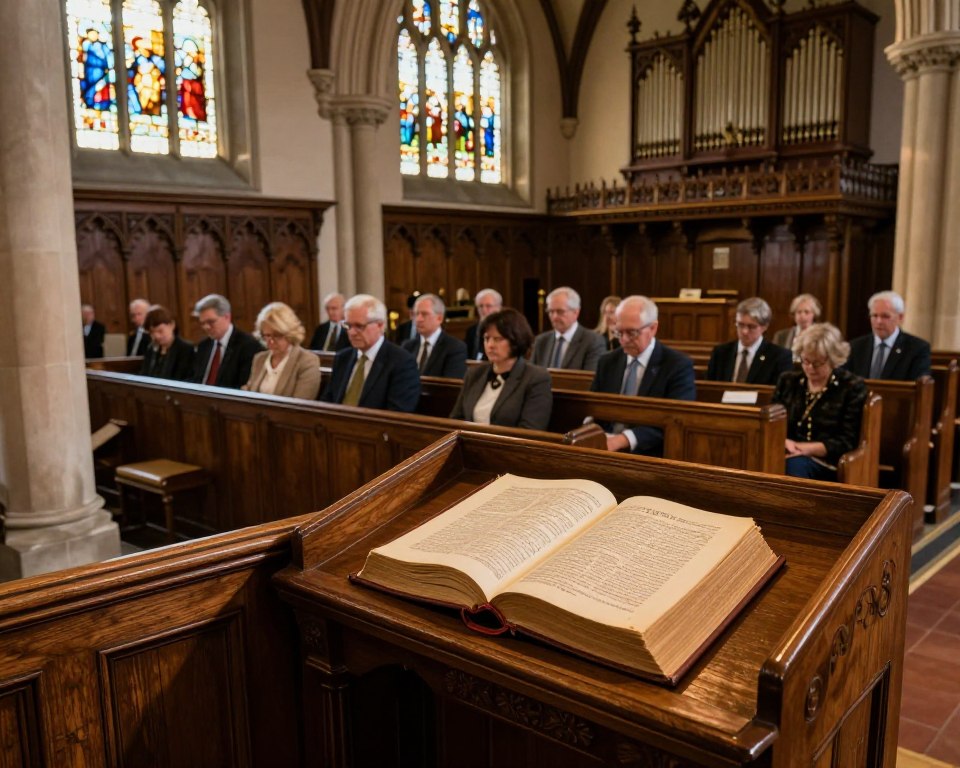
Traditional services in the Presbyterian Church of Scotland are characterized by their simplicity and reverence. The worship is typically led by a minister, with active participation from the congregation. Hymns and psalms are an integral part of the service, accompanied by the church organ or other musical instruments.
Modern Adaptations
In recent years, the Church of Scotland has incorporated modern adaptations into its worship practices to make them more relevant and engaging for contemporary worshippers. This includes the use of modern hymns and worship songs, as well as the incorporation of technology such as projection systems for displaying lyrics and other worship materials.
These modern adaptations are designed to enhance the worship experience, making it more accessible and meaningful to a wider range of people. The Scottish Presbyterian Church continues to evolve its worship practices, balancing tradition with innovation to serve the spiritual needs of its community.
Theology and Doctrine
The theology and doctrine of the Presbyterian Church of Scotland are guided by its historical connection to the Reformed tradition. This foundation shapes the church’s understanding of Christian faith and practice.
Reformed Tradition
The Presbyterian Church of Scotland is rooted in the Reformed tradition, which emerged during the Protestant Reformation in the 16th century. This tradition emphasizes the authority of the Bible and the sovereignty of God in all things.
The Reformed tradition has significantly influenced the church’s governance, worship, and doctrine. It is characterized by a commitment to the principles of the Reformation, including the priesthood of all believers and the importance of faith in Christ.
The Importance of Scripture
The Church of Scotland’s basis of faith is the Word of God, which it views as being “contained in the Scriptures of the Old and New Testament.” This underscores the central role of the Bible in the church’s theology and practice.
Scripture is considered authoritative in matters of faith and practice. The church adheres to the Westminster Confession of Faith, which is a theological summary of the Reformed faith based on biblical teachings.
| Doctrine | Description | Significance |
|---|---|---|
| The Sovereignty of God | God is the supreme ruler over all creation. | Provides comfort and assurance of God’s control. |
| The Authority of Scripture | The Bible is the inspired Word of God. | Guides faith and practice, considered authoritative. |
| The Priesthood of All Believers | All believers have direct access to God. | Promotes equality and direct relationship with God. |
Community Engagement
Community engagement is a cornerstone of the Presbyterian Church of Scotland’s mission, manifesting in diverse outreach initiatives and advocacy for social justice. The church is committed to serving its communities through various programs that address the needs of the local population.
Outreach Programs
The Presbyterian Church of Scotland operates a range of outreach programs designed to connect with and support local communities. These include food banks, youth programs, and support for the elderly. For instance, many congregations are involved in running food banks and distributing food to those in need, often in partnership with local charities and community groups.
Additionally, the church is involved in youth programs that aim to provide young people with positive role models, educational support, and recreational activities. These programs are crucial in helping young people develop life skills and build resilience.
Social Justice Initiatives
Beyond outreach, the Presbyterian Church of Scotland is also deeply involved in social justice initiatives. The church advocates for policies and practices that promote fairness, equality, and human rights. This includes campaigns on issues such as poverty, climate change, and human rights abuses.
The church’s commitment to social justice is reflected in its active participation in ecumenical and interfaith partnerships, working collaboratively with other churches and faith communities to address societal challenges. For example, the church is a member of the Action of Churches Together in Scotland (ACTS), which brings together churches to work on common issues and support one another in their missions.
The Scottish church community is thus at the forefront of efforts to create a more just and compassionate society. Through its community engagement efforts, the Presbyterian Church of Scotland continues to make a positive impact on the lives of individuals and communities across Scotland.
For those interested in learning more about the Presbyterian Church of Scotland’s community engagement efforts or getting involved, the Scotland Presbyterian Church directory provides a valuable resource, listing congregations and their community activities across the country.
Education and Discipleship
The Church of Scotland is deeply committed to nurturing its members through various educational programs, recognizing the importance of spiritual growth and development.
Sunday Schools and Bible Studies
Sunday schools play a vital role in the Presbyterian Church of Scotland‘s educational efforts, providing children with a foundational understanding of Christian teachings. These programs are designed to be engaging and informative, often incorporating activities and discussions to help children explore their faith.
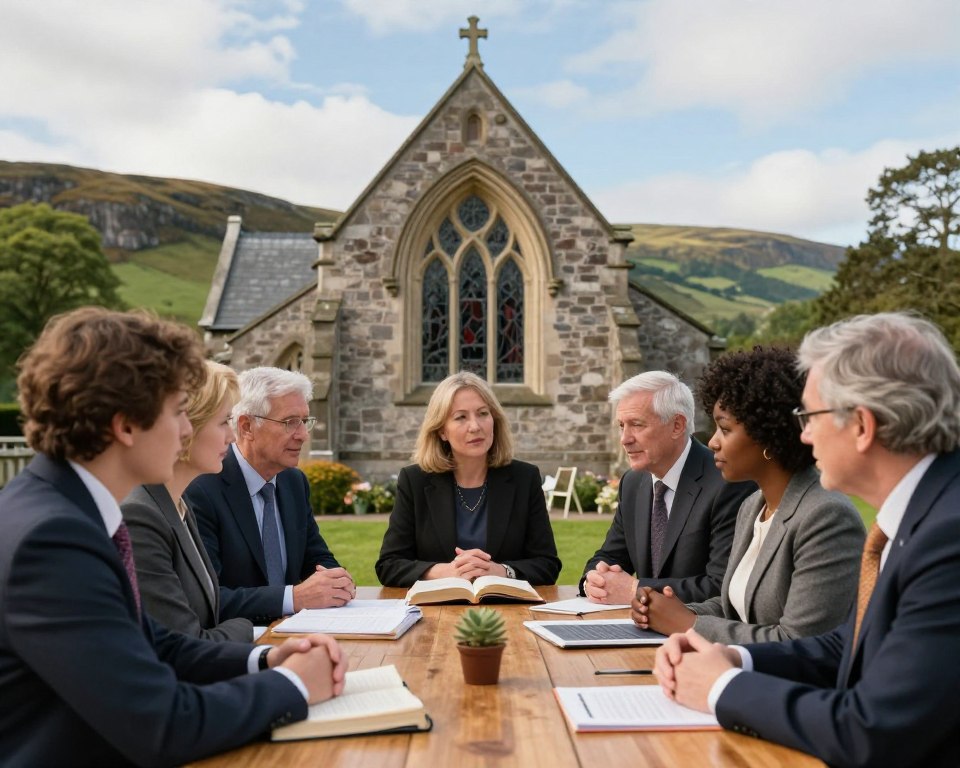
Bible studies, on the other hand, cater to individuals of all ages, offering in-depth examinations of scripture. These studies encourage participants to reflect on biblical teachings and their application in daily life, fostering a deeper connection with their faith.
Theological Colleges
The Scottish Presbyterian Church operates several theological colleges, which are dedicated to the training and education of individuals for ministry and other forms of church service. These institutions offer a range of programs, from degree courses to certification programs, all aimed at equipping students with a comprehensive understanding of theology, church history, and pastoral care.
Theological colleges are crucial in preparing the next generation of church leaders, providing them with the knowledge, skills, and spiritual grounding necessary for their roles. The colleges also serve as centers for ongoing research and scholarship, contributing to the broader theological discourse within the church.
Through its commitment to education and discipleship, the Presbyterian Church of Scotland not only nurtures the spiritual growth of its members but also ensures the continuation of its mission and values. By investing in the education of its members, the church builds a strong foundation for its future.
Music and Worship
The integration of music into worship is a significant aspect of the Presbyterian Church of Scotland‘s community life. Music has long been a cornerstone of the church’s worship practices, providing a means of expressing faith and fostering a sense of community among congregants.
Hymns and Worship Songs
The Church of Scotland’s worship is characterized by a rich musical heritage, including a wide range of hymns and worship songs. These musical elements are carefully selected to complement the liturgy and enhance the overall worship experience. The use of traditional hymns alongside contemporary worship songs allows the church to connect with a broad audience, from those who appreciate classic religious music to those who prefer more modern expressions of faith.
Choirs and Musical Ministries
Choirs and other musical ministries play a vital role in the Church of Scotland’s worship services. These groups are not only responsible for leading congregational singing but also for performing anthems and other musical pieces that add depth and beauty to the worship experience. The church’s choirs and musical ministries are often comprised of dedicated volunteers who are passionate about music and its ability to enhance worship.
The Scottish church places a strong emphasis on the importance of music in worship, recognizing its power to inspire and unite the congregation. Through its choirs, hymns, and worship songs, the Church of Scotland continues to cultivate a vibrant musical culture that is integral to its identity as a Scotland Presbyterian denomination.
Mission Work
With a strong commitment to spreading the Gospel, the Presbyterian Church of Scotland engages in various mission efforts. The church’s mission work is guided by its core beliefs and commitment to serving communities both domestically and internationally.
Domestic Mission Efforts
The Church of Scotland is actively involved in domestic mission efforts, focusing on serving local communities and addressing social issues. This includes providing support to marginalized groups, promoting social justice, and offering spiritual guidance.
One of the key initiatives is the Church of Scotland’s Community Development program, which aims to empower local communities through various projects and services.
“The Church of Scotland is committed to serving the needs of the community, both spiritually and practically.”
International Partnerships
The Presbyterian Church of Scotland also engages in international mission work through partnerships with other churches and organizations. These partnerships enable the church to support global initiatives, promote cross-cultural understanding, and provide humanitarian aid.
| Region | Partnership | Initiative |
|---|---|---|
| Africa | Partner Church in Malawi | Community Development Projects |
| Asia | Church in India | Disaster Relief Efforts |
| Europe | European Churches’ Partnership | Refugee Support Services |
The church’s international partnerships are a vital aspect of its mission work, reflecting its commitment to presbyterianism in scotland and scottish presbyterian beliefs on a global scale.
Through its domestic and international mission efforts, the Presbyterian Church of Scotland demonstrates its dedication to serving communities and promoting the values of its faith.
Challenges Facing the Church
The Presbyterian Church of Scotland is currently navigating a complex landscape of challenges that impact its ability to thrive in a rapidly changing world. In recent years, the Church of Scotland has encountered several challenges that impact its growth and relevance.
Decline in Membership
One of the significant challenges facing the Church is a decline in membership. This trend is not unique to the Presbyterian Church of Scotland, as many traditional religious institutions are experiencing similar declines. However, the Church is actively exploring strategies to reverse this trend and attract a new generation of members.
Factors contributing to the decline include:
- Changing societal values and beliefs
- Increasing secularization
- Competition from other community activities
The Need for Modernization
Another challenge is the need for modernization. The Church recognizes the importance of adapting its practices and services to remain relevant to contemporary society. This involves embracing new technologies, updating worship practices, and ensuring that the Church’s message is communicated in a way that resonates with modern audiences.
The process of modernization is not without its challenges, as it requires balancing tradition with innovation. However, the Church is committed to this process, seeing it as essential to its long-term viability.
For those interested in exploring the history and current state of the Church of Scotland, resources such as the Scotland Presbyterian Church Directory can provide valuable insights and information.
The Future of the Presbyterian Church of Scotland
Innovations in worship and community engagement are key to the Presbyterian Church of Scotland’s strategy for a vibrant future. As the church navigates the complexities of the modern world, it remains committed to its core beliefs while adapting to the changing needs of its congregation and the wider community.
Innovations in Worship
The Presbyterian Church of Scotland is exploring new ways to conduct worship services, incorporating modern elements while retaining traditional practices. This includes the use of contemporary music, digital technology, and innovative liturgical practices.
Key Innovations:
- Incorporation of digital media in worship services
- Use of contemporary music and hymns
- Experimental liturgical practices
Fostering Community
Fostering a sense of community is crucial for the church’s future. The Presbyterian Church of Scotland is focusing on outreach programs, social justice initiatives, and creating inclusive environments to attract and retain members.
| Community Engagement Strategies | Description | Impact |
|---|---|---|
| Outreach Programs | Targeted initiatives to engage with local communities | Increased community involvement |
| Social Justice Initiatives | Programs aimed at addressing social inequalities | Enhanced reputation and community trust |
| Inclusive Environments | Creating welcoming spaces for diverse groups | Increased membership diversity |
By embracing innovation and fostering community, the Presbyterian Church of Scotland is poised to remain a relevant and vibrant presence in Scottish society.
How to Get Involved
The Presbyterian Church of Scotland, a prominent scotland presbyterian denomination, welcomes individuals to join its congregations and participate in its various ministries and activities. For those interested in becoming part of the scottish church community, there are several ways to get involved.
Local Congregations
Joining a local congregation is a great way to start. The Church of Scotland has numerous congregations across the country, each with its unique character and community. By attending services and meeting with church members, individuals can find a congregation that aligns with their values and spiritual needs.
Volunteer Opportunities
The scottish church offers a range of volunteer opportunities, from helping with community outreach programs to participating in worship services. Individuals can explore these opportunities by contacting their local congregation or visiting the Church of Scotland’s website.
By getting involved with the Presbyterian Church of Scotland, individuals can become part of a vibrant and active community that is committed to serving others and spreading the message of the Gospel.
FAQ
What is the Presbyterian Church of Scotland?
The Presbyterian Church of Scotland, also known as the Church of Scotland, is one of the country’s largest Christian denominations, with a rich history dating back to the Reformation.
What are the core beliefs of the Church of Scotland?
The Church of Scotland’s theology is rooted in the Reformed tradition, with a strong emphasis on the authority of Scripture and the Westminster Confession of Faith.
How is the Church of Scotland governed?
The Church of Scotland is governed presbyterianly, with decision-making distributed among its members through the Synod and General Assembly, and a significant role played by elders.
What are the worship practices of the Church of Scotland?
The Church of Scotland’s worship is centered on the sacraments and ordinances, with a strong emphasis on community and participation, and includes both traditional services and modern adaptations.
What is the Church of Scotland’s stance on social justice?
The Church of Scotland is committed to serving its communities and promoting social justice through various outreach programs and initiatives.
How can I get involved with the Church of Scotland?
You can get involved with the Church of Scotland by joining a local congregation, exploring volunteer opportunities, or participating in its various education and discipleship programs.
What education and discipleship programs does the Church of Scotland offer?
The Church of Scotland offers a range of education and discipleship programs, including Sunday schools, Bible studies, and theological colleges, aimed at nurturing its members and equipping them for ministry.
What is the significance of music and worship in the Church of Scotland?
Music and worship are integral to the Church of Scotland’s community life, with the use of hymns, worship songs, and choirs being an important part of its worship practices.
Is the Church of Scotland involved in mission work?
Yes, the Church of Scotland is committed to sharing the Gospel and serving communities around the world through its domestic mission efforts and international partnerships.
What challenges is the Church of Scotland facing?
The Church of Scotland is facing challenges such as decline in membership and the need for modernization, but is working to address these issues and remain relevant in a changing world.
What is the future of the Presbyterian Church of Scotland?
The Church of Scotland is committed to remaining a vibrant and relevant presence in Scottish society, with efforts to innovate in worship and foster community being key to its future prospects.