Clear communication starts with mastering word sounds. This guide focuses on a term often used in cultural and religious discussions across the U.S. You’ll learn to pronounce it with the authentic American accent you want, whether chatting with colleagues or presenting in class.
Why does this matter? Using precise speech builds trust and avoids confusion. The American version of this word has distinct syllables compared to British English. We’ll simplify the subtle differences so you can speak naturally in any setting.
Our approach goes beyond basic repetition. You’ll get actionable tips for breaking down tricky sounds and tools to refine your skills. Think of it as your personal roadmap to sounding confident and polished.
Key Takeaways
- Break the term into three clear parts for accurate articulation
- Understand key differences between U.S. and U.K. speech patterns
- Learn practical methods to improve your accent
- Gain confidence for professional and social conversations
- Access free resources for ongoing practice
Exploring the Origins and Meaning of Protestant
To grasp this term fully, we must travel back to 16th-century Europe. What began as a religious movement shaped language itself, creating a word now used worldwide. Let’s uncover how history forged its meaning and why it remains vital in American discourse today.
Etymology and Historical Context
The story starts with Latin roots. Protestari – meaning “to declare publicly” – gave birth to the term during the Reformation. In 1529, German leaders challenged religious laws at the Diet of Speyer. Their bold stand coined a phrase that would echo through centuries.
By 1539, the word entered English through French influences. It originally described those protesting Catholic Church practices. This linguistic shift mirrored growing religious diversity across Europe.
Definition and Usage in English
Today, the term refers to Christian groups emphasizing faith over tradition. These denominations share core beliefs:
| Denomination | Key Principle | Founded |
|---|---|---|
| Lutheran | Salvation through faith alone | 1517 |
| Baptist | Adult baptism by immersion | 1609 |
| Methodist | Social justice focus | 1739 |
From church services to history classes, the word connects discussions about belief systems. Knowing its background helps avoid mix-ups with similar-sounding terms. You’ll spot it in books, news articles, and cultural debates – a testament to its lasting impact.
Mastering “protestant pronunciation”: American vs. British Accents
Accent differences shape how we hear and say words. Let’s explore what makes American speech patterns unique. This comparison focuses on specific sound variations that change a word’s character.
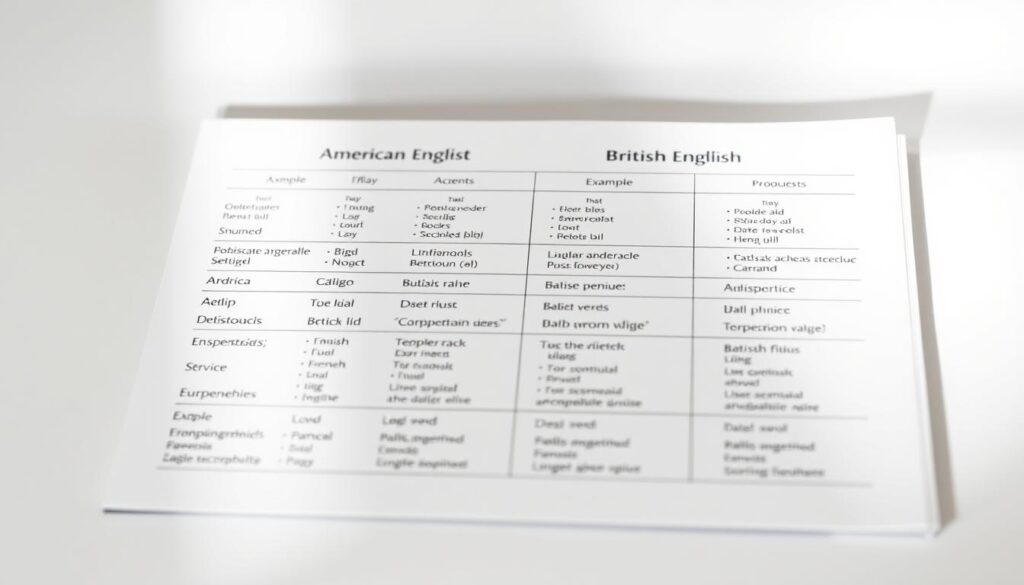
Detailed Phonetic Comparison
The first vowel tells the story. Americans stretch the “a” like in “calm”, while Brits use a clipped “o” like in “hot”. This distinction creates immediate recognition between accents.
Listen for the middle consonant. The American flapped T turns “t” into a soft tap, similar to the “dd” in “ladder”. British speakers maintain a crisp “t” like in “tea”.
| Sound Feature | American Example | British Example |
|---|---|---|
| First Vowel | start (stärt) | stop (stɒp) |
| Middle Consonant | water (wɔːdər) | water (wɔːtə) |
| Ending | mountain (maʊnʔn) | mountain (maʊntɪn) |
Understanding IPA and Sound Markers
IPA symbols act like a global sound dictionary. The notation /ˈprɑː.t̬ɪ.stənt/ reveals three key American features:
1. Long /ɑː/ vowel
2. Flapped /t̬/ consonant
3. Reduced /ə/ ending
These markers help learners visualize mouth movements. Practice matching symbols to audio examples for faster improvement. Soon, you’ll spot patterns in other words too.
A Step-by-Step Guide to Perfecting the Pronunciation
Perfecting speech sounds requires smart strategies. Let’s transform this multi-syllable term into manageable pieces using proven techniques that build muscle memory and clarity.
Sound It Out: Breaking Down the Word
Split the term into three distinct parts: PROT-uh-stuhnt. Begin with the opening syllable, stretching the “ah” sound like you’re yawning. This strong start anchors the entire word.
Move to the middle section quickly – think of it as a quick breath between bookends. End with the final cluster, softening the “t” into a gentle tap against your teeth. This creates the smooth finish Americans use daily.
Self-Recording and Practice Techniques
Grab your phone and create instant feedback loops. Try phrases like: “Many historical documents reference Protestant traditions”. Listen critically – does your version match native speakers’ flow?
Start slow, then speed up like a metronome. Apps like Voice Recorder let you compare waveforms with expert examples. Notice how your mouth shapes change during tricky sounds.
Weekly check-ins work wonders. Track progress by saving recordings with dates. You’ll hear improvements in stress patterns and vowel clarity within 14 days of consistent practice.
Common Pitfalls and Helpful Pronunciation Tips
Sharpening your speech skills means spotting sneaky sound traps. Many learners trip over subtle differences between look-alike terms. Let’s explore practical fixes for these common hiccups.

Recognizing Minimal Pairs and Similar Sounds
That flapped T trips up even advanced speakers. Imagine saying “ladder” instead of “latter” – that’s the soft tap your tongue needs. Compare “protested” and “protesting” to hear how the sound shifts.
Watch the middle syllable’s weak vowel. Say “ship” three times, then try “sheep.” Notice how your jaw moves? That same mouth shape creates the quick “uh” in our target word.
Group practice works wonders. Try these nearby words:
- Persistent (per-sis-tent)
- Protestantism (prot-uh-stuhn-tiz-um)
- Predestine (pree-des-tin)
Stress the first syllable like you’re starting a drumbeat: PROT-uh-stuhnt. Record yourself saying “promised land” and “protestations” back-to-back. You’ll spot rhythm patterns that boost clarity.
Slow down tricky clusters. The ending “-stant” needs crisp articulation without rushing. Think of it as two separate sounds: “st” + “ant.” Pair this with ship/sheep exercises to sharpen your ear for details.
Applying Grammar, Usage, and Context in Daily Speech
Using words effectively requires more than correct sounds—it demands context awareness. Let’s explore how to weave this term naturally into conversations while respecting its cultural weight.
Mastering Sentence Integration
Start with basic structures. Try switching between noun and adjective forms:
- “The Protestant Reformation shaped modern Europe” (adjective)
- “Many Protestants attend nondenominational churches” (noun)
Notice capitalization rules through real-world examples. A recent news snippet shows proper usage:
“Ukrainian Protestant pastors have volunteered widely as military chaplains during the war.”
Build complexity with these common pairings:
- Protestant denominations
- Protestant work ethic
- Protestant traditions
Create personal connections. Discuss topics you care about: “My neighbor’s Protestant heritage influences their holiday traditions.” This makes practice engaging while reinforcing grammar rules.
Watch for lowercase exceptions. When describing activists, “protestant groups organized rallies” uses the same spelling with different meaning. Context determines capitalization every time.
Tools and Online Resources for Better Pronunciation
Digital tools make mastering tricky terms easier than ever. Whether you’re chatting with coworkers or studying history, these resources help you speak clearly and confidently. Let’s explore the best options available today.

YouTube Guides and Pronunciation Apps
Top channels like Rachel’s English break down sounds using video close-ups. Watch how lips form specific vowels in slow motion. English with James offers fun drills that turn practice into games.
| Platform | Key Feature | Best For |
|---|---|---|
| YouGlish | Real-life video examples | Hearing words in context |
| Elsa Speak | AI feedback system | Correcting specific errors |
| Forvo | Native speaker recordings | Learning regional variations |
Using Dictionaries and Audio Examples
Merriam-Webster’s website lets you toggle between British and American sounds. Tap the speaker icon repeatedly to internalize rhythm patterns. Many entries include example sentences showing practical usage.
Try these features from popular resources:
| Tool | Special Function | Practice Tip |
|---|---|---|
| Cambridge Dictionary | Phonetic translator | Compare IPA symbols |
| Google Translate | Slow playback speed | Mimic pacing |
| WordReference | Forum discussions | Ask about tricky sounds |
Bookmark a word-of-the-day feature to build vocabulary while reinforcing sounds. Share recordings with language partners through apps like HelloTalk. Their feedback helps spot hidden improvement areas.
Conclusion
You’ve gained tools to speak American English with precision and confidence. Breaking down PROT-uh-stuhnt into its core sounds helps tackle similar multi-syllable words. Remember the stretched “ah” vowel and soft middle consonant – these distinct features set U.S. speech patterns apart.
Apply these techniques daily. Try word-of-the-day apps to expand your vocabulary while reinforcing sounds. Explore related terms like “Protestant work ethic” to deepen cultural understanding alongside language skills.
Progress comes through consistent practice. Record yourself weekly using free tools mentioned earlier. Celebrate small wins – clearer stress patterns or smoother transitions between syllables. Language mastery isn’t a race, but a journey of steady growth.
Keep conversations flowing by revisiting historical definitions and modern usage examples. With each English discussion, you’ll communicate ideas more effectively – whether chatting with neighbors or analyzing texts. Your voice matters – make it heard clearly.
FAQ
Where does the term "Protestant" come from?
The word traces back to 16th-century Europe, when reformers “protested” certain Catholic doctrines. It became linked to Christian groups emphasizing faith over tradition.
How do American and British accents differ in saying this word?
Americans stress the first syllable (PRAH-tuh-stent), while Britons often emphasize the second (pruh-TEST-uhnt). Vowel sounds also vary slightly between accents.
What’s the best way to practice saying it correctly?
Break it into syllables: Prah-tuh-stent. Record yourself, compare with native speakers, and use apps like Forvo or ELSA Speak for feedback.
What mistakes do learners commonly make?
Mixing up similar sounds like “pro-test-ant” instead of “Prah-tuh-stent.” Others misplace stress, altering the word’s rhythm and clarity.
How can I use this term naturally in sentences?
Pair it with context clues: “Martin Luther’s teachings shaped Protestant beliefs” or “The Protestant Reformation changed European history.”
Which tools help improve accent accuracy?
YouTube channels like Rachel’s English, Merriam-Webster’s audio dictionary, and apps such as Speechling offer targeted practice for American English sounds.