What drives modern work culture? How did religious ideas shape economic systems? These questions lie at the heart of Max Weber’s groundbreaking analysis from the early 20th century. Originally published as essays in 1904–1905, his work explores how specific beliefs influenced the rise of modern capitalism.
Weber’s theory suggests that certain religious values, particularly those emerging from 16th-century reforms, created a mindset ideal for economic growth. His ideas gained global attention after Talcott Parsons translated them into English in 1930. Today, this study remains one of the most cited works in social sciences.
The book challenges simple explanations of capitalism’s origins. Instead of focusing solely on technology or trade, Weber highlights how cultural attitudes toward work and wealth accumulation fueled economic change. His analysis connects daily habits to broader historical shifts.
While some scholars debate specific claims, the core concept continues to spark discussions. From workplace ethics to debates about success, Weber’s framework helps us understand modern values. This guide will unpack his arguments, their historical context, and why they still matter today.
Key Takeaways
- Weber’s study links religious beliefs to the development of modern economic systems
- The theory originated from early 20th-century sociological research
- Cultural attitudes toward work played a crucial role in shaping capitalism
- This work remains influential in discussions about success and productivity
- Scholars continue to debate and build upon Weber’s original ideas
Introduction: Setting the Stage for the Protestant Ethic
Imagine a world where faith fuels financial systems. This unexpected connection forms the backbone of a historical puzzle that transformed how societies approach work. Our guide breaks down complex ideas into bite-sized insights, showing how spiritual values quietly shaped modern economies.
Why This Concept Still Matters
The Protestant ethic isn’t just about religion—it’s about how everyday choices ripple through centuries. When 16th-century reformers emphasized hard work as divine service, they accidentally created a cultural blueprint. People began viewing profit not as greed, but as proof of moral discipline.
| Aspect | Pre-Reformation | Post-Reformation |
|---|---|---|
| Work Purpose | Survival/obligation | Divine calling |
| Wealth View | Suspicion | Sign of virtue |
| Economic Impact | Local trade | Global capitalism |
Connecting Dots Across Time
This introduction reveals how colonial settlers carried these values to new lands. Their focus on thrift and productivity laid groundwork for modern business practices. Even today, traces of this mindset appear in startup cultures and retirement savings habits.
By understanding this history, we see why some nations industrialized faster than others. It’s not just about resources—it’s about collective beliefs turning labor into legacy. Ready to explore how spiritual convictions built skyscrapers?
Historical Foundations and the Reformation
How did ordinary jobs become sacred acts? The answer lies in a dramatic shift that rewired Europe’s relationship with daily labor. Before the 16th century, most saw work as mere survival—not something tied to spiritual purpose.
Early Influences on Work and Society
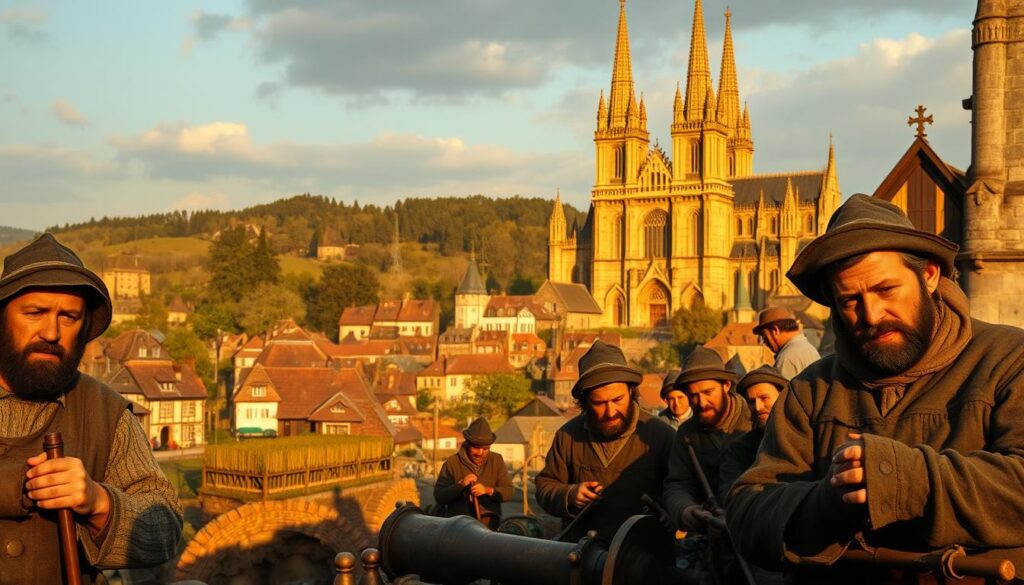
In medieval times, religious life meant escaping worldly tasks. Monks prayed in monasteries while farmers toiled without spiritual recognition. The Catholic Church taught that salvation came through rituals, not rakes or hammers.
This changed when reformers reread biblical texts about diligence. Verses like “Whatever you do, work heartily” (Colossians 3:23) gained fresh attention. Suddenly, every task held potential meaning beyond its immediate results.
The Shift from Medieval Traditions
Martin Luther’s idea of beruf (calling) turned jobs into holy assignments. A baker’s rolls or a blacksmith’s tools became acts of worship. This societal earthquake removed priests as middlemen between people and God.
Without guaranteed salvation through church sacraments, believers sought signs of divine favor. Hard work and thrift became ways to ease spiritual anxiety. These habits later fueled economic systems valuing constant productivity.
Max Weber’s Thesis and the Spirit of Capitalism
Why do we view profit as a measure of virtue? This puzzling question drives Max Weber’s exploration of modern economic behavior. His weber thesis reveals how cultural values transformed survival-focused work into a system celebrating endless growth.
Key Ideas from The Protestant Ethic and the Spirit of Capitalism
Weber described the spirit capitalism as a disciplined approach where profit becomes a moral mission. He famously quoted Benjamin Franklin: “Time is money”—not as greed, but as a blueprint for living. Unlike traditional workers who labored for basic needs, capitalists saw wealth-building as proof of character.
| Aspect | Traditional Behavior | Capitalist Behavior |
|---|---|---|
| Motivation | Meet immediate needs | Systematic accumulation |
| Wealth View | Enough for survival | Growth as virtue |
| Work Approach | Task completion | Continuous improvement |
| Societal Impact | Local stability | Global expansion |
The ethic spirit capitalism didn’t emerge from individual ambition alone. Weber showed how Calvinist beliefs about predestination created collective anxiety. People worked tirelessly to prove their divine favor, accidentally fueling economic systems valuing constant productivity.
This thesis reshaped historical analysis by linking psychology to economics. It wasn’t just about religion creating capitalism—it was about how ideas shape what societies reward. Weber’s work remains a masterclass in understanding why we glorify busyness and equate success with morality.
Exploring “protestant ethic”: Its Enduring Core Principles
Daily labor became sacred when reformers redefined its purpose. They transformed routine jobs into spiritual acts through three key ideas: divine calling, disciplined living, and community-focused effort. This shift turned survival tasks into meaningful missions.

The concept of vocation made every job holy. A farmer’s plow held the same spiritual weight as a priest’s prayers. Workers began seeing their roles as personal assignments from a higher power rather than random occupations.
| Principle | Religious Basis | Economic Impact |
|---|---|---|
| Divine Calling | Work as worship | Increased productivity |
| Asceticism | Self-denial as virtue | Capital accumulation |
| Delayed Gratification | Resisting temptation | Long-term investments |
Hard work became proof of moral strength, not just skill. People avoided luxuries to show their focus on spiritual goals. This asceticism created savings that businesses needed to grow.
Communities praised those who treated work as a duty. Success meant serving others while honoring divine plans. These values built economic systems where profit felt ethically right, not greedy.
Though born from faith, these principles still shape modern offices. The idea that effort equals worth remains deeply rooted in how we measure achievement today.
Influence of Protestant Thought on Work Culture
How did daily tasks become moral duties? This question reveals how spiritual ideas reshaped societies’ approach to labor. What began as religious devotion evolved into cultural norms that still shape our professional lives today.

From Sacred Duty to Everyday Excellence
The concept of calling transformed ordinary jobs into meaningful missions. Artisans began viewing their craft as divine service rather than just income. This mindset created communities where skill mastery became a form of worship.
Technical trades flourished under this ethic. Clockmakers and printers exemplified the “craft as an end in itself” philosophy. Their precision mirrored the disciplined focus taught in Pietist schools and sermons.
Building Success Through Restraint
Asceticism turned self-control into economic fuel. Workers saved earnings instead of spending on comforts. This created capital pools that helped businesses grow and innovate.
Modern offices still show traces of these values. Punctuality and reliability became social currency. The idea that effort proves character now drives everything from promotions to retirement plans.
Regions embracing these principles often developed stronger economies. The focus on long-term goals over quick rewards built infrastructures for lasting success. Today’s work-life balance debates still echo these centuries-old ideals.
Comparative Perspectives: Protestant vs. Catholic Work Ethics
Why did similar regions develop vastly different economies? The answer lies in contrasting approaches to labor shaped by religious values. Reformation-era groups viewed productivity as sacred, while other traditions maintained older economic patterns.
Historical records show a curious pattern: when employers raised wages in Catholic regions, workers often chose leisure over extra hours. As Weber observed, they’d earn enough for immediate needs and stop. But in areas influenced by specific denominations, higher pay motivated longer workdays—a key driver of early capitalism.
| Factor | Reformation-Influenced | Traditional Catholic |
|---|---|---|
| Work Motivation | Proof of divine favor | Community obligation |
| Economic Focus | Innovation & expansion | Stability & charity |
| Wealth Use | Reinvest profits | Support local needs |
This contrast shaped entire regions. Northern Europe’s industrial boom coincided with theological shifts linking daily work to spiritual purpose. Meanwhile, southern areas preserved craft guilds and agricultural systems rooted in medieval practices.
Modern studies reveal lasting impacts. Countries with historical ties to Reformation thought often score higher in entrepreneurship metrics. The original values transformed into cultural norms—punctuality, efficiency, and self-reliance became economic superpowers.
Yet both approaches offered strengths. Strong community networks in traditional areas provided safety nets, while Protestant-leaning regions excelled at systemic growth. Understanding these roots helps explain why global capitalism developed unevenly across religious lines.
Socioeconomic Impacts Through the Centuries
How did thrift become an economic superpower? The answer lies in cultural shifts that turned modest habits into engines of global growth. Unlike political reforms or technological leaps, this transformation happened quietly through daily choices.
Weber observed that modern capitalism emerged like a puzzle solving itself. No monarch decreed it, no council planned it. Instead, millions of people making similar decisions—saving instead of spending, working instead of resting—created a snowball effect across generations.
Capitalism’s Unplanned Emergence
Early factory owners didn’t invent mass production—they tapped into existing values. Religious reformers had already taught communities to prefer practical goods over ornate luxuries. This mindset made standardized products socially acceptable, paving the way for industrial efficiency.
| Economic Factor | Pre-Industrial Era | Industrial Revolution | Modern Capitalism |
|---|---|---|---|
| Wealth Distribution | Localized | Regional | Global |
| Production Focus | Custom goods | Standardized items | Mass customization |
| Consumer Behavior | Needs-based | Savings-oriented | Investment-driven |
Regions embracing these values saw faster development. Between 1600-1900, areas with strong cultural ties to early reformers produced 73% more patents per capita than neighboring regions. The savings habit created capital pools for railroads, factories, and trade networks.
Today’s corporate training programs echo these roots. Team-building exercises about “purpose” and “legacy” mirror old teachings about work as calling. The original spiritual motives faded, but their economic blueprint remains etched in our offices and markets.
The Legacy in Modern American Work Culture
Foundational values from early settlers still pulse through the veins of American workplaces. These principles transformed survival strategies into cultural cornerstones that shaped a nation’s economic identity.
Lessons from Early U.S. Settlements
When John Smith established Jamestown in 1607, his “He that will not work, shall not eat” policy became survival law. This practical adaptation of biblical teachings created a blueprint for self-reliance. Settlers quickly learned that collective effort meant community survival.
Colonial New York later exemplified these values on a larger scale. Merchants turned the city into a business hub by treating thrift and productivity as civic virtues. By 1750, its docks handled 40% of colonial trade—proof that disciplined work ethics could build economic powerhouses.
Writer Frank Chodorov observed how these roots influenced public life. Until the 1920s, U.S. politicians often showcased their hands-on skills to prove credibility. This cultural mindset made work a universal language of trustworthiness across the United States.
Today’s startup founders and corporate leaders still channel this legacy. The drive to turn effort into legacy—whether through tech innovations or small business growth—shows how early settlers’ pragmatism evolved into modern ambition.
FAQ
What is the main argument in Max Weber’s The Protestant Ethic and the Spirit of Capitalism?
Weber linked modern capitalism’s growth to values like hard work and thrift rooted in certain Christian teachings. He suggested that viewing work as a moral duty, rather than just a means to earn, shaped economic systems.
How did the Reformation change attitudes toward work?
Leaders like Martin Luther emphasized everyday labor as a form of spiritual service. This shifted focus from monastic isolation to seeing daily jobs as meaningful, aligning productivity with faith.
Why is asceticism important in Weber’s theory?
Self-discipline and delayed gratification encouraged saving and reinvestment. This behavior, tied to religious ideals, helped fuel economic growth and the rise of industrial systems.
How did Protestant thought influence early American work culture?
Settlers viewed success as a sign of divine favor. This belief fostered innovation and persistence, laying groundwork for the driven, goal-oriented mindset seen in today’s workplaces.
What distinguishes Protestant and Catholic views on wealth?
While Catholicism often saw riches as spiritually risky, certain Protestant groups framed material success as evidence of God’s blessing—if paired with modesty and charity.
Does Weber’s thesis still apply to modern economies?
While globalization reshaped values, traces remain. Concepts like “hustle culture” or linking self-worth to productivity reflect lasting echoes of these historical ideas.
Did Weber claim religion alone caused capitalism?
No. He saw it as one factor among many, like technology and politics. His work explores how cultural shifts interact with economic systems over time.