Exploring this community’s story means diving into a rich blend of faith, culture, and history. While often seen as a single group, its members form a vibrant patchwork of traditions and beliefs. Presbyterians make up the largest segment, followed closely by Anglicans and smaller denominations. Together, they create what scholars call a “majority of minorities” – united yet diverse.
From early settlements to modern times, these groups have shaped the region’s social fabric. Their journey includes periods of growth, conflict, and efforts toward peace. Cultural practices like Orange Order parades and church-led initiatives reveal how identity extends beyond Sunday services.
Economic contributions and political debates also play key roles in their narrative. The 20th century brought challenges, including societal shifts and transformative peace agreements. Today, younger generations navigate balancing heritage with evolving values in a changing world.
Key Takeaways
- Presbyterians form the largest single denomination within this diverse community
- Cultural traditions remain tightly woven into daily life and annual celebrations
- 20th-century conflicts significantly impacted social structures and intercommunity relations
- Modern efforts focus on reconciliation while preserving cultural identity
- Demographic changes continue reshaping community dynamics in urban and rural areas
Historical Roots and Demographic Shifts
The story of Northern Ireland’s landscape and people is written in its fields and towns. English and Scottish settlers reshaped the region during the 17th-century plantation era. Their grid-like farms replaced traditional Irish clan systems, creating lasting cultural divides.
Early Settlement Patterns and Land Enclosure
By the 19th century, landlords consolidated scattered plots into orderly estates. The Potato Famine accelerated this change, emptying rural areas. Eastern districts became agricultural strongholds, while western zones saw population declines.
This transformation created visible patterns:
| County | Pre-1840s Landscape | Post-Famine Reality |
|---|---|---|
| Londonderry | Mixed farming communities | Urban-centered development |
| Tyrone | Subsistence crofts | Consolidated estates |
| Down | Forests/wetlands | Productive farmland |
Shifting Populations and Birth Rates
The 20th century brought new changes. Political tensions prompted many families near the border to relocate eastward. Today, Catholics form 40% of the population, with slightly higher birth rates sparking demographic debates.
Urban centers now reflect these shifts:
- Belfast remains religiously mixed
- Derry/Londonderry became predominantly Catholic
- Armagh maintains balanced communities
Understanding the Protestant of Northern Ireland
In the heart of this region’s social structure lies a tapestry of faiths, each denomination adding its distinct hue. While often viewed as a unified bloc, the reality reveals intricate layers of belief and practice. This diversity shapes everything from local governance to neighborhood celebrations.
Religious Denominations and Community Mosaic
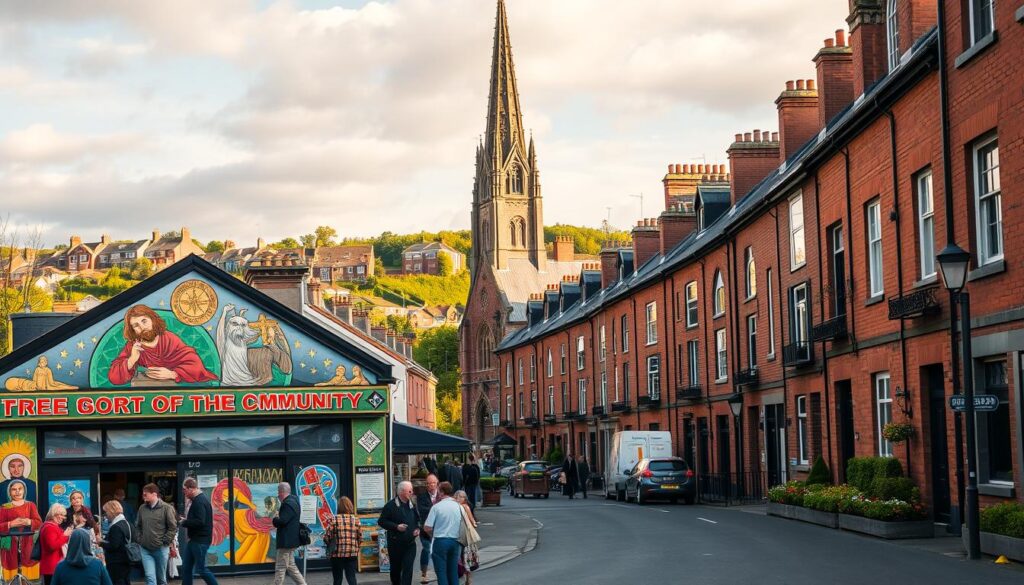
Presbyterians form the largest single group, representing over 20% of residents. Their emphasis on education and community leadership echoes through local institutions. The Anglican tradition follows closely, blending English heritage with regional customs developed over centuries.
Smaller groups like Methodists and Baptists create vibrant pockets of worship. Each brings unique traditions – from fiery revival meetings to quiet meditation practices. Together, they form what scholars describe as a “collage of conviction” within broader society.
Impact on Identity and Culture
Faith here extends beyond church walls into daily life. Orange Order parades pulse with historical symbolism, while Ulster-Scots language classes preserve linguistic roots. Musical traditions fuse hymns with folk tunes, creating sounds instantly recognizable to community members.
These expressions strengthen bonds within communities while sometimes deepening divides with neighbors. Yet new generations increasingly blend heritage with modern values, reshaping what it means to belong. Their evolving identity remains rooted in shared history while reaching toward inclusive futures.
Impact of the Troubles on Protestant Communities
The late 1960s erupted into a period of profound transformation as social tensions boiled over into open conflict. What began as demands for equal housing and voting rights soon spiraled into decades of violence that redefined community relationships.
Key Incidents and Violent Milestones
October 5, 1968, changed everything. When civil rights marchers defied a government ban in Derry, police batons cracked skulls under TV spotlights. This clash became the spark that lit the fuse. Just months later, loyalists ambushed activists at Burntollet Bridge while officers watched – a pattern repeated throughout the troubled years.
| Year | Event | Impact |
|---|---|---|
| 1968 | Duke Street March | Global exposure of police brutality |
| 1969 | Burntollet Attack | Escalation of sectarian violence |
| 1972 | Bloody Sunday | Military distrust peaks |
Role of Paramilitary Groups and Law Enforcement
As paramilitary groups multiplied, neighborhoods became battlegrounds. Loyalist forces claimed to protect communities but often targeted civilians. The RUC police found themselves trapped – praised by some as defenders, condemned by others as oppressors.
British soldiers initially brought hope to fearful residents. But curfews and checkpoints soon turned welcome into resentment. One Belfast shopkeeper recalled: “We traded bombs for barbed wire – neither brought peace.”
By the 1990s, over 3,500 lives had been lost. The legacy remains etched in streets still divided by walls and in hearts still healing from wounds that no treaty can fully mend.
Cultural Mosaic and Segregation Patterns
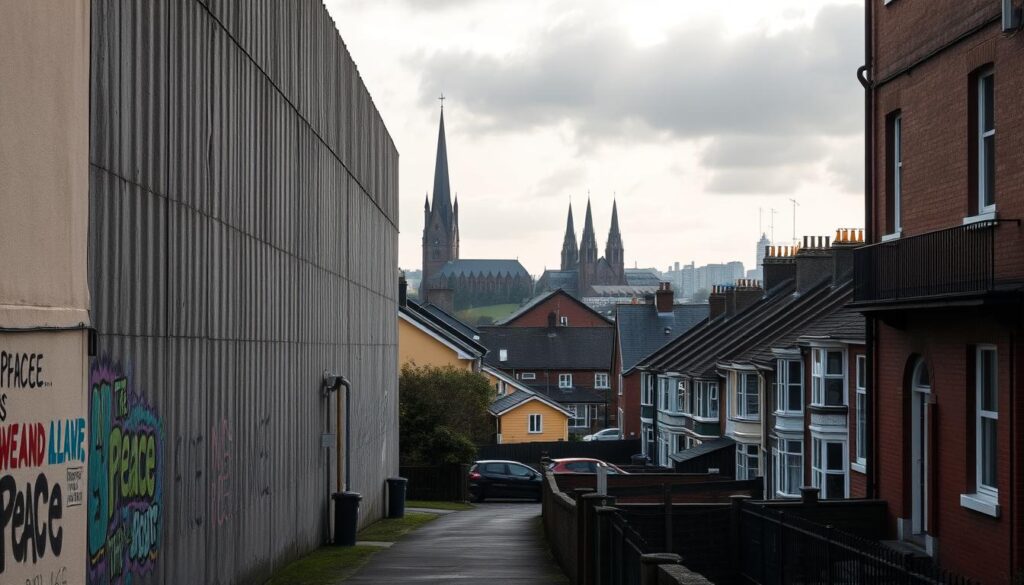
Neighborhoods here tell stories without words, their boundaries etched in brick and memory. Nearly 50% of residents live in areas where nine out of ten neighbors share their background. This separation cuts deepest in urban centers, where peace walls now outnumber those from the conflict’s peak.
Residential Segregation and Peace Walls
In Belfast’s working-class districts, towering barriers divide streets into parallel worlds. What began as temporary dividers now stand as permanent fixtures – 130 structures and counting. “You learn the invisible lines early,” shares a lifelong resident. “Cross the wrong alley, and you’re in another universe.”
These interface zones see limited mixing, with schools and shops often mirroring community divides. Public housing maps reveal stark patterns – clusters of red-brick homes ending abruptly at fortified walls.
Community Traditions and Celebrations
Within these separated spaces, cultural life thrives through drumming circles and mural-lined streets. July’s Orange Order parades transform neighborhoods into seas of banners and lambeg drums. Ulster-Scots festivals keep linguistic roots alive, while loyalist murals recount historical ties.
Yet new efforts emerge. Cross-community music projects now bridge divides, blending Protestant flute bands with Gaelic trad sessions. As one organizer notes: “Our rhythms differ, but the beat connects us.”
Economic and Urban Developments in Northern Ireland
Belfast’s skyline tells a story of reinvention. Perched at the head of Belfast Lough, this economic hub has transformed from industrial powerhouse to modern service center. Its deep-water port once launched legendary ships like Titanic, while today’s cranes build wind turbines and tech campuses.
Industrial Shifts and Urban Transformations
The last century saw traditional industries fade, replaced by healthcare and IT sectors. Former docklands now host glass-fronted offices, with the government investing in cross-community job programs. Urban renewal projects blend historic architecture with smart housing, creating neighborhoods that mirror the region’s evolving identity.
Brexit’s Impact on the Border and Local Economy
Since the UK’s EU exit, checkpoints dot the once-invisible border. Local businesses juggle new customs rules, while farmers face export delays. Cross-border trade dropped 13% in two years, pushing leaders to seek creative solutions. As part of the United Kingdom, the region navigates unique challenges balancing British ties and Irish neighbor relations.
FAQ
How did the Good Friday Agreement impact communities in the region?
The 1998 peace deal helped reduce violence by creating shared governance between nationalist and unionist parties. It also led to paramilitary disarmament and reforms in policing, though some divisions remain.
Why did population demographics shift over the 20th century?
Higher Catholic birth rates and Protestant emigration gradually changed the balance. Industrial decline in traditionally unionist areas like Belfast’s shipyards also influenced economic and social dynamics.
What cultural traditions define Protestant identity today?
Events like July’s Orange Order parades commemorate historical battles, while sports, music, and local dialects reflect shared heritage. These practices often highlight ties to Britain rather than Irish traditions.
How did paramilitary groups affect daily life during the Troubles?
Groups like the UVF and UDA carried out attacks in response to IRA campaigns, deepening fear and mistrust. Many neighborhoods became heavily militarized, with checkpoints and barriers separating communities.
Do peace walls still divide cities like Belfast?
Yes, over 100 physical barriers remain, mostly in working-class areas. While some see them as necessary for safety, others argue they reinforce segregation and slow reconciliation efforts.
How has Brexit influenced tensions around the border?
Trade checks between Great Britain and the region created economic friction. Unionists opposed special EU trade rules, fearing weakened UK ties, while nationalists saw risks to cross-border cooperation.