Let’s explore a movement that reshaped Christianity forever. Born in 16th-century Europe, this spiritual revolution started as a call for change within the church. Over five centuries later, its teachings now guide nearly one billion people worldwide.
You’ll find this tradition emphasizes personal connection with scripture and salvation through grace. Unlike earlier practices, it encouraged believers to interpret sacred texts directly. This shift created new ways of worship that still influence modern Christian communities.
From humble beginnings in Germany, these ideas spread across continents. They shaped laws, inspired social reforms, and fueled educational advancements. Today, over 30% of Christians identify with denominations born from this movement.
Key Takeaways
- Originated in 16th-century Europe as a reform movement
- Focuses on scripture as the ultimate spiritual authority
- Influences nearly a third of global Christians today
- Shaped modern concepts of individual religious practice
- Sparkled major social and cultural transformations
Ready to uncover how these beliefs took root? Let’s journey through their development and lasting impact on our world.
Introduction to the Protestant Journey
Imagine a spiritual revolution that began with handwritten challenges nailed to a church door. This 16th-century awakening didn’t just reshape religious institutions—it redefined how ordinary individuals connect with the divine. At its core lay three groundbreaking ideas: salvation through unearned grace, every believer’s right to spiritual leadership, and scripture as life’s ultimate roadmap.
This movement tore down barriers between clergy and congregations. Farmers could now read sacred texts in their native tongues. Housewives debated theology with scholars. “Why should truth be locked in ancient languages?” reformers asked, sparking mass Bible translations that changed how churches operated.
The heart of this transformation? A radical trust in personal conviction over institutional decrees. Leaders taught that divine grace flows freely—no elaborate rituals required. As one reformer declared:
“The Bible belongs to the people, not the powerful.”
Today, this journey continues through community food banks and online worship services. From German monasteries to Appalachian chapels, the emphasis remains clear: spiritual connection thrives when everyone participates. Over 40,000 denominations now carry this legacy, proving ideas born in medieval Europe still speak to modern hearts.
Historical Origins and the Medieval Church Context
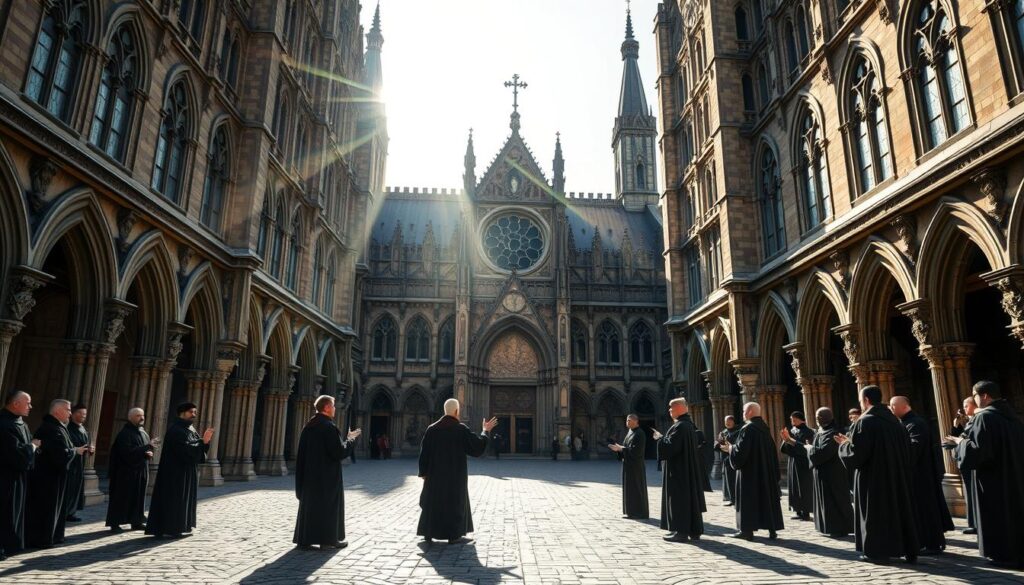
The story of religious transformation begins long before the 16th century. By the 1400s, many Europeans questioned why their spiritual leaders lived like kings while preaching humility. The Roman Catholic Church faced growing criticism over lavish papal lifestyles and questionable financial practices.
Late Medieval Critiques and Seeds of Reform
Early voices like John Wycliffe and Jan Hus laid groundwork for change decades before Luther. Wycliffe’s English Bible translations challenged the church’s monopoly on scripture. “Why should Latin be God’s only language?” became a rallying cry among reformers.
Hus took this further in Bohemia, arguing that true authority came from biblical truth rather than church hierarchy. His famous declaration at the Council of Constance still echoes:
“I would not retreat a single inch unless convinced by Scripture.”
The Role of Nationalism and Ecclesiastical Abuses
Kings grew tired of Roman Catholic leaders meddling in local affairs. When Pope Alexander VI used church funds to build palaces for his children, even loyal Catholics cringed. National rulers saw an opportunity to reclaim power while addressing public outrage.
Ordinary people bore the brunt of corrupt practices. Peasants paid for indulgences to fund St. Peter’s Basilica while their own churches crumbled. This mismatch between preaching and practice created perfect conditions for revolution.
The Birth of Protestantism in the 16th Century
History remembers 1517 as the year that shook European Christianity to its core. A single monk’s act of defiance sparked what we now call the Protestant Reformation, creating lasting changes in religious and political landscapes.
The Diet of Speyer and the 95 Theses
Martin Luther’s 95 Theses nailed to Wittenberg’s church door began as local debate fuel. By 1529, this criticism became rebellion. At the Diet of Speyer, six German princes and 14 cities protested Emperor Charles V’s power grab over regional churches.
Their bold declaration earned them the term “Protestants.” As one delegate argued:
“Majority votes can’t override conscience.”
Pivotal Moments in the Reformation
Three key events cemented the 16th century movement:
| Event | Year | Key Figures | Impact |
|---|---|---|---|
| 95 Theses Posted | 1517 | Martin Luther | Started public debate |
| Diet of Worms | 1521 | Charles V | Declared Luther outlaw |
| Speyer Protest | 1529 | German Princes | Coined movement’s name |
Luther’s famous stand at Worms became legendary:
“Here I stand. I cannot do otherwise.”
These clashes between conscience and authority birthed new ideas about personal belief and governance. What began as theological arguments grew into a cultural earthquake still felt today.
Key Figures Shaping the Movement
Visionary thinkers and bold leaders fueled Christianity’s great transformation. These pioneers blended deep scholarship with practical action, creating lasting change across nations.
Martin Luther, John Calvin, and Other Reformers
Martin Luther’s monastery experience shaped his revolutionary ideas. As a former monk turned professor, he translated complex theology into everyday language. His 95 Theses became the spark that lit Europe’s spiritual revolution.
John Calvin built systematic frameworks for reformed beliefs. Working from Geneva, he emphasized God’s ultimate authority in human affairs. His writings became textbooks for generations of believers.
| Reformer | Role | Key Contribution | Legacy |
|---|---|---|---|
| Martin Luther | Theology Professor | Scripture accessibility | Lutheran churches |
| John Calvin | Theologian | Predestination doctrine | Reformed tradition |
| Huldrych Zwingli | Pastor | Symbolic sacraments | Swiss Reformation |
Influences from European Leaders and Thinkers
Princes and printers helped spread new ideas. German rulers protected reformers, while publishers used Gutenberg’s press to distribute Bibles widely. As one pamphlet declared:
“Truth belongs to those who seek it – not just scholars.”
Humanist scholars like Erasmus paved the way by promoting ancient language studies. Their work made scripture analysis possible for grassroots movements. Together, these figures created a chain reaction that still shapes modern worship.
Diverse Doctrines and Core Beliefs
What holds together denominations as different as Baptists and Anglicans? A shared foundation built on radical ideas about divine acceptance. At its heart lies a truth that reshaped Christianity: God’s favor comes freely, not through rituals or human effort.
Justification by Grace Through Faith
The Five Solae form Christianity’s most influential framework. These Latin principles—grace alone, faith alone, Christ alone—declare salvation stems entirely from divine generosity. As reformers argued:
“We contribute nothing but our need; God provides everything through Christ.”
| Sola | Meaning | Impact |
|---|---|---|
| Sola Gratia | Grace alone saves | Ended merit-based rituals |
| Sola Fide | Faith as conduit | Empowered lay believers |
| Solus Christus | Christ’s unique role | Simplified worship practices |
This theology flipped medieval traditions. Instead of earning favor through deeds, believers receive righteousness as a gift. Jesus’ sacrifice becomes the sole basis for spiritual standing—no intermediaries required.
Over 500 denominations now interpret these doctrines differently. Some emphasize predestination; others focus on free will. Yet all agree: eternal hope rests on divine kindness, not human achievement. This unity-through-diversity makes the tradition both adaptable and enduring.
Worship Practices and Sacramental Life
Picture a Sunday morning where everyone participates—not just clergy. This vision became reality through revolutionary worship reforms. Communities embraced two sacred acts seen as direct gifts from Christ, reshaping how people connect with the divine.
Baptism and the Lord’s Supper
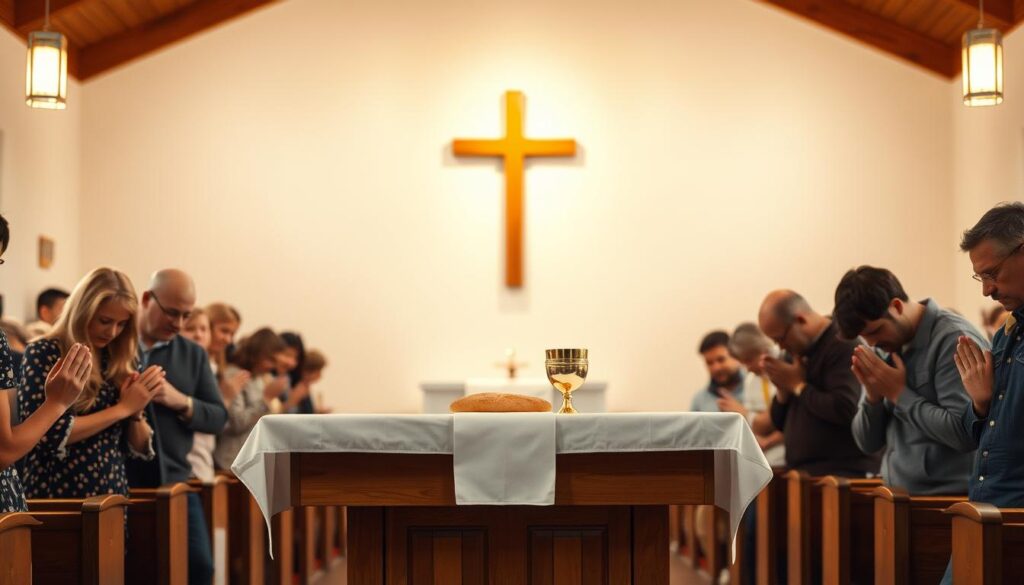
Most churches recognize baptism and communion as visible expressions of spiritual truth. Unlike medieval traditions, these acts serve as meaningful symbols rather than magical rituals. Baptism marks entry into Christian life—some sprinkle infants while others immerse adults.
| Sacrament | Form | Meaning |
|---|---|---|
| Baptism | Water ritual | New spiritual identity |
| Lord’s Supper | Bread & wine | Christ’s sacrifice remembered |
The Lord’s Supper unites churches through shared reflection. As one reformer taught:
“This meal isn’t magic—it’s memory made tangible.”
Congregations worldwide use this practice to strengthen community bonds.
The Priesthood of All Believers
This groundbreaking idea leveled spiritual hierarchies. Farmers could now lead prayers. Teachers might explain scripture. Every person gained direct access to divine grace without intermediaries.
Churches adopted democratic structures where members vote on leaders and ministries. This shift birthed Sunday schools, lay preachers, and volunteer-led outreach programs. Today, 83% of congregations report involving members in decision-making—a lasting legacy of these teachings.
Deep Dive into the Protestant Faith: Beliefs and Practices
Christian traditions bloom like wildflowers across a meadow—each unique, yet sharing common roots. Over 200 distinct church families exist today, shaped by how communities interpret sacred texts. This variety reflects a core principle: truth shines through many lenses.
| Denomination | Key Belief | Worship Style | Governance |
|---|---|---|---|
| Lutheran | Grace through faith alone | Liturgical hymns | Regional synods |
| Baptist | Adult baptism by immersion | Congregational singing | Local autonomy |
| Methodist | Social holiness | Contemporary mix | Connectional system |
| Pentecostal | Spiritual gifts active | Spontaneous praise | Charismatic leadership |
Lutheran churches preserve ancient rituals while emphasizing Martin Luther’s teachings. Their pipe organs echo medieval cathedrals, yet sermons focus on accessible theology. Baptist congregations often gather in simple buildings, prioritizing personal conversion stories.
Methodists follow John Wesley’s vision of faith in action. As one 19th-century circuit rider noted:
“The world is our parish—not just the pews.”
This diversity brings both vitality and challenges. Neighboring churches might disagree on baptism methods yet unite in food drives. About 68% of American believers say denominational lines matter less today than shared community service.
Scriptural Authority and the Right of Private Interpretation
Imagine holding divine wisdom in your hands – not locked in monasteries, but printed in your native tongue. This revolutionary idea reshaped spiritual life by making sacred writings accessible to all. The shift from institutional control to personal engagement became Christianity’s game-changer.
The Bible as the Supreme Guide
Reformers declared scripture the ultimate authority, surpassing human traditions. “Why trust popes when we have God’s own word?” they argued. Every verse became a direct line to divine truth, with Martin Luther insisting:
“Scripture is its own interpreter.”
Translation, Printing, and Accessibility
Gutenberg’s press turbocharged this movement. Vernacular Bibles spread like wildfire – English, German, and French translations put God’s word in common homes. Suddenly, farmers could debate theology using first-hand knowledge of sacred writings.
This democratization of knowledge challenged old power structures. By 1600, over 200 million printed books circulated Europe. The authority to interpret scripture moved from clergy to congregations, creating lasting changes in how communities practice their beliefs today.
FAQ
How did the Protestant movement begin?
The movement emerged in the 16th century as reformers like Martin Luther challenged Roman Catholic doctrines. Key events, such as Luther’s 95 Theses and the Diet of Speyer, sparked widespread religious and social change across Europe.
What role did Martin Luther and John Calvin play?
Luther’s teachings on grace and scripture reshaped Christian thought, while Calvin’s systematic theology influenced Reformed traditions. Both emphasized salvation through faith alone, rejecting medieval Catholic practices they viewed as corrupt.
Why is scripture central to these beliefs?
Reformers prioritized the Bible as the supreme authority over church tradition. Advances in printing made translations accessible, empowering individuals to interpret texts personally—a radical shift from Roman Catholicism’s hierarchical structure.
How do worship practices differ from Catholicism?
Sacraments like baptism and the Lord’s Supper are simplified, focusing on communal faith rather than ritual. The “priesthood of all believers” idea also encourages lay participation, unlike Catholicism’s clergy-centric model.
What defines justification by grace through faith?
This doctrine teaches that salvation comes solely from God’s grace, received through faith in Jesus Christ—not human deeds. It became a cornerstone of Reformation theology, contrasting with Catholic teachings on merit and sacraments.
How did nationalism influence the Reformation?
European rulers often supported reformers to resist papal authority, merging religious reform with political independence. This alliance helped spread new ideas and establish state-aligned churches in regions like Germany and England.
Are all Protestant denominations the same?
No—groups like Lutherans, Calvinists, and Anglicans developed distinct doctrines. Differences in sacraments, church governance, and interpretations of scripture led to diverse traditions within the broader movement.