For millions worldwide, daily life revolves around deeply held beliefs that shape relationships and routines. With over 833 million adherents globally, Protestant Christianity emphasizes personal faith, biblical teachings, and shared spiritual growth. This article explores how these principles translate into meaningful traditions within households.
At the heart of this lifestyle lies a commitment to integrating spiritual values into everyday moments. Many begin mornings with prayer or scripture reading, creating rhythms that reinforce their worldview. These practices often extend beyond personal devotion to community involvement through local churches and service projects.
The roots of these customs trace back to the Reformation era, when emphasis shifted to individual connection with faith. Today’s households adapt historical teachings to modern contexts while preserving core ideals like grace and moral guidance. Stories from diverse communities reveal creative approaches to maintaining spiritual bonds across generations.
Key Takeaways
- Protestant traditions emphasize personal faith and direct engagement with scripture
- Daily spiritual practices often include prayer, worship, and community service
- Modern customs evolved from 16th-century Reformation principles
- Local churches frequently serve as hubs for family-oriented activities
- Generational faith transmission remains a central focus
- Values like grace and moral responsibility guide household decisions
Overview of Protestant Beliefs and History
Understanding a faith’s core tenets offers insight into its historical evolution and modern-day expressions. Central to this tradition are principles that reshaped religious thought centuries ago and continue guiding communities today.
Defining Core Beliefs
Five foundational ideas, known as the Five Solas, shape this belief system. Scripture alone places the Bible above other authorities, encouraging personal study. Faith alone teaches that spiritual connection comes through trust rather than rituals. These ideas foster self-guided worship and ethical decision-making.
| Core Principle | Meaning | Daily Impact |
|---|---|---|
| Sola Scriptura | Bible as ultimate guide | Home Bible studies |
| Sola Fide | Salvation through faith | Personal prayer habits |
| Sola Gratia | Grace as divine gift | Emphasis on forgiveness |
Historical Milestones
In the 16th century, reformers sought to simplify worship and empower ordinary people. This movement spread rapidly across Europe, creating new church models. Over time, diverse denominations emerged, each adapting these beliefs to local cultures while keeping core ideals intact.
Origins of the Protestant Movement and Reformation
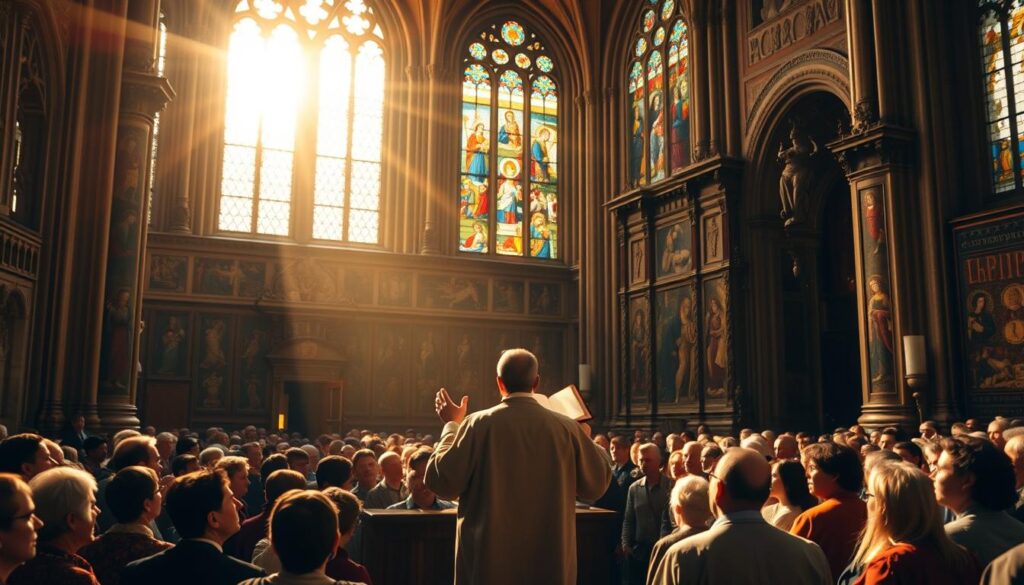
Long before the 16th century, seeds of change were already taking root in European religious life. Early reformers like the Waldensians quietly challenged church authority as early as the 12th century. These groups emphasized personal Bible study over institutional rituals—a radical idea that would later blossom into full-scale reformation.
Proto-Protestant Influences
Movements such as the Lollards and Hussites kept the flame of reform alive for hundreds of years before Luther. They translated scripture into common languages and questioned the power structures controlling faith practices. Their underground networks proved ordinary people could shape spiritual life without formal hierarchies.
Reformation Catalysts
By 1517, three main issues pushed religious tension to breaking point. Church leaders sold forgiveness through indulgences, scripture remained locked in Latin, and corruption ran rampant. These problems created fertile ground for Martin Luther’s famous protest—a moment that changed the religious world forever.
Role of Martin Luther
Luther’s Ninety-five Theses didn’t just criticize indulgences—they reshaped how people viewed salvation. His teaching that “faith alone makes one righteous” (sola fide) empowered families to take spiritual leadership. This idea made homes centers of worship rather than just church buildings, a legacy still visible today.
The Role of the Protestant Church
Gathering spaces shape more than Sunday routines—they build connections that last lifetimes. Unlike traditions with centralized authority, these congregations thrive on shared participation and mutual care.
Community and Worship
Weekly services blend music, prayer, and practical teachings. Everyone contributes, from teens leading songs to parents organizing meals. This inclusive approach stems from the belief that all members have equal spiritual value.
Local congregations often feel like extended households. They host game nights, mentorship programs, and neighborhood cleanups. When challenges arise, the community responds with meals, childcare, or financial aid—living out their faith through action.
The idea of an “invisible church” unites believers beyond physical buildings. Many congregations partner with global ministries, reminding people they’re part of something bigger. This perspective encourages generosity and cultural awareness.
Modern worship styles appeal to diverse age groups. Interactive sermons and upbeat music create welcoming environments. These adaptations help traditions stay relevant while maintaining core values like grace and service.
Martin Luther and the Shock of the Ninety-Five Theses
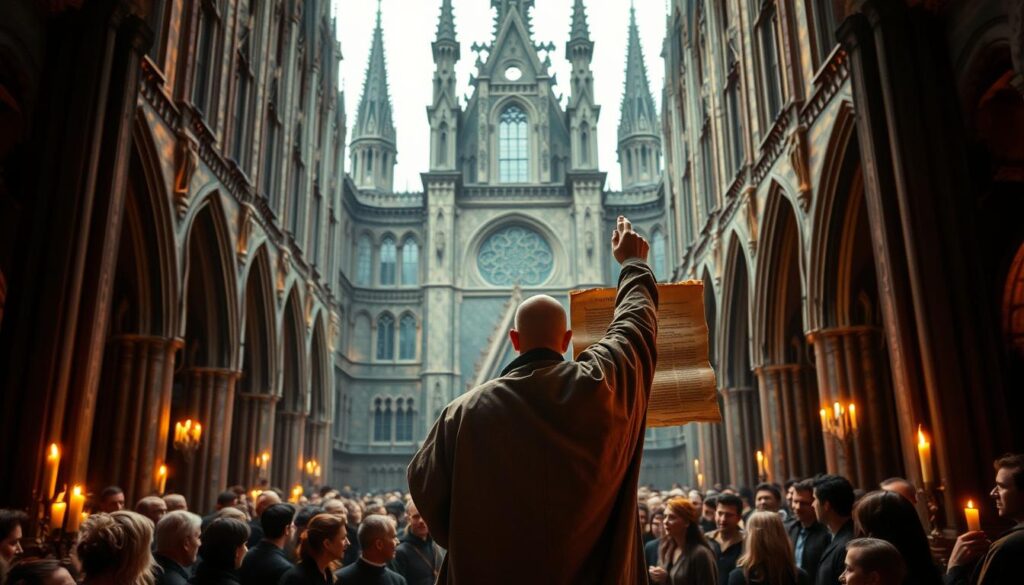
A single act of defiance in 1517 cracked centuries of religious tradition wide open. When Martin Luther nailed his arguments to Wittenberg’s church door, he ignited changes still felt in spiritual practices today.
Impact on Church Authority
Luther’s bold move directly challenged the idea that religious authority belonged solely to clergy. His 95 arguments declared:
“The true treasure of the church is the gospel of the glory and grace of God.”
This shifted power from institutions to individuals. Suddenly, ordinary people could access scripture without intermediaries—a radical concept at the time.
The practice of selling forgiveness through indulgences became Luther’s main target. By arguing salvation came through faith alone, he dismantled systems controlling spiritual access. Wittenberg’s church door became symbolic of this new openness.
Three key changes emerged:
- Households began leading prayers instead of waiting for priests
- Scripture study became daily practice rather than special occasions
- Spiritual guidance moved from church buildings to kitchen tables
Over years, these ideas transformed how communities worshipped. The church became less about hierarchy and more about personal connection—a legacy shaping modern faith experiences.
Key Figures in Protestant History
Visionary leaders shaped religious thought across continents, leaving legacies that still guide communities today. Their ideas transformed how people practiced faith and structured daily life.

John Calvin and Huldrych Zwingli
John Calvin’s leadership in Geneva became a blueprint for integrating faith into society. He taught that every aspect of life—from parenting to business—should reflect divine principles. His emphasis on God’s sovereignty encouraged households to view challenges as part of a larger plan.
Huldrych Zwingli revolutionized worship in Zurich by putting scripture at the center. He urged parents to teach Bible stories during meals and chores. This hands-on approach made spiritual growth a natural part of family routines rather than just church activities.
Other Reformers
John Knox brought these ideas to Scotland, creating traditions like daily Bible reading. His work helped establish schools where children learned to read scripture—a radical shift in an era when few had access to education.
William Farel and Theodore Beza expanded Protestant teachings through written guides. Their materials helped families discuss faith during evening devotions. Over years, these practices became cornerstones of household spirituality across Europe.
Development of Protestant Denominations
Diverse interpretations of scripture gave birth to varied worship traditions over centuries. Today’s faith communities reflect this rich heritage through distinct expressions of shared beliefs. Over 40% of Christians globally identify with these groups, each offering unique ways to experience spiritual life.
Roots in Shared Values
Lutheran churches build households around grace-centered teachings. Weekly gatherings often feature hymns celebrating unconditional love, fostering environments where forgiveness thrives. Many members describe these spaces as safe havens for spiritual growth.
Reformed congregations prioritize thoughtful Bible study. Families might discuss scripture during meals, applying ancient wisdom to modern dilemmas. This approach encourages critical thinking while maintaining reverence for divine guidance.
New Expressions Emerge
Modern movements like Pentecostalism energize worship with lively music and spontaneous prayer. These churches attract younger generations seeking vibrant community connections. Their emphasis on personal spiritual experiences reshapes traditional practices.
Baptist denominations champion local leadership and adult baptism. This model teaches that faith choices shape daily living, inspiring active participation in community projects. Such principles help tradition stay relevant across changing cultures.
From formal liturgies to casual services, these varied paths let believers find communities matching their spiritual needs. This flexibility explains why Protestant denominations continue growing worldwide.
FAQ
What distinguishes core beliefs among Christian denominations?
Central teachings focus on Scripture as the ultimate authority, salvation through faith, and a personal relationship with Christ. Unlike some traditions, leadership often emphasizes shared interpretation rather than hierarchical structures.
How did the Reformation reshape religious practices?
The movement challenged traditional authority by promoting vernacular worship, congregational participation, and simplified rituals. Figures like Luther and Calvin emphasized direct engagement with biblical texts, shifting power dynamics within communities.
Why was Martin Luther’s work so influential?
Luther’s Ninety-Five Theses sparked debates about indulgences and corruption, accelerating demands for reform. His translation of the Bible into German made Scripture accessible, empowering individuals to interpret teachings independently.
How do worship styles vary across different groups?
Services range from liturgical Anglican ceremonies to contemporary non-denominational gatherings. Many prioritize sermons and congregational singing, reflecting a focus on teaching and communal participation over ritual.
What role do modern movements play today?
Current trends emphasize social justice, inclusivity, and adapting traditions to cultural shifts. Groups like Evangelicals or Pentecostals blend historic teachings with dynamic worship styles to engage younger generations.
Are marriage customs unique within these communities?
While ceremonies often reflect local culture, many emphasize covenantal commitment and spiritual partnership. Some traditions encourage pre-marital counseling or prioritize congregational support for couples.
How did early reformers like Calvin shape theology?
Calvin’s teachings on predestination and church governance influenced Reformed traditions. His systematic approach to doctrine provided frameworks for ethical living and community organization still referenced today.