Let’s step back to 16th-century Europe, where a single event sparked changes that reshaped societies forever. On October 31, 1517, a German monk named Martin Luther nailed his bold ideas to a church door in Wittenberg. This act didn’t just challenge religious practices—it ignited a cultural earthquake.
What began as a critique of church authority grew into a movement that redefined spirituality. People started questioning traditions that had lasted centuries. They sought direct connections with faith, bypassing old hierarchies. This wasn’t just about religion—it reshaped politics, education, and even how nations formed.
The ripple effects reached far beyond Europe’s borders. Ideas about personal belief and governance traveled across oceans, influencing early American values. Concepts like religious freedom and individual rights took root, shaping democracies we recognize today.
Why does this matter now? Because the past isn’t just dates and names. It’s the foundation of modern thought. From art to laws, the echoes of this era still surround us. Let’s explore how a 500-year-old revolution continues to shape our lives.
Key Takeaways
- Began with Martin Luther’s 95 Theses in 1517, challenging established religious practices
- Transformed spiritual practices and political structures across Europe
- Laid groundwork for modern ideas like religious freedom and self-governance
- Influenced art, education, and cultural norms for centuries
- Shaped foundational principles of nations, including the United States
Introduction to the Protestant Reformation
As the Renaissance flourished, a clash between spiritual ideals and earthly authority brewed beneath the surface. Europe’s catholic church held unmatched influence, shaping laws, art, and even kings’ decisions. But cracks were forming in this centuries-old system.
Historical Context and Cultural Shifts
By the 1500s, the pope wielded power rivaling monarchs. Lavish cathedrals and indulgence sales funded by peasant donations sparked resentment. Many felt their religion had become transactional—more about money than meaningful faith.
The Renaissance’s focus on human potential changed how people saw authority. Scholars rediscovered ancient texts, asking: “Why can’t we read scripture ourselves?” Meanwhile, Gutenberg’s printing press spread new ideas faster than ever—like matches ready to ignite dry timber.
An Overview of Reformation Beginnings
Economic strains added fuel to the fire. Farmers tired of sending crops to distant bishops. Merchants bristled at church taxes cutting profits. Even earlier thinkers like Jan Hus had challenged tradition, proving dissent wasn’t new—just louder now.
When these pressures collided, change became unavoidable. What started as calls for modest reforms soon snowballed into a movement reshaping church and society. The stage was set for a revolution that would echo through the years.
Origins and Key Figures of the Reformation
In 1517, a simple act of protest by a German monk ignited a spiritual revolution across Europe. While many reformers contributed to this seismic shift, four figures stand out for their lasting impact.

Martin Luther and the 95 Theses
Martin Luther never planned to split the church. His famous 95 Theses—posted publicly on October 31—aimed to spark debate about selling indulgences. “Why does the pope’s wealth exceed that of the richest citizens?” he questioned, challenging the idea that money could buy spiritual favors.
Luther’s bold ideas spread like wildfire through printed pamphlets. What began as academic criticism soon became a rallying cry. Church leaders demanded he recant, but the scholar stood firm. His translation of scripture into German later let ordinary people interpret faith themselves.
Influential Voices: John Calvin, Huldrych Zwingli, and Henry VIII
While Luther shaped Germany’s religious landscape, John Calvin reimagined faith’s role in society. His Institutes of the Christian Religion outlined a strict theological system. Geneva became his laboratory—a city where moral codes governed daily life.
Meanwhile, Swiss priest Huldrych Zwingli took reform further. He stripped churches of ornaments, arguing worship should focus on scripture alone. Across the Channel, England’s Henry VIII took a different path. His clash with Rome over marriage rights birthed the Church of England, blending political ambition with spiritual change.
These reformers disagreed on details but shared a core belief: faith shouldn’t be controlled by distant authorities. Their collective courage reshaped how millions connected with the divine.
protestant reformation definition world history
At the heart of 16th-century spiritual upheaval lay radical ideas that redefined divine connection. Reformers declared sacred texts—not institutions—as life’s true compass. This shift sparked fiery debates about who held authority in matters of faith.
Defining the Core Beliefs and Doctrines
Two Latin phrases changed everything: sola scriptura and sola fide. The first meant scripture alone guided spiritual truth. The second declared salvation came through belief, not rituals or payments. “A living, daring confidence in God’s grace,” Luther wrote, became the soul’s anchor.
This theology turned hierarchies upside down. Every believer became their own priest, capable of understanding divine messages without mediators. Churches stripped away statues and saintly petitions, calling them distractions from pure worship.
The Movement’s Role in Reshaping Authority and Theology
Old traditions crumbled as personal Bible study flourished. Farmers debated scripture while scholars translated texts into common tongues. This democratization of doctrine empowered individuals but alarmed rulers who relied on church alliances.
The ripple effects reached beyond Sunday services. Concepts like accountability and self-governance took root in politics. These beliefs later crossed oceans, shaping societies valuing personal conscience over imposed theology.
Impact on European Religious and Political Landscapes
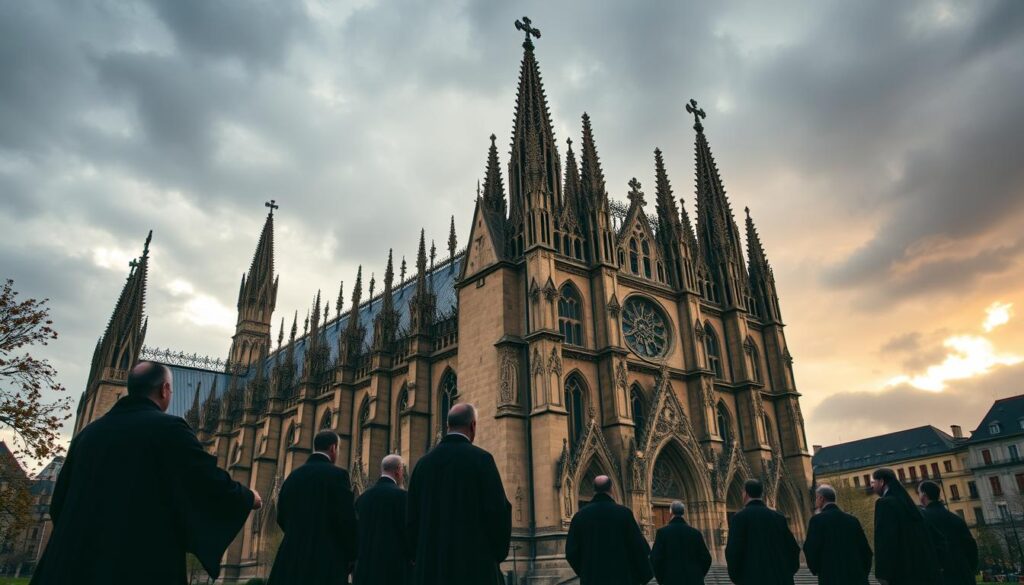
The spiritual revolution reshaped kingdoms as much as it did souls. Rulers seized newfound control over spiritual matters, redrawing maps of power across the continent. This shift didn’t just alter Sunday services—it rewrote the rules of governance.
Shifts in Power: From Papal Authority to National Churches
Monarchs saw an opportunity in the chaos. German princes declared state-sponsored churches, keeping tithes within their borders. England’s crown broke from Rome entirely, with Henry VIII declaring himself head of a national faith. “The ruler’s law becomes God’s law,” one diplomat noted, capturing the era’s seismic power transfer.
The 1555 Peace of Augsburg made it official. Regional leaders could now choose their territory’s religion—Catholic or Lutheran. This development turned faith into a tool of statecraft, binding spiritual identity to political borders.
Reformation and the Rise of Liberal Political Thoughts
Challenges to religious authority spilled into civic life. If people could interpret scripture personally, why not laws? Reformers’ emphasis on individual conscience planted seeds for later democratic ideals. John Locke and other thinkers drew from these principles when crafting theories of governance.
Economically, Protestant regions thrived with reduced church taxes and a focus on communal work ethics. Meanwhile, Catholic areas maintained older systems. This divide created competing models of state power that still influence modern policy debates.
Evolution of Church Practices and Doctrines
Imagine walking into a church where every familiar ritual had vanished overnight. That’s what many Europeans experienced as reformers reimagined spiritual life. The system of indulgences—payments for forgiveness—faced fierce criticism. “Why should coins clink in chests to erase sins?” reformers asked, sparking debates about true faith.
Rethinking Forgiveness and Authority
Martin Luther’s attack on indulgences shook the church to its core. He argued forgiveness came through belief, not payments—a doctrine challenging centuries of practice. This shift made salvation personal rather than transactional. Churches stopped selling “get-out-of-purgatory” passes, changing how people viewed divine grace.
New Rhythms of Worship
Gone were Latin chants few understood. Services now echoed with local languages, letting farmers and merchants grasp sermons. Baptism became a hot topic too—Anabaptists required adult vows instead of infant rituals. “True faith needs conscious choice,” they insisted, prioritizing personal commitment over tradition.
| Practice | Catholic Approach | Protestant Adaptation |
|---|---|---|
| Worship Language | Latin only | Local vernacular |
| Salvation Path | Good works + sacraments | Faith alone |
| Baptism Age | Infants | Adults (Anabaptists) |
| Communion Meaning | Literal transformation | Symbolic remembrance |
| Service Focus | Ritual observance | Scripture teaching |
These changes created ways of worship still seen today. Congregations sang together instead of watching priests perform mysteries. The church became a classroom where everyone studied sacred texts—not just clergy. This revolution in practice made spirituality something you lived, not just observed.
The Legacy of the Protestant Reformation in American Contexts
Crossing stormy seas in search of spiritual freedom, early settlers carried revolutionary ideas to new shores. Their journey planted seeds that would bloom into America’s unique approach to faith and governance.
Foundations of Religious Freedom in the United States
English believers split into two camps when the Church of England kept old traditions. Separatists (later called Pilgrims) fled to Plymouth in 1620. Puritans followed a decade later, aiming to “purify” their faith from within. This diversity forced colonies to accept different beliefs—no single group could dominate.
James Madison later echoed these principles, arguing: “Conscience is the most sacred of all property.” The First Amendment’s twin guarantees—no state religion and free worship—directly reflected reform-era debates about personal conviction versus institutional control.
Modern Reflections on Historical Reform Movements
Today’s questions about faith in public life trace back to 16th-century reformers. Should schools teach creationism? Can businesses refuse service based on beliefs? These debates mirror early arguments about scripture’s role in daily life.
| Reformation Principle | American Legacy |
|---|---|
| Personal Bible study | Public education system |
| Work as divine calling | Entrepreneurial culture |
| Local church governance | Grassroots democracy |
| Rejection of hierarchy | Individual rights focus |
From town hall meetings to self-made success stories, the reform spirit still shapes national identity. As one historian notes: “America didn’t invent religious freedom—it institutionalized what reformers dared to imagine.”
Conclusion
What began as a monk’s protest evolved into enduring principles that define societies. The ideas born from this era sparked debates about individual conscience and collective faith, creating ripples that still touch modern life. Both Catholic and emerging traditions refined their theology through this clash, proving growth often comes through friction.
Today’s emphasis on personal belief and diverse worship styles owes much to those 16th-century reformers. Their courage to question authority laid groundwork for religious freedom—a value now central to many nations. Museums display Reformation-era art, while universities study its impact on democratic systems.
The true legacy? A reminder that challenging norms can reshape cultures. Whether in churches or civic spaces, the push for meaningful change remains alive. As we navigate new questions about tradition and progress, history’s lessons continue to guide us.
FAQ
What sparked the religious movement led by Martin Luther?
Martin Luther’s critique of indulgences and church practices in 1517, outlined in his 95 Theses, ignited widespread debate. His challenge to papal authority emphasized salvation through faith alone, not rituals or payments.
How did John Calvin and Huldrych Zwingli contribute to theological changes?
Calvin’s Institutes of the Christian Religion stressed predestination and strict moral living, while Zwingli rejected Catholic traditions like fasting. Both reshaped worship by prioritizing scripture over rituals.
Why did Henry VIII break from the Catholic Church?
Henry VIII sought to annul his marriage to Catherine of Aragon, which the pope denied. This led to England’s split from Rome, creating the Church of England with the monarch as its head.
What role did scripture play in reshaping authority during this period?
Reformers argued that the Bible—not the pope—held ultimate authority. Translating scripture into local languages empowered individuals to interpret faith, weakening centralized church control.
How did critiques of indulgences change worship practices?
Rejecting indulgences shifted focus to personal faith and ethical living. Churches simplified rituals, removed icons, and emphasized preaching, creating a more direct connection between believers and God.
Did this movement influence political structures in Europe?
Yes! National rulers gained power as papal influence declined. Ideas about individual conscience and governance later inspired democratic principles, shaping modern political thought.
What lasting impacts are seen in American religious freedom?
Many colonists fled Europe to practice faith freely. This diversity laid groundwork for the First Amendment, ensuring no single church could dominate in the U.S.
Why do modern churches still reference this era?
Debates over tradition vs. reform, scripture’s role, and church-state relations remain relevant. Denominations like Lutherans and Presbyterians trace roots to reformers like Luther and Calvin.