Imagine a world where questioning authority could cost your life. In 1517, a German monk named Martin Luther nailed 95 arguments to a church door, igniting a spiritual earthquake. This bold act challenged centuries of tradition and sparked debates that reshaped Europe’s religious landscape.
What began as a call for reform within the church grew into a movement empowering everyday people. Leaders across the continent began rethinking how believers connected with God, emphasizing personal faith over institutional rituals. The ripple effects reached kings, scholars, and farmers alike—all seeking deeper meaning in their spiritual lives.
This era didn’t just create new branches of Christianity. It transformed politics, education, and cultural values. From translating sacred texts into common languages to challenging monarchs’ divine rights, the changes still echo in modern ideas about freedom and self-governance.
Key Takeaways
- A single document—the 95 Theses—triggered Europe’s religious revolution in 1517
- New Christian traditions emerged, prioritizing personal spirituality over hierarchy
- Religious debates sparked political upheavals and social transformations
- Translation of religious texts empowered ordinary people to interpret faith independently
- Reform principles influenced modern concepts of individual rights and liberties
Introduction to the Protestant Reformation
Picture a time when spiritual leaders prioritized power over piety. By the 1500s, the roman catholic hierarchy had become a symbol of excess. Lavish Vatican weddings for popes’ children and bribes for promotions eroded public trust in religious authority.
Historical Context and the Late Medieval Church
Two popes embodied this era’s scandals. Innocent VIII hosted ceremonies for his illegitimate offspring at St. Peter’s Basilica. Alexander VI secured his position through payments while fathering eight children—a stark contrast to the church’s teachings on celibacy.
Ordinary believers grew furious as their donations funded marble palaces instead of pastoral care. Kings saw an opportunity—rising nationalism let them challenge Rome’s control. Monarchs began asserting local governance over foreign authority.
Importance of Reform in Today’s Religious Landscape
Early thinkers planted seeds of change centuries before Luther. William of Ockham questioned papal infallibility in the 1300s. John Wycliffe’s English Bible translation empowered people to interpret scripture themselves—a radical idea at the time.
Erasmus of Rotterdam sharpened these critiques using humor and scholarship. His exposes of forged documents earned him the nickname “Luther’s incubator.” Modern faith communities still wrestle with the balance he highlighted—tradition versus transparency in spiritual leadership.
The Origins: From Martin Luther’s 95 Theses to a Global Movement
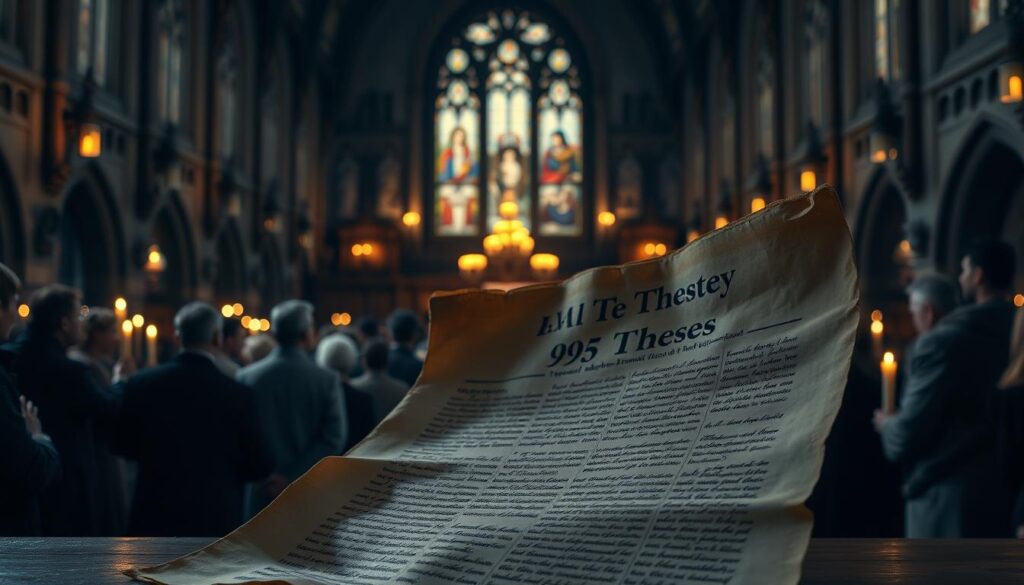
What if a single document could shake the foundations of an empire? On October 31, 1517, a university professor in Wittenberg took that daring leap. Martin Luther’s 95 arguments against religious fundraising practices didn’t just question church teachings—they lit a fuse that would detonate Europe’s spiritual order.
Martin Luther and the Spark of Reform
Luther, an Augustinian monk, witnessed wealthy believers buying indulgences—certificates claiming to reduce punishment for sins. “When coins ring in the chest,” one preacher promised, “souls fly from purgatory.” This pay-to-pray system contradicted Luther’s study of scripture, where he found salvation came through faith, not financial deals.
His fiery critique spread like wildfire. Printed pamphlets of his ideas reached towns faster than horseback riders. Farmers debated theology at markets. Tailors read translated Bibles aloud—a direct challenge to the Catholic Church’s Latin-only policy.
Challenges to the Catholic Church’s Authority
The indulgence controversy exposed deeper cracks. For centuries, the Catholic Church had acted as heaven’s gatekeeper. Luther’s writings asked: Why trust institutions when God speaks through scripture? His translation of the New Testament into German let ordinary people interpret divine messages themselves.
Princes saw opportunity. Some protected Luther to weaken Rome’s grip. Others banned his books, fearing chaos. This wasn’t just a religious dispute—it became a series of power struggles reshaping kingdoms and daily lives.
Exploring Protestant Reformation Religions
Think of a spiritual revolution where every believer becomes their own interpreter of divine truth. As Luther’s ideas spread, they sprouted into distinct beliefs across regions. From Swiss city halls to German farmhouses, new teachings reshaped how communities worshipped and governed themselves.
Diverse Beliefs and Denominations
Local cultures shaped these spiritual movements. Northern Germany embraced Luther’s focus on grace, while Geneva’s churches adopted Calvin’s strict moral codes. The Anabaptists took radical steps—rebaptizing adults and rejecting state ties.
Three core ideas united these groups:
- Scripture as ultimate authority (sola scriptura)
- Salvation through faith alone
- Every believer’s right to interpret texts
The Transition from Catholic Traditions
Stone altars made way for wooden pulpits. Latin chants faded as congregations sang in their languages. Priests became pastors who married and raised families—a stark shift from Catholic celibacy rules.
This relationship between believer and scripture sparked wider changes. Farmers quoted Bible verses to argue land rights. City councils debated theology like trade policies. The Reformation wasn’t just about churches—it rewrote society’s rulebook.
Key Figures and Their Impact
What if your hometown became ground zero for a spiritual revolution? While Martin Luther lit the match of change, other visionaries fanned the flames across Europe. Two thinkers in particular—one meticulous, one radical—carved distinct paths that still shape modern faith practices.
John Calvin’s Reformed Theology
A French exile transformed Geneva into a laboratory for religious reform. John Calvin argued that God’s plan was fixed before time began—a concept called predestination. His logical approach turned faith into a system anyone could study, like math or science.
Geneva’s streets became classrooms. Citizens attended daily sermons while councils enforced moral codes. This “holy commonwealth” model traveled to Scotland and New England, proving ideas could cross oceans as easily as borders.
Huldrych Zwingli and Revolutionary Ideas
Meanwhile in Zurich, Huldrych Zwingli took renovation literally. Workers stripped churches bare, removing statues and paintings. Worship shifted to plain rooms where crowds dissected Bible passages line by line.
Zwingli’s boldest move redefined communion. Unlike Catholic or Lutheran terms, he saw bread and wine as symbols—not holy mysteries. This split among reformers showed how one movement could birth multiple thought traditions.
From Calvin’s structured communities to Zwingli’s minimalist services, these leaders proved spiritual renewal wears many faces. Their debates over scripture and practice still echo in modern churches—a testament to the power of ideas to outlive their creators.
The Reformation in England and Its Transatlantic Impact
Royal bedrooms rarely shape nations’ spiritual destinies—except when they do. King Henry VIII‘s desperate quest for a male heir transformed England’s religious identity. His marriage to Catherine of Aragon became Europe’s most explosive divorce case after the Pope refused an annulment.
Henry VIII and the Formation of the Church of England
In 1534, the monarch declared himself head of the newly formed Church of England. This bold move severed ties with Rome but kept many Catholic traditions. Henry’s six wives and three surviving children created decades of political drama, setting the stage for future conflicts.
The Pilgrims, Puritans, and the New World Journey
Not everyone embraced the hybrid faith. Two groups emerged:
| Group | Goal | Challenge |
|---|---|---|
| Separatists | Complete break from England | Persecution & poverty |
| Nonseparatists | Reform from within | Political resistance |
After failed efforts to build communities in Holland, 102 Separatists boarded the Mayflower in 1620. Their risky voyage to New England planted seeds for America’s religious freedom ideals. Later Puritan settlers aimed to create a “city upon a hill”—a model society visible to the world.
Socio-Political Influences and Cultural Legacies
Power struggles and technological breakthroughs collided to reshape 16th-century Europe. As monarchs gained strength, they clashed with religious leaders over control of lands and laws. This tension created openings for radical ideas to take root and spread like summer wildfire.
The Role of Nationalism and Political Turbulence
Local rulers saw spiritual independence as a path to greater power. At the 1529 Diet of Speyer, German princes made history by formally protesting imperial orders to suppress new teachings—an event that birthed the term “Protestant.”
Money often motivated these decisions as much as faith. Many leaders seized church lands and stopped sending taxes to Rome. The table below shows key reasons rulers backed religious changes:
| Motivation | Political Gain | Economic Benefit |
|---|---|---|
| Reduce papal influence | Increased local control | Kept church taxes |
| Appeal to citizens | Strengthened loyalty | Sold monastery lands |
The Printing Press: Spreading Reform Ideas throughout Europe
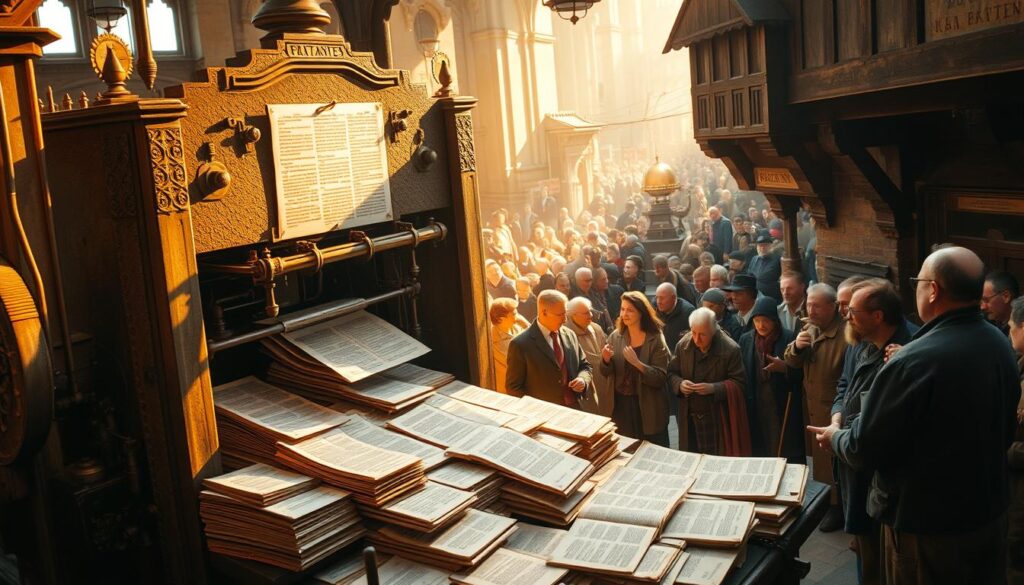
Johannes Gutenberg’s 1440 invention became the movement’s secret weapon. Pamphlets could now reach thousands within weeks—something handwritten texts required years to achieve.
This information explosion changed daily life. Farmers discussed theology using printed pamphlets as guides. City leaders debated new ideas that challenged old authority structures. The press didn’t just share words—it empowered people to rethink their world.
The Enduring Legacy in the United States
How did colonial Bible studies shape a superpower’s DNA? Early settlers carried revolutionary ideas across the Atlantic, planting seeds that grew into America’s unique spiritual identity. Pilgrims, Puritans, and Quakers—each group brought distinct visions of sacred life that collided and blended on new shores.
Religious Freedom and the Influence of the Bill of Rights
The First Amendment’s famous words—”Congress shall make no law respecting an establishment of religion“—echo Reformation-era debates. Founders rejected state-controlled worship, protecting individual faith choices instead. This bold experiment in spiritual freedom became America’s social glue, binding diverse believers through shared liberty.
Colonial new church models influenced more than Sunday services. Town meetings mirrored reform church self-governance, teaching citizens to debate and decide collectively. These practices shaped everything from jury systems to local elections.
Even America’s economic drive carries traces of this legacy. The emphasis on personal responsibility and hard work—values championed by early reformers—helped forge a nation where opportunity outweighs birthright. Four centuries later, these principles still define the United States‘ cultural heartbeat.
FAQ
Why did the Reformation begin in the 16th century?
The movement started due to widespread frustration with practices like selling indulgences, corruption in the Church, and disagreements over teachings like salvation through faith alone. Figures like Martin Luther and John Calvin challenged traditional authority, sparking debates across Europe.
How did Henry VIII influence religious change in England?
King Henry VIII broke from Rome after the pope denied his request to annul his marriage. This led to the creation of the Church of England, which blended Catholic traditions with emerging reformed ideas, reshaping England’s spiritual identity.
What role did the printing press play in spreading reform ideas?
The printing press allowed pamphlets, Bibles, and writings by leaders like Luther and Huldrych Zwingli to circulate quickly. This democratized access to religious texts and fueled debates, helping ideas reach far beyond local communities.
How did reformers like Calvin differ from Luther?
While both emphasized scripture over Church hierarchy, Calvin’s teachings focused on predestination and strict moral codes. His ideas shaped denominations like Presbyterians, whereas Luther’s work inspired Lutheran traditions.
Why did groups like the Pilgrims migrate to the New World?
Many sought freedom to practice their beliefs without persecution. The Puritans, for example, aimed to create a society based on their interpretation of scripture, influencing early American values like religious liberty and self-governance.
What was the Diet of Worms, and why does it matter?
This 1521 assembly declared Luther a heretic after he refused to recant his writings. It marked a turning point, solidifying his break from Rome and inspiring others to openly challenge the Church’s authority.
How did the Reformation impact everyday life in Europe?
It reshaped education, family roles, and social norms. For instance, clergy marriage became accepted, and vernacular Bible readings encouraged literacy. These changes laid groundwork for modern concepts of individualism and civic responsibility.
What lasting effects did the Reformation have in America?
Its emphasis on personal faith and resistance to centralized power influenced the First Amendment. Many colonies, like Massachusetts, were founded by groups seeking to practice their beliefs freely, shaping the nation’s cultural foundation.