Imagine a time when a single person’s actions could shake the foundations of Europe’s most powerful institutions. In the 1500s, a wave of religious change swept across the continent, challenging centuries-old traditions and sparking debates that still resonate today. This movement didn’t just alter how people practiced their faith—it rewrote the rules of society itself.
At its core, this transformation began with ordinary believers craving a deeper, more personal relationship with spirituality. Church practices that once went unquestioned suddenly faced scrutiny. Figures like Martin Luther, a German monk, voiced concerns that spread like wildfire through pamphlets and sermons. Their ideas didn’t stay confined to theology—they fueled political revolutions and inspired new forms of governance.
The ripple effects reached far beyond Sunday services. Education flourished as people sought to read religious texts themselves. Nations began asserting independence from external authorities, planting early seeds for modern democracies. Even art and culture shifted, reflecting fresh perspectives on human dignity and individual choice.
By exploring this pivotal era, you’ll uncover how conflicts over belief systems can reshape entire civilizations. From the halls of power to village churches, the changes born in this period continue to influence how we think about freedom, identity, and community.
Key Takeaways
- A 16th-century religious movement broke Europe’s spiritual unity, creating lasting divisions in Christianity
- Demands for reform grew from widespread desire for accessible, personal faith experiences
- Printing technology helped radical ideas spread faster than ever before
- Political leaders used religious changes to strengthen national identities
- Educational advances empowered individuals to interpret sacred texts independently
- Cultural shifts during this era laid groundwork for modern concepts of human rights
Overview of the Protestant Reformation
The 16th century witnessed a spiritual revolution that reshaped Europe’s religious fabric. What began as calls for change within established institutions evolved into a continent-wide shift in belief systems. This period saw ordinary believers question long-standing traditions, seeking faith experiences that felt personal and direct.
Defining the Movement
Central to this transformation was the idea that spiritual connection didn’t require institutional gatekeepers. Leaders across Europe argued that salvation came through faith alone, challenging teachings about mandatory good deeds. This concept upended centuries of religious practice, creating space for diverse interpretations of scripture.
New church structures emerged, favoring local leadership over distant hierarchies. Communities began governing their own worship practices, a stark contrast to centralized Roman Catholic authority. These changes occurred alongside political shifts, as rulers used religious reforms to strengthen national identities.
| Aspect | Traditional Practice | Reformed Approach |
|---|---|---|
| Salvation Requirements | Faith + Good Works | Faith Alone |
| Scripture Access | Latin (Clergy Only) | Vernacular Languages |
| Church Leadership | Papal Hierarchy | Local Governance |
Printing technology played a crucial role, spreading reform ideas faster than ever. As people gained access to translated Bibles, personal interpretation became a cornerstone of spiritual life. This empowerment laid groundwork for modern concepts of individual rights and religious diversity.
Historical Context and Precursors
Long before religious change swept Europe, courageous thinkers laid foundations for spiritual transformation. The Roman Catholic Church faced growing criticism over practices that seemed disconnected from everyday believers’ lives. Let’s explore how early voices for change planted seeds that would later blossom into full-scale reforms.
Medieval Christianity and Early Reform Movements
By the 1300s, many felt uneasy about church leadership. Wealthy clergy lived in luxury while ordinary people struggled. John Wycliffe, an Oxford scholar, made bold moves:
- Translated the Bible into English against church rules
- Argued scripture held more authority than the Pope
- Inspired the Lollards – early advocates for religious access
Jan Hus built on these ideas in Bohemia. His fiery sermons attracted thousands. “Truth conquers all things,” he declared before being burned at the stake in 1415. His followers formed the Hussite movement, proving reforms could outlive their founders.
Key Precursors: Wycliffe, Hus, and Savonarola
Florence’s fiery preacher Girolamo Savonarola showed how moral passion could shake cities. He convinced citizens to burn luxury items in public bonfires. Though executed in 1498, his writings spread widely – National Geographic notes they’re still studied today.
| Reformer | Contribution | Legacy |
|---|---|---|
| Wycliffe | Bible translation | First English scriptures |
| Jan Hus | Church accountability | Hussite Wars |
| Savonarola | Moral renewal | Florentine republic |
These pioneers shared a common thread: they believed the church existed to serve believers, not control them. Their courage created blueprints for future changes in Christian practice across Europe.
The protestant and reformation: Core Beliefs and Transformations
A seismic shift in spiritual thinking emerged when traditional hierarchies faced unprecedented scrutiny. At the heart of this change lay a radical concept: every person could forge their own path to divine connection without institutional oversight.
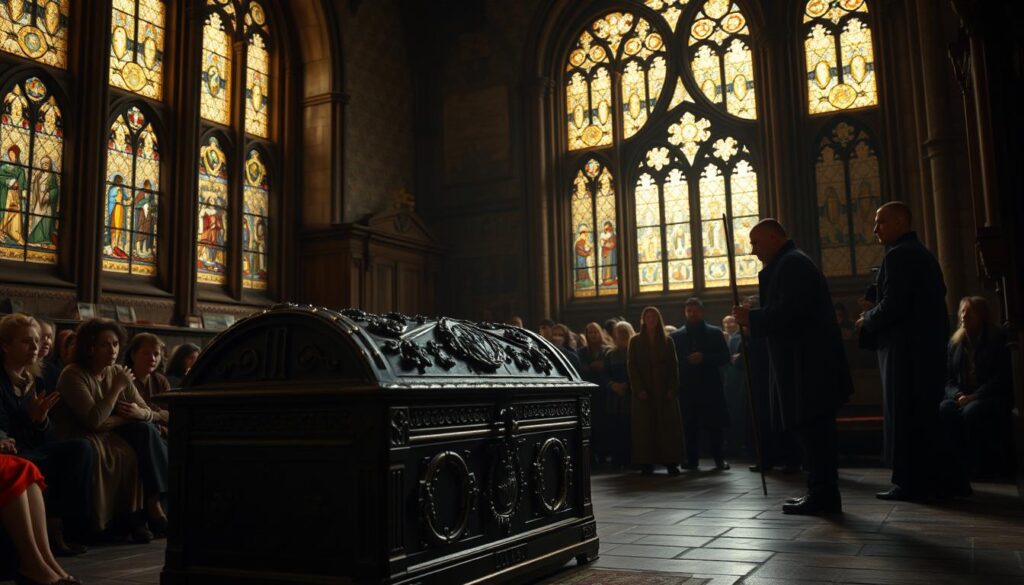
Direct Relationship with God vs. Church Authority
Imagine praying without needing someone else to carry your words. Reformers championed this idea, arguing that beliefs mattered more than rituals. “Why should priests control what God hears?” became a rallying cry across communities.
This perspective dismantled centuries of tradition. Ordinary worshippers began seeing themselves as capable of understanding sacred texts. Church leaders’ special status crumbled as people realized spiritual equality wasn’t just possible—it was essential.
Challenge of the Indulgence System and Its Implications
Nothing exposed institutional flaws like the indulgence system. Wealthy individuals could literally purchase forgiveness slips, while others faced eternal consequences for empty pockets. This practice didn’t just feel unfair—it contradicted core Christian teachings.
When critics called out the Catholic Church, they struck at its financial lifeline. The system relied on fear and exclusivity, but reformers offered a liberating alternative: salvation through personal faith, not coins. This shift didn’t just change theology—it redistributed power from Rome to individual hearts and minds.
You’ll notice how these changes sparked wider societal transformations. As people embraced direct spiritual access, literacy rates rose and local leadership models gained traction. The ripple effects reached far beyond Sunday services, reshaping entire communities.
Key Figures and Their Impact
Two very different men ignited religious revolutions that still influence modern faith. Their actions transformed how millions worshipped while reshaping political landscapes. Let’s explore how a German scholar and an English king became unlikely architects of spiritual change.
Martin Luther and the Ninety-five Theses
In 1517, a university professor nailed his concerns to a church door in Wittenberg. Martin Luther’s 95 Theses questioned payment systems for forgiveness, arguing scripture should guide spiritual life. His ideas spread rapidly through printed pamphlets – Europe’s first viral content.
Luther’s German Bible translation proved revolutionary. For the first time, farmers could read scripture without relying on clergy. This empowerment challenged hierarchies, letting ordinary people form personal connections with sacred texts.
Henry VIII and the Birth of Anglicanism
Across the Channel, England’s king took a different path. When denied a marriage annulment, Henry VIII severed ties with Rome in 1534. His new Church of England blended Catholic rituals with reformed leadership structures.
This hybrid approach kept familiar traditions while shifting power to local control. Royal decrees and printed materials helped cement these changes, showing how political needs could drive religious transformations.
| Reformer | Method | Lasting Change |
|---|---|---|
| Luther | Theological debate | Personal scripture access |
| Henry VIII | Political decree | National church autonomy |
Both men proved ideas could alter history. Whether through academic arguments or royal proclamations, their legacies remind us that change often starts with courageous questions.
Social and Cultural Ramifications
Religious disagreements became the blueprint for entirely new social structures across Europe. In England, debates over spiritual purity split communities into passionate factions. These divisions sparked innovations in governance, education, and daily life that extended far beyond Sunday services.
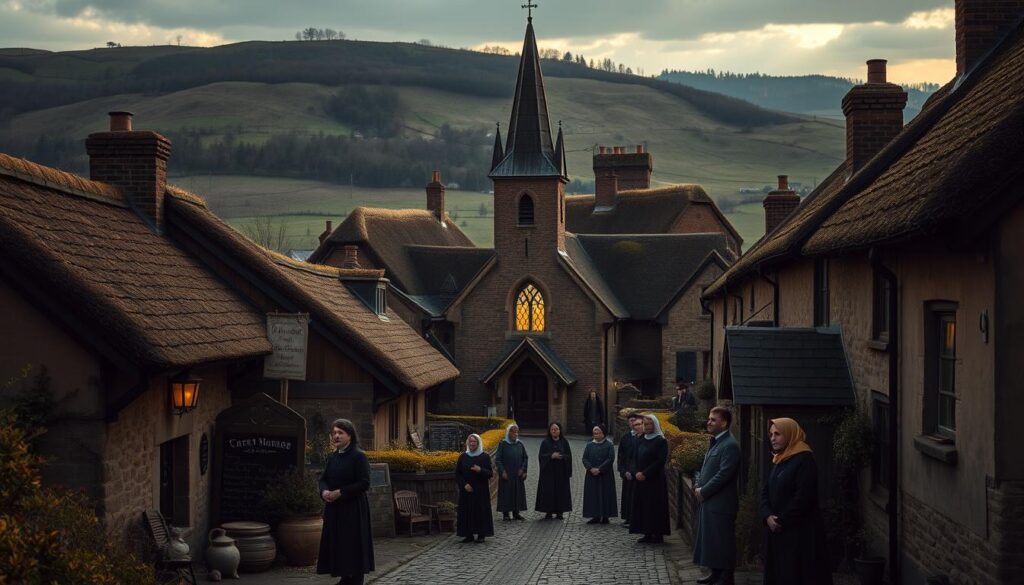
Emergence of Religious Freedom and New Community Structures
Queen Elizabeth’s religious policies created unexpected consequences. While some supported the Church of England, others demanded deeper reforms. This tension birthed two distinct groups:
| Group | Approach | Impact |
|---|---|---|
| Separatists | Left to form new churches | Founded English Separatist Church |
| Nonseparatists | Worked within existing system | Purged Catholic traditions |
The separatists’ radical choice to abandon established churches shocked contemporaries. One member wrote: “We seek not rebellion, but a purer communion with God.” Their actions proved people could create alternative faith networks.
These groups developed unique cultural fingerprints. Separatist communities emphasized:
- Simplified worship services
- Congregational decision-making
- Universal literacy for scripture study
The development of self-governing churches influenced political thought. Over time, the idea that members could shape their spiritual lives paved the way for modern concepts of individual rights.
Economics, Politics, and Media in the Reformation Era
A technological breakthrough reshaped Europe’s spiritual landscape like never before. When Johannes Gutenberg perfected movable-type printing around 1440, he unknowingly lit a fuse that would detonate religious authority structures. This innovation didn’t just change how ideas spread—it rewrote the rules of cultural influence.

Influence of Gutenberg’s Printing Press
Imagine religious texts flowing into towns like water from a broken dam. For the first time, scripture and sermons appeared in German, French, and English rather than Latin. Farmers could now read the Bible during lunch breaks, while pamphlets critiquing the church sold faster than bread at market.
The numbers tell a staggering story:
| Medium | Production Time | Cost |
|---|---|---|
| Handwritten Bible | 3 years | Equivalent to a house |
| Printed Bible | 3 months | Middle-class annual wage |
This affordability created three seismic shifts:
- Local printers became powerful media gatekeepers
- Rulers funded presses to boost national identity
- Religious debates reached kitchen tables
As National Geographic notes, the church initially dismissed printed materials as “paper storms.” But when Luther’s German New Testament sold 5,000 copies in two months, leaders realized they’d lost control of spiritual conversations.
The press also fueled unexpected economic changes. Print shops employed translators, illustrators, and street hawkers. Meanwhile, the Vatican’s indulgence sales plummeted as critiques spread through this new media landscape. What began as a tool for sharing ideas became the engine of permanent cultural transformation.
Lessons from the Past: Modern Religious Relationships and Diversity
Modern religious freedom finds its roots in the turbulent transformations of early Europe. The Protestant Reformation’s emphasis on personal faith directly influenced foundational documents like the U.S. Bill of Rights. Its First Amendment guarantees believers the right to practice their faith without government interference—a radical idea born from past struggles.
Diverse Belief Systems and Their Enduring Legacy
Today’s spiritual landscape reflects centuries of evolving thought sparked by the Protestant Reformation. In the United States, over 300 distinct religious groups coexist, according to National Geographic studies. This mosaic of beliefs stems from early reforms that prioritized individual believers’ conscience over institutional control.
Local congregations now adapt ancient teachings to modern contexts. Many communities blend traditional rituals with contemporary values. This flexibility helps belief systems remain relevant across generations.
The United States serves as a living laboratory for spiritual experimentation. From megachurches to meditation centers, the nation’s approach to religion keeps evolving. These developments prove historical changes weren’t endpoints—they became springboards for humanity’s ongoing relationship with the divine.
FAQ
What was the main conflict between reformers and the Roman Catholic Church?
Reformers challenged practices like the indulgence system, arguing salvation came through faith, not payments. They also emphasized a direct relationship with God, reducing reliance on church authority.
How did Martin Luther influence religious practices?
Luther’s Ninety-five Theses criticized church corruption, sparking debates. His translation of the Bible into German let ordinary people engage with scripture, shifting power away from clergy.
Why did Henry VIII create the Church of England?
Henry sought to annul his marriage, which the pope denied. He broke from Rome, declaring himself head of the Church of England, blending Catholic rituals with reformed ideas.
What role did the printing press play in the Reformation?
A: Gutenberg’s press spread ideas rapidly. Pamphlets, translations, and Luther’s works reached wider audiences, fueling debates and enabling grassroots religious change.
How did early reformers like Jan Hus inspire later movements?
Hus criticized church wealth and authority, urging scripture as the primary guide. His execution in 1415 became a symbol, motivating later leaders to push for systemic reforms.
What lasting impacts did the Reformation have on society?
It encouraged religious freedom and diverse interpretations of faith. Communities formed around shared beliefs, influencing education, governance, and individual rights in Europe and beyond.
How did the indulgence system work before the Reformation?
The church sold indulgences as certificates to reduce punishment for sins. Critics saw this as exploiting believers, arguing salvation couldn’t be bought—a key issue Luther addressed.
Why did some European rulers support Protestant ideas?
Breaking from Rome allowed rulers to seize church lands and wealth. It also let them control religious affairs, strengthening political power while aligning with reformers’ critiques.