What began as scattered missionary efforts has blossomed into one of the most dynamic spiritual movements of our time. Over the past century, communities across this vast continent have embraced a vibrant faith that’s rewriting global religious demographics. From humble beginnings, the story of growth here is nothing short of extraordinary.
Consider this: In 1910, fewer than a million people identified with this tradition. Today, that number exceeds 265 million. While Europe’s religious landscape shrinks—losing 244,000 followers in a single year—African communities gained over 8 million during the same period. By 2050, nearly one-third of the world’s adherents could call this region home.
This transformation isn’t just about numbers. Local cultures have woven ancient traditions into their practice, creating unique expressions of belief. Young leaders are stepping forward, shaping both their communities and global conversations. What emerges is a living, breathing faith that honors its roots while embracing new possibilities.
Key Takeaways
- African Catholic communities grew from under 1 million to 265 million in 110 years
- Projected to represent 32% of global followers by 2050
- Annual growth outpaces European declines by millions
- Cultural blending creates distinct local traditions
- Emerging leadership influences worldwide religious dialogue
Overview of Catholicism’s Growth in Africa
The story of spiritual transformation across the continent reveals unexpected patterns. While European churches empty, vibrant congregations from Lagos to Kinshasa overflow with energy. This shift didn’t happen overnight—it’s rooted in unique historical currents and cultural resilience.
Seeds Planted in Challenging Soil
Early 20th-century missionaries faced complex landscapes. Colonial powers often arrived alongside cross-bearing travelers, creating mixed impressions. Yet local communities gradually shaped foreign traditions into something new. By the 1950s, indigenous leaders began steering the Catholic Church toward self-reliance.
Numbers Tell a Revolutionary Tale
Nigeria’s 30 million faithful set stunning benchmarks—94% attend weekly services compared to Europe’s 5% averages. Five nations here dominate global practice rankings according to World Values Survey data. Consider these contrasts:
- Democratic Republic of Congo added 28 million believers since 1970
- Uganda’s Catholic population tripled in 30 years
- Ghana builds 12 new parishes annually
This explosion reshapes the world’s religious map. Projections suggest African people will constitute one-third of global followers by 2050. The growth isn’t slowing—it’s accelerating as younger generations embrace faith traditions fused with local customs.
Exploring “catholicism in africa”: Demographics & Cultural Impact
Numbers only tell part of the story. Behind every statistic lies a tapestry of lived experiences shaping religious practice. Let’s uncover what makes certain communities thrive while others struggle with participation.
Statistical Trends and Mass Attendance Insights
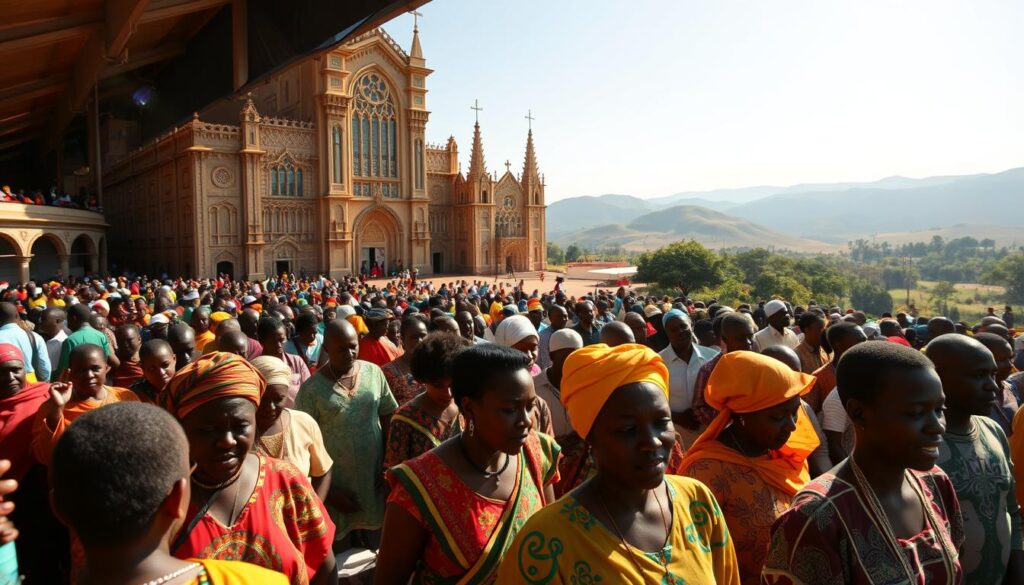
The Democratic Republic of Congo stands out with 37.5 million active worshippers—more than France and Spain combined. Nigeria follows closely, where 94% of its 30.5 million faithful attend weekly services. Compare this to Brazil, where only 8% of 120 million baptized individuals regularly participate.
Key contrasts emerge:
- Uganda’s 28.4 million practitioners outnumber Germany’s entire population of churchgoers
- U.S. Mass attendance (17%) trails far behind most African nations
- Mexico’s 45 million active members still face growth rates half those seen in Kenya
The Role of Local Traditions and Community Values
Why do these numbers matter? Shared rituals bind people beyond Sunday services. In many villages, ancestral respect blends seamlessly with sacramental life. Elders often lead prayer circles, while youth groups organize charity drives.
This fusion creates resilience. Families prioritize worship as communal identity, not just personal choice. As one Ghanaian priest notes, “Our faith walks with us—from market stalls to harvest festivals.” Today, this approach keeps churches vibrant as social hubs and spiritual anchors.
Global Influence, Leadership, and Church Politics
African church leaders are reshaping global religious conversations through bold actions and unified stances. When the Vatican released its 2023 document on blessings, over 20 regional conferences swiftly voiced concerns—a historic show of collective strength. This marked a turning point in how church decisions are shaped worldwide.
African Bishops and Responses to Global Directives
Cardinal Fridolin Ambongo’s January meeting with Pope Francis highlighted Africa’s growing clout. The Pope reportedly felt “deeply troubled” by widespread pushback against the document’s provisions. Through weeks of dialogue, Ambongo and Vatican officials crafted revised guidelines—a process requiring multiple approvals from the pontiff himself.
Reactions to Fiducia Supplicans and Synod Dynamics
This episode revealed three key shifts:
- African leaders now actively shape church policies rather than follow directives
- Cultural values around family unite diverse religious groups across the continent
- Reforms within SECAM amplify regional perspectives in world forums
As Cardinal Ambongo noted, “Our people’s voice matters in Rome now.” This confidence stems from demographic realities—with Pope Francis himself acknowledging Africa’s central role in the world’s religious future. While Western churches debate theology, African leaders focus on pastoral needs rooted in local traditions.
Future Perspectives and Evolving Church Dynamics
A fresh breeze of change sweeps through global religious circles as African communities reimagine their spiritual futures. Pope Francis calls this region the “continent of hope,” where joyful worship meets social transformation. His reforms spark conversations about balancing tradition with local needs.
The Impact of Pope Francis’ Reforms
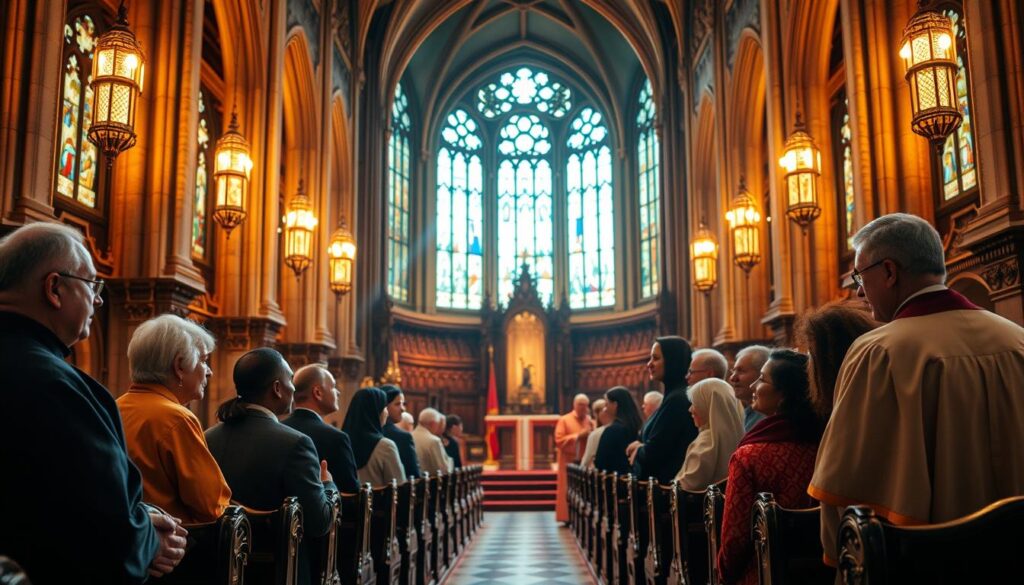
The pontiff’s push for decentralization resonates deeply here. African leaders welcome his vision of a church shaped by grassroots experiences rather than top-down directives. “We’re not just receivers of faith—we’re co-creators,” shares a Kenyan bishop.
This shift shows in practical ways. Youth ministries blend drum-led prayers with climate activism. Women’s groups reinterpret sacramental preparation using traditional storytelling methods. Yet financial ties to Western donors complicate true independence.
Pathways to Autonomy and Cultural Empowerment
Local theologians propose bold solutions:
- Training priests in community development alongside theology
- Creating micro-donations systems to reduce foreign funding
- Designing liturgies that honor ancestral wisdom
These steps could help the world see faith through African eyes. As one Ugandan nun observes, “Our challenges birth new ways of serving—both our people and the universal church.” The road ahead holds both struggle and promise, but the continent’s vibrant spirit lights the way.
Conclusion
As global spiritual landscapes shift, African voices emerge as architects of renewal. The continent’s 18 cardinal-electors now hold historic influence, their collective voice shaping decisions from Kinshasa to Rome. This growth carries profound responsibility—to address modern spiritual hunger while preserving cultural roots.
Communities like the Republic Congo model faith anchored in kinship and reconciliation. “Our strength lies in love that serves without conditions,” reflects a Zambian deacon. Such values draw global attention, offering fresh responses to secularization and isolation.
The Catholic Church faces a pivotal moment. Can it embrace diverse traditions while maintaining unity? African leaders suggest solutions through youth-led initiatives and family-centered ministries. Their approach blends ancient wisdom with modern challenges.
For people worldwide seeking authentic connection, this vibrant faith offers hope. As worship spaces overflow from Nairobi to Lagos, they remind us: spiritual vitality thrives where community comes first. The church’s future may depend on listening to those who’ve mastered this balance.
FAQ
When did the Catholic Church begin to grow rapidly in Africa?
The demographic boom started in the early 20th century, with membership rising from under 2 million in 1910 to over 250 million today. Countries like the Democratic Republic of Congo and Nigeria have seen particularly strong growth.
How do local traditions influence African Catholic practices?
Communities blend faith with cultural values, such as communal worship styles and integrating traditional music. This fusion strengthens the Church’s relevance while honoring ancestral heritage.
What role do African bishops play in global Church decisions?
Leaders like Cardinal Fridolin Ambongo advocate for regional needs, often challenging Vatican policies that clash with local contexts. Their voice highlights issues like poverty and social justice.
How has Pope Francis shaped the Church’s future in Africa?
His reforms, such as emphasizing mercy over dogma, resonate with younger generations. However, debates continue over topics like LGBTQ+ blessings, with many African bishops urging caution.
Why is the Democratic Republic of Congo significant to the Church?
It’s home to one of Africa’s largest Catholic populations, with over 40 million members. The Church there addresses hunger, conflict, and education, serving as a pillar of hope amid instability.
What challenges does the Church face in maintaining growth?
Balancing traditional teachings with modern societal shifts, addressing clergy shortages, and navigating political tensions remain key hurdles. Youth engagement is also critical for sustained growth.
How do African Catholics view Vatican documents like Fiducia Supplicans?
Many bishops and congregations reject directives that conflict with local values, emphasizing the need for cultural sensitivity. This reflects a broader push for autonomy in interpreting doctrine.