What makes us truly human? For centuries, this question has shaped discussions about ethics, spirituality, and our place in the world. At the heart of these conversations lies a powerful idea: the ability to choose our path.
Religious traditions have long emphasized human agency. The Catholic perspective teaches that every person holds the capacity to shape their spiritual journey through decisions. This belief directly impacts how individuals approach concepts like fairness, accountability, and personal growth.
Unlike philosophies that see actions as predetermined, Catholic doctrine highlights genuine choice. Our decisions matter—not just for earthly consequences but for our ultimate relationship with the divine. This understanding creates a framework for concepts like mercy, forgiveness, and spiritual development.
Key Takeaways
- Human choice plays a central role in Catholic spiritual teachings
- Moral decisions impact concepts of justice and personal responsibility
- Catholic teaching rejects strict determinism in human behavior
- Choice interacts with divine grace in spiritual growth
- This doctrine supports teachings about salvation and redemption
Introduction to Free Will in Catholic Thought
From coffee preferences to career paths, our daily decisions quietly shape who we become. Catholic teachings emphasize that this power to choose isn’t random—it’s woven into human nature. “Every person carries a spiritual soul with intellect and decision-making capacity,” notes the Catechism, framing choice as fundamental to our design.
Understanding Choice in Daily Living
Consider how morning routines reveal our priorities. Selecting oatmeal over donuts reflects self-care values. Choosing honesty during tough conversations builds trust. These ordinary moments form the bedrock of spiritual growth.
| Daily Decision | Moral Consideration | Long-Term Impact |
|---|---|---|
| Work ethic | Fairness to colleagues | Professional integrity |
| Family time | Relationship nurturing | Generational legacy |
| Charitable acts | Compassion practice | Community bonds |
Modern Challenges to Personal Agency
Today’s culture often blames circumstances for poor choices. Yet Catholic thought maintains that true freedom requires owning our decisions. As Augustine observed, a “good will” seeks upright living—not perfection, but consistent effort toward wisdom.
This perspective answers modern questions about purpose. When we view choices as gifts rather than burdens, responsibility becomes a path to meaning rather than a weight to carry.
Historical Perspectives on Free Will
Philosophers of old laid the groundwork for understanding moral responsibility. Their ideas shaped how later thinkers viewed human agency. Early debates centered on whether our actions stem from necessity or genuine choice.
Ancient Philosophical Roots
Greek thinkers offered contrasting views about decision-making. The Pythagoreans believed souls carried moral debts across lifetimes. This idea hinted at personal accountability long before modern concepts emerged.
Democritus argued every event followed strict physical laws. “Atoms move by necessity,” he claimed, leaving no space for independent choice. Meanwhile, Socrates linked virtue to knowledge—he thought people naturally choose good when they recognize it.
| Philosopher | Core Belief | View on Choice | Impact |
|---|---|---|---|
| Pythagoreans | Moral accountability through reincarnation | Limited self-direction | Early responsibility model |
| Eleatics | Universal unity | No individual freedom | Deterministic framework |
| Aristotle | Experience over theory | Humans can reject known good | Foundation for voluntary action |
Medieval and Early Christian Contributions
Later scholars built on these foundations. Augustine and others blended Greek ideas with spiritual concepts. They explored how divine plans coexist with human decisions.
This fusion created new ways to view moral growth. It acknowledged both external influences and personal responsibility. These discussions remain vital in ethical debates today.
Free Will in Early Christian Teaching
When spiritual leaders began sharing Jesus’ message, they faced unexpected questions about human agency. How could a loving God judge people’s acts if they lacked true choice? This dilemma reshaped ancient ideas about morality.
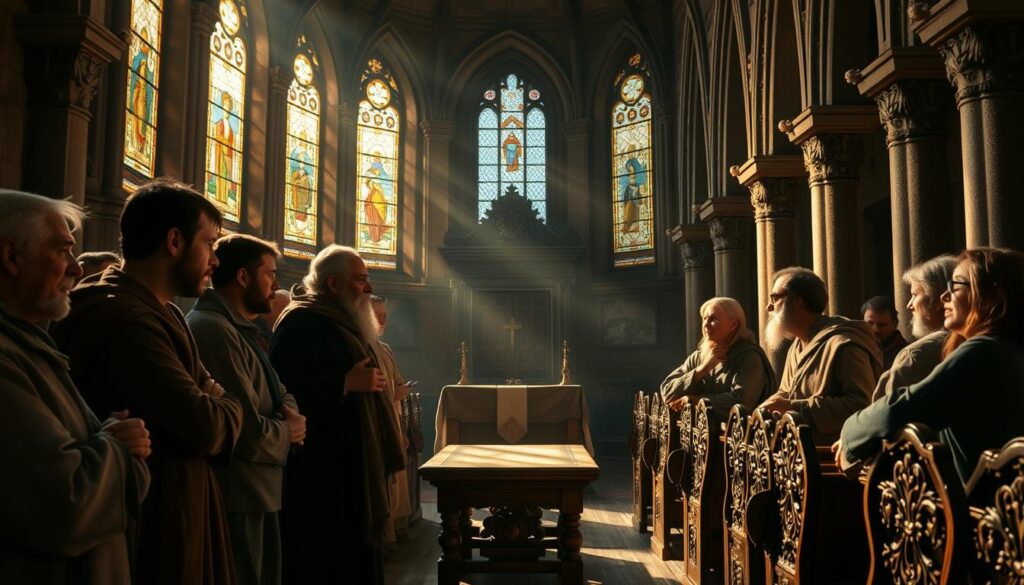
The creation story gave clarity: if man wasn’t designed to choose good, divine commands would be meaningless. As one early bishop noted, “A puppet can’t love—it only mimics motion.” Moral laws required genuine decision-making capacity in the soul.
Original sin complicated matters. The Fall suggested human nature leaned toward evil, yet redemption through grace offered correction. St. Paul’s letters resolved this tension: “Where sin increased, grace abounded all more” (Romans 5:20).
Early communities tested these ideas daily. Could thieves reform? Should repeat offenders face harsher penalties? These cases proved spiritual growth required both personal action and divine help.
This framework became Christianity’s backbone. It honored human dignity while acknowledging our need for guidance—a balance later thinkers would refine for centuries.
St. Augustine and His Vision of Free Will
Imagine a man who once stole pears for fun becoming history’s most influential thinker on moral choice. This was Augustine’s journey—a transformation from reckless living to profound spiritual insight. His experiences shaped groundbreaking ideas about human agency that still guide religious thought today.
https://www.youtube.com/watch?v=ENDOLGqmO5g
The Dance Between Desire and Divine Guidance
Augustine saw true freedom as alignment with higher truths, not unlimited options. He famously described good will as “the earnest effort to live rightly and reach perfect wisdom.” This wasn’t about flawless behavior, but consistently choosing eternal values over fleeting pleasures.
He argued that every choice reflects what we value most. When passions rule, people chase temporary things like fame or wealth. But when guided by grace, the soul seeks lasting goods—love, justice, and connection with the divine.
Shaping Centuries of Spiritual Understanding
Augustine’s debates with rival groups refined core teachings. To Manichaeans denying responsibility, he insisted: “You can choose better.” To Semi-Pelagians overestimating human effort, he countered: “Divine help makes goodness possible.”
His balance of human agency and heavenly assistance became doctrinal bedrock. Later thinkers built on his view that grace empowers rather than overrides our choices—like wind filling a ship’s sails while the captain still steers.
The Scholastic Synthesis: Thomas Aquinas and Beyond
Medieval thinkers faced a puzzle: How does divine guidance work alongside human decision-making? St. Thomas Aquinas answered by blending philosophy with spiritual insight. His concept of rational appetite reshaped understandings of moral agency—the idea that our choices flow from both desire and reason.

Thomist Contributions on Will and Grace
Aquinas saw the will as our “hunger for goodness,” always seeking fulfillment but never fully satisfied. While man naturally desires happiness, we freely pick between limited options. As he wrote: “The intellect proposes, but the will disposes.”
| Concept | Key Idea | Role of Grace | View of Freedom |
|---|---|---|---|
| Thomism | Divine guidance moves us toward good | Prepares the soul | Cooperates with grace |
| Molinism | God knows all possible choices | Works alongside decisions | Preserves self-direction |
Molinist Perspectives on Conditional Future Events
Luis de Molina later proposed scientia media—God’s knowledge of what we’d choose in any situation. This “middle knowledge” respects human freedom while affirming divine oversight. Imagine a chef who knows exactly how guests will season their soup without controlling their hands.
Both schools agree: Our power to act matters. Whether through Thomist “premotion” or Molinist collaboration, they show how grace elevates rather than erases human agency. As Aquinas taught, “The end of every man lies in his own hands—and God’s.”
catholicism free will in Modern and Contemporary Thought
In today’s world of curated feeds and AI recommendations, maintaining authentic agency feels increasingly complex. Catholic thought offers a compass for modern individuals seeking purpose amid competing influences. This ancient wisdom meets cutting-edge questions about what it means to choose well.
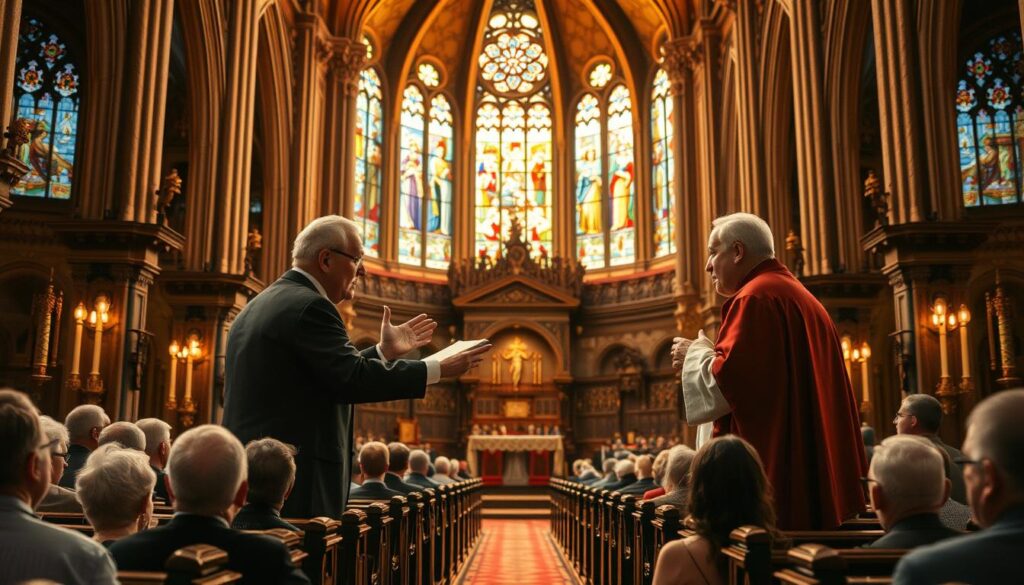
Personal Responsibility in a Post-Modern World
Many now view freedom as unlimited personal expression. Yet Catholic teaching frames true liberty as choosing goods that uplift both self and community. A young professional might ask: Does my career path serve only me, or contribute to society’s flourishing?
| Cultural View | Catholic Perspective | Practical Outcome |
|---|---|---|
| Autonomy as ultimate goal | Freedom ordered toward truth | Balanced decision-making |
| Relativism in ethics | Moral absolutes guide choices | Clearer life direction |
| Isolation in decisions | Community shapes responsibility | Stronger social bonds |
The Ongoing Theological Debate
Recent neuroscience discoveries have sparked fresh discussions. Can brain chemistry explain all choices? Catholic thinkers respond: Science reveals how we decide, but not why we value certain outcomes over others.
The interplay between predestination and human agency remains vital. As one theologian notes: “God writes our story with us, not for us.” This partnership model preserves both divine sovereignty and human dignity.
Modern applications abound. From environmental policies to end-of-life care, Catholic principles help people navigate ethical gray areas. The Church’s teachings continue evolving while maintaining core truths about man‘s role in shaping his life journey.
Protestant Reformers and the Challenge to Free Will
The 16th century shook religious foundations with bold new ideas about human agency. Leaders like Martin Luther and John Calvin argued divine control leaves no room for self-directed choices. Their teachings sparked debates that still shape Christian thought today.
Luther’s Determinism versus Free Will
Luther’s writings dismissed autonomous decision-making. In “De Servo Arbitrio,” he claimed man lacks power to choose good or evil, comparing humans to horses ridden by God or Satan. Every action, he insisted, flows from divine necessity.
Calvin expanded this view, teaching righteous acts only occur when grace compels them. He believed God wills all outcomes, making human effort irrelevant. This strict predestination framework erased moral cooperation.
The Council of Trent countered by affirming human capacity to accept divine help. While grace starts spiritual growth, they declared people retain freedom to partner in salvation throughout time. This balanced divine sovereignty with personal responsibility.
FAQ
How does Catholic teaching define human freedom?
Human freedom is seen as the power to act deliberately, guided by reason and moral responsibility. It allows individuals to choose good or evil, shaping their relationship with God and others through conscious decisions.
How do grace and human choice coexist in Catholic theology?
Divine grace empowers people to pursue holiness, but it doesn’t override personal agency. The Church teaches that God’s help and human effort work together, avoiding both rigid determinism and the idea that salvation is earned through works alone.
What role did St. Augustine play in shaping views on moral responsibility?
Augustine emphasized that sin weakens humanity’s ability to choose good without divine aid. His writings clarified how human weakness and God’s mercy interact, influencing doctrines on original sin and redemption.
How did Thomas Aquinas integrate philosophy with theology on this topic?
Aquinas blended Aristotle’s ideas with Christian thought, framing freedom as the intellect guiding the will toward truth. He stressed that virtue and grace refine choices, helping align desires with eternal happiness.
What is Molinism, and how does it address divine knowledge?
Proposed by Luis de Molina, this theory suggests God knows how individuals would freely act in any circumstance. It balances divine sovereignty with human liberty, showing how God’s plan incorporates our decisions without forcing them.
How do modern Catholics apply free will to ethical challenges?
Issues like social justice, bioethics, and environmental stewardship require using freedom to honor human dignity. The Church encourages discernment, prayer, and community support to navigate complex moral landscapes.
How does Catholic teaching differ from Protestant views on human agency?
While reformers like Martin Luther emphasized predestination, Catholicism rejects fatalism. The Council of Trent affirmed that cooperation with grace is possible, preserving accountability for one’s actions.
Why is free will essential for understanding love and justice?
Authentic love requires voluntary self-giving, not coercion. Similarly, justice assumes people can be held responsible for their actions, making freedom foundational to moral order and personal growth.
Can human desires ever fully align with divine purpose?
Through spiritual growth and sacraments like confession and communion, Catholics believe desires can be purified. This process, while gradual, helps individuals embrace goodness more freely and wholeheartedly.