Many seek clarity about spiritual traditions that shape lives and communities. This guide addresses common curiosities surrounding one of the world’s oldest belief systems, drawing from centuries of wisdom and modern insights. Like conversations between friends, we’ll explore topics that matter to those nurturing their spiritual journey.
Jesus often used questions to deepen understanding—a method still valuable today. Our approach mirrors this by blending official teachings, scriptural context, and respectful dialogue. Whether you’re new to these discussions or deepening your knowledge, you’ll find balanced perspectives here.
We’ve gathered insights from trusted sources like Catholic Answers, ensuring accuracy while honoring diverse viewpoints. Topics range from everyday practices to profound mysteries of belief. Each response aims to reflect both the richness and nuance of tradition.
You’ll discover answers that respect your curiosity without oversimplifying complex ideas. Our goal? To create space for reflection while addressing misconceptions with care. Let’s begin this exploration together.
Key Takeaways
- Clear explanations of widely discussed spiritual topics
- Answers rooted in historical teachings and modern context
- Respectful tone that welcomes diverse perspectives
- Insights from trusted theological resources
- Balanced approach to complex subjects
Exploring Biblical Insights Behind Catholicism Questions
Curiosity opens doors to deeper understanding. Throughout the Gospels, Jesus Christ modeled this by asking thought-provoking questions rather than giving easy answers. His approach invites us to examine our beliefs and traditions with fresh eyes.
Jesus’ Method of Asking Hard Questions
When religious leaders prioritized rules over relationships, Jesus challenged them directly. To Nicodemus, a respected teacher, He asked: “Are you Israel’s teacher and do not understand these things?” (John 3:10). This exposed gaps between knowledge and true wisdom.
Three key questions reveal His strategy:
| Question | Audience | Purpose |
|---|---|---|
| “Why do you break God’s command for tradition?” | Pharisees | Challenge priorities |
| “Who do you say I am?” | Peter | Clarify identity |
| “If I speak truth, why don’t you believe?” | Crowds | Test sincerity |
Scriptural Comparisons of Faith and Tradition
Jesus honored scripture while questioning practices that missed its heart. His dialogue with the Pharisees in Matthew 15 shows how traditions should serve faith, not replace it. The apostles later carried this balance forward, teaching truth while respecting cultural context.
Modern believers face similar challenges. Like first-century followers, we must ask: “Does this practice draw us closer to God’s heart?” Regular scripture study helps answer this, just as Jesus used God’s Word to guide His teachings.
The Role of Sacraments and Church Traditions
Sacred rituals bridge earthly life and divine connection. For many believers, these practices serve as visible encounters with spiritual realities. Bishop Erik Pohlmeier describes sacraments as moments when “God intervenes to dispense the very life of God into the soul.” This understanding shapes how communities approach worship and personal growth.
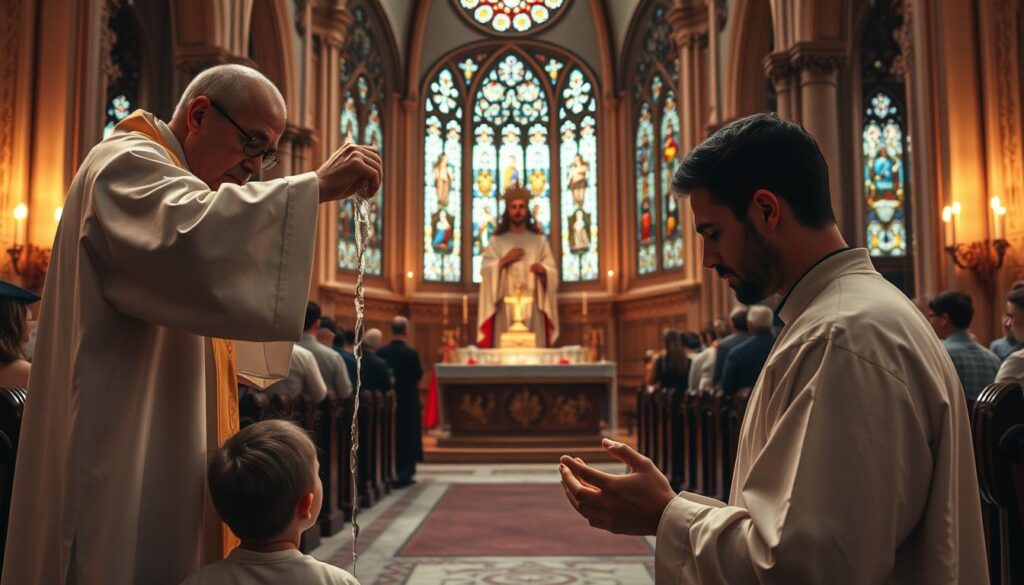
Baptism, Eucharist, and Their Theological Implications
Catholic teaching views baptism as more than symbolic. It teaches this sacrament “purifies all sins” and initiates believers into new life through Christ (CCC 1257). Infant baptism reflects this transformative view, contrasting with Protestant emphasis on personal faith declarations.
The Eucharist holds particular significance. Catholics believe in transubstantiation—Christ’s real presence in bread and wine. This mirrors Jesus’ words: “This is my body… my blood“ (Matthew 26:26-28). Other Christian traditions often see communion as symbolic remembrance.
Comparing Sacramental Practices with Biblical Teachings
Seven sacraments structure Catholic spiritual life, while most Protestants recognize two. This difference stems from varying interpretations of scripture and tradition. The holy spirit‘s role also differs—some see sacraments as channels of grace, others as confirmations of existing faith.
Key contrasts emerge in salvation theology. Ephesians 2:8-9 emphasizes faith over works, yet Catholic practice sees sacraments as means of grace supporting salvation. This balance between divine gift and human response continues to spark thoughtful dialogue among believers.
Questioning Church Authority and Religious Leadership
Understanding leadership structures helps clarify spiritual foundations. Many wonder how religious authority developed over centuries and whether it aligns with early Christian models. Let’s explore two key areas where these discussions often focus.
The Debate on Priests and Apostolic Succession
Catholic teaching states bishops continue the apostles’ mission through sacramental ordination. The Catechism declares:
“Whoever listens to them is listening to Christ” (CCC 862)
However, Acts 1:21-26 sets specific criteria for apostleship:
| Biblical Requirement | Modern Practice |
|---|---|
| Witnessed Jesus’ ministry from baptism to ascension | Bishops ordained through succession |
| Chosen directly by Christ or original apostles | Appointed through hierarchical processes |
This difference fuels ongoing dialogue. While early apostles like Matthias and Paul met these standards, later leaders adopted different selection methods.
Papal Infallibility Versus Scriptural Truth
Catholics believe the pope speaks without error on faith and morals when making official declarations. Bishop Pohlmeier explains this power stems from Jesus’ words to Peter: “I will give you the keys of the kingdom” (Matthew 16:19).
Three key points clarify this concept:
- Applies only to definitive teachings
- Requires agreement with scripture
- Differs from personal opinions
Many Protestant traditions prioritize individual Bible study over church authority. This contrast shows how communities balance tradition with personal truth-seeking in different ways.
Understanding Grace, Faith, and Salvation in Scripture
Spiritual growth often centers on understanding divine gifts. Ephesians 2:8-9 states: “For by grace you have been saved through faith… not from works.” This passage sparks rich discussions about how eternal life is received—through God’s gift alone or with human cooperation.
The Gospel of Grace Through Faith in Jesus Christ
Protestant teachings emphasize salvation as a one-time gift through faith in Jesus Christ. Catholics agree grace initiates redemption but view sacraments like baptism as ongoing channels for sanctifying grace. Bishop Pohlmeier clarifies:
“Salvation restores God’s grace—a gift we can’t earn, but must nurture.”
Key differences emerge in practice:
| Belief | Salvation Process | Key Verse |
|---|---|---|
| Protestant | Faith alone secures salvation | Romans 10:9 |
| Catholic | Grace through sacraments + works | James 2:24 |
Infant baptism illustrates this contrast. While Catholics see it cleansing original sin, many Protestants reserve baptism for believers old enough to profess personal faith. Both traditions agree Christ’s sacrifice offers hope—but differ on how that hope becomes certain.
Assurance of salvation remains a tender topic. Some find comfort in God’s promises; others stress the need to persevere. As 1 Corinthians 15:10 reminds us: “His grace toward me was not in vain.”
Diverse Perspectives on Catholic Doctrines and Practices
The word “Catholic” means universal—a truth shaping how this religion engages the world. Bishop Pohlmeier emphasizes:
“Jesus came to save all people, inviting everyone to share divine grace.”
This vision fuels thecatholic church‘s mission to welcome seekers from every background through sacraments and service.
Evaluating Doctrinal Differences and Misconceptions
Many religion scholars note confusion about Mass. Catholics believe each celebration makes Christ’s sacrifice present again—over 200,000 times daily worldwide. Critics cite Hebrews 9:28, arguing Jesus’ offering happened “once for all.” The Catechism clarifies this isn’t a new sacrifice but a participation in His eternal gift (CCC 1371-1374).
Saints’ veneration often gets mislabeled as worship. Catholics ask saints to pray with them, reserving adoration for God alone. Similarly, Mary’s role as intercessor differs from Protestant views. As Bishop Pohlmeier notes, “Honoring Mary magnifies her Son’s work—not replaces it.”
Scripture and Tradition form twin pillars in catholic faith. While Protestants prioritize Sola Scriptura, Catholics view Tradition as God’s ongoing guidance. This balance helps the catholic church address modern people while honoring ancient wisdom.
Addressing Common Misconceptions about catholicism questions
Misunderstandings often arise when ancient traditions meet modern interpretations. Let’s clarify three frequent points of confusion using historical context and scriptural insights.
Honor Versus Worship: Clearing the Air
Catholics distinguish between latria (worship reserved for God) and dulia (veneration given to saints). This mirrors how we honor exemplary family members while reserving ultimate devotion for the divine. Statues serve as reminders of holy lives, not objects of adoration.
| Practice | Purpose | Biblical Parallel |
|---|---|---|
| Praying to saints | Requesting heavenly intercession | Revelation 5:8 (prayers of saints) |
| Rosary repetitions | Meditative focus tool | Psalm 136 (liturgical refrain) |
Ancient Roots in Modern Practice
The rosary’s repeated prayers aim to create sacred rhythm, not empty words. As Jesus taught in Matthew 6:7, heartfelt intent matters more than word count. Early Christians used scripture study and patterned prayers to deepen their connection to God’s kingdom.
Purgatory teachings developed from scriptural hints about purification (1 Corinthians 3:15). While not explicitly named in the Bible, this concept reflects the belief that God perfects souls before they enter heaven’s fullness. Such traditions adapt timeless truths to answer every day spiritual needs.
Conclusion
Faith journeys often begin with honest inquiry, leading us toward enduring truths. This exploration of sacred traditions reveals how sacraments like the Eucharist—Christ’s body and blood—connect believers to divine power daily. As Jesus taught, “The word I spoke is what will judge on the last day” (John 12:48), reminding us that scriptural truth anchors spiritual growth.
The Catechism of the Catholic Church serves as a compass, balancing ancient practices with modern life. Through baptism, communion, and other sacraments, communities experience grace that shapes their work and worship. These moments invite reflection: Does our faith deepen relationships with others and the sacred?
Every generation faces new questions about religion’s role in changing times. By returning to scripture while honoring tradition, we find ways to live out convictions with integrity. Whether in prayer or service, each step forward strengthens our shared journey toward understanding.
FAQ
How does the Catholic Church reconcile tradition with biblical teachings?
The Church views Sacred Tradition and Scripture as complementary, both flowing from God’s revelation. Practices like the Eucharist and apostolic succession are rooted in both the Bible (e.g., John 6:53-56) and early Christian traditions passed down through generations.
Why do Catholics emphasize sacraments like Baptism and the Eucharist?
These sacraments are seen as visible signs of God’s grace. Baptism, for instance, reflects Jesus’ command to “make disciples of all nations” (Matthew 28:19), while the Eucharist connects to His words at the Last Supper: “This is my body” (Luke 22:19).
What is the basis for papal authority in Catholicism?
The Church traces this to Jesus naming Peter the “rock” of His Church (Matthew 16:18). Apostolic succession ensures bishops, including the Pope, continue the apostles’ mission. Papal infallibility applies only to formal teachings on faith/morals, not personal opinions.
How does Catholic teaching on salvation differ from sola fide?
While affirming salvation through Christ alone, Catholics believe faith must be “working through love” (Galatians 5:6). Good works flow from grace, not as earning salvation but as cooperating with God’s gift, as James 2:26 states: “Faith without works is dead.”
Are saints and Mary worshipped in Catholic practice?
No—veneration (honor) differs from worship (latria), which is reserved for God. Asking saints for intercession mirrors Paul’s request for prayers (Romans 15:30). Mary’s role as Jesus’ mother is honored, reflecting her “yes” to God’s plan (Luke 1:38).
How does the Church address modern ethical issues not in Scripture?
Teachings evolve through a framework of natural law and consistent moral principles. For example, bioethics are guided by respect for life (Psalm 139:13-14) and dignity, while social doctrines draw from Jesus’ call to serve “the least of these” (Matthew 25:40).
Why confess sins to a priest instead of directly to God?
The sacrament of Reconciliation reflects Jesus granting apostles authority to forgive sins (John 20:23). Confession offers tangible assurance of mercy and aligns with James 5:16: “Confess your sins to one another.” It’s a communal, not private, act of healing.