For over 500 years, sacred songs have shaped worship practices that unite communities in faith and celebration. These timeless melodies carry stories of hope, resilience, and devotion, offering more than just music—they create bridges between generations and deepen spiritual connections.
From Sunday services to personal reflection, these compositions anchor moments of praise and prayer. Many believers find their hearts stirred by lyrics that express joy, sorrow, and gratitude—emotions that bind people across cultures and eras.
This guide explores beloved classics and modern adaptations that continue to inspire. You’ll discover how historical roots meet today’s creative expressions, along with practical ways to weave these treasures into daily life. Whether you’ve grown up with these songs or are exploring them for the first time, their power to comfort and uplift remains unmatched.
Key Takeaways
- Centuries-old traditions continue to shape modern worship experiences
- Sacred music serves as both communal celebration and personal reflection
- Lyrics often blend theological depth with emotional resonance
- Historical context enriches understanding of familiar melodies
- Practical applications help integrate spiritual songs into daily routines
- Both lifelong adherents and newcomers find value in these compositions
Introduction: Embracing the Joy of Lutheran Hymns
There’s something powerful about voices joining together in harmony. For many, these songs aren’t just melodies—they’re vessels carrying hope through life’s storms. One believer shared, “When my words ran dry during chemotherapy, the verses I’d sung for years became my prayer.”
More Than Sunday Morning Music
Communal singing creates bonds that transcend age and background. A grandmother and teenager might find common ground through a baptismal hymn they both love. These moments turn sanctuaries into spaces where people truly see one another.
Timeless Truths for Modern Hearts
Why do centuries-old compositions still resonate? Their lyrics distill complex theology into relatable joy and struggle. As one worship leader noted, “They give voice to what we feel but struggle to express.” From weddings to funerals, these songs mark life’s sacred milestones.
Newcomers often discover surprising relevance. A college student recently confessed, “I thought these were just my grandma’s tunes—until I needed their praise-filled promises during finals week.” Whether whispered alone or belted in pews, this music meets us where we are.
Historical Roots of Lutheran Hymns
The foundation of worship music we cherish today was built by visionaries who blended artistry with devotion. Their work transformed simple words into profound expressions of faith, creating templates still used centuries later.
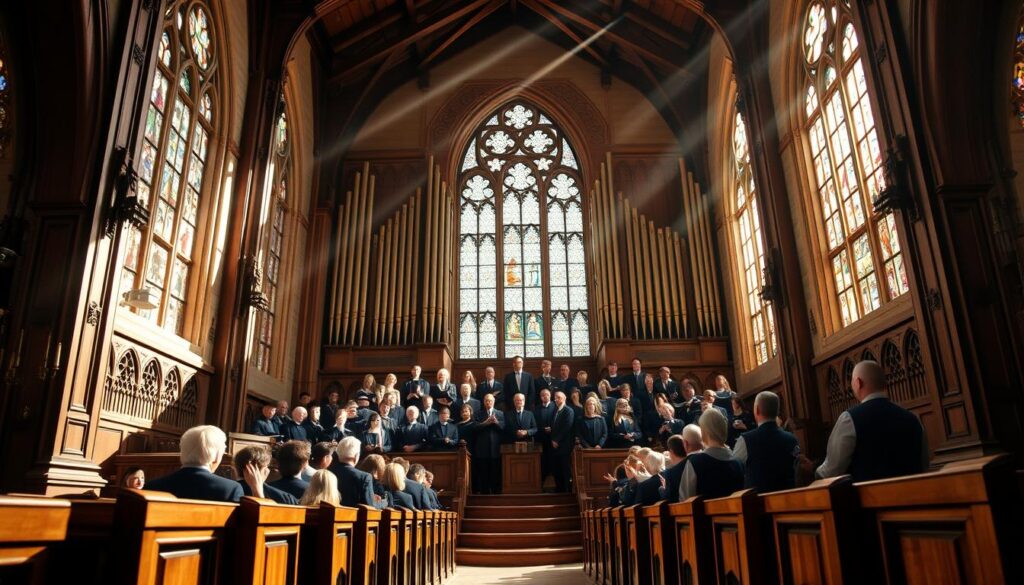
Bach’s Revolutionary Harmonizations
Johann Sebastian Bach’s name remains synonymous with sacred composition. His intricate arrangements gave new depth to congregational singing, weaving theological truths into every chord. Scholar Daniel Zager observes:
“Bach’s music reflects the meaning inherent in the text like no other composer.”
This approach let worshippers experience doctrine through melody. The Lutheran church became a laboratory where complex ideas met accessible tunes.
Martin Luther’s Lasting Impact
Centuries before Bach, Martin Luther planted seeds for this musical revolution. He crafted hymn lyrics in common language so everyone could participate. One revolutionary practice? Replacing Latin words with local dialects during services.
Luther’s compositions balanced poetic beauty with clear biblical text. This dual focus shaped worship patterns still guiding the Lutheran church today. Modern versions of his works keep his name alive in sanctuaries worldwide.
Inspiring Christmas and Transfiguration Hymns
Seasonal songs carry unique power to connect worshippers with sacred stories. Two compositions stand out for their ability to transport singers from Bethlehem’s fields to a holy mountain peak.
Celebrating the Season with “Break Forth, O Beauteous Heavenly Light”
Three creative minds shaped this Christmas treasure. Johann Rist’s text from Luke 2:8-18 captures the angel’s joyful announcement to shepherds. Johann Schop’s melody dances like starlight, while Bach’s harmonies deepen the wonder. Together, they create musical magic that still hails Christ’s birth each December.
Experiencing Transformation in ‘Tis Good, Lord, to Be Here
Joseph A. Robinson wrote this rare 1888 Transfiguration hymn when such songs were scarce. His text mirrors Peter’s awe on Mount Tabor (Luke 9:28-36). Bach’s tune lifts Robinson’s words beyond ordinary time, making divine encounters feel immediate. One choir director notes:
“The rising melody mirrors our longing to stay in sacred moments.”
| Feature | “Break Forth…” | “‘Tis Good…” |
|---|---|---|
| Biblical Source | Luke 2:8-18 (shepherds) | Luke 9:28-36 (Transfiguration) |
| Composer Team | Rist, Schop, Bach | Robinson, Bach |
| Theological Focus | Incarnation | Divine Revelation |
Both works prove how hymn writers across centuries have transformed scripture into song. Their creations continue shaping worship during Christianity’s most cherished seasons.
The Power of Isorhythmic Hymns
Musical patterns shape how we experience sacred texts. Isorhythmic arrangements create flowing soundscapes that help hearts absorb profound truths. Let’s explore two classics that demonstrate this power.
Exploring “O Sacred Head, Now Wounded”
This hymn appears twice in modern worship books. The isorhythmic version (LSB 449) flows like a gentle stream compared to the rhythmic setting (LSB 450). Bach’s smooth phrasing highlights words about Christ’s sacrifice. A music director explains:
“The equal note lengths let congregations sit with each truth before moving forward.”
This approach turns singing into meditation. Notes cradle the text rather than push it ahead.
Understanding the Comforting Cadence of “A Mighty Fortress Is Our God”
Martin Luther’s famous work surprises many. Though called a battle anthem today, its 1529 publication labeled it a “hymn of comfort.” Bach later wrapped Luther’s melody in warm harmonies. Together, they create musical armor against life’s storms.
| Feature | “O Sacred Head” | “Mighty Fortress” |
|---|---|---|
| Musical Style | Isorhythmic flow | Bold, steady meter |
| Composer Focus | Textual reflection | Thematic comfort |
| Historical Context | Passion devotion | Reformation trials |
Both pieces show how musical choices amplify meaning. Whether through flowing lines or sturdy rhythms, they offer fortress god-level strength to weary singers. Their power lies not in complexity, but in meeting human needs through artful simplicity.
Heartfelt Testimonies and Personal Connections
Sacred music often becomes the soundtrack to our most cherished memories. Two stories reveal how melodies intertwine with life’s joys and sorrows, creating bonds that outlast time itself.
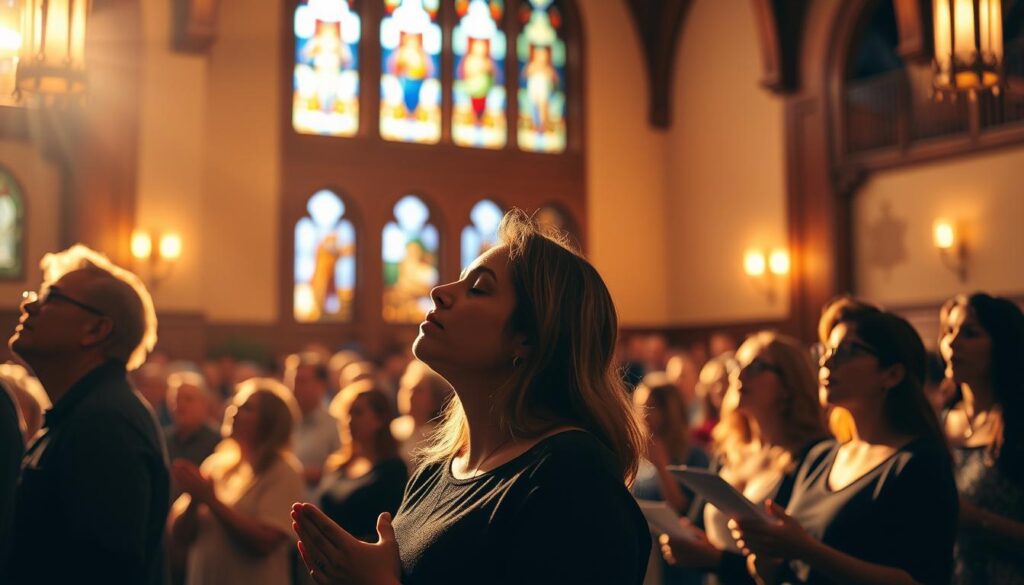
Memorable Moments from “God Be With You Till We Meet Again”
Erica Bryer’s voice softens as she recalls Sunday dinners with her grandparents. “This hymn meant family time—warm hugs and shared pies,” says the Minneapolis church member. When her grandfather passed, the song transformed. “The words I’d sung carefree now felt like prayers catching in my throat.”
“Memories rush back with waves of emotion, yet the words remain a comfort.”
The Intimate Story Behind “O Jesus, I Have Promised”
Larry Herrold stood shivering in Westminster Abbey, far from his Pennsylvania home. As strangers sang “Oh, let me see Thy footmarks,” the hymn dissolved his loneliness. “Those words became a roadmap during my darkest time,” he shares. “My faith found footing in foreign soil.”
“It wasn’t just music—it was life speaking to life.”
| Theme | “God Be With You…” | “O Jesus…” |
|---|---|---|
| Emotional Anchor | Family bonds | Personal calling |
| Key Strength | Comfort in loss | Guidance in uncertainty |
| Global Reach | Midwest family home | English cathedral |
These accounts show how sacred songs become companions through life’s twists. Whether mourning at a kitchen table or finding courage overseas, they carry heart-truths that span the world.
Contemporary Voices and Modern Interpretations
New perspectives keep ancient songs vibrant in today’s worship spaces. Modern people find creative ways to connect with traditional melodies, blending respect for heritage with personal flair.
How Modern Testimonies Enrich Hymn Tradition
Mike Russo from Family of God Church embodies this fresh approach. His favorite hymn, “I Am the Bread of Life,” challenges singers with unexpected pauses and a wide vocal range. “It’s like musical karaoke night,” he laughs. “Most people drop out by verse three, leaving me to carry the melody.”
“After 20 years, I know exactly where to stand so my voice bounces off the balcony. It turns Sunday morning into my personal music ministry.”
This playful honesty reveals how church communities today value authenticity over perfection. Challenging songs create opportunities for passionate members to lead. Their enthusiasm often sparks others to join in, turning tricky phrases into shared triumphs.
Modern worshipers approach these moments with humor and heart. They’re less concerned about hitting every note than about experiencing joy together. This shift helps ancient texts feel alive and accessible to people navigating 21st-century life.
Worship Service Arrangements That Elevate the Spirit
Thoughtful song selection shapes meaningful gatherings. The right melodies act as spiritual bookends, framing moments of reflection and sending hearts outward with purpose.
First Notes That Prepare the Heart
Opening selections like “God Himself Is Present” create sacred space. These melodies quiet distractions, helping worshippers transition from daily life to divine connection. “Open Now Thy Gates of Beauty” invites anticipation, its lyrics echoing ancient psalms of approach.
Final Chords That Launch Mission
Closing hymns equip communities for service. “Guide Me, O Thou Great Jehovah” transforms pews into launching pads. One music director notes: “These songs aren’t endings—they’re commissioning anthems.”
The Lutheran church’s hymnal organizes these moments with care. Seasonal categories like Advent or Easter ensure praise aligns with liturgical rhythms. Whether seeking true God-centered focus or communal praise, every note serves a purpose.
FAQ
How did Bach shape the sound of traditional hymns?
Johann Sebastian Bach transformed hymnody by blending intricate harmonies with deep theological themes. His arrangements, like those in “O Sacred Head, Now Wounded,” added emotional depth, making ancient texts feel alive for worshippers.
What makes “A Mighty Fortress Is Our God” timeless?
Written by Martin Luther, this hymn combines bold lyrics with a strong, steady rhythm. Its message of divine strength during life’s battles resonates across generations, offering hope in uncertain times.
Which hymns are popular during Christmas services?
A: “Break Forth, O Beauteous Heavenly Light” is a cherished choice. Its joyful melody and vivid imagery of Christ’s birth create a festive yet reverent atmosphere for seasonal celebrations.
Can older hymns still connect with modern audiences?
Absolutely! Updated arrangements and fresh testimonies breathe new life into classics. For example, “God Be With You Till We Meet Again” remains a favorite due to its universal themes of hope and community.
How do hymns enhance worship services today?
Thoughtfully curated selections, like opening with uplifting melodies or closing with reflective tunes, guide congregational focus. Many churches use playlists from trusted sources to balance tradition and relevance.
Why are stories behind hymns like “O Jesus, I Have Promised” meaningful?
Personal narratives, such as a parent dedicating this hymn at a child’s baptism, highlight its role in marking spiritual milestones. Such connections deepen the song’s emotional impact in daily faith journeys.
What role does rhythm play in hymns like “Tis Good, Lord, to Be Here”?
Isorhythmic patterns create a meditative flow, helping worshippers reflect on transformative moments, such as the Transfiguration. The steady cadence fosters both contemplation and communal unity.