Paris shines as a hub of spiritual diversity, blending centuries-old traditions with modern expressions of faith. While famous for its cathedrals, the city also boasts remarkable Protestant congregations that welcome global visitors. These sacred spaces combine stunning architecture with meaningful community connections.
From Anglican chapels to Presbyterian assemblies, these institutions reflect a vibrant mix of worship styles. Many feature English-language services, making them ideal for travelers and expats. Their programs range from Sunday schools to adult discussion groups, fostering connections beyond weekly gatherings.
What makes these venues special? Imagine singing hymns in a 19th-century sanctuary or joining a coffee hour in a sunlit courtyard. Several locations host concerts and cultural events, inviting people to engage with their heritage. Whether you prefer liturgical services or contemporary praise music, there’s a place for every spiritual seeker.
Families appreciate childcare options and youth activities, while history buffs marvel at Gothic arches and Reformation-era artifacts. Most communities extend warm welcomes regardless of background – you’ll find open doors and multilingual resources.
Key Takeaways
- Paris offers diverse Protestant denominations including Anglican, Presbyterian, and Reformed traditions
- Many congregations provide services in English and other languages for international visitors
- Architectural styles range from historic stone buildings to modern worship spaces
- Community programs extend beyond Sunday services with family-friendly activities
- Several locations combine spiritual practices with cultural events and historical exhibits
Discovering Paris’ Protestant Heritage
Stone walls across the city hold stories of faith surviving political storms. The French Revolution reshaped spiritual landscapes, turning sacred spaces into symbols of resilience. Many temples you see today began as Catholic chapels before adapting to new purposes.
When History Changed Worship Spaces
In 1793, revolutionaries ransacked the Oratoire du Louvre – a building started in 1621 as a Catholic church. Its marble altars became storage for theater props. Napoleon later gifted it to reformers in 1811, creating a worship hub that still hosts services today.
Architecture Tells Two Stories
Temple Sainte-Marie shows how structures evolve. Built as a convent chapel in the 1630s, it became national property during revolutionary years. The government transferred it to Protestant groups in 1803. Its Gothic arches now frame hymn books instead of rosaries.
| Temple | Original Use | Revolution Impact | Current Role |
|---|---|---|---|
| Oratoire du Louvre | Catholic church (1621) | Became storage (1793) | Reformed worship space |
| Sainte-Marie | Convent chapel (1632) | Seized (1790) | Protestant assembly |
| Charenton | First legal temple (1606) | Edict restrictions lifted | Historic landmark |
These transformations didn’t just change buildings – they shifted France’s approach to religious freedom. The 1787 Edict of Toleration finally ended centuries of persecution, letting communities worship openly.
Community and Worship at protestant churches in paris
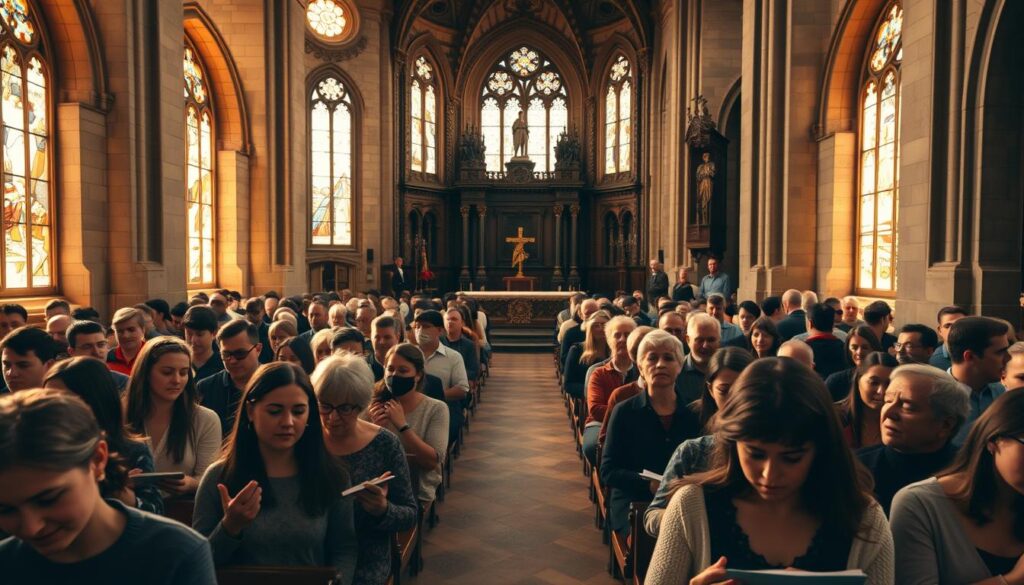
Global connections thrive within Paris’ spiritual spaces, where language barriers dissolve through shared faith. English-speaking congregations serve as cultural bridges, blending heritage with modern fellowship. Visitors often find both comfort and discovery in these welcoming environments.
English-speaking Congregations and Cultural Integration
Sunday mornings buzz with diverse accents at St. Michael’s, where traditional hymns meet electric guitars. At St. George’s, choir robes sway beside volunteers packing meals for homeless neighbors. These groups prove worship styles vary widely while maintaining core values.
Cultural integration shines through coffee hours featuring Moroccan pastries and Korean bibimbap. “Our potlucks look like UN summits,” laughs a regular at Trinity International. Such mixers help expats build local roots while honoring their backgrounds.
Modern Service Trends and Community Engagement
Many congregations now offer multiple service formats. The American Church streams contemporary worship online while hosting in-person lectern-based gatherings. Youth groups organize park cleanups, merging faith with civic responsibility.
| Congregation | Worship Approach | Key Programs |
|---|---|---|
| St. Michael’s | Blended traditional/contemporary | Youth mentorship, food drives |
| St. George’s Anglican | Liturgical with choir | Homeless outreach, family nights |
| American Church | Dual-format services | Career workshops, art exhibits |
| Emmanuel International | Modern worship band | Bible studies, language exchanges |
Weekday activities keep community bonds strong. Book clubs discuss theology in cafés, while running groups pray at mile markers. These creative connections make spiritual growth an everyday adventure.
Architectural Treasures and Sacred Spaces
Architectural wonders hold more than beauty—they embody centuries of faith transformations. Two exceptional structures reveal how communities reshaped spaces while honoring their past.
Builders of Enduring Legacies
Jacques Lemercier’s grand vision for the Oratoire du Louvre began in 1621. Workers laid the final nave stones 119 years later—a testament to persistent craftsmanship. This temple now stands as Paris’ largest reformed worship space, its interior adorned with rescued wood panels from Saint-Louis du Louvre.
François Mansart’s genius shines at Temple Sainte-Marie, originally a convent chapel. The vaulted crypt beneath its floors displays 17th-century masonry mastery. “These stones witnessed spiritual revolutions,” notes a preservationist, pointing to revolutionary symbols carved into doorframes.
Time Capsules in Plain Sight
Conservation teams face unique challenges. At Sainte-Marie, they maintain:
- Original 1634 stained glass depicting biblical scenes
- A hidden Phrygian hat carving from the 1790s
- The Coulanges family crest in a side chapel
The Oratoire’s style blends Baroque grandeur with Reformed simplicity. Its 1745 veneer door welcomes visitors into an interior where sunlight filters through high windows, illuminating carved pews that survived three centuries.
| Architectural Feature | Oratoire du Louvre | Temple Sainte-Marie |
|---|---|---|
| Original Purpose | Catholic church | Convent chapel |
| Key Designer | Jacques Lemercier | François Mansart |
| Notable Element | Recycled wood panels | Underground crypt |
| Revolutionary Mark | Napoleonic gifting | Phrygian hat carving |
These buildings teach us how sacred spaces evolve. From Mansart’s arches to Lemercier’s soaring ceilings, each temple whispers stories of adaptation and endurance.
Family, Education, and Sunday School Ministries
Building strong foundations across generations, spiritual communities in the French capital prioritize meaningful connections. Vibrant programs blend learning with fellowship, creating spaces where families grow together in faith and service.

Growing Together Through Shared Experiences
St. Michael’s sets the standard with its youth mentorship initiatives. Teens lead community garden projects while younger children explore Bible stories through art. At St. George’s, confirmation classes evolve into service trips to homeless shelters.
The American Church’s Sunday school uses interactive tech to teach parables. “Our app lets kids collect virtual faith badges,” explains their education director. Meanwhile, Trinity International hosts monthly parent-child cooking workshops that double as theology discussions.
| Community | Core Programs | Special Events |
|---|---|---|
| American Cathedral | Bilingual Bible studies Youth choir |
Annual confirmation retreat |
| Emmanuel International | Toddler playgroups Teen leadership circles |
Intergenerational mission trips |
| Holy Trinity | Parent support networks Scripture camps |
Family talent showcases |
Seasonal celebrations unite all ages. Easter egg hunts become scavenger hunts through church history. Christmas pageants feature grandparents as narrators and toddlers as sheep. These family-focused traditions build lasting memories.
Since 1814, when France’s first Sunday school opened, faith education has adapted while keeping community at its heart. Today’s programs continue this legacy through creative approaches that make spiritual growth a joyful journey for all.
Conclusion
Finding your spiritual home in a foreign city becomes easier through welcoming communities that blend tradition with modern life. From the American Church’s historic arches to Holy Trinity’s family programs, these spaces help faith thrive across cultures. Their doors stay open to travelers and locals alike.
What makes these groups special? Years of adaptation turned them into lively hubs where Sunday services launch week-long connections. Think cooking classes discussing scripture or jazz concerts in candlelit sanctuaries. Every event builds bridges between heritage and today’s needs.
True strength lies in how these places nurture growth. Food drives meet prayer circles, while youth groups plant urban gardens. Through centuries of change, their core mission remains: creating belonging through shared values.
Ready to explore? Grab a café au lait and join the next community meal. You’ll find addresses easy to reach by metro – and hearts even easier to connect with. Paris’ spiritual legacy lives brightest in these living, breathing communities.
FAQ
How did the French Revolution impact Paris’ religious communities?
The French Revolution led to the repurposing of many sacred buildings. Some historic spaces, like the Oratoire du Louvre, were transformed into hubs for new congregations. This era reshaped how faith groups operated, fostering resilience and adaptation.
Are there English-language services available for visitors?
Yes! Several congregations offer bilingual or English-speaking gatherings. These services cater to international visitors and expats, blending cultural diversity with traditional worship practices.
What architectural styles define these sacred spaces?
From Gothic Revival to neoclassical designs, many buildings showcase rich histories. The Temple Sainte-Marie, for example, mixes medieval elements with post-Revolution updates, creating visually striking interiors.
Do these communities host family-friendly activities?
Absolutely. Youth programs, Sunday school sessions, and intergenerational events are common. Families can participate in workshops, seasonal festivals, and volunteer projects tailored for all ages.
How are historic interiors preserved today?
Restoration efforts often involve partnerships with cultural organizations. Stained glass, wooden pews, and organ pipes are carefully maintained to honor their original craftsmanship while meeting modern needs.
Can visitors engage with local outreach initiatives?
Many congregations actively partner with charities, food banks, and social justice projects. Volunteering opportunities allow visitors to connect meaningfully with Parisian neighborhoods during their stay.
Are there educational programs for children?
Yes! Sunday schools and summer camps teach values through storytelling, music, and art. Some even integrate French language lessons to help kids connect with local culture.