Welcome to an exploration of Protestant Christianity’s vibrant spiritual landscape. With roots stretching back to the 16th-century Reformation, this branch of faith has grown into a global mosaic of beliefs and practices. While united by core principles like Scripture’s authority and salvation through grace, its diverse expressions often surprise even longtime believers.
You might wonder how a High Church Anglican service differs from a Pentecostal worship gathering. Or why Lutheran theology aligns more closely with Orthodox traditions than with Baptist teachings. These contrasts highlight the rich complexity within Protestantism, shaped by centuries of cultural adaptation and theological debate.
From liturgical traditions emphasizing sacraments to evangelical movements prioritizing personal conversion, each denomination carries unique insights. Understanding these differences helps explain how Reformed churches approach governance differently than Congregationalists, or why Quaker meetings contrast with Methodist structures.
This guide will walk you through major denominational families, revealing how historical events and regional influences shaped their identities. Whether you’re curious about Anabaptist pacifism or the Anglican via media, you’ll discover how these living traditions continue shaping modern Christian thought and community life worldwide.
Key Takeaways
- Protestantism includes over a dozen major denominational families with distinct worship styles and beliefs
- Four historical confessions—Lutheran, Anglican, Reformed, and Free Church—form foundational branches
- Modern expressions range from formal liturgical services to spontaneous charismatic gatherings
- Denominational differences often reflect cultural contexts and theological interpretations
- Understanding these variations enriches appreciation of Christianity’s global impact
Introduction to Protestantism
At the heart of Protestant identity lies a revolutionary idea: every believer can directly engage with Scripture. This contrasts sharply with the Roman Catholic approach, where religious authority flows through church leaders. Instead of papal decrees, Protestants emphasize personal Bible study as the path to understanding God’s will.
This focus on individual interpretation created space for diverse doctrines to develop. While all Protestant groups share core beliefs like salvation through faith, differences emerge in practices and secondary teachings. A Baptist might prioritize believer’s baptism, while a Lutheran emphasizes sacramental theology.
Three key concepts shape Protestant thought:
- The “Invisible Church” uniting true believers across denominations
- The Five Solae principles anchoring shared theology
- Local church autonomy in worship styles and governance
Modern Christianity sees a rise in non-denominational communities that keep Protestant tradition without formal labels. These groups often blend contemporary worship with historic convictions about Scripture’s supreme authority. Whether in megachurches or home gatherings, the Protestant emphasis on personal faith continues reshaping spiritual landscapes worldwide.
Historical Roots and the Protestant Reformation
Long before Luther’s 95 Theses, Europe simmered with calls for religious change. The late medieval church faced growing criticism over practices that prioritized wealth over spiritual guidance. By the 15th century, reformers like Jan Hus openly questioned why clergy lived like princes while ordinary people struggled.
Early Criticisms of the Medieval Church
Visionaries such as John Wycliffe challenged Roman Catholic doctrines decades before the Protestant Reformation. He translated the Bible into English, arguing Scripture—not papal decrees—should guide believers. Public anger grew as stories spread about popes hosting lavish weddings for their children or selling church positions.
The Role of the Printing Press and Nationalism
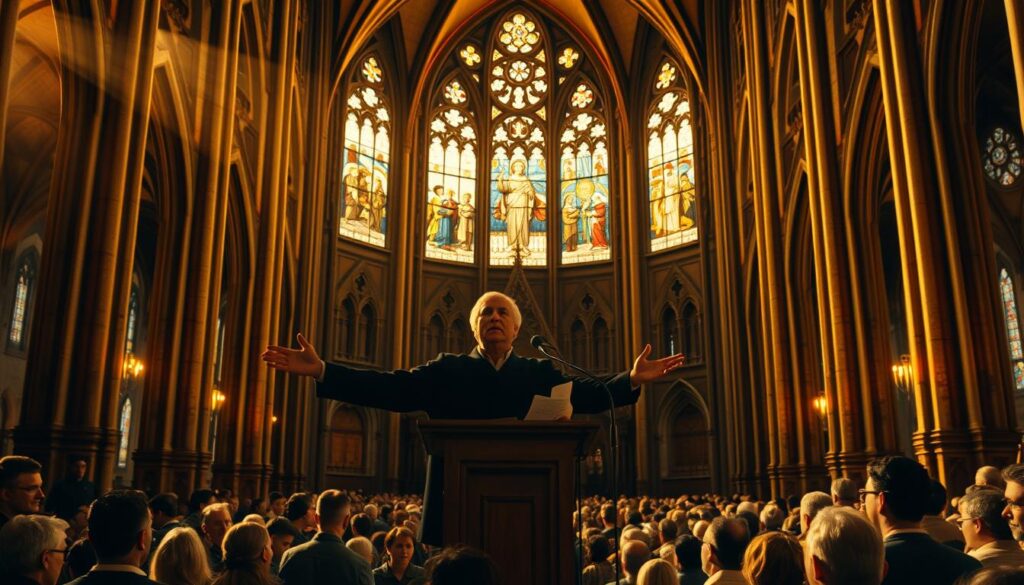
Gutenberg’s invention turbocharged reform efforts. For the first time, ordinary people could read vernacular Bibles instead of relying on clergy interpretations. National rulers also saw opportunity—by supporting reformers, kings could weaken papal authority and control local church lands.
Three forces reshaped Christianity:
- Public disgust with corrupt leadership
- New technology spreading radical ideas
- Kings asserting power over religious matters
Key Figures in the Protestant Movement
Two visionary leaders shaped Christianity’s most dramatic transformation since the first century. Their bold ideas about faith and Scripture created shockwaves that still ripple through modern worship practices.
Martin Luther’s Revolutionary Impact
This fiery German monk didn’t plan to split the Roman Catholic Church. But his 1517 critique of indulgences ignited a spiritual wildfire. Luther’s radical teaching that “faith alone justifies” challenged centuries of tradition. His translation of the Bible into German let ordinary people engage directly with Scripture.
“Unless I am convinced by Scripture… I cannot and will not recant anything.”
John Calvin and the Reformed Tradition
While Luther sparked the Reformation, Calvin built its intellectual framework. His systematic approach to theology emphasized God’s sovereignty and predestination. Geneva became a training ground for Reformed leaders under his guidance, exporting ideas about church governance worldwide.
| Reformer | Key Contribution | Lasting Influence |
|---|---|---|
| Martin Luther | Sola Scriptura principle | Lutheran denominations |
| John Calvin | Predestination doctrine | Reformed/Presbyterian churches |
| Both | Priesthood of believers | Modern evangelical movements |
These pioneering figures proved that theological ideas could reshape nations. Their distinct approaches created complementary streams of Protestant thought – one emphasizing personal faith, the other divine sovereignty. Together, they laid foundations for denominations serving over 800 million believers today.
Exploring types of protestantism: Denominational Diversity
Protestant Christianity blossoms through nine major families of faith, each nurturing distinct spiritual identities. From Quaker silence to Pentecostal praise, these groups share core Reformation principles while celebrating unique expressions of worship. This diversity lets believers find congregations that resonate with their cultural background and theological leanings.
Main Denominational Families
Lutheran churches cherish liturgical traditions rooted in Martin Luther’s teachings. Baptist groups prioritize adult baptism and local church autonomy. The table below shows how key denominations differ:
| Tradition | Worship Style | Key Practice |
|---|---|---|
| Anglican | Liturgical | Book of Common Prayer |
| Pentecostal | Charismatic | Spiritual gifts emphasis |
| Anabaptist | Simple | Pacifism & community |
Rise of Non-Denominational Churches
Many modern believers join church communities without formal labels. The Vineyard movement exemplifies this trend, blending contemporary worship with Protestant theology. These congregations often focus on practical teaching and relational ministry.
Nearly 1 in 4 American Protestants now attend non-denominational churches. They maintain the “Invisible Church” concept while adapting to 21st-century spiritual needs. This flexibility helps explain their rapid growth across diverse cultures.
Lutheran Traditions and Beliefs
Among the oldest Protestant traditions, Lutheranism combines rich liturgy with a deep emphasis on grace. With over 80 million followers globally, these churches maintain a unique balance between ancient rituals and Reformation principles. Their doctrine centers on Christ’s presence in communion and salvation through faith alone.
The Augsburg Confession Explained
Lutheran identity crystallized in 1530 through the Augsburg Confession. This founding document declares churches must preach the Gospel and administer sacraments biblically.
“The assembly of believers where the Gospel is purely taught.”
It established key teachings like consubstantiation—Christ’s spiritual presence in communion elements. The Book of Concord later expanded these ideas, shaping Lutheran worship and theology worldwide.
Modern Lutheran Churches in North America
In the United States, Lutherans blended European heritage with local culture. Many congregations now use English liturgies while keeping traditional hymns. Food pantries and disaster relief programs reflect their commitment to social justice.
Dietrich Bonhoeffer’s legacy inspires modern members. His resistance to Nazi oppression shows how Lutheran tradition values both theological depth and ethical action. From Minnesota to Texas, these communities prove historic faith can thrive in contemporary North America.
The Anglican Communion and Its Evolution
When royal drama reshaped Christianity, England forged a spiritual path blending ancient rituals with reformed ideas. The Anglican Communion emerged from this collision of politics and faith, creating a global family of churches united by shared traditions rather than rigid doctrine.
Historical Break with Rome
King Henry VIII’s quest for a male heir sparked a religious revolution. After Pope Clement VII refused to annul his marriage to Catherine of Aragon, England severed ties with Rome. The 1534 Act of Supremacy declared Henry “Supreme Head of the Church of England,” establishing royal control over religious affairs.
The Legacy of the Book of Common Prayer
Archbishop Thomas Cranmer’s 1559 masterpiece transformed worship across English-speaking lands. His Book of Common Prayer blended Scripture with poetic language, making liturgy accessible to ordinary people. A timeless passage declares:
“We have erred and strayed from thy ways like lost sheep.”
The 39 Articles (1571) later clarified Anglican theology, rejecting papal authority while keeping bishops as spiritual leaders. This tradition of balance—called via media—let Anglicanism spread globally through British colonialism.
Today’s 70-million-member Communion faces modern tests. Debates over same-sex unions and female clergy reveal tensions between progressive and conservative wings. Yet the Lambeth Quadrilateral (1888) still unites Anglicans through Scripture, creeds, sacraments, and historic leadership structures.
Baptist Roots and Modern Expressions
Emerging from 17th-century Europe, Baptists championed individual belief over inherited rituals. Founded in 1609 Amsterdam by John Smyth, these churches now thrive across the United States, with 30 million members shaping American spiritual life. Their signature practice rejects infant baptism, seeing faith as a conscious choice rather than birthright.
Believer’s Baptism and Congregational Autonomy
Baptists practice full-immersion baptism only after personal confession of faith. This teaching reflects their view that spiritual commitment requires understanding, not tradition. Infants receive blessings rather than sacraments, honoring each person’s journey to belief.
Local congregations govern themselves completely—a radical idea in 1609 that remains central today. While groups like the Southern Baptist Convention offer fellowship, each church sets its own doctrine. This independence fueled diverse expressions, from urban megachurches to rural community hubs.
Martin Luther King Jr. exemplifies Baptist impact beyond theology. His civil rights leadership showed how these people of faith transform society while maintaining spiritual convictions. Modern Baptists continue balancing personal faith with collective action, proving ancient ideas can address contemporary challenges.
FAQ
What sparked the Protestant Reformation?
The Protestant Reformation began in 1517 when Martin Luther criticized practices like indulgences in his 95 Theses. His ideas spread rapidly due to the printing press, challenging the medieval church’s authority and emphasizing salvation through faith alone.
How did John Calvin shape Protestant theology?
John Calvin’s teachings on predestination and church polity influenced Reformed traditions. His work in Geneva created a model for congregational governance, impacting denominations like Presbyterians and later Baptist movements.
What distinguishes Lutheran churches from other denominations?
Lutherans follow the Augsburg Confession, emphasizing grace through faith. Modern Lutheran churches in North America blend traditional liturgy with contemporary practices while maintaining core teachings on scripture’s authority.
Why did the Anglican Church separate from Rome?
The Anglican Communion emerged after King Henry VIII’s break with the Pope in the 16th century. It retained elements of Catholic tradition but introduced reforms like the Book of Common Prayer, shaping its unique identity.
What defines Baptist beliefs today?
Baptists emphasize believer’s baptism by immersion and local church autonomy. Modern expressions focus on evangelism, religious freedom, and congregational decision-making without hierarchical clergy structures.
How have non-denominational churches grown in influence?
Non-denominational churches prioritize flexibility, contemporary worship, and community outreach. Their rise reflects a shift toward personalized spirituality and away from traditional denominational labels, especially in the United States.
What role does the Holy Spirit play in Protestant worship?
Many Protestant groups, like Pentecostals, emphasize the Holy Spirit’s active role in guiding believers, healing, and spiritual gifts. This contrasts with more liturgical traditions that focus on structured sacraments.