From colonial settlements to modern cities, America’s spiritual identity has been profoundly shaped by key Christian traditions. This guide explores the Anglican, Baptist, Lutheran, and Methodist denominations—foundational movements rooted in the Reformation that evolved uniquely on American soil.
Each of these groups brought distinct beliefs yet shared core principles like salvation through faith and the Bible’s authority. Their stories intertwine with pivotal moments in U.S. history, from the Great Awakening to civil rights struggles.
You’ll learn how early leaders like John Wesley and Roger Williams shaped their traditions. Discover how these churches influenced education, social justice, and community-building nationwide.
Whether you’re curious about religious heritage or cultural history, understanding these denominations offers insight into America’s spiritual mosaic. Let’s dive into their lasting legacies.
Key Takeaways
- Four major denominations anchor America’s Protestant roots: Anglican, Baptist, Lutheran, and Methodist.
- Each tradition adapted Reformation ideas to fit America’s evolving cultural landscape.
- Shared beliefs include scripture-based faith and personal salvation.
- Historical figures like Martin Luther and George Whitefield shaped these movements.
- These churches played key roles in social reforms and education initiatives.
- Modern expressions reflect both tradition and contemporary relevance.
Introduction: Exploring American Protestantism
America’s spiritual journey thrives through countless expressions of faith. At its heart lies a dynamic network of belief systems that evolved from shared roots but branched into distinct paths. This diversity isn’t accidental—it’s woven into the very fabric of how many believers approach scripture and community.
Understanding the Landscape of Christian Denominations
The word “denomination” describes organized faith communities sharing core beliefs while maintaining unique traditions. Unlike centralized religious structures, these groups emerged as believers interpreted biblical teachings differently. For example:
- Some emphasize ancient rituals like communion
- Others focus on personal spiritual experiences
- Many actively address modern social challenges
This variety allows individuals to find spiritual homes aligning with their views. From the quiet reflection of Quaker meetings to the vibrant worship of Pentecostal gatherings, each tradition offers distinct ways to connect with the divine.
Why Denominational Diversity Matters
Different faith groups have shaped American culture in extraordinary ways. The Methodist movement’s historical focus on education led to founding universities, while Baptist traditions championed religious freedom early in colonial times.
Today, this diversity helps faith remain relevant. Urban ministries address homelessness, rural congregations preserve cultural heritage, and youth-driven movements tackle climate concerns. As one 19th-century theologian noted: “Our differences become strengths when rooted in shared purpose.”
Understanding these varied approaches helps us appreciate how millions of people live out their beliefs. It reveals why a single religious label could never capture America’s rich spiritual story.
Historical Context of Protestantism in the United States
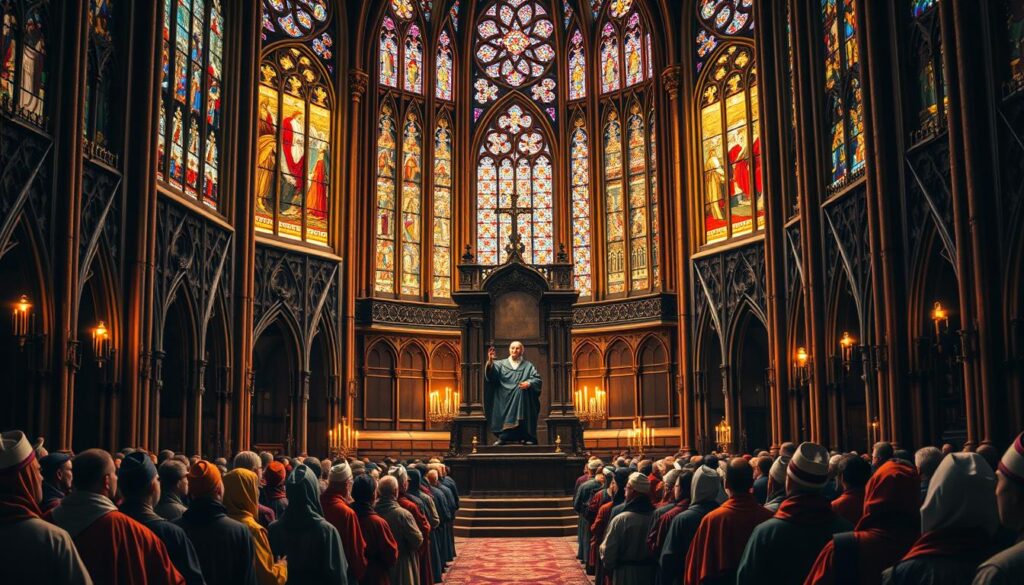
America’s religious landscape grew from seeds planted during Europe’s 16th-century upheavals. When reformers like Martin Luther questioned Roman Catholic authority, they sparked changes that would cross oceans and shape new communities.
Early Reformation Influences
The schism began as a call to purify religious life. Reformers argued scripture—not church tradition—should guide faith. Luther famously declared: “A simple layman armed with Scripture is greater than the mightiest pope without it.”
Colonists carried these ideas to American shores. They established communities where:
- Local congregations held more authority than distant bishops
- Faith became personal rather than ritual-driven
- Education helped people interpret the Bible themselves
The Evolution of Church Practices
Frontier life forced creative adaptations. Circuit riders replaced steepled buildings in rural areas. Camp meetings blended worship with social gatherings. As one pioneer journal noted: “We measured faith by deeds, not doctrines.”
Three key shifts emerged over time:
- Simplified rituals focused on practical daily living
- Democratic governance models in many denominations
- Emphasis on individual spiritual experiences
These changes created space for diverse groups to thrive. From urban parishes to prairie meeting houses, American religious life became as varied as its people.
Examining the Impact of Protestant Reformation on American Faith
A spiritual revolution began when ink met parchment in 16th-century Europe. Ideas from this era crossed oceans to shape America’s religious DNA, creating foundations for diverse beliefs we see today.
Pioneers Who Redefined Faith
Martin Luther’s 1517 stand against Roman Catholic authority cracked open new ways of thinking. His “sola scriptura” principle made the Bible accessible to everyone, not just clergy. This shift birthed core doctrines like salvation through faith alone—ideas that became America’s spiritual bedrock.
Reformers like John Calvin added layers to this theology. Their teachings about God’s sovereignty and the Holy Spirit’s guidance gave colonists tools to build fresh expressions of belief. As one historian noted: “They carried Reformation sparks that ignited prairie fires of revival across America.”
Three lasting impacts emerged:
- Local congregations gained authority over distant religious leaders
- Personal Bible study became central to spiritual growth
- Democratic church structures mirrored America’s political values
This schism with older traditions didn’t just create new denominations—it shaped how Americans approach community, education, and social change. From abolitionist pulpits to civil rights marches, Reformation ideals keep influencing national conversations about justice and equality.
Exploring 4 protestant churches Shaping American Christianity
Distinct spiritual traditions emerged as cornerstones of U.S. religious life. The Anglican, Baptist, Lutheran, and Methodist movements stand out for their lasting influence. Each carved unique paths while sharing core Reformation values like scripture-centered belief.
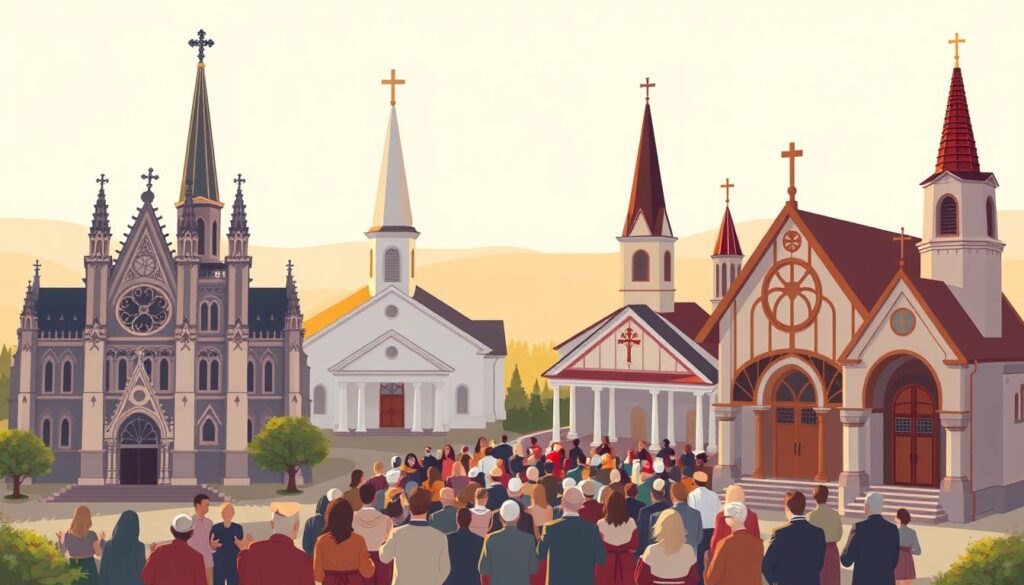
Anglican communities brought structured worship styles from England. Their Book of Common Prayer shaped early colonial services. Over time, this evolved into the Episcopal Church, blending tradition with social engagement.
Baptist teachings prioritized personal faith decisions. Their emphasis on local leadership matched America’s democratic spirit. This approach fueled growth during frontier expansions and civil rights movements.
| Name | Core Focus | Historical Contribution | Modern Influence |
|---|---|---|---|
| Lutheran | Sacramental theology | Immigrant community support | Interfaith partnerships |
| Methodist | Social holiness | Circuit rider evangelism | Global relief efforts |
| Anglican | Liturgical worship | Colonial education systems | Ecumenical dialogue |
| Baptist | Believer’s baptism | Religious liberty advocacy | Urban ministries |
Lutheran immigrants preserved Reformation teachings through hymns and schools. Their emphasis on grace provided comfort to Scandinavian and German settlers. Today, they bridge historical roots with contemporary issues.
Methodist camp meetings sparked nationwide revivals. Their system of traveling preachers reached remote areas. This energy later fueled abolitionist efforts and worker’s rights campaigns.
Anglican Church’s Role in Modern American Protestantism
Blending ancient rituals with modern social engagement, the Anglican tradition carves a unique path in America’s religious tapestry. This branch of Christianity maintains deep historical roots while addressing contemporary issues through its via media approach—a middle way between contrasting theological views.
From Monarchs to Modern Worship
Born from King Henry VIII’s 1534 break with Roman Catholic authority, the Church of England evolved into a global communion. In the United States, it became the Episcopal Church, preserving liturgical practices while embracing democratic governance. Today, over 70 million members worldwide follow this tradition’s blend of sacramental theology and flexible cultural adaptation.
Bridges Between Beliefs
The Book of Common Prayer remains central to Anglican worship, connecting modern believers to centuries-old traditions. Equally important are ecumenical partnerships—like dialogue with Roman Catholic leaders—that address shared challenges. Through food banks, interfaith councils, and climate initiatives, Episcopal communities demonstrate how ancient doctrines inspire fresh forms of service.
FAQ
Why does denominational diversity matter in American Christianity?
Denominational diversity reflects varied interpretations of scripture, cultural contexts, and worship styles. This richness fosters dialogue, adapts faith to modern challenges, and meets the spiritual needs of diverse communities.
How did the Protestant Reformation influence American faith traditions?
The Reformation’s emphasis on personal faith, scripture over tradition, and clergy accountability shaped early colonial churches. Ideas from reformers like Martin Luther and John Calvin inspired practices still seen in many congregations today.
What role does the Anglican Church play in modern U.S. Protestantism?
The Episcopal Church, rooted in Anglican traditions, blends liturgical structure with progressive social engagement. Its ecumenical efforts, like partnerships with Lutheran denominations, highlight a commitment to unity amid theological differences.
How have Protestant practices evolved in the United States?
From Puritan simplicity to charismatic worship, practices shifted with cultural changes. Innovations like revivals, gospel music, and community-focused ministries reflect ongoing adaptation while preserving core teachings.
What connects the Church of England to today’s Episcopal identity?
The Episcopal Church retains Anglican liturgy and sacraments but embraces democratic governance and inclusivity. This balance honors historical roots while addressing contemporary issues like social justice and interfaith collaboration.
How do ecumenical initiatives strengthen Protestant communities?
Partnerships across denominations—like shared outreach programs or joint theological studies—build mutual understanding. These efforts emphasize shared goals, such as serving marginalized groups, over doctrinal disagreements.