Let’s step back to a time when a single document sparked a spiritual revolution. Imagine a crisp autumn day in 1517, when a monk named Martin Luther nailed his concerns to a church door in Germany. What began as a call for debate grew into a movement that reshaped Christianity—and the world—forever.
This 16th-century shift wasn’t just about religious practices. It challenged powerful institutions, redefined personal faith, and ignited cultural changes still felt today. From humble beginnings, ideas spread like wildfire across Europe, fueled by newfound access to printed materials and growing public discontent.
You’ll discover how ordinary people gained unprecedented access to spiritual texts, sparking debates about authority and tradition. The movement’s ripple effects reached far beyond church walls, influencing art, education, and even how nations governed themselves.
Key Takeaways
- A German monk’s bold act in 1517 launched a spiritual revolution
- Printing technology accelerated the spread of reform ideas
- Changes affected politics, education, and daily life across Europe
- New branches of Christianity emerged from these debates
- Legacy includes modern concepts of religious choice and individual faith
As we explore this pivotal era, you’ll meet fiery reformers, witness political showdowns, and see how courage reshaped beliefs. These stories aren’t just dusty history—they’re the roots of religious freedom and diverse worship practices we value today.
Understanding the Origins of the Reformation Movement
What happens when spiritual guidance becomes tangled with power and profit? By the 1500s, the Catholic Church stood as Europe’s ultimate authority—both in matters of faith and earthly politics. Its leaders enjoyed lavish lifestyles while ordinary people struggled to afford basic religious comforts.
When Money Met Salvation
The church’s indulgences practice turned forgiveness into a transaction. Traveling salesmen called “pardoners” sold certificates claiming to shorten souls’ time in purgatory. One seller reportedly told crowds: “As soon as the coin in the coffer rings, the soul from purgatory springs!”
These funds often financed grand cathedrals or lined officials’ pockets. Many clergy members grew uneasy—how did buying grace align with biblical teachings? Meanwhile, political ties between Rome and European rulers made internal reforms nearly impossible.
Seeds of Change in Wittenberg
Public frustration reached a boiling point in small German towns. Local priests noticed parishioners skipping confession after purchasing indulgences. “Why seek forgiveness,” people asked, “when you can simply pay?” This disconnect between doctrine and practice created fertile ground for questioning the church’s authority.
Three critical issues fueled dissent:
- Visible corruption among high-ranking clergy
- Exploitative fundraising tactics
- Growing literacy rates allowing people to read religious texts themselves
Martin Luther and the 95 Theses
In a quiet German town, a single act of defiance ignited a spiritual wildfire. Martin Luther, an Augustinian monk and teacher, never intended to start a revolution when he posted his academic arguments in 1517. His 95 Theses questioned church practices like indulgences—paid certificates claiming to reduce punishment for sins.
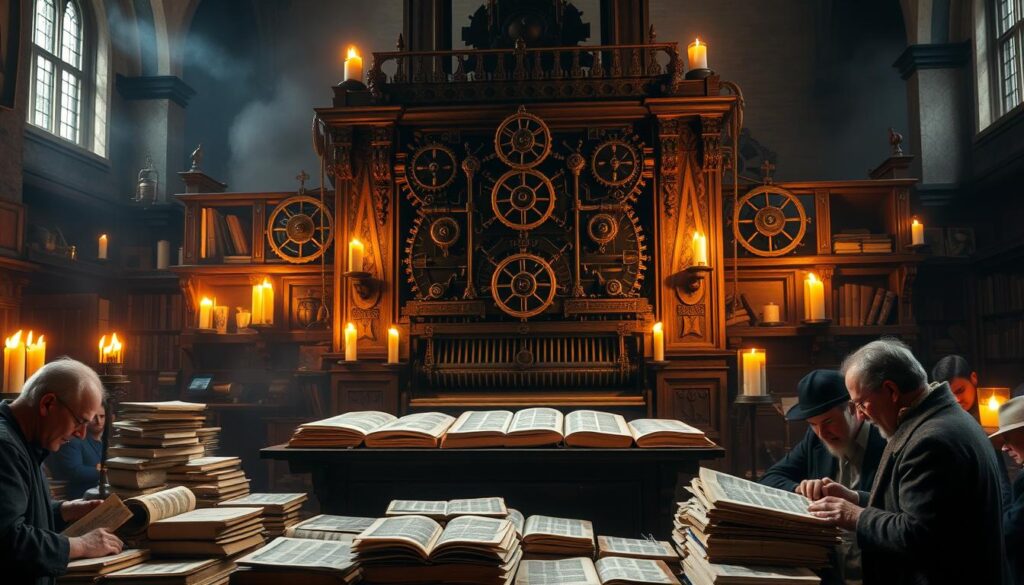
Luther’s Challenge to Church Authority
Luther’s writings struck at the heart of religious power structures. “Why should a peasant’s coins decide their salvation?” he argued. His bold claim—that faith alone granted divine grace—directly contradicted established teachings. Church leaders demanded he retract his statements, but the scholar stood firm.
The monk’s productivity shocked Europe. Between 1518-1525, he wrote more works than the next 17 leading reformers combined. Ordinary Germans devoured his translated pamphlets, realizing they could access spiritual truths without mediators.
The Role of the Printing Press in Spreading Reform Ideas
New technology turbocharged Luther’s message. The printing press let his ideas travel faster than ever before. Earlier critics had been silenced, but Luther became Europe’s first best-selling author. His works spread 500x faster than handwritten manuscripts.
| Luther’s Works | Other Reformers | Spread Speed |
|---|---|---|
| 67 pamphlets | 3-5 each | Weeks vs. years |
| German language | Latin texts | Reached 80% more people |
| Visual cartoons | Text-only | 50% higher recall |
This wasn’t just about religion—it was a communication revolution. For the first time, farmers debated theology using materials they could read themselves. The genie of public discourse couldn’t be put back in the bottle.
The Spread of Reformation Across Europe
What began in German monasteries soon echoed through Swiss city halls and English palaces. Local leaders saw opportunities in reformist ideas—some seeking spiritual renewal, others aiming to weaken old alliances. This cross-continent shift blended faith with regional identities, creating distinct expressions of religious change.
Reformation Developments in Germany and Switzerland
German princes quickly recognized Luther’s teachings as a tool for independence. By adopting Lutheranism, they challenged the Holy Roman Emperor’s power while gaining control over local churches. One ruler famously declared: “We’ll answer to God before foreign bishops!”
Swiss cities forged their own path. Ulrich Zwingli launched Zurich’s reforms in 1519, arguing for simpler worship than even Luther proposed. But it was John Calvin who left the deepest mark. His Geneva became a hub for strict moral codes and theological training, attracting reformers worldwide.
| Leader | Location | Key Contribution |
|---|---|---|
| Martin Luther | Germany | State-aligned Lutheranism |
| Ulrich Zwingli | Zurich | Symbol-free worship |
| John Calvin | Geneva | Theocratic governance |
Transformation of the Church of England Under Henry VIII
England’s break from Rome began with a king’s personal crisis. When Pope Clement VII refused Henry VIII‘s divorce request, the monarch made himself head of the Church of England in 1534. This political masterstroke transferred wealth from monasteries to the crown while answering reformers’ calls for change.
Though initially resisting Protestant doctrines, Henry’s actions opened doors for later reforms. The Church of England became a middle path—keeping Catholic rituals while rejecting papal authority. Henry VIII‘s successors would push further, but his bold move proved faith and statecraft could reshape nations overnight.
Deep Dive into protestant reformation history
Imagine flipping through a calendar filled with world-changing events. The years following 1517 brought seismic shifts that reshaped religious and political landscapes. From fiery debates to bloody conflicts, each date tells a story of courage and consequence.
Key Dates and Milestones from 1517 Onwards
October 31, 1517, remains etched in memory. When Martin Luther shared his concerns in Wittenberg, he unknowingly set a continent ablaze. Within four years, leaders declared him an outlaw at the Diet of Worms—but ideas can’t be shackled.
By 1524, Luther’s teachings inspired more than theological debates. The German Peasants’ War saw 100,000 rebels demanding fairness, proving reform could spark social flames. One leader cried: “Why should scripture free our souls but chain our bodies?”
| Year | Event | Impact |
|---|---|---|
| 1534 | English Church Split | Royal power over religion |
| 1545-1563 | Council of Trent | Catholic Church reforms |
| 1618-1648 | Thirty Years’ War | 40% population loss in Germany |
The Catholic Church launched its counter-move in 1545. The Council of Trent spent nearly 20 years clarifying doctrines while curbing corruption—a delicate dance between old traditions and new realities.
Europe’s deadliest religious conflict erupted in 1618. The Thirty Years’ War turned villages to ash but ultimately allowed diverse faiths to coexist. What began as one monk’s protest became a 130-year transformation, proving ideas outlast empires.
Key Figures and Doctrinal Shifts in the Movement
Thinkers across Europe sparked debates that reshaped spiritual life forever. Their bold ideas about salvation and scripture created new paths for worshippers. Let’s meet the trailblazers who turned theological arguments into lasting traditions.
From Luther’s Bold Actions to Calvin’s Theological Contributions
Martin Luther’s “faith alone” principle became a rallying cry. He argued divine grace came through trust in God—not rituals or payments. This doctrine empowered ordinary people to seek truth directly from Bibles.
John Calvin took these ideas further. His teachings about predestination claimed God already chose who’d gain eternal life. Though controversial, this theology gave believers confidence in their spiritual destiny.
The Emergence of Diverse Protestant Beliefs
Not all reformers agreed. Huldrych Zwingli saw communion as symbolic, not mystical. Anabaptists insisted only adults could choose baptism. These differences birthed distinct groups with unique practices.
| Reformer | Core Doctrine | Impact |
|---|---|---|
| Martin Luther | Salvation through faith | Personal Bible study |
| John Calvin | Predestination | Strict moral codes |
| Huldrych Zwingli | Symbolic sacraments | Simplified worship |
| Anabaptists | Adult baptism | Separation from state |
One thing united them: scripture ruled supreme. This “Bible alone” belief let communities interpret teachings differently. Today’s denominational diversity grew from these early debates about grace and practice.
Social and Political Impact of the Protestant Reformation
Political chessboards across Europe shifted as spiritual debates turned into power plays. Local rulers saw religious change as a tool to challenge distant authorities and reshape their domains. This collision of faith and governance rewrote alliances—and redrew maps.
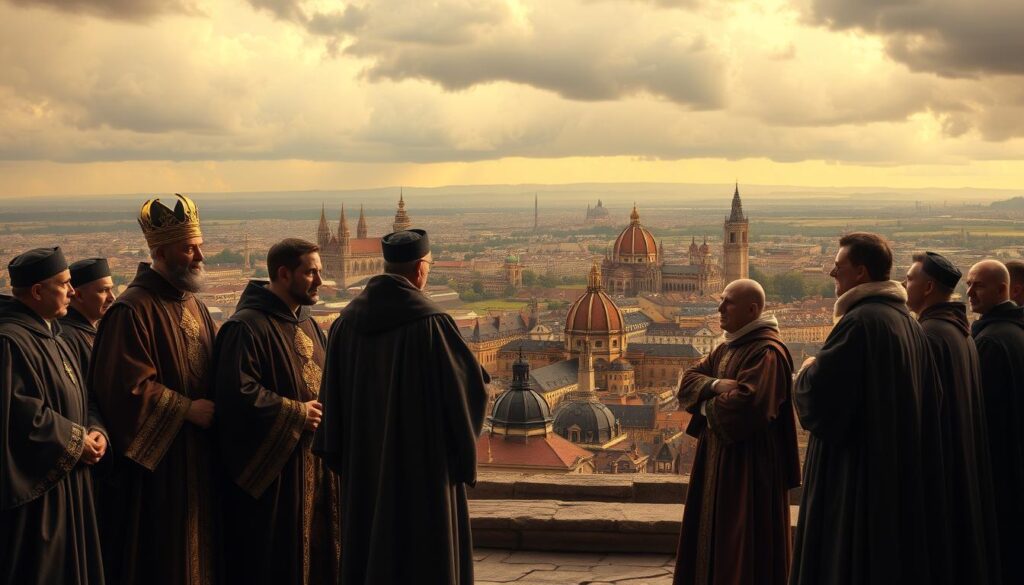
Rulers as Reformers
German princes cleverly used theological arguments to boost their independence. When Frederick III of Saxony hid Martin Luther after his trial, it wasn’t just protection—it was a political statement. His staged kidnapping showed how regional leaders could defy the Holy Roman Emperor’s authority.
The phrase “cuius regio, eius religio” became law in 1555. Entire populations switched beliefs overnight if their ruler did. One farmer reportedly joked: “We changed prayers like changing shoes—when the duke snapped his fingers.”
| Region | Ruler’s Choice | Population Impact |
|---|---|---|
| Saxony | Lutheran | 95% conversion by 1530 |
| Bavaria | Catholic | Monasteries retained power |
| Brandenburg | Calvinist | Mixed resistance |
This system gave people limited choice—follow your prince’s faith or leave. Though harsh, it stabilized regions torn by competing doctrines. The church’s role shifted from universal guide to a tool of statecraft.
War and Transformation
Decades of tension exploded in 1618. The Thirty Years’ War turned theological disputes into battlefield carnage. Mercenaries from Sweden to Spain ravaged German lands, leaving villages empty and fields charred.
A survivor’s diary entry reads:
“Our children starve while soldiers argue over baptism methods.”
When peace finally came in 1648, Europe’s power structure had changed forever. Nations began separating religious loyalty from civic duty—a radical idea that would later inspire democratic revolutions.
The Lasting Legacy of the Reformation in Modern Christianity
How did a 16th-century spiritual upheaval plant the seeds for modern religious liberty? Across the Atlantic, Reformation principles took root in unexpected ways. Dissenters fleeing Europe’s conflicts carried bold ideas about personal faith and self-governance to new shores.
Shaping American Religious Freedom and Diversity
English reformers split into two groups under Queen Elizabeth’s rule. Separatists formed their own churches, while Puritans sought change within the Church of England. Both sailed to America—one group aboard the Mayflower in 1620, the other founding Boston a decade later.
These settlers brought competing visions of worship. The Plymouth colonists held simple services under a pastor’s guidance. Massachusetts Bay leaders blended biblical law with civic rules. By 1700, over 10 distinct denominations thrived in the colonies.
| Group | Belief | Impact |
|---|---|---|
| Separatists | Independent churches | Pilgrim traditions |
| Puritans | Biblical governance | Public education |
| Quakers | Inner light doctrine | Religious tolerance |
America’s founders later enshrined Reformation ideals in law. The First Amendment’s religious clauses echo reformers’ demands for choice. “No government,” argued James Madison, “should dictate matters of conscience.”
Today, over 40% of global Christians identify with Reformation-rooted religion. From megachurches to home Bible studies, the movement’s emphasis on personal connection still shapes spiritual lives. Modern churches continue adapting 500-year-old principles to 21st-century needs.
Conclusion
A monk’s ink-stained arguments in 1517 still shape how millions experience spirituality. The ripples from Martin Luther’s stand reached beyond church walls, inspiring art that stirs souls and ideas that fuel innovation. J.S. Bach’s hymns and Rubens’ vibrant altarpieces prove creative fire often follows spiritual awakening.
Modern believers carry this legacy forward. Some stream sermons globally, while others debate teachings in virtual groups. The printing press that spread reformist ideas now has digital cousins—live-tweeted services and Bible apps reaching smartphones worldwide.
This movement’s true triumph lies in choice. Where once salvation felt locked behind Latin texts, people today explore faith through countless denominations. From Dutch merchants’ trade ethics to grassroots Bible studies, reformed beliefs keep adapting to new eras.
As candles still glow in Wittenberg’s chapels, they remind us: bold ideas about grace and community can outlast empires. That’s a revolution worth remembering—and living.
FAQ
Why did the Reformation begin in Wittenberg, Germany?
Wittenberg became the starting point due to Martin Luther’s role as a theology professor there. His public criticism of indulgences and church practices, especially after posting the 95 Theses in 1517, ignited widespread debate. The city’s academic environment and access to the printing press helped ideas spread quickly.
How did the printing press change religious discussions?
The printing press allowed reformers like Luther and John Calvin to share writings rapidly. Pamphlets, translations of the Bible, and critiques of the Catholic Church reached masses, empowering ordinary people to engage with religious ideas independently.
What role did Henry VIII play in the Reformation?
A: Henry VIII broke from Rome to annul his marriage, creating the Church of England. While his actions were politically motivated, they opened doors for Protestant teachings to influence English religious life, blending tradition with reformed ideas.
How did John Calvin’s theology differ from Luther’s?
Calvin emphasized predestination and a strict moral code, shaping Reformed Christianity. Luther focused on faith over works and the authority of scripture. Both rejected papal authority but developed distinct doctrines that influenced different branches of Protestantism.
Why did some European rulers support the Reformation?
Many princes saw religious reform as a way to gain independence from the Pope and the Holy Roman Empire. By backing reformers, they could seize church lands, reduce external influence, and consolidate political power within their territories.
How did the Reformation affect everyday people?
It encouraged literacy through Bible translations and challenged traditional hierarchies. Ordinary believers began questioning authority, while new teachings on salvation and worship practices reshaped spiritual lives. Social structures, like marriage, also became topics of reform.
What is the Reformation’s legacy in America today?
The movement’s emphasis on individual faith and opposition to centralized authority influenced concepts of religious freedom. Many early settlers were Protestants seeking tolerance, laying groundwork for America’s diverse religious landscape and separation of church and state.