The story of the Catholic Church begins in ancient Jerusalem, where a small group of believers gathered after Jesus’ crucifixion. According to tradition, this community experienced a transformative event at Pentecost – often called the “birthday of the Church.” From these humble beginnings emerged a spiritual movement that would reshape global history.
Early followers saw themselves as part of Jewish tradition, but gradually developed distinct practices. The apostles, particularly Peter, became central figures in spreading teachings across the Mediterranean. By the 4th century, what we now call the Roman Catholic Church began taking shape through doctrinal decisions and organizational structure.
This journey from local sect to worldwide religion involved pivotal moments. Key councils clarified beliefs, while missionaries carried the faith to new lands. The Church’s ability to adapt while maintaining core principles explains its enduring influence across two millennia.
Key Takeaways
- Roots trace back to 1st-century Jerusalem and the Pentecost event
- Evolved from Jewish tradition to distinct religious institution
- Peter’s leadership established early organizational structure
- Spread through Roman Empire via missionary work and councils
- Doctrinal developments shaped modern Catholic practices
- Maintains continuity through apostolic succession claims
Introduction to the Origins of Catholicism
Exploring the roots of the Catholic Church reveals a journey spanning continents and centuries. This guide bridges ancient traditions with modern scholarship, offering clarity on how a spiritual movement became a cornerstone of global culture.
Purpose of This Ultimate Guide
This resource unpacks the Roman Catholic faith’s evolution through artifacts, texts, and historical turning points. You’ll discover how early Christian practices merged with Roman governance to create lasting institutions. Whether you’re a student or curious reader, we break down complex ideas into relatable insights.
Understanding the Historical Significance
The Church’s impact extends far beyond religion. Its teachings shaped legal systems, inspired Renaissance art, and influenced scientific thought. Recent archaeological discoveries—like ancient baptismal fonts—show how communities organized before formal hierarchies existed.
Scholars emphasize that studying these origins isn’t just about beliefs. As one historian notes: “The Church’s growth mirrors Western civilization’s own development.” By separating tradition from verifiable events, we gain tools to analyze its role in world history objectively.
Historical Background and Context
The rise of Christianity occurred within a unique historical framework. The Roman Empire’s vast reach created a melting pot of cultures and ideas. Its political stability and infrastructure became unexpected catalysts for religious transformation.
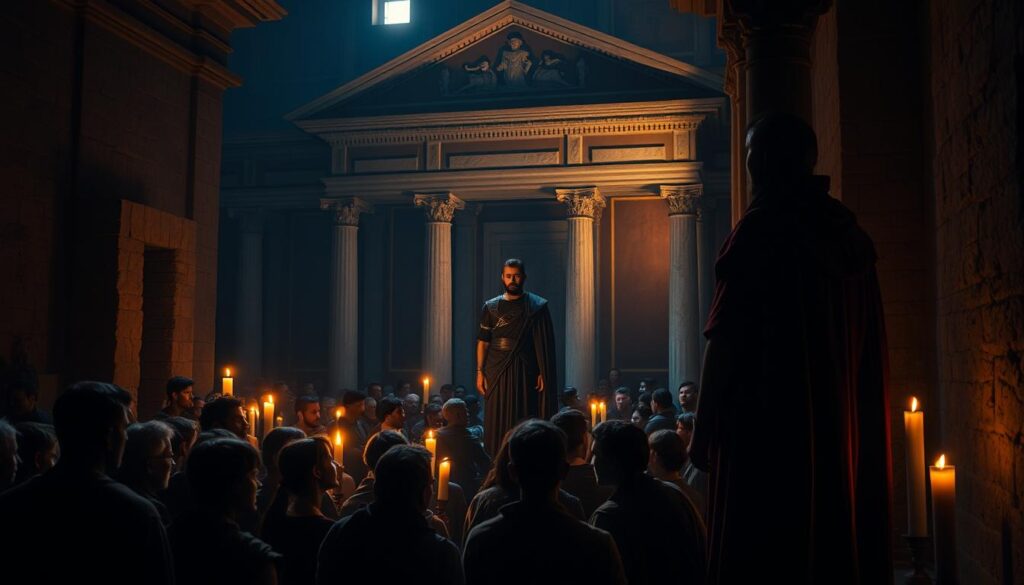
Networks That Shaped a Movement
Roman roads weren’t just for soldiers and traders. Missionaries used these highways to spread teachings across three continents. Over 40 vibrant Christian communities emerged by 100 AD, connected through shared Greek dialects.
Urban hubs like Ephesus and Corinth became spiritual laboratories. Their diverse populations embraced new ideas faster than rural areas. As one scholar observes: “Cities were social accelerators for early Church growth.”
The Roman legal system initially protected minority faiths. This allowed believers to organize openly before later persecutions. Combined with the Pax Romana’s peace, these conditions let Christianity establish deep roots.
Three key factors propelled its spread:
- Common languages bridging regional divides
- Trade routes doubling as missionary pathways
- Legal frameworks enabling community formation
These elements didn’t just help Christianity survive—they let it thrive. The Catholic Church’s future structures grew from this fertile imperial soil.
Scriptural Foundations and Pentecost
Ancient texts and transformative events shaped the Catholic Church from its earliest days. The New Testament stands as a spiritual blueprint, documenting Jesus Christ’s mission and the apostles’ divine calling. This collection of writings bridges first-century experiences with modern religious practices.
Building Blocks of Faith
Four Gospels form the core of Christian teachings. Matthew 16:18 records Jesus telling Peter: “You are Peter, and on this rock I will build my church.” Catholics view this as establishing leadership through apostolic succession.
The Acts of the Apostles reveals how early believers organized worship. Shared meals, prayer gatherings, and baptism rituals became standard practices. These traditions evolved into sacraments central to Catholic life today.
| New Testament Book | Key Contribution | Modern Catholic Practice |
|---|---|---|
| Gospel of Matthew | Peter’s leadership role | Papal authority |
| Acts of the Apostles | Pentecost event | Confirmation sacrament |
| 1 Corinthians | Eucharist instructions | Mass celebration |
| Ephesians | Church as body of Christ | Communal worship |
Pentecost marked a turning point – the Holy Spirit empowered apostles to preach boldly. This event, celebrated 50 days after Easter, symbolizes the Church’s public launch. Missionary journeys described in Acts show faith spreading across Roman trade routes.
Catholic tradition sees scripture and teaching authority as intertwined. As one theologian explains: “The Bible lives through the Church’s interpretation.” This relationship between text and community remains vital after two millennia.
The Role of Jesus Christ and the Apostles
At the heart of Catholic belief lies a transformative figure whose life and mission shaped an entire spiritual legacy. Through parables and personal example, Jesus Christ established patterns of worship that still guide millions today.
Foundational Teachings and Miracles
The Gospels show Jesus blending radical compassion with divine authority. His Sermon on the Mount redefined moral expectations, while miracles like healing the blind demonstrated power beyond human limits. These acts weren’t just displays – they revealed a blueprint for spiritual community.
Christ’s death and resurrection became the cornerstone of Catholic theology. As one biblical scholar notes: “The empty tomb isn’t just an event – it’s the engine driving Christian hope.” This pivotal moment transformed grief into a message of eternal life.
| Jesus’ Action | Spiritual Purpose | Modern Catholic Practice |
|---|---|---|
| Choosing 12 apostles | Establish leadership structure | Bishop hierarchy |
| Last Supper instructions | Create sacramental model | Eucharist celebration |
| “Feed my sheep” command | Define pastoral care | Priestly responsibilities |
The Catholic Church sees Jesus’ promises as ongoing commitments. When he told Peter, “Whatever you bind on earth will be bound in heaven,” believers interpret this as establishing unbroken spiritual authority. This concept of apostolic succession remains central to Church identity.
Through both words and symbolic acts, Christ planted seeds that grew into lasting traditions. His blend of revolutionary ideas and timeless truths created a faith movement that adapted across centuries while keeping core teachings intact.
Peter’s Legacy: The First Bishop of Rome
Rome’s spiritual leadership traces back to a fisherman-turned-founder. Saint Peter, one of Jesus’ closest followers, became the first bishop to shape what we now call the Roman Catholic Church. His story blends ancient texts with enduring traditions that still guide millions.
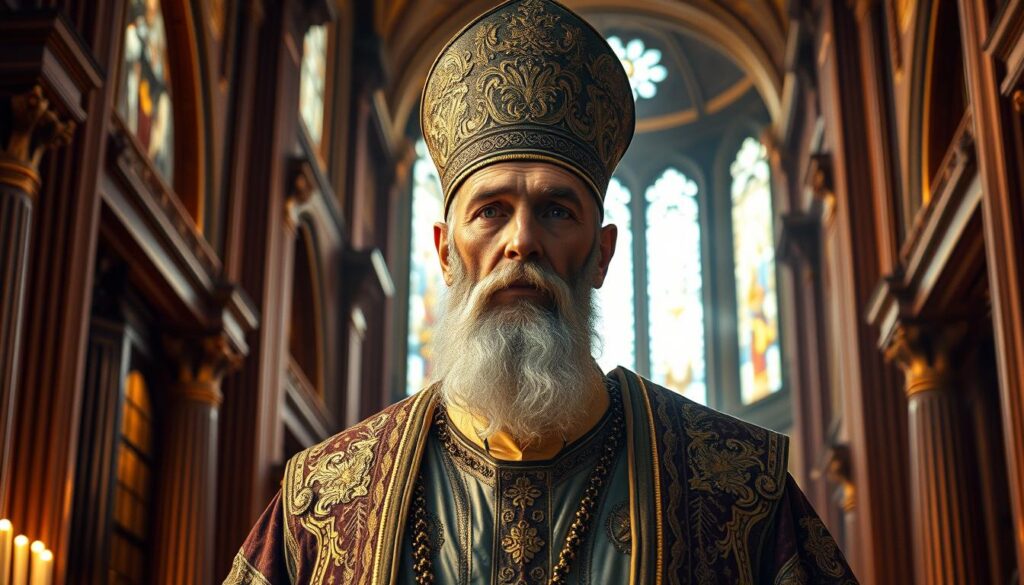
Apostolic Succession and Early Traditions
Jesus’ words to Peter in Matthew 16:18 sparked a lasting legacy: “You are Peter, and on this rock I will build my church.” Catholics view this as establishing a chain of authority passed through generations of bishops. By appointing Linus as his successor, Peter created a model for unbroken leadership.
Historical records show Peter likely died in Rome under Emperor Nero. His martyrdom cemented the city’s status as Christianity’s heart. As one Vatican scholar notes: “Rome’s soil holds more than relics—it anchors the Church’s founding narrative.”
Not all experts agree Peter served as Bishop of Rome in modern terms. Early Christian communities often had multiple leaders. Yet the tradition became vital for unifying believers across continents. The pope’s role grew from this need for central guidance.
Three key elements shaped papal claims:
- Direct lineage from the first bishop
- Rome’s political and symbolic importance
- Shared practices among early bishops
Today’s Roman Catholic leaders still reference Peter’s legacy when addressing global issues. This 2,000-year-old authority structure continues adapting while honoring its roots.
Early Church Organization and Structure
Worship practices in early Christian communities reveal a fascinating evolution. What began as small gatherings in homes grew into an organized network spanning the Mediterranean. This transformation laid the groundwork for the Roman Catholic identity we recognize today.
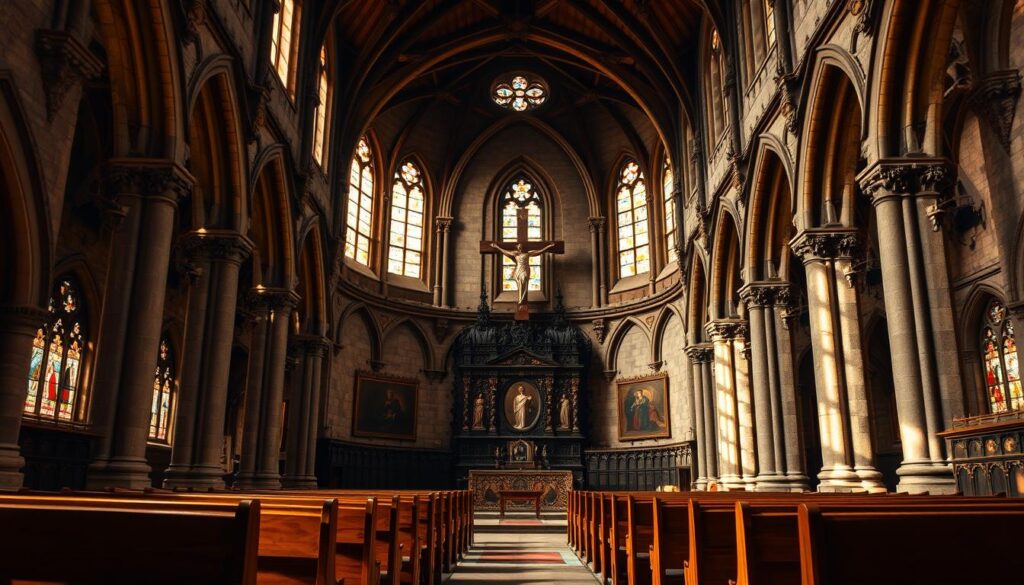
Building Unity Through Shared Practices
First-century believers balanced Jewish roots with new traditions. While keeping Sabbath rituals, Sunday worship gained prominence as “the Lord’s Day.” This shift marked a gradual separation from synagogue customs while honoring Christ’s resurrection.
By 200 AD, clear structures emerged. Cities like Antioch and Alexandria developed leadership models where bishops oversaw local clergy. As one historian notes: “These leaders weren’t just spiritual guides—they became community anchors during Roman persecutions.”
| Jewish Influence | Christian Innovation | Lasting Impact |
|---|---|---|
| Synagogue gatherings | Home-based worship | Parish system |
| Saturday Sabbath | Sunday Eucharist | Weekly Mass |
| Elder leadership | Bishop authority | Diocesan hierarchy |
The church’s development mirrored Roman governance. Major cities’ bishops held sway over nearby regions, creating hubs of spiritual authority. This system maintained unity across diverse cultures—a cornerstone of Catholic institution-building.
Regional networks eventually formed the basis for archdioceses. These structures enabled coordinated responses to challenges, from heresies to imperial edicts. Through adaptable organization, early believers planted seeds for a global faith community.
where did catholicism start
The roots of the global Catholic Church tradition lie in specific locations and pivotal events. A small gathering in Jerusalem’s upper room became ground zero for a spiritual revolution. This moment sparked a movement that would eventually reshape religious history across three continents.
Tracing the Geographical and Historical Beginnings
Jerusalem served as the launchpad for early Christian expansion. Apostles used Mediterranean trade routes to establish communities from Egypt to Greece. By 100 AD, believers had planted over 40 worship groups – some as far east as India’s Malabar Coast.
Urban centers played a crucial role in this growth. Major cities like Antioch became hubs for teaching and organizing. As one archaeologist notes: “Ancient ports weren’t just commerce centers – they were information superhighways for faith.”
| Region | Early Community | Key Figure |
|---|---|---|
| Armenia | 1st century converts | Thaddeus |
| Iran | 2nd century church | Thomas |
| India | 52 AD converts | Bartholomew |
Jerusalem’s destruction in 70 AD shifted leadership westward. Rome gained prominence through its political clout and Peter’s legacy. This transition laid the foundation for the Roman Catholic Church‘s centralized structure.
Geographical advantages fueled the church‘s development. Coastal cities and Roman roads allowed rapid spread of ideas. These networks enabled diverse communities to share practices while adapting to local cultures – a hallmark of Catholic growth.
The Spread of Early Christianity
The growth of early Christianity wasn’t just about beliefs—it was a masterclass in cultural adaptation. Missionaries became experts at weaving spiritual messages into local traditions, creating a faith that felt both universal and personal.
Roads, Rivers, and Relationships
Roman Empire infrastructure proved crucial for the church‘s expansion. Traders carried gospels along silk routes, while soldiers shared stories at frontier outposts. This organic spread created diverse expressions of faith—from Egyptian desert monasteries to Celtic prayer practices.
Early believers often repurposed pagan symbols. Spring festivals became Easter celebrations, and former temples transformed into worship spaces. As one historian observes: “The Catholic Church didn’t erase cultures—it absorbed and redirected them.”
Three factors fueled global growth:
- Flexible teaching methods for different audiences
- Use of common Greek/Latin languages
- Alignment with Roman Empire trade networks
This strategic blending helped Christianity outlast Rome’s collapse. Today’s Catholic Church still reflects these ancient roots—a living bridge between first-century fireside talks and modern digital congregations.
FAQ
What role did the Roman Empire play in Catholicism’s development?
The Roman Empire’s infrastructure and legal systems helped spread early Christianity. Persecutions under emperors like Nero tested believers, but later support from Constantine in the 4th century allowed the religion to flourish, shaping Catholic traditions and governance.
How does the New Testament influence Catholic beliefs?
The New Testament forms the core of Catholic doctrine, detailing Jesus Christ’s teachings, miracles, and resurrection. It guides sacraments, moral teachings, and the Church’s authority, emphasizing apostolic succession from figures like Peter, the first bishop of Rome.
Why is Peter considered central to the Catholic Church?
Catholics believe Jesus appointed Peter as the “rock” of the Church (Matthew 16:18). His leadership in Rome established apostolic succession, a tradition linking modern popes to early Christian authority. This lineage remains a pillar of Catholic identity.
How did early Christian communities organize themselves?
Early Christians formed structured communities led by bishops, priests, and deacons. They blended Jewish traditions with new practices like the Eucharist. Councils, like Nicaea in 325 CE, later standardized doctrines to address theological conflicts.
What marked the shift from Jewish Christianity to Roman Catholicism?
After the destruction of Jerusalem’s Temple in 70 CE, leadership shifted to Gentile converts in cities like Rome. The Church adopted Greco-Roman cultural elements, creating a distinct identity separate from Judaism while retaining core teachings.
How did missionary work spread Catholicism globally?
Apostles like Paul traveled across the Roman Empire, preaching to Gentiles. Later, missionaries adapted teachings to local cultures, from Europe to the Americas. This flexibility helped Catholicism become a worldwide faith with over 1 billion followers today.
What is the significance of Vatican City in Catholicism?
Vatican City, established in 1929, serves as the spiritual and administrative center of the Roman Catholic Church. It houses the Pope, the successor of Peter, and symbolizes the Church’s enduring global influence and governance.
How do Catholic traditions address modern social issues?
The Church blends ancient doctrines with contemporary challenges. Pope Francis, for example, emphasizes mercy and environmental stewardship while upholding traditional teachings on topics like marriage. Councils and encyclicals guide evolving responses.