Imagine a single act that changed the course of religious history. In 1517, a monk named Martin Luther nailed his Ninety-five Theses to a church door in Wittenberg, Germany. This bold move questioned long-standing practices and sparked a movement that reshaped Christianity.
What began as a call for reform grew into a global force. The ideas behind this movement emphasized faith alone as the path to salvation and the Bible as the ultimate authority. These principles challenged traditions and created new ways of practicing faith.
This guide explores how these events unfolded and why they matter today. You’ll learn about the social and theological shifts that defined this era. Discover how a small German town became the birthplace of a major branch of Christianity.
Key Takeaways
- Martin Luther’s Ninety-five Theses ignited religious reforms in 1517
- Core beliefs include salvation through faith and scripture as the highest authority
- The movement spread rapidly across Europe, challenging existing structures
- Wittenberg remains a symbolic location for this historical shift
- Protestant ideas continue to influence modern Christian practices worldwide
Historical Roots of the Protestant Origin
The seeds of religious reform were sown long before the 16th century. Across Europe, bold thinkers questioned church practices for hundreds of years. Their ideas laid the groundwork for sweeping changes in Christian thought and practice.
Early Voices for Change
As early as the 9th century, theologians challenged traditional views. Claudius of Turin rejected papal authority and destroyed religious images. He taught that faith alone brought salvation, not good deeds. Another thinker, Gottschalk of Orbais, argued God chose who would be saved through grace.
By the 14th century, Oxford scholar John Wycliffe demanded church reform. He called scripture the true authority and translated the Bible into English. His ideas spread to Bohemia, where Jan Hus condemned corrupt clergy. “The pope has no right to earthly power,” Hus declared before being burned for heresy in 1415.
Building Blocks of Reform
These early reformers shared key beliefs that would later define Protestant theology:
- Scripture over church tradition
- Faith as the path to salvation
- Questioning clerical authority
| Thinker | Century | Key Contribution | Impact |
|---|---|---|---|
| Claudius of Turin | 9th | Denied papal authority | Early challenge to church structure |
| John Wycliffe | 14th | Bible translation | Made scripture accessible |
| Jan Hus | 15th | Condemned clergy corruption | Inspired mass movements |
Their courage during dangerous times kept reform ideas alive. Though silenced in their day, these pioneers shaped religious debates for generations. The church would face growing calls for change as these concepts spread across Europe.
Key Figures of the Reformation
Three visionaries reshaped Christianity’s landscape through bold ideas and actions. While earlier thinkers planted seeds of change, Martin Luther, John Calvin, and Huldrych Zwingli became the movement’s driving forces. Their courage to challenge established norms created lasting theological shifts.
Martin Luther and the Ninety-Five Theses
In 1517, Luther famously nailed his objections to church practices on a Wittenberg door. His Ninety-Five Theses attacked the sale of indulgences – payments claiming to reduce punishment for sins. “Why does the pope not empty purgatory for love’s sake?” he asked, sparking debates across Europe.
Luther’s teachings emphasized direct connection with God through faith. He translated the Bible into German, making scripture accessible to ordinary people. This act undermined the church’s role as sole interpreter of divine truth.
“The Bible is the cradle wherein Christ is laid.”
John Calvin and Huldrych Zwingli
Calvin’s systematic approach gave structure to Reformation ideas. His Institutes of the Christian Religion outlined concepts like predestination – the belief God chooses who receives salvation. These ideas spread from Geneva to Scotland and beyond.
Zwingli took a different path in Switzerland. He removed religious images from churches, arguing worship should focus on scripture. His debates with Luther about communion showed how reformers could disagree while sharing core beliefs.
| Reformer | Key Teachings | Geographic Influence | Lasting Impact |
|---|---|---|---|
| Martin Luther | Salvation through faith alone | Germany, Scandinavia | Lutheran Church foundation |
| John Calvin | Predestination | Switzerland, France, USA | Reformed theology |
| Huldrych Zwingli | Scripture as ultimate authority | Switzerland | Simplified worship practices |
Together, these leaders created a ripple effect that transformed Christian practice. Their willingness to question authority continues to inspire religious thought centuries later.
The Role of the Church and State
Political leaders and religious reformers formed unexpected alliances that changed Europe’s spiritual landscape. Rulers saw opportunities to strengthen their authority while advancing new beliefs. This partnership between earthly power and divine mission fueled dramatic shifts in 16th-century society.
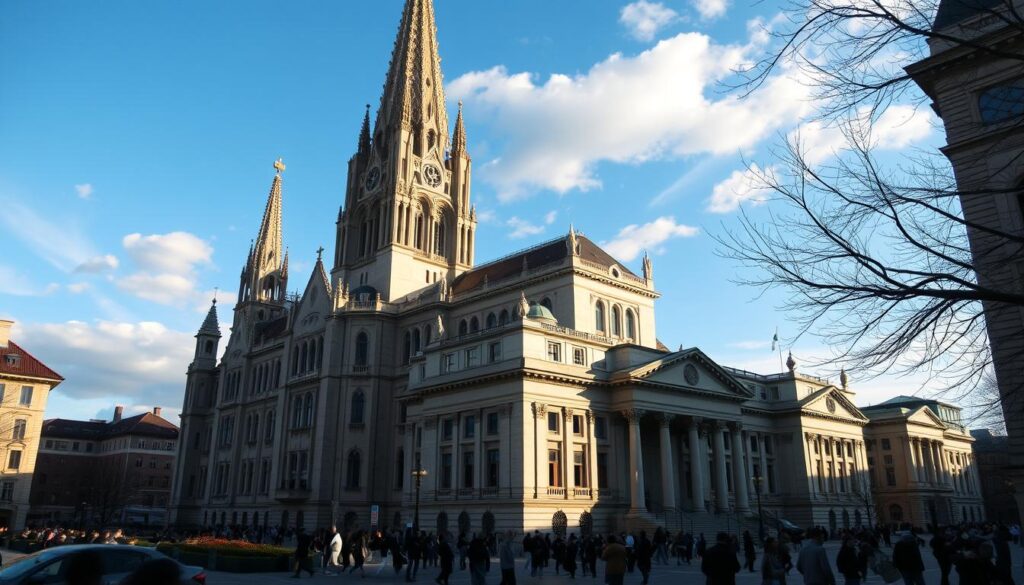
Political Influences on Religious Change
Six German princes and fourteen city leaders made history in 1529. At the Diet of Speyer, they protested restrictions on Lutheran teachings, earning the name “Protestants.” Their defiance showed how local rulers could challenge the Holy Roman Empire’s authority.
Henry VIII’s break with Rome created another political milestone. By establishing the Church of England, he merged religious reform with royal power. This move gave monarchs control over church matters while distancing England from papal influence.
“We protest before God and all men that we will not consent to anything contrary to His Word.”
The 1555 Peace of Augsburg brought temporary stability. It let each prince choose between Catholicism or Lutheranism for their territory. This “whose realm, his religion” principle reshaped how power and faith interacted across Europe.
| Event | Year | Political Impact |
|---|---|---|
| Edict of Worms | 1521 | Banned Lutheran teachings |
| Diet of Speyer | 1529 | Created Protestant identity |
| Peace of Augsburg | 1555 | Legalized Lutheran states |
These developments show how church reforms relied on political support. Rulers gained autonomy while reformers found protectors – a partnership that still influences modern governance.
Defining Protestant Theologies
New ideas about faith and scripture rewired Christianity’s DNA during the Reformation. At its core lay three groundbreaking doctrines that reshaped religious life. These teachings gave believers fresh ways to understand salvation and connect with divine truth.
Sola Scriptura and Justification by Faith Alone
Sola Scriptura became Christianity’s new compass. This principle declared the Bible as God’s ultimate authority – not church leaders or traditions. For the first time, farmers and merchants could read scripture in their own languages.
Luther captured this shift perfectly: “Scripture is its own interpreter.” His translation work turned ancient texts into living guides for ordinary people. Churches began replacing Latin services with local dialects.
The doctrine of justification offered radical hope. It taught that salvation came through faith in Christ alone – not rituals or good deeds. This assurance freed believers from anxiety about earning God’s favor.
- Bible study replaced priestly instruction
- Faith became personal rather than transactional
- Five key phrases (Solas) defined Reformation beliefs
The Priesthood of All Believers
This concept blew open church doors. Every Christian gained equal access to God without needing clergy as middlemen. Congregations started making decisions together instead of waiting for bishops.
Three changes transformed worship:
- Laypeople leading prayers and readings
- Communion served directly to worshippers
- Local groups interpreting scripture
These teachings didn’t just change doctrines – they reshaped daily spiritual life. Families discussed Bible stories at dinner tables. Communities sang hymns in their native tongues. The Reformation became something people lived, not just believed.
Movements and Branches Within Protestantism
Diverse expressions of faith emerged as reform ideas took root across Europe. By the mid-1500s, three primary streams shaped Christian practice in bold new ways. These branches shared core beliefs but developed unique approaches to worship and community life.

Lutherans, Reformed, and Radical Groups
Lutheran churches became the first organized expression of reform. They kept traditional elements like altars and liturgy while rejecting papal authority. Congregations sang hymns in local languages and focused on scripture-centered sermons.
The Reformed tradition took shape through John Calvin’s systematic theology. These groups emphasized God’s sovereignty and simple worship spaces. Presbyterian governance structures gave lay members decision-making power alongside clergy.
Radical reformers pushed boundaries further. Anabaptists insisted on adult baptism and refused to bear arms. Their commitment to separate from state-controlled churches led to severe persecution. These groups often met secretly in homes rather than formal buildings.
| Movement | Key Beliefs | Governance | Modern Presence |
|---|---|---|---|
| Lutheran | Justification by faith | Bishop-led structure | 76 million members worldwide |
| Reformed | Predestination | Elder councils | Presbyterian & Congregational churches |
| Radical | Adult baptism | Congregational autonomy | Mennonites & Amish communities |
Today’s landscape includes vibrant new expressions. Nondenominational churches combine contemporary worship with conservative theology. Charismatic movements emphasize spiritual gifts and personal revelation. This ongoing evolution shows how communities adapt ancient truths to modern contexts while keeping biblical principles central.
Influence of the Roman Catholic Church
The Roman Catholic Church struck back with sweeping reforms that changed religious dynamics across Europe. When Pope Leo X excommunicated Luther in 1521, it marked the start of a fierce rivalry. Church leaders and the Holy Roman Empire joined forces, banning Lutheran teachings through the Edict of Worms.
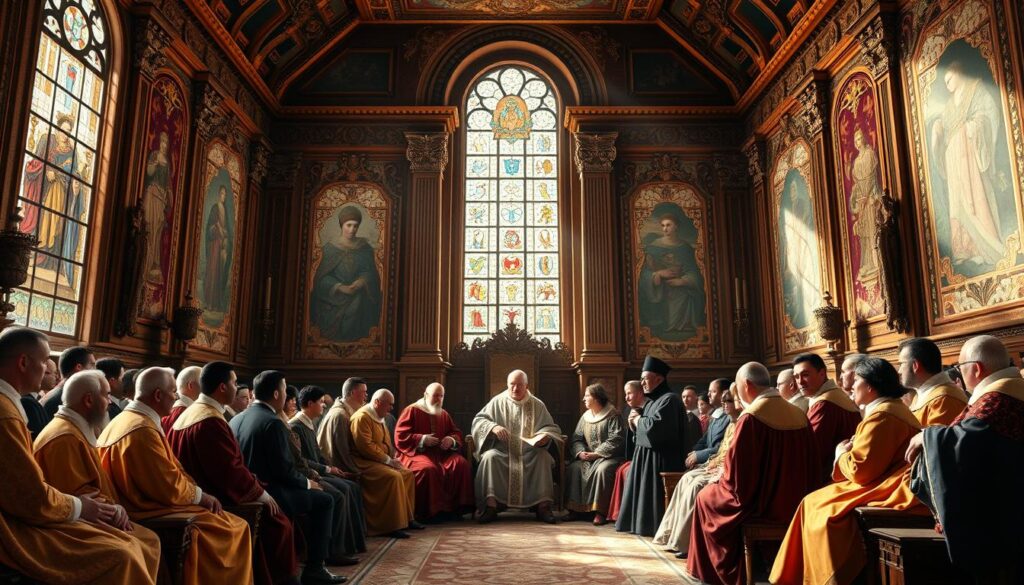
Strategic Reforms and Global Reach
From 1545 to 1563, Catholic officials held the Council of Trent to address Protestant criticisms. They reaffirmed traditional doctrines while improving clergy education. The council’s decisions shaped Catholic practices for centuries:
- Standardized Latin Mass requirements
- Enhanced training for priests
- Strict rules against selling church positions
The Jesuit order became Catholicism’s sharpest tool. Founded in 1540, these missionaries established schools worldwide and debated Protestant thinkers. Their work expanded the church’s influence from Asia to the Americas.
| Event | Year | Key Action | Impact |
|---|---|---|---|
| Edict of Worms | 1521 | Banned Lutheran teachings | Strengthened Catholic authority |
| Council of Trent | 1545-1563 | Standardized doctrines | Unified Catholic response |
| Jesuit Founding | 1540 | Launched global missions | Spread Catholic education |
| Peace of Augsburg | 1555 | Allowed state religions | Reduced direct conflicts |
Political alliances boosted these efforts. The Habsburg dynasty backed Catholic causes, using military force to reclaim territories. This mix of theology and power sparked wars but also pushed both sides to refine their beliefs.
Despite clashes, the rivalry produced lasting changes. Catholic art flourished, missionaries reached new continents, and scripture study expanded. Both traditions grew stronger through competition – a messy but transformative chapter in Christian history.
Societal Impact of the Protestant Reformation
The ripples of reform reached far beyond Sunday sermons, reshaping how people lived, worked, and governed. Where new teachings took root, entire communities transformed their way of life. Literacy rates soared as believers embraced personal Bible study, sparking school-building campaigns across Europe.
This movement rewired economic systems too. The emphasis on thrift and hard work created what we now call the “work ethic.” These values helped fuel capitalism’s growth, changing how people approached trade and innovation for centuries.
Political landscapes shifted as local leaders gained power over religious matters. National identities grew stronger, weakening the papacy’s influence in daily life. Even art and music evolved, with hymns sung in common languages instead of Latin.
Today’s world still feels these changes. Modern education systems, democratic principles, and workplace values all carry echoes of Reformation ideas. What began as spiritual renewal became a blueprint for how societies organize themselves – proof that faith movements can reshape human life in unexpected ways.
FAQ
What sparked the religious changes in the 16th century?
Growing criticism of Roman Catholic practices, like the sale of indulgences, fueled demands for reform. Figures such as Martin Luther and John Calvin challenged doctrines they saw as conflicting with Scripture, leading to a break from traditional authority.
Who were the main leaders challenging the Catholic Church?
A: Martin Luther’s Ninety-Five Theses criticized church corruption, while John Calvin and Huldrych Zwingli shaped Reformed theology. Their writings emphasized personal faith and Scripture over clerical hierarchy.
How did political powers influence these religious shifts?
Rulers in the Holy Roman Empire often supported reformers to weaken papal authority. This alliance between princes and reformers allowed new churches to grow, reshaping Europe’s religious and political landscape.
What are the core beliefs that define these movements?
Central ideas include sola scriptura (Scripture alone) and justification by faith. The priesthood of all believers also rejected the need for intermediaries between individuals and God.
How did the Catholic Church respond to the rise of new groups?
The Counter-Reformation sought to address criticisms through internal reforms while reaffirming traditional doctrines. Councils like Trent clarified teachings and countered Protestant claims, deepening divisions.
What long-term effects did these reforms have on society?
They encouraged literacy through vernacular Bibles, reshaped education, and influenced concepts of individual freedom. The reforms also fueled wars but eventually led to greater religious diversity in Europe.