For centuries, a sacred collection of texts has guided spiritual practices and teachings within one of the world’s largest faith communities. This compilation stands apart through its distinctive structure—46 ancient writings in the first section and 27 in the second. These works form a foundation that continues to shape worship, ethics, and theology for millions.
What makes this collection unique? Seven additional writings, along with expanded sections in two others, distinguish it from versions used in other Christian traditions. These texts—rooted in early Greek translations—sparked centuries of theological debate before being formally affirmed by church leaders. Their inclusion reflects a rich history of discernment spanning early Christian assemblies to decisive councils.
The process of preserving these texts remains carefully managed today. Every approved edition must meet strict translation standards that honor original meanings while maintaining doctrinal alignment. This attention to detail ensures clarity for modern readers without compromising ancient wisdom.
Key Takeaways
- Contains 73 sacred writings divided between ancient covenants and newer teachings
- Includes seven additional texts not found in some other Christian editions
- Church councils solidified the official list of accepted works over centuries
- Translation guidelines preserve doctrinal accuracy across languages
- Directly influences spiritual practices and moral teachings today
Understanding the Historical and Religious Context
Imagine living in faith communities where sacred texts arrived as scattered scrolls and letters. Early Christians faced this reality, navigating spiritual guidance without an official list of approved writings. Their journey to define scripture reveals how authority emerged through lived experience rather than rigid rules.
Tracing Early Christian Scripture Traditions
Fourth-century Greek manuscripts like Vaticanus and Sinaiticus show something surprising. They mixed deuterocanonical books with other Old Testament texts seamlessly. These codices became vital tools for worship, suggesting early believers valued these writings equally.
Leaders relied on practical tests to identify authoritative texts. Did a book align with apostolic teachings? Was it widely used in worship? Communities gradually recognized works that resonated with their shared faith experiences.
Significance of Biblical Authority in the Past
Paul’s acknowledgment that Jews preserved “the oracles of God” (Romans 3:2) shaped many early decisions. Some groups strictly followed Jewish scripture lists. Others embraced additional texts that deepened their spiritual lives.
A two-tier system developed. Core books established church doctrine, while others offered moral support. This flexible approach allowed diverse communities to grow while maintaining unity through key scripture.
Through prayer and debate, these early choices laid groundwork for how history and divine guidance intersect in religious traditions today.
Historical Evolution of the Biblical Canon
How did ancient communities decide which sacred texts held ultimate authority? The answer unfolded through centuries of reflection and debate. Church leaders gradually shaped the canon through councils that responded to theological and cultural challenges.
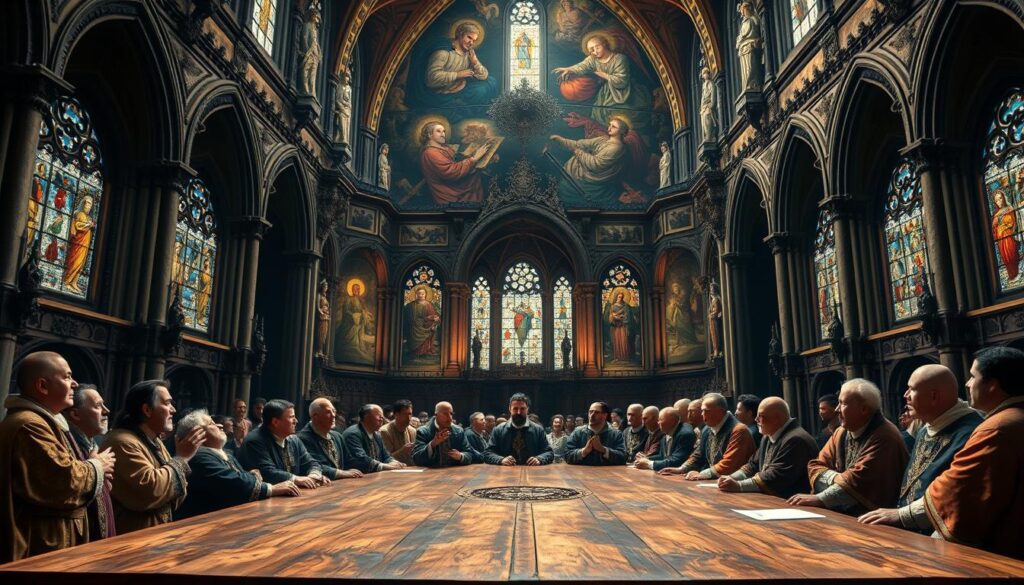
Development from Early Church to the Council of Florence
The Council of Rome (382 AD) marked a turning point. It produced the first official list of accepted writings, later reinforced by African synods. By 419 AD, Carthage councils confirmed these texts as essential for worship and teaching.
Debates continued for centuries. The Council of Florence (1431-1449) took a bold step by including deuterocanonical books in its list. Though not final, this decision showed growing consensus about their spiritual value.
The Role of the Council of Trent in Canon Formation
Everything changed during the Protestant Reformation. The Council of Trent (1545-1563) made history by formally declaring the 73-book canon as doctrine. This wasn’t just about numbers—it reaffirmed ancient traditions while addressing new questions.
Records reveal an interesting twist. Many theologians at Trent saw themselves as protecting existing practices rather than creating new rules. Their work bridged Augustine’s inclusive approach with Jerome’s focus on Hebrew texts.
Key Components of the Roman Catholic Bible
The sacred texts form a carefully organized library rather than a random collection. This structure helps readers navigate complex themes while maintaining historical continuity. Let’s explore how these writings are grouped and why certain texts hold special significance.
Structure of the Old and New Testaments
The Old Testament’s 46 books unfold in four clear sections. First comes the Pentateuch—Genesis through Deuteronomy—laying groundwork for laws and early history. Next, 16 historical works track Israel’s journey, including deuterocanonical gems like Tobit’s adventures and the Maccabees’ resistance stories.
Wisdom seekers find rich material in seven poetic books. Alongside Psalms and Proverbs, Wisdom of Solomon offers timeless reflections on virtue. Prophetic voices fill the final 18 works, with Baruch’s messages blending seamlessly with major prophets like Isaiah.
Inclusion of Deuterocanonical Books and Additional Materials
These special texts aren’t sidelined—they’re threaded throughout the Old Testament. You’ll find Judith’s heroism among historical accounts and Sirach’s practical advice beside Proverbs. This integration shows their equal value in teaching and worship.
The New Testament mirrors other Christian traditions with 27 books, from Gospels to Revelation. What makes this collection unique lies in how earlier sections preserve spiritual insights from Judaism’s Hellenistic period—voices that shaped early Christian thought.
Comparing the Canon: roman catholicism bible vs. Protestant Bible
Two Christian traditions share core scriptures but differ in their approach to ancient texts. While both use the same 27 New Testament books, their Old Testament collections reveal distinct paths of spiritual inheritance.
Differences in the Old Testament of Each Tradition
Catholic Bibles contain 46 Old Testament writings—seven more than Protestant editions. These extra books include Tobit’s journey, Judith’s bravery, and the Maccabees’ resistance stories. Additions to Daniel and Esther expand familiar narratives with new insights.
Protestant Bibles follow the Hebrew Masoretic Text, limiting their Old Testament to 39 books. Works like Wisdom of Solomon and Baruch—preserved in Greek Septuagint manuscripts—appear only in Catholic editions. This difference stems from how early communities valued translation traditions.
| Catholic Bibles | Protestant Bibles | Key Distinction |
|---|---|---|
| 46 Old Testament books | 39 Old Testament books | Septuagint vs. Hebrew sources |
| Deuterocanonical texts | Apocrypha (if included) | Terminology reflects acceptance |
| Supports intercessory prayers | Rejects purgatory concepts | Doctrinal implications |
Impact on Doctrinal Authority and Faith Practices
These textual differences shape teachings. Catholic doctrine finds support in 2 Maccabees’ references to praying for the dead. Protestant traditions often view such practices as unsupported by scripture they recognize.
The term “Deuterocanon” (second canon) shows Catholic acceptance of these texts’ spiritual value. “Apocrypha” (hidden writings) reveals Protestant caution. This linguistic divide mirrors deeper debates about authority and tradition.
Both communities share a faith in Christ but navigate their spiritual journeys through different scriptural landscapes. These canonical choices continue to influence worship styles, ethical discussions, and interdenominational dialogues today.
Exploring the Deuterocanonical Books
Ancient texts often spark curiosity and debate. Among these, seven special writings—and additions to Daniel and Esther—hold a unique place in spiritual history. These works bridge Jewish traditions with early Christian thought, offering wisdom that shaped centuries of faith practices.

Historical Acceptance and Debates
Third-century Christians began quoting texts like Tobit and Wisdom as scripture. Though not directly cited in the New Testament, subtle nods appear. Hebrews 11:35 echoes 2 Maccabees’ martyrs, showing early familiarity with these stories.
Debates simmered for centuries. In 1566, Sixtus of Sienna coined “Deuterocanonical” to clarify their status. He stressed these books were “second in reception time”—not importance. This term helped defend their value amid Reformation-era disputes.
Their Role in Catholic Worship and Teaching
These texts breathe life into worship and learning. During Lent, Judith’s bravery inspires homilies. Sirach’s practical advice shapes ethical teaching. Maccabees’ accounts of martyrdom fuel discussions about sacrifice.
Doctrinally, they support practices like praying for the departed. Wisdom 3:1-4 and 2 Maccabees 12:45 reinforce beliefs about purification after death. Such passages show how included deuterocanonical works complement core teachings.
From liturgy to personal study, these writings remain vital. They preserve Jewish resilience during Greek rule while deepening Christian understanding of divine justice and mercy.
Translation Principles and Bible Versions
The journey of sacred texts across languages reveals careful stewardship. While the Council of Trent affirmed the Latin Vulgate as official in 1546, it never restricted work with original languages. This balance between tradition and scholarship shapes translation efforts today.
From the Vulgate to the Nova Vulgata
Jerome’s 4th-century Vulgate became the Church’s bedrock for centuries. In 1979, scholars introduced the Nova Vulgata, updating archaic terms while preserving doctrinal accuracy. This modern Latin edition now serves in official documents, bridging ancient wisdom with contemporary needs.
Modern English Translations Approved by the Church
Today’s English translation options blend rigor with readability. The New American Bible (1970) and Revised Standard Version Catholic Edition (1966) lead popular choices. Each follows strict guidelines from Pius XII’s Divino afflante Spiritu, requiring:
- Expertise in Hebrew, Greek, and Aramaic
- Analysis of ancient manuscripts
- Textual criticism techniques
From the poetic Douay-Rheims to the dynamic Jerusalem Bible, these versions help millions connect with sacred writings in their native tongue. Every approved translation honors both historical roots and modern understanding.
FAQ
Why does the Old Testament differ between traditions?
The Old Testament includes additional books like Tobit and Wisdom, recognized by the Church since ancient times. These texts, called Deuterocanonical, were affirmed at the Council of Trent but excluded in later Protestant editions.
How did early councils shape the canon?
Councils like Florence (1442) and Trent (1546) formalized the list of inspired texts. These gatherings resolved debates, ensuring consistency in teachings and worship practices across communities.
What role do Deuterocanonical books play today?
They’re used in liturgy, theology, and personal devotion. Passages like 2 Maccabees 12:45 support doctrines such as prayer for the deceased, highlighting their ongoing spiritual significance.
Are modern translations faithful to original texts?
Approved versions, such as the NABRE or RSV-CE, rely on ancient Hebrew, Greek, and Latin sources. Scholars and Church authorities ensure accuracy while balancing readability for today’s audiences.
How does the New Testament structure align with other traditions?
It mirrors Protestant editions with 27 books, including the Gospels and Pauline letters. Differences arise in Old Testament references, which sometimes cite Deuterocanonical works.
Why was the Vulgate important historically?
St. Jerome’s 4th-century Latin translation became the Church’s official text for over a millennium. Its clarity and widespread use shaped theology, art, and medieval European culture.
Do these differences affect core beliefs?
While shared doctrines like the Resurrection remain central, unique texts inform distinct practices—such as purgatory or intercession of saints—rooted in the Deuterocanonical writings.