The Presbyterian Church has a rich history that dates back to the 16th century Reformation. This period was marked by significant religious and social change, influenced by Protestant reformers such as John Knox. The Reformation laid the groundwork for the establishment of the Church of Scotland, which would later become known as the Presbyterian Church.
The influence of the Reformation and John Knox played a crucial role in shaping the theology and governance of the church. Understanding this historical context is essential to grasping the development of Presbyterianism in Scotland.
Key Takeaways
- The Presbyterian Church has its roots in the 16th century Reformation.
- John Knox was a pivotal figure in shaping the church’s theology and governance.
- The Reformation led to the establishment of the Church of Scotland.
- The church’s history is marked by significant religious and social change.
- Understanding the historical context is crucial to grasping the development of Presbyterianism.
Origins of the Presbyterian Church in Scotland
Scotland’s Presbyterian denomination has its roots in the country’s early Christian community and the subsequent Reformation. The early Christian community in Scotland was significantly influenced by missionaries such as Saint Ninian and Saint Columba, who played crucial roles in spreading Christianity throughout the region.
Historical Background
The historical background of the Presbyterian Church in Scotland is characterized by its development from the early Christian missions to the establishment of a distinct Presbyterian governance. The Reformation in Scotland was a pivotal event that led to the formation of a Protestant church, which eventually became the Presbyterian Church of Scotland.
The influence of the early Christian community and the subsequent Reformation laid the groundwork for the church’s theology and practices. The Presbyterian Church in Scotland adopted a governance structure based on the principles of Presbyterianism, which emphasizes the importance of local church assemblies and the role of elders in church leadership.
Key Figures in Early Presbyterianism
John Knox, a prominent leader of the Scottish Reformation, was instrumental in shaping the Presbyterian Church in Scotland. Knox’s theological perspectives and leadership helped establish the church’s doctrines and governance structures. Other key figures, including George Buchanan and Andrew Melville, also contributed to the development of Presbyterianism in Scotland.
The contributions of these individuals, along with the historical context of the Reformation, were crucial in establishing the Presbyterian Church in Scotland as a distinct denomination within the broader Christian community.
The Role of John Knox
As a key figure in the 16th-century Scottish Reformation, John Knox’s impact on the Presbyterian Church’s theology and governance was profound. His advocacy for a Protestant faith grounded in the Bible helped shape the church’s beliefs and practices.
Theological Impact
John Knox was instrumental in promoting a form of Christianity that emphasized the authority of Scripture and the importance of personal faith. His theological writings and sermons played a crucial role in defining the Presbyterian Church’s doctrine, which continues to influence its beliefs today.
The Presbyterian Church in Scotland’s commitment to Reformed theology is a direct result of Knox’s efforts to align the church with Protestant principles. This theological foundation has shaped the church’s stance on various issues, from worship and sacraments to social justice and community engagement.
Establishment of Leadership Structures
Knox also played a pivotal role in establishing the governance structure of the Presbyterian Church. He advocated for a Presbyterian form of government, where leadership is shared among elders and ministers. This governance model has become a hallmark of the Presbyterian Church, not just in Scotland but globally.
| Leadership Structure | Description | Key Features |
|---|---|---|
| Presbyterian Governance | A form of church government where local churches are governed by elders and ministers. | Shared leadership, local autonomy, connectionalism |
| Role of Elders | Elders are responsible for spiritual leadership and governance within the church. | Spiritual guidance, decision-making, pastoral care |
| Ministers’ Responsibilities | Ministers are ordained to preach, teach, and administer sacraments. | Preaching, teaching, sacramental administration |
The establishment of this leadership structure has allowed the Presbyterian Church to maintain a balance between local autonomy and connectionalism, enabling it to address both local and global issues effectively.
Significant Historical Events
Significant historical events have played a crucial role in molding the Presbyterian Church in Scotland. These events have not only shaped the church’s theology and practices but have also influenced its governance and identity.
The Scottish Reformation
The Scottish Reformation was a pivotal period in the church’s history, marked by the adoption of Protestantism and the rejection of Catholic practices. This significant event occurred in the 16th century, led by reformers such as John Knox, who played a crucial role in shaping the church’s theological direction.
The Covenanting Movement
The Covenanting Movement, which emerged in the 17th century, was another critical event that further defined the church’s identity and its commitment to Presbyterian governance. The movement was characterized by the signing of covenants, pledging to maintain the purity of the church’s doctrine and practices.
The Covenanting Movement had a lasting impact on the church, influencing its stance on various theological and governance issues. It reinforced the church’s commitment to its Presbyterian roots and shaped its response to challenges from both within and outside the church.
The Westminster Assembly
As a cornerstone in Presbyterian history, the Westminster Assembly brought together theologians and church leaders to reform the Church of England.
Formation and Purpose
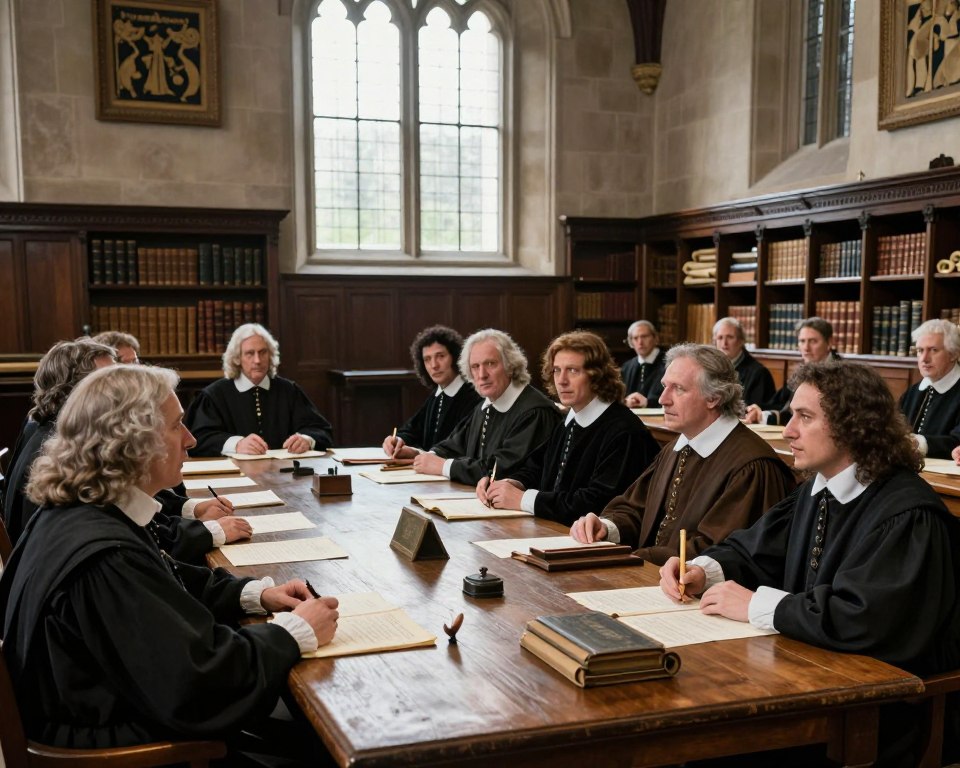
The Westminster Assembly, convened in 1643, was a response to the need for reform within the Church of England. Its primary purpose was to create a unified church government and doctrine.
The assembly consisted of 121 divines, 10 lords, and 20 members of the House of Commons, making it a diverse gathering of ecclesiastical and political figures.
| Key Documents | Description | Year Adopted |
|---|---|---|
| Westminster Confession of Faith | A comprehensive statement of Presbyterian theology | 1646 |
| Directory for Public Worship | Guidelines for worship practices in Presbyterian churches | 1644 |
| Form of Presbyterian Church Government | Outline of the governance structure for Presbyterian churches | 1645 |
Impact on Presbyterian Doctrine
The Westminster Assembly’s documents, particularly the Westminster Confession of Faith, have had a lasting impact on Presbyterian doctrine, shaping the theological understanding and practices of Presbyterian churches globally, including those in Scotland.
The Confession’s detailed exposition of Reformed theology has influenced not only the Presbyterian Church in Scotland but also other Presbyterian denominations worldwide.
Growth and Development
The Presbyterian Church in Scotland’s growth was characterized by its establishment of congregations across Scotland. This expansion was a crucial aspect of the church’s development, enabling it to reach a wider audience and solidify its presence in various regions.
Expansion Across Scotland
The church’s expansion across Scotland was marked by the establishment of new congregations in various locations. This growth was facilitated by the church’s commitment to spreading its teachings and values. As a result, the Presbyterian Church in Scotland became a prominent religious institution, with a presence in many parts of the country.
Key locations for these new congregations included urban centers, rural areas, and islands, ensuring that the church’s message reached diverse communities. The establishment of these congregations not only expanded the church’s reach but also contributed to the development of local communities.
Influence of Scottish Presbyterians Globally
Scottish Presbyterians had a significant influence globally, with many emigrating to other countries and establishing Presbyterian churches. This diaspora contributed to the spread of Presbyterianism, shaping the religious landscape in various parts of the world.
The Presbyterian Church Scotland beliefs were carried by Scottish Presbyterians to their new homes, influencing the development of Presbyterian churches internationally. This global influence is a testament to the church’s ability to adapt and thrive in different cultural contexts.
The legacy of Scottish Presbyterianism can be seen in the many Presbyterian churches around the world that owe their origins to Scottish emigrants. This global network of Presbyterian churches continues to be an important aspect of the Presbyterian community’s identity and mission.
The Presbyterian Church Today
As a cornerstone of Scottish religious life, the Presbyterian Church continues to evolve. The church is engaged in ongoing discussions about its beliefs, practices, and governance, striving to maintain its traditional identity while being relevant in a changing world.
Current Beliefs and Practices
The Presbyterian Church in Scotland is committed to its core beliefs while adapting to modern needs. The church’s practices are influenced by its historical roots and its commitment to social justice. For instance, the church is actively involved in community service and social welfare programs.
One of the key practices is the emphasis on education and theological study. The church encourages its members to engage deeply with their faith, promoting a culture of learning and spiritual growth.
Diversity Within the Church
The Scottish Presbyterian Church is characterized by its diversity, with various perspectives and approaches being represented within its congregation. This diversity is seen as a strength, enabling the church to engage with a wide range of issues and communities.
The church’s governance structure allows for a degree of autonomy among its congregations, fostering a rich tapestry of worship and community engagement. This diversity is celebrated, and efforts are made to ensure that all voices are heard within the church’s decision-making processes.
The ongoing evolution of the Presbyterian Church in Scotland reflects its commitment to remaining a vibrant and relevant spiritual force in Scottish society. Through its beliefs, practices, and embrace of diversity, the church continues to serve its congregation and the broader community.
Social and Political Engagement
The Presbyterian Church in Scotland has been deeply intertwined with the nation’s identity and political landscape throughout its history. This connection is rooted in the church’s theological understanding and its commitment to serving the needs of Scottish society.
Presbyterianism and Scottish Identity
The Presbyterian Church has played a significant role in shaping Scottish identity. Its influence extends beyond religious practices to impact cultural and national consciousness. The church’s emphasis on education, social justice, and community service has contributed to its integral role in Scottish society.
Key aspects of Presbyterianism that have shaped Scottish identity include:
- Emphasis on education and literacy
- Commitment to social justice and equality
- Community service and volunteerism
Historical Political Involvement
The Presbyterian Church in Scotland has a long history of political involvement, often taking stands on issues that affect the nation. This involvement is rooted in the church’s belief in being a moral compass for society.
| Historical Event | Church’s Role | Impact |
|---|---|---|
| Scottish Reformation | Key player in the Reformation movement | Shaped Protestantism in Scotland |
| Covenanting Movement | Supported the movement for Presbyterian governance | Influenced the establishment of Presbyterianism as the national church |
| Westminster Assembly | Participated in the assembly to shape Presbyterian doctrine | Developed the Westminster Confession, a foundational document for Presbyterianism |
The church’s historical political involvement has had a lasting impact on Scotland, shaping not only religious practices but also the nation’s social and political landscape.
Challenges Faced by the Church
As with many religious institutions, the Presbyterian Church in Scotland grapples with significant challenges. The church is at a pivotal moment, needing to balance tradition with the demands of a rapidly changing society.
The challenges are multifaceted, ranging from declining attendance to the need for modernization, and debates on various social issues. These challenges are not unique to the Presbyterian Church but are common among many religious organizations worldwide.
Modernization and Attendance Decline
One of the significant challenges facing the Presbyterian Church in Scotland is the decline in church attendance. This decline has implications for the church’s vitality and sustainability. To address this, the church is exploring ways to modernize its practices and make them more relevant to contemporary society.
Some of the strategies include:
- Embracing digital technology to reach a wider audience
- Revising traditional worship practices to make them more inclusive and engaging
- Developing community outreach programs to serve the broader community
By adopting these strategies, the church aims to attract a new generation of members and revitalize its presence in Scottish society.
Debates on Social Issues
The Presbyterian Church in Scotland is also grappling with debates on various social issues, including human sexuality and social justice. These debates require the church to navigate complex theological and ethical questions, balancing traditional beliefs with contemporary values.
Some of the key issues being debated include:
- The role of the church in advocating for social justice
- The church’s stance on human sexuality and its implications for church membership and leadership
- The balance between traditional doctrine and modern societal norms
These debates are challenging the church to re-examine its beliefs and practices, ensuring they remain relevant and meaningful in today’s world.
The Presbyterian Church in Scotland’s ability to navigate these challenges will be crucial in determining its future relevance and vitality. By embracing change while remaining true to its core beliefs, the church can continue to play a significant role in Scottish society.
The Global Influence of Scottish Presbyterianism
The impact of Presbyterianism in Scotland extends far beyond its borders, with the Scottish Presbyterian Church playing a significant role in shaping Presbyterian traditions worldwide.
Presbyterianism Beyond Scotland
In the United States, Presbyterian churches have been influenced by Scottish Presbyterianism, with many tracing their roots back to Scotland. The Presbyterian Church in the United States has a rich history, with Scottish Presbyterians contributing to its development.
Global Mission Efforts
Scottish Presbyterians have been involved in collaborative global mission efforts, working with other Presbyterian churches and denominations to advance the gospel and serve communities worldwide. This global partnership has enabled the Scottish Presbyterian Church to make a meaningful impact on a global scale, promoting Presbyterianism in Scotland and beyond.
The legacy of Scottish Presbyterianism continues to be felt globally, with its influence evident in the many Presbyterian churches and organizations around the world.
FAQ
What are the roots of the Presbyterian Church in Scotland?
The Presbyterian Church in Scotland has its roots in the Reformation of the 16th century, a period of significant religious and social change in Scotland, influenced by Protestant reformers such as John Knox.
Who was John Knox and what was his impact on the Presbyterian Church?
John Knox was a pivotal figure in the Scottish Reformation and the development of the Presbyterian Church, advocating for a Protestant faith grounded in the Bible and promoting a Presbyterian form of government.
What was the significance of the Westminster Assembly to the Presbyterian Church?
The Westminster Assembly, convened in the 17th century, produced the Westminster Confession of Faith, a document that has had a lasting impact on Presbyterian doctrine, shaping the theological understanding of Presbyterian churches, including those in Scotland.
How did the Presbyterian Church in Scotland expand and develop?
The church expanded across Scotland, establishing congregations in various locations, and Scottish Presbyterians had a profound influence globally, with many emigrating to other countries and establishing Presbyterian churches.
What are the current beliefs and practices of the Presbyterian Church in Scotland?
The church continues to be a vibrant and dynamic institution, maintaining its traditional Presbyterian identity while seeking to be relevant in a changing world, with a recognition of diversity within the church.
How has the Presbyterian Church in Scotland been involved in social and political issues?
The church has played a significant role in shaping Scottish identity and has been involved in various social and political issues throughout its history, advocating for social justice and participating in national debates.
What challenges is the Presbyterian Church in Scotland facing today?
The church is grappling with the decline in church attendance, the need for modernization, and debates on social issues such as human sexuality and social justice, requiring it to navigate complex theological and ethical questions.
What is the global influence of Scottish Presbyterianism?
Scottish Presbyterianism has had a profound influence globally, with its impact being felt in various parts of the world, including the United States, where Presbyterian churches have been shaped by Scottish Presbyterian traditions.
What is the history of the Scottish Reformation and its impact on the Presbyterian Church?
The Scottish Reformation was a crucial period that saw the adoption of Protestantism and the rejection of Catholic practices, leading to the establishment of the Presbyterian Church in Scotland.
How has the Presbyterian Church in Scotland contributed to global mission efforts?
Scottish Presbyterians have been involved in collaborative global mission efforts, working with other Presbyterian churches and denominations to advance the gospel and serve the needs of communities around the world.