The Presbyterian Church has a unique form of governance known as Presbyterian polity, which emphasizes the authority of councils composed of ministers and elected members, known as ruling elders.
This system is rooted in the church’s history and theology, focusing on fairness, equity, and the presence of the Holy Spirit in every believer. It is characterized by a collective leadership approach, ensuring that decisions are made through a collaborative process.
Understanding this governance structure is crucial for grasping how the Presbyterian Church operates and makes decisions.
Key Takeaways
- The Presbyterian Church is governed by councils of ministers and elected elders.
- This governance structure emphasizes fairness and equity.
- Decision-making is a collaborative process.
- The system is rooted in the church’s history and theology.
- It reflects a commitment to collective leadership.
What is Presbyterian Church Government?
At its core, Presbyterianism is defined by its governance structure, which is rooted in the principles of connectionalism and the guidance of the Holy Spirit. This unique system emphasizes the collective decision-making process, involving both ministers and elders in the governance of the church.
Definition of Presbyterianism
Presbyterianism is a branch of Protestant Christianity that is governed by a presbyterian form of government. This means that the church is governed by councils of elders, rather than a single hierarchy or individual leaders. The term “Presbyterian” comes from the Greek word “presbyteros,” meaning “elder.”
The Presbyterian Church is characterized by its connectionalism, where local congregations are part of a broader church community. This connectionalism is reflected in the various councils that make decisions for the church, ensuring that the governance is both local and collective.
Key Principles of Presbyterian Governance
The key principles of Presbyterian governance include the importance of the Holy Spirit’s guidance in decision-making and the connectionalism that binds congregations together. These principles are fundamental to understanding how Presbyterian churches operate and make decisions.
| Principle | Description |
|---|---|
| Guidance of the Holy Spirit | The belief that the Holy Spirit guides the decision-making process in the church, ensuring that decisions are spiritually grounded. |
| Connectionalism | The practice of local congregations being part of a broader church community, facilitating collective governance and decision-making. |
| Councils of Elders | The governance structure involving councils made up of both ministers and elders, ensuring a collective approach to church governance. |
Understanding these principles is crucial for grasping the nature of Presbyterian Church Government. The governance structure is designed to ensure that decision-making is a collective process, guided by spiritual principles.
Historical Background of Presbyterianism
The historical background of Presbyterianism is deeply intertwined with the Protestant Reformation and the subsequent development of Reformed theology. This connection is crucial for understanding the Presbyterian Church structure and its governance.
Presbyterianism has its roots in the 16th-century Protestant Reformation, particularly through the influence of John Calvin. Calvin’s theological reforms and ecclesiastical governance models significantly shaped the Presbyterian movement.
Origins in the Reformation
The Protestant Reformation in Europe laid the groundwork for Presbyterianism. Key figures like John Calvin and Martin Luther challenged various Catholic Church doctrines, leading to the formation of different Protestant denominations.
Calvin’s theology emphasized the sovereignty of God, the authority of Scripture, and the importance of church governance by elders. These principles became foundational to the Presbyterian Church.
Development in America
As Presbyterianism spread to America, it developed unique characteristics. The governance structure, based on the principles of Calvin and other Reformers, was adapted to the American context.
The Presbyterian Church leadership structure, featuring governing bodies like sessions, presbyteries, and synods, was established. This structure allowed for a balance between local church autonomy and broader denominational coordination.
The influence of the Reformation and the adaptation of Presbyterian governance in America have shaped the contemporary Presbyterian Church structure. Understanding this historical context is essential for appreciating the current practices and governance of Presbyterian churches.
Structure of Church Leadership
In Presbyterian churches, leadership is distributed among different positions to ensure effective governance and service. This shared leadership model is a cornerstone of Presbyterian church organization, allowing for a diverse range of responsibilities and expertise.
The leadership structure is primarily composed of elders, deacons, and pastors, each with distinct roles that contribute to the overall functioning of the church.
Role of Elders
Elders play a crucial role in the governance of the Presbyterian church. They are responsible for making key decisions and guiding the congregation in accordance with the church’s principles and policies. The elders are typically involved in spiritual leadership, ensuring that the church remains true to its theological roots while adapting to the needs of the community.
Role of Deacons
Deacons, on the other hand, are focused on service and care within the church and the broader community. They are responsible for addressing the practical needs of the congregation and for organizing various service projects. The role of deacons is vital in maintaining the church’s commitment to social responsibility and community engagement.
The Pastor’s Position
Pastors, or ministers, are responsible for preaching, teaching, and providing spiritual guidance to the congregation. They play a key role in Presbyterian church administration, working closely with elders and deacons to ensure that the church is well-led and that its various ministries are effective.
The pastor’s role is not only to provide spiritual leadership but also to support the congregation in their faith journey, offering guidance and counseling as needed.
The Synod and General Assembly
Understanding the Presbyterian Church’s governance requires a closer look at its middle and top-tier governing bodies: the Synod and General Assembly. These entities play crucial roles in the Presbyterian Church Government, ensuring unity and coordination across different levels of church organization.
What is a Synod?
A Synod is a mid-level governing body in the Presbyterian Church that oversees several presbyteries. It acts as a bridge between the local presbyteries and the General Assembly, facilitating communication and coordination among the churches within its jurisdiction.
The Synod’s responsibilities include providing support to presbyteries, promoting unity among the churches, and addressing issues that require regional attention. It is an essential component of the Presbyterian Polity, enabling the church to function cohesively at a regional level.
The Function of the General Assembly
The General Assembly is the highest governing body of the Presbyterian Church, bringing together representatives from across the denomination to make decisions and set policies. It is the ultimate authority in matters of doctrine, church governance, and social issues, providing a national perspective on various church-related matters.
The General Assembly meets regularly to discuss and decide on issues affecting the church as a whole. Its decisions have a profound impact on the direction and practices of the Presbyterian Church, shaping its mission and outreach efforts.
Key Roles of the Synod and General Assembly
| Governing Body | Primary Functions |
|---|---|
| Synod | Oversees presbyteries, promotes regional unity, and addresses regional issues. |
| General Assembly | Makes denomination-wide decisions, sets policies, and provides national leadership. |
In summary, the Synod and General Assembly are vital to the Presbyterian Church’s governance structure, each serving distinct yet complementary roles. Understanding their functions is essential for grasping the broader context of Presbyterian Church Government and Presbyterian Polity.
The Role of Congregations
Understanding the role of congregations is crucial to grasping Presbyterian ecclesiology. Congregations in the Presbyterian Church have a significant degree of autonomy but are also part of a broader connectional structure. This balance between local autonomy and connectional responsibility is key to understanding how the Presbyterian Church operates.
Local Church Governance
Local church governance in the Presbyterian Church involves the active participation of the congregation in decision-making processes. This ensures that the local church is not only guided by higher governing bodies but is also actively involved in its own governance and direction. The congregation’s role is crucial in electing leaders, such as elders and deacons, who are responsible for the spiritual guidance and administrative needs of the church.
The congregation also has a say in significant decisions affecting the church, including the calling of a pastor. This process involves discernment and voting, reflecting the Presbyterian commitment to shared governance and collective decision-making.
Congregation’s Authority in Decision-Making
The authority of the congregation in decision-making is a fundamental aspect of Presbyterian governance. While the Presbyterian Church is connectional, with higher courts having significant authority, the local congregation retains important rights and responsibilities. This includes decisions on budget, property, and mission initiatives, which are typically made at the local level.
The congregation’s authority is balanced by the guidance and oversight provided by higher governing bodies, such as presbyteries and synods. This balance ensures that local decisions are made within the context of the broader Presbyterian Church, maintaining unity and consistency across the denomination.
In summary, the role of congregations in the Presbyterian Church is multifaceted, involving significant autonomy at the local level while being part of a larger connectional structure. This structure allows for a dynamic and inclusive form of governance that is characteristic of Presbyterian governance.
Theological Basis for Governance
At the heart of Presbyterian governance lies a profound theological foundation. This foundation is crucial for understanding why Presbyterian churches are governed in a particular way. The governance structure is designed to reflect the church’s theological commitments, particularly the authority of Scripture.
Importance of Scripture
The Presbyterian church places a high value on the authority of Scripture in its governance. This means that decisions are guided by biblical principles. The church believes that Scripture provides clear guidance on matters of faith and practice. As such, the governance structure is designed to ensure that the church remains faithful to its biblical heritage.
Biblical Governance is not just about following rules; it’s about creating a community that is guided by the principles of love, justice, and compassion. The church’s leadership is responsible for interpreting Scripture and applying its teachings to the life of the church.
“Your word is a lamp for my feet, a light on my path.” – Psalm 119:105
Spiritual Leadership and Accountability
Spiritual leadership is a critical aspect of Presbyterian governance. Leaders are chosen for their wisdom, faithfulness, and ability to guide the congregation. The church emphasizes the importance of accountability, ensuring that leaders are responsible to the congregation and to God.
The governance structure includes various checks and balances to prevent any one individual or group from dominating the decision-making process. This ensures that the church remains accountable to its members and to its theological principles.
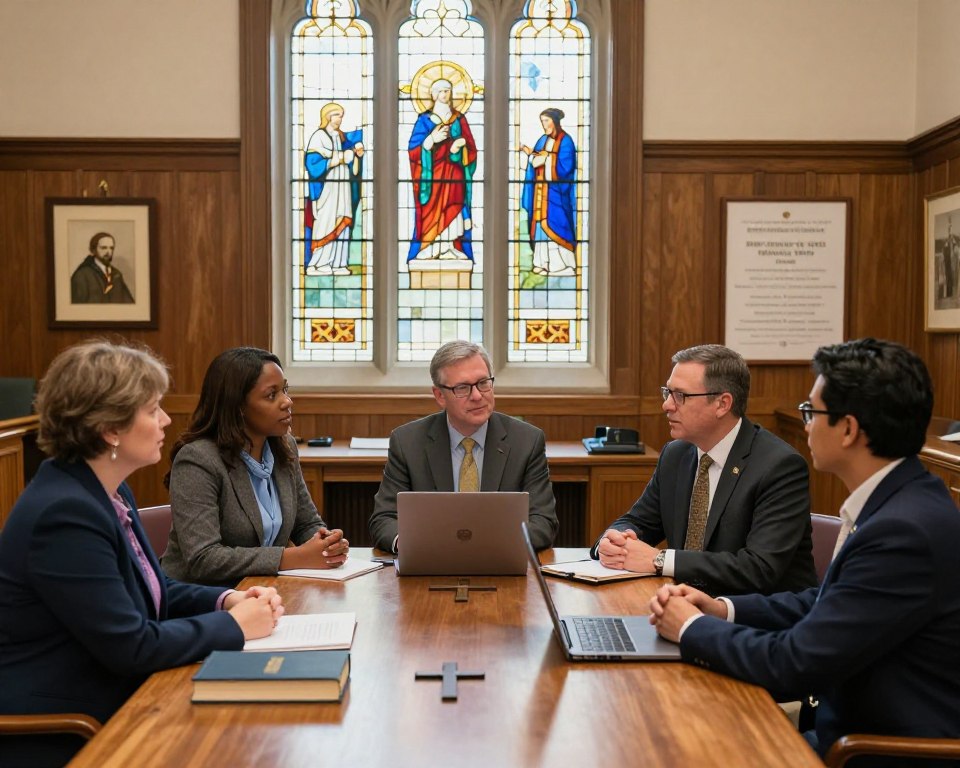
In summary, the theological basis for governance in Presbyterian churches is rooted in the authority of Scripture and the importance of spiritual leadership and accountability. This foundation shapes the church’s leadership structure and decision-making processes, ensuring that the church remains faithful to its theological commitments.
Decision-Making Processes
Understanding how decisions are made is crucial for active participation in Presbyterian Church governance. The Presbyterian Church’s decision-making process is designed to be inclusive and representative, involving various church bodies and committees.
Church Decision-Making Bodies
Decisions in the Presbyterian Church are made through a collaborative process that involves sessions, presbyteries, and the General Assembly. Each of these bodies plays a distinct role in the governance of the church.
The session, composed of elders, is responsible for the governance of the local congregation. Presbyteries, on the other hand, oversee a group of local churches within a specific geographic area, while the General Assembly is the highest governing body, meeting annually to address issues affecting the church as a whole.
The Role of Committees
Committees play a vital role in the decision-making process within the Presbyterian Church. They are responsible for preparing and implementing decisions, as well as providing recommendations to the governing bodies.
Committees may be formed at various levels of church governance, including the local congregation, presbytery, and General Assembly. Their tasks can range from studying issues and making recommendations to overseeing specific programs and initiatives.
Types of Committees and Their Functions
| Committee Type | Function |
|---|---|
| Session Committees | Oversee local church operations, including worship, education, and community outreach. |
| Presbytery Committees | Address issues at the regional level, such as clergy support, new church development, and ecumenical relations. |
| General Assembly Committees | Focus on denominational-wide issues, including mission, social justice, and theological education. |
The effective functioning of these committees is essential for the smooth operation of the Presbyterian Church’s governance structure. By understanding the role of committees and the broader decision-making process, members can participate more fully in the life of the church.
Differences from Other Denominations
Presbyterian polity is distinct from other forms of church government, including episcopal and congregational systems. This distinction is rooted in its unique blend of connectionalism and Presbyterian governance structure.
Comparison with Episcopal Governance
One of the primary differences between Presbyterian and episcopal governance lies in their hierarchical structures. Episcopal governance is characterized by a top-down approach, with bishops holding significant authority over church matters. In contrast, Presbyterian governance emphasizes the role of elders and a more distributed leadership model.
The Presbyterian system is more connectional, meaning that local churches are connected through a broader network of presbyteries and synods, rather than being governed by a central authority figure like a bishop.

Differences from Congregational Governance
Presbyterian Church Government also differs significantly from congregational governance. While congregational governance emphasizes the autonomy of the local congregation, Presbyterian polity balances local church governance with a connectional approach that involves broader church bodies.
This means that decisions in a Presbyterian context are made through a collaborative process involving multiple levels of church leadership, including local elders, presbyteries, and the General Assembly.
- Presbyterian governance involves a council of elders.
- Decision-making is distributed across various church levels.
- Connectionalism allows for cooperation and shared resources among churches.
In summary, the Presbyterian Church Government’s unique blend of connectionalism and distributed leadership sets it apart from both episcopal and congregational governance models. Understanding these differences is crucial for appreciating the nuances of Presbyterian polity.
The Importance of Community Engagement
At the heart of Presbyterian ecclesiology is a strong commitment to community service and social justice. This commitment is reflected in the various ways Presbyterian churches engage with their communities, both locally and beyond.
Mission and Outreach Programs
Presbyterian churches are actively involved in numerous mission and outreach programs. These initiatives range from local food banks and homeless shelters to international development projects. By engaging in such programs, Presbyterian churches demonstrate their dedication to serving others and promoting justice.
For instance, many Presbyterian congregations participate in community development projects, such as building affordable housing or providing educational programs for underprivileged children. These efforts not only benefit the community but also foster a sense of connection and purpose among church members.
Involvement in Social Justice Issues
Beyond their immediate communities, Presbyterian churches are also called to address broader social justice issues. This includes advocating for policies that promote equality, peace, and environmental stewardship. Through their involvement in social justice, Presbyterian churches reflect their commitment to living out their faith in meaningful ways.
Examples of social justice initiatives include campaigns to address climate change, support for refugee resettlement programs, and advocacy for human rights. By engaging in these issues, Presbyterian churches demonstrate their understanding of the church’s role in the world.
The Presbyterian Church’s emphasis on community engagement through mission, outreach, and social justice reflects its theological commitment to serving others. This not only benefits the communities they serve but also enriches the lives of church members.
Future of Presbyterian Church Government
The Presbyterian Church Government is poised to evolve in response to changing societal needs and internal dynamics. As the church navigates these changes, its governance structure will play a crucial role in maintaining its theological principles while adapting to new circumstances.
Emerging Trends
Trends in governance practices are likely to shape the future of the Presbyterian Church. The church’s administration will need to balance tradition with innovation, leveraging technology and new leadership models to enhance its presbyterian church structure and improve overall governance.
Challenges Ahead
The church faces numerous challenges, from declining membership to social justice issues. Effective presbyterian church administration will be critical in addressing these challenges, fostering community engagement, and promoting mission and outreach programs.
By understanding these trends and challenges, the Presbyterian Church can better navigate its future, ensuring that its governance remains relevant and effective in serving its members and the broader community.
FAQ
What is Presbyterian Church Government?
Presbyterian Church Government is a system of governance rooted in the church’s history and theology, emphasizing the role of elders and the connectional nature of the church, designed to ensure fairness, equity, and the honoring of the Holy Spirit’s presence in every believer.
What are the key principles of Presbyterian governance?
The key principles include the importance of the Holy Spirit in guiding the church, connectionalism, and a collective form of leadership through various councils or governing bodies.
How did Presbyterianism develop historically?
Presbyterianism originated in the Protestant Reformation, drawing heavily from the theological and ecclesiastical reforms advocated by John Calvin, and gained significant traction in Scotland before spreading to other parts of the world.
What is the role of elders in Presbyterian churches?
Elders play a crucial role in the governance of the church, making decisions and guiding the congregation as part of the church’s shared leadership model.
What is the difference between a synod and the General Assembly?
A synod is a mid-level governing body that oversees several presbyteries, while the General Assembly is the highest governing body of the Presbyterian Church, bringing together representatives to make decisions and set policies.
How do congregations participate in Presbyterian governance?
Congregations have a degree of autonomy but are also integral to the broader Presbyterian connectional structure, participating in decision-making processes through local church governance.
What is the theological basis for Presbyterian governance?
The governance structure is deeply rooted in the church’s theological commitments, particularly the authority of Scripture, and is designed to reflect spiritual leadership and accountability.
How are decisions made in Presbyterian churches?
Decisions are made through a process involving various church bodies, including sessions, presbyteries, and the General Assembly, with committees playing a vital role in preparing and implementing decisions.
How does Presbyterian governance differ from other denominations?
Presbyterian governance is distinct from episcopal governance, which is hierarchical, and congregational governance, which emphasizes local autonomy, being more connectional and less hierarchical.
Why is community engagement important in Presbyterian churches?
Community engagement is a key aspect of Presbyterian ecclesiology, with churches encouraged to be involved in mission and outreach programs and to address social justice issues, reflecting their commitment to serving others.
What trends are influencing the future of Presbyterian Church Government?
The future is likely to be influenced by trends in governance practices and the challenges the church faces in a rapidly changing world, requiring a balance between maintaining theological principles and adapting to new circumstances.
What is the role of presbyterian polity in church government?
Presbyterian polity is rooted in the church’s history and theology, emphasizing the role of elders and the connectional nature of the church.
How does presbyterian ecclesiology influence church leadership?
Presbyterian ecclesiology emphasizes the importance of connectionalism and the role of the Holy Spirit in guiding the church, influencing the structure of church leadership.